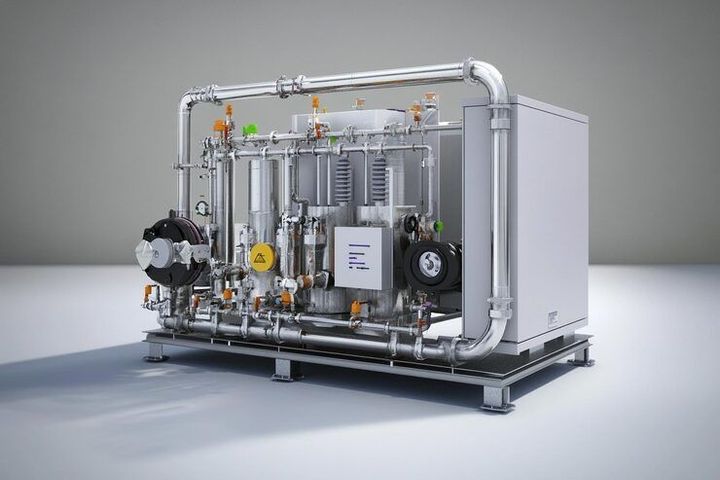
Heat Exchangers: Guide to Heat Transfer Methods
Heat exchangers are equipment designed to transfer thermal energy from one fluid or gas stream to another without normally allowing the two streams to mix. They are used across many industries because heating and cooling are fundamental parts of industrial and commercial processes.
The basic principle is straightforward. A hot fluid passes through one side of the exchanger while a cooler fluid passes through another side. A separating wall or heat-transfer surface allows thermal energy to move from the hotter stream toward the colder stream.
How Heat Transfer Takes Place
Heat transfer in an exchanger generally involves three mechanisms:
- Conduction: Heat moves through the separating wall or heat-transfer surface.
- Convection: Heat moves between the fluid and the exchanger surface.
- Radiation: Thermal energy is transferred through electromagnetic waves, although radiation is usually less important in conventional fluid-to-fluid heat exchangers.
The exchanger's design determines how effectively these mechanisms work together.
Main Components
A typical heat exchanger may contain:
- Heat-transfer tubes or plates
- Shell or outer casing
- Headers
- Tube sheets
- Baffles
- Gaskets
- Nozzles
- Flanges
- Supports
- Temperature and pressure instruments
The exact components depend on the exchanger design.
Importance
Industrial Heating and Cooling
Many industrial processes require precise temperature control. Heat exchangers allow process fluids to be heated or cooled without direct contact between the two streams.
For example, a process liquid may be heated using hot water or steam, while another process may use chilled water to remove unwanted heat.
Energy Recovery
Heat exchangers can recover thermal energy from a hot stream and transfer it to a colder stream. This can reduce the amount of additional heating or cooling required elsewhere in a process.
Heat recovery is particularly useful in systems where hot exhaust gases, process fluids, or heated water would otherwise leave the process carrying significant thermal energy.
Process Stability
Temperature affects viscosity, pressure, chemical reactions, phase changes, and product characteristics. A properly designed heat exchanger helps maintain suitable thermal conditions.
Stable heat transfer can therefore support consistent process operation.
Equipment Protection
Cooling systems often use heat exchangers to remove excess heat from equipment or process fluids. They can help control temperatures in engines, compressors, hydraulic systems, electrical equipment, refrigeration systems, and industrial machinery.
Common Heat Exchanger Types
| Type | Main Construction | Common Application |
|---|---|---|
| Shell-and-Tube | Tubes inside a shell | Industrial process systems |
| Plate | Corrugated plates | HVAC and process heating |
| Air-Cooled | Tubes with air-side fins | Oil and gas and industrial systems |
| Double-Pipe | One pipe inside another | Smaller process duties |
| Spiral | Spiral heat-transfer passages | Selected process applications |
| Finned-Tube | Tubes with extended surfaces | Air conditioning and refrigeration |
| Plate-and-Fin | Plates and fins | Compact thermal systems |
Each design has different characteristics relating to heat-transfer area, pressure drop, maintenance, footprint, and operating conditions.
Recent Updates
New Work on Plate-Type Heat Exchangers
BIS reported in its October 2025 newsletter that work was progressing on a new standard covering the general requirements for the design, construction, and testing of brazed plate-type heat exchangers for room air conditioners. The proposed work was intended to address performance and testing considerations for this type of exchanger.
This activity reflects continuing standardization around heat-transfer equipment used in HVAC applications.
Updates to Finned Heat Exchanger Standards
BIS has continued work around IS 11329:2018, which covers finned-type heat exchangers for room air conditioners. BIS documentation describes requirements relating to materials, leak testing, corrosion resistance, construction, and marking.
The standard is specifically associated with room air-conditioning applications, so it should not be treated as a universal specification for every industrial heat exchanger.
New Heat Recovery Focus
BIS also reported work on a proposed standard for heat recovery ventilators and energy recovery ventilators. The work covers performance testing for fixed-plate exchangers, rotary heat or energy wheels, and heat-pipe exchangers used in ventilation systems.
Heat recovery is increasingly relevant to building energy management because ventilation systems can transfer thermal energy between outgoing and incoming air streams.
Materials and Thermal Performance
Heat-transfer equipment continues to receive attention regarding material selection, corrosion resistance, leak prevention, compact construction, and thermal performance.
BIS's standards database includes IS 8362:2025 for copper and copper-alloy rolled plates used for condensers and heat exchangers, showing continued standards activity around materials used in heat-transfer equipment.
Digital Monitoring
Modern heat exchanger installations can incorporate sensors and control systems that monitor temperatures, pressure, flow rate, and differential pressure.
These measurements can help operators identify changes in thermal performance or flow conditions. Digital monitoring can also support maintenance planning and process control.
Laws or Policies
Indian Standards
India uses BIS standards for many products and equipment categories. The applicable standard depends on the specific heat exchanger, its intended application, materials, operating conditions, and associated equipment.
BIS's Know Your Standard portal allows users to search for standards using an Indian Standard number or a keyword such as a product name. The portal provides access to standard documents, amendments, testing information, laboratory details, and related material. It was last updated on May 8, 2026.
Compulsory Certification
BIS states that its certification system is generally voluntary, although the Central Government can make compliance compulsory for particular products through Quality Control Orders.
Therefore, a heat exchanger should not automatically be assumed to require BIS certification simply because an Indian Standard exists. The applicable product category and current government requirements should be checked for the specific equipment.
Pressure and Safety Requirements
Many industrial heat exchangers operate under pressure. Depending on the application, pressure equipment can therefore involve additional regulatory and safety requirements.
PESO maintains regulatory frameworks involving pressure vessels and petroleum-related installations. Its current website continues to list activities under the Static and Mobile Pressure Vessels (Unfired) Rules, 2016.
The exact regulatory requirements depend on the equipment, fluid, pressure, installation, and facility type.
Testing and Inspection
Heat exchangers can undergo several types of inspection and testing, depending on their design and application. These can include:
- Pressure testing
- Leak testing
- Visual inspection
- Dimensional inspection
- Material verification
- Corrosion assessment
- Thermal performance testing
- Tube inspection
For example, BIS documentation for finned heat exchangers references leak testing and corrosion-resistance testing as part of the relevant product requirements.
Safety Considerations
Safe operation requires attention to pressure, temperature, fluid compatibility, corrosion, leakage, and thermal expansion.
Industrial systems can also require insulation, protective guarding, pressure-relief arrangements, appropriate valves, monitoring instruments, and planned inspection according to the equipment design and applicable regulations.
Tools and Resources
Temperature and Pressure Instruments
Temperature sensors and pressure gauges are fundamental to heat exchanger monitoring. Comparing inlet and outlet conditions can help operators understand whether the exchanger is operating within its intended range.
Flow Measurement
Flow meters can measure the quantity of fluid passing through each side of the exchanger. Flow information can be combined with temperature measurements to assess thermal performance.
Differential Pressure Monitoring
Differential pressure across an exchanger can provide useful information about flow resistance. An increasing pressure drop may indicate changes such as fouling, blockage, or altered flow conditions.
Thermal Performance Calculations
Several engineering parameters are commonly used when assessing heat exchanger performance, including:
- Heat-transfer rate
- Temperature difference
- Overall heat-transfer coefficient
- Heat-transfer area
- Pressure drop
- Thermal effectiveness
These parameters help engineers evaluate whether an exchanger is appropriately sized for its application.
Inspection Resources
Tube inspection equipment, thickness measurement instruments, leak-testing equipment, thermal imaging systems, and maintenance records can support inspection activities.
For Indian standards, the BIS Know Your Standard portal provides a central reference for identifying applicable standards and related documentation.
FAQs
What are heat exchangers?
Heat exchangers are devices that transfer thermal energy between two separate fluids or gas streams. A separating wall or heat-transfer surface normally keeps the streams apart while allowing heat to pass between them.
How do heat exchangers transfer heat?
Heat exchangers transfer heat primarily through convection between the fluids and the exchanger surfaces and conduction through the separating material. The overall design determines the rate and efficiency of heat transfer.
What are the main types of heat exchangers?
Common types include shell-and-tube, plate, air-cooled, double-pipe, spiral, finned-tube, and plate-and-fin heat exchangers. The appropriate type depends on flow conditions, temperature, pressure, space, maintenance requirements, and the process application.
Where are heat exchangers used?
Heat exchangers are used in HVAC systems, refrigeration, power generation, chemical processing, oil and gas, food processing, pharmaceuticals, industrial machinery, energy systems, and many other applications.
What factors affect heat exchanger performance?
Important factors include temperature difference, flow rate, heat-transfer area, fluid properties, surface condition, fouling, pressure drop, material selection, and exchanger configuration.
Conclusion
Heat exchangers provide an efficient way to transfer thermal energy between separate fluids or gas streams. Different designs, including shell-and-tube, plate, air-cooled, finned, and compact exchangers, are suited to different operating requirements. Current Indian standardization activity includes developments involving plate-type heat exchangers, heat recovery equipment, and materials used in heat-transfer systems. Proper design, monitoring, inspection, and compliance with applicable standards are important for reliable heat exchanger operation.