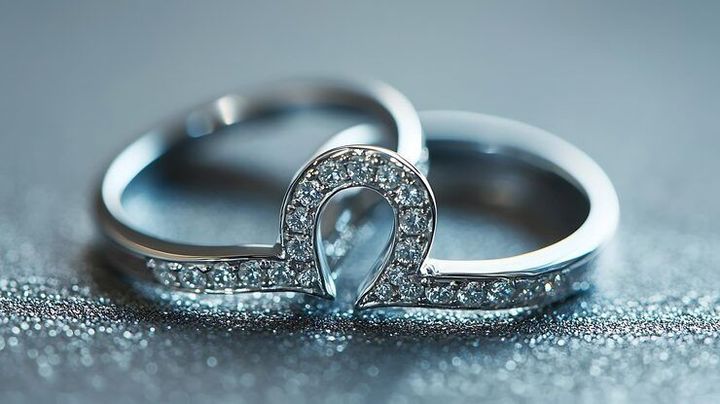
Halo Engagement Rings: Guide to Sparkling Designs, Settings, and Style Trends
Halo engagement rings surround a center diamond with smaller accent stones to create a distinctive framed appearance. Explore halo designs, diamond shapes, settings, metals, hidden halos, and bridal trends.
Context
Understanding Halo Engagement Rings
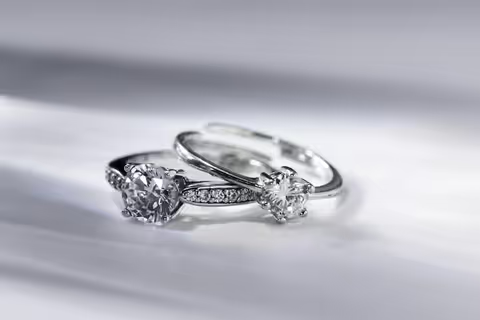
Halo engagement rings feature a center diamond or gemstone surrounded by a circle or arrangement of smaller accent stones. This structure creates a framed appearance around the center stone and can add additional visual detail to the ring.
The halo can be made with diamonds or other gemstones, depending on the design. Traditional halo rings commonly use small round diamonds, while contemporary designs may incorporate pear-shaped, baguette, oval, or other accent stones.
Halo engagement rings can also be combined with different center-stone shapes, metals, band designs, and setting styles. This makes the halo format adaptable to classic, vintage-inspired, geometric, and contemporary bridal jewelry.
Main Characteristics
A traditional halo engagement ring generally includes:
One center diamond or gemstone
A surrounding arrangement of smaller accent stones
A metal setting that holds the stones
A ring band or shank
A selected precious-metal type
A defined halo shape and proportion
The halo may be symmetrical around the center stone or designed with more unusual shapes and proportions.
Traditional Halo vs Hidden Halo
A traditional halo is visible around the center stone when the ring is viewed from above.
A hidden halo is positioned beneath the center stone, usually around the basket or gallery. From the top, the ring can appear similar to a solitaire, while the additional stones become visible from side angles.
Hidden halos have become an important design feature in 2026, particularly for couples who want additional detail without a prominent surrounding frame. (vogue.com)
Halo Ring vs Solitaire
A solitaire focuses attention on one center stone without a visible surrounding arrangement.
A halo adds smaller stones around the center diamond, creating a more detailed visual structure. The choice between the two depends on the desired appearance, center-stone shape, band design, and overall ring proportions.
| Feature | Solitaire | Halo |
|---|---|---|
| Center stone | Single focal stone | Single focal stone with surrounding accents |
| Surrounding stones | Usually absent | Present |
| Visual structure | Simple | Framed |
| Design detail | Minimal to moderate | Moderate to elaborate |
| Personalization | High | High |
| Side profile | Depends on setting | Can include additional gallery details |
Importance
Framing the Center Stone
The halo creates a visual frame around the center stone.
The relationship between the center diamond and surrounding stones is important because the halo can change the overall proportion of the ring. A narrow halo can create a delicate outline, while a wider arrangement can produce a more substantial appearance.
Diamond Shape
The center diamond shape strongly influences the halo design.
Round diamonds can be surrounded by a circular halo, while oval, cushion, pear, emerald, radiant, and marquise diamonds generally require halo outlines designed specifically for their proportions.
A properly proportioned halo follows the shape of the center stone rather than functioning as a generic circle around every diamond shape.
Popular Center-Stone Shapes
| Center Shape | General Character | Halo Design Direction |
|---|---|---|
| Round | Symmetrical and classic | Circular halo |
| Oval | Elongated | Oval or contour halo |
| Cushion | Rounded corners | Soft rectangular halo |
| Pear | Teardrop | Contoured pear halo |
| Emerald | Linear and geometric | Structured rectangular halo |
| Radiant | Angular with brilliant-style faceting | Rectangular or square halo |
| Marquise | Long with pointed ends | Elongated contour halo |
| Asscher | Square step-cut | Geometric halo |
Halo Proportions
The size of the accent stones and the width of the halo influence the final appearance.
A delicate micro-pavé halo uses very small stones and can create a refined outline. Larger accent stones produce a more pronounced frame.
The distance between the center stone and halo is also relevant. A close halo creates a compact arrangement, while a slightly separated design can create more definition between the center and surrounding stones.
Metal Selection
Halo engagement rings can be produced in platinum, white gold, yellow gold, and rose gold.
White metals can create a continuous visual relationship between the diamond and surrounding stones. Yellow gold creates stronger contrast and can give a contemporary or vintage-inspired character.
Rose gold can introduce a warmer color palette and may be paired with white diamonds or colored accent stones.
Halo Settings
The setting determines how the center and accent stones are held.
Common approaches include:
Prong settings
Pavé settings
Micro-pavé settings
Bezel details
Cathedral structures
Halo basket settings
Hidden halo galleries
The setting should be considered as a complete structure rather than only a decorative feature because it determines the relationship between the stones, band, and wearer's hand.
Personalization
Halo rings provide numerous opportunities for customization.
Personalization can involve the center-stone shape, halo outline, accent-stone shape, metal color, band width, prong design, gallery structure, engraving, and hidden details.
A round center stone with a traditional diamond halo creates a different visual character from an emerald-cut stone surrounded by baguette accents.
Recent Updates
Hidden Halos
Hidden halos are among the notable contemporary developments in halo engagement-ring design.
Instead of placing small diamonds around the visible perimeter of the center stone, a hidden halo places them underneath the center stone's upper section. The effect creates additional detail when the ring is viewed from the side while maintaining a relatively simple appearance from above.
Current 2026 jewelry coverage identifies hidden halos as an increasingly requested design feature. (turn0search7)
More Individualized Designs
Engagement-ring design in 2026 is moving toward more individual and distinctive arrangements rather than one dominant standard silhouette.
Vogue's 2026 trend coverage highlights personalization, antique-cut diamonds, sculptural forms, warmer metals, and unusual settings as part of this broader movement. (vogue.com)
Halo rings can participate in this trend through unusual accent-stone shapes, asymmetrical arrangements, mixed metals, or less conventional center stones.
Geometric Halos
Geometric designs are becoming increasingly visible in contemporary bridal jewelry.
Emerald and Asscher cuts naturally emphasize straight lines, while baguette and other linear accent stones can create structured halo arrangements.
Forbes' 2026 engagement-ring coverage identifies renewed interest in architectural jewelry and geometric designs, including emerald cuts and Art Deco-inspired halo arrangements. (forbes.com)
Vintage-Inspired Halos
Vintage influences remain relevant in modern halo rings.
Art Deco-inspired geometry, milgrain details, engraved bands, antique-style diamond cuts, and cluster arrangements can give a contemporary halo a historical character.
Current bridal coverage also identifies antique and vintage-inspired cuts as an important 2026 direction, reflecting greater interest in distinctive jewelry with a sense of individuality. (usatoday.com)
Elongated Center Stones
Oval, marquise, pear, and elongated cushion diamonds are increasingly visible in contemporary engagement-ring designs.
These shapes can be paired with halos that follow their elongated outlines. The resulting arrangement can emphasize the length of the center stone while maintaining the detailed appearance associated with a halo.
Yellow-Gold Halo Rings
Yellow gold continues to appear in modern bridal jewelry alongside white diamonds.
The warm metal can create contrast between the center stone, halo, and band. It can also complement vintage-inspired designs, particularly when combined with engraved or milgrain details.
Mixed Accent Stones
Some contemporary halo rings use different stone shapes within the same design.
For example, a center oval diamond can be surrounded by smaller round diamonds, while a geometric center stone can use baguette or tapered accent stones.
Mixed shapes can create a more structured or personalized appearance.
Sculptural Bands
The band itself is receiving more attention in contemporary engagement-ring design.
Rather than treating the halo as the only decorative element, designers may use wider bands, tapered shoulders, sculptural curves, unusual profiles, or east-west arrangements to create a more distinctive ring.
This reflects the broader 2026 movement toward individuality and stronger design character. (vogue.com)
Laws or Policies
Diamond Origin Disclosure
Jewelry descriptions should accurately identify whether a diamond is laboratory-grown or mined.
The U.S. Federal Trade Commission states that laboratory-grown diamonds should be clearly identified with appropriate terms so consumers understand their origin. Jewelry descriptions should not create an inaccurate impression about whether a diamond is naturally mined. (ftc.gov)
This distinction is relevant when halo rings contain laboratory-grown center stones or accent diamonds.
Diamond Documentation
A diamond grading report can provide information about characteristics such as carat weight, color, clarity, measurements, and other grading details.
When a halo ring contains several diamonds, documentation for the center stone and relevant details for accent stones can help establish what materials are included in the finished jewelry.
Gold Hallmarking in India
For gold halo engagement rings in India, applicable BIS hallmarking requirements apply to the metal component.
BIS states that gold and silver are covered under its Hallmarking Scheme. Hallmarked gold jewelry carries information related to purity and a unique HUID number. (bis.gov.in)
The applicable hallmarking requirements can change, so current BIS provisions should be checked when evaluating gold jewelry documentation.
Metal Purity
Indian gold jewelry can be marked according to applicable purity grades.
The metal purity and diamond characteristics are separate aspects of the ring. A gold hallmark provides information about the metal, while a diamond grading report addresses characteristics of the diamond.
Consumer Information
Jewelry descriptions should accurately identify the materials, diamond origin, treatments where applicable, and relevant specifications.
Clear descriptions help distinguish natural diamonds, laboratory-grown diamonds, treated stones, and diamond simulants.
Tools and Resources
Diamond Grading Reports
A grading report can help document the characteristics of the center diamond.
Relevant information may include:
Carat weight
Color
Clarity
Cut information
Measurements
Polish
Symmetry
Fluorescence
Diamond origin
Identification details
Shape Comparison
Comparing diamond shapes can help determine which halo outline works with the desired center stone.
Round stones generally use circular halos, while elongated or angular shapes require more specialized halo proportions.
Setting Comparison
| Halo Style | Main Character | Common Design Direction |
|---|---|---|
| Classic halo | Visible surrounding stones | Traditional |
| Double halo | Two accent-stone rows | Elaborate |
| Hidden halo | Stones beneath center | Subtle |
| Floral halo | Petal-like arrangement | Romantic |
| Geometric halo | Structured outline | Contemporary |
| Baguette halo | Linear accent stones | Art Deco-inspired |
| Cluster halo | Closely grouped stones | Vintage-inspired |
Ring Size Measurement
Ring size should be checked carefully before selecting a final design.
Band width, metal thickness, setting height, and finger shape can influence how a ring fits. Professional measurement can provide more reliable results than estimating from an existing ring.
Wedding-Band Compatibility
The halo setting should also be considered alongside a future wedding band.
Some halo rings have a low setting or broad side structure that may create a gap between the engagement ring and a straight wedding band. Other designs are shaped specifically for close stacking.
A contoured or curved wedding band may be appropriate for certain halo structures.
Care and Inspection
Halo rings contain multiple small accent stones, so regular inspection can help identify loose stones, worn prongs, or other setting issues.
Cleaning methods should be appropriate for the metal, diamond treatments, gemstones, and construction of the ring. Manufacturer or jeweler care instructions should be followed where available.
Halo Ring Planning
A practical design process can include:
Select the center diamond shape.
Decide between natural and laboratory-grown diamond origin.
Review diamond documentation.
Select the halo structure.
Compare accent-stone shapes.
Choose the metal.
Select the band profile.
Consider hidden or gallery details.
Check wedding-band compatibility.
Confirm ring size and care requirements.
FAQs
What are halo engagement rings?
Halo engagement rings feature a center diamond or gemstone surrounded by smaller accent stones. The surrounding stones create a framed appearance and can add additional visual detail to the ring.
What diamond shapes work with halo engagement rings?
Round, oval, cushion, pear, emerald, radiant, marquise, and Asscher diamonds can all be paired with halo settings. The halo should be proportioned to follow the shape of the center stone.
What is a hidden halo engagement ring?
A hidden halo places small accent diamonds beneath the center stone rather than around its visible upper perimeter. This creates additional sparkle from certain viewing angles while maintaining a relatively simple appearance from above.
Are halo engagement rings still popular in 2026?
Halo designs remain part of contemporary bridal jewelry, although current 2026 trends are increasingly emphasizing personalization, unusual proportions, geometric elements, hidden halos, vintage references, and distinctive center stones. (vogue.com)
What should I check when choosing a halo engagement ring?
Consider the center-stone shape, halo proportions, accent-stone arrangement, setting structure, metal, ring size, diamond documentation, wedding-band compatibility, and care requirements.
Conclusion
Halo engagement rings combine a prominent center stone with surrounding accent stones to create a framed and detailed bridal design. The format can accommodate round, oval, cushion, pear, emerald, radiant, marquise, and other diamond shapes, with different halo structures creating distinct visual effects. Current 2026 trends include hidden halos, geometric arrangements, vintage-inspired details, elongated center stones, yellow-gold settings, and more personalized designs. Accurate diamond documentation, clear origin information, appropriate metal identification, and careful consideration of ring proportions can help create a well-planned halo engagement ring.