Gear Hobbing Machines: Overview of Machine Types, Operations, and Gear Manufacturing
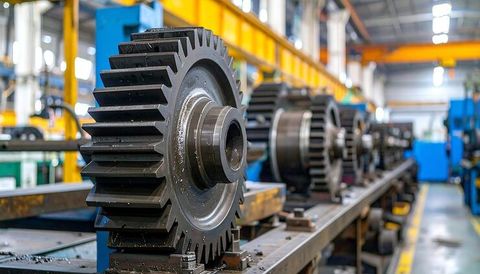
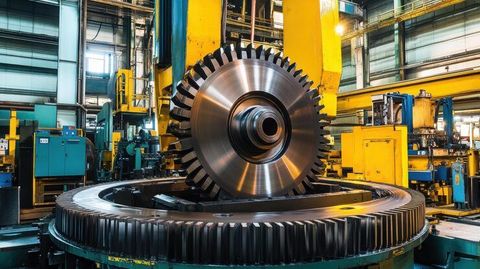
Gear hobbing machines are machine tools used to produce gears, splines, sprockets, and other toothed components.
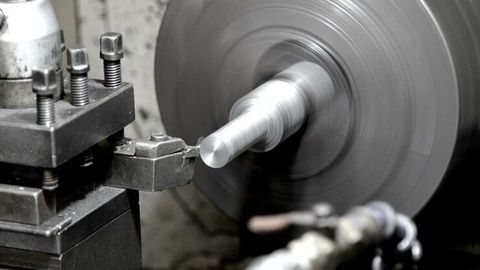
The process uses a rotating cutting tool called a hob that works together with a rotating workpiece. As the hob and workpiece rotate in a coordinated relationship, cutting edges gradually form the required tooth profile.
Gear hobbing is a continuous machining process. Unlike some individual tooth-cutting methods, it can generate several gear teeth during one continuous cutting operation. This makes the technology important for industries that require repeatable production of cylindrical gears.
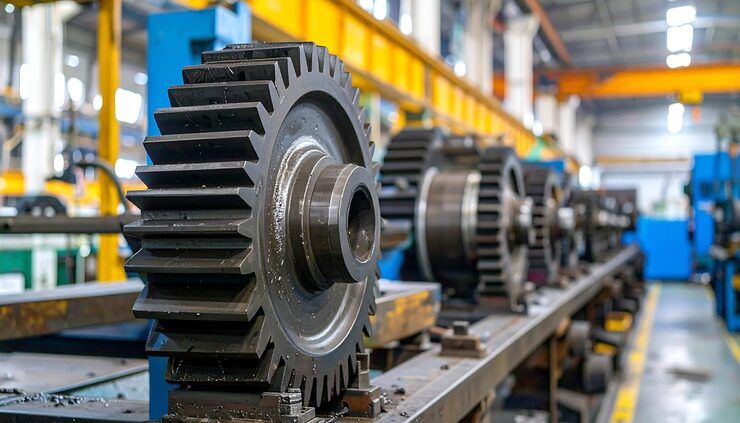
A typical gear hobbing machine includes several major elements:
- Hob spindle: Holds and rotates the cutting tool.
- Workpiece spindle: Holds and rotates the gear blank.
- Machine bed: Provides structural support and stability.
- Feed mechanism: Controls movement between the hob and workpiece.
- CNC control: Coordinates multiple machine movements on advanced models.
- Coolant system: Helps manage heat and remove machining chips.
- Workholding system: Keeps the gear blank accurately positioned.
The basic process begins with a prepared gear blank. The hob is positioned at the required angle, and the machine synchronizes the rotational movement of the hob and workpiece. Controlled axial or radial movement then removes material until the required tooth geometry is produced.
Why Gear Hobbing Technology Matters
Gears are used in transmissions, industrial machinery, robotics, pumps, automotive systems, agricultural equipment, aerospace systems, and many other mechanical applications. The accuracy of the gear directly affects how smoothly mechanical power can be transmitted.
Gear hobbing machines are particularly useful because they combine continuous cutting with synchronized tool and workpiece movement. Modern CNC gear hobbing machines can coordinate several axes and automatically maintain programmed cutting parameters.
The technology helps address several manufacturing requirements:
- Consistent tooth spacing
- Repeatable gear geometry
- Production of different gear sizes
- Automated machining sequences
- Reduced dependence on manual adjustments
- Integration with inspection and measurement systems
- Support for digitally controlled manufacturing
The growing use of automation also connects gear hobbing with broader developments in smart manufacturing. Sensors, CNC controls, digital monitoring, and automated material handling can provide more information about machining conditions.
India's machine-tool sector has also shown substantial development. According to the Ministry of Heavy Industries, machine-tool production increased from ₹6,152 crore in 2019–20 to ₹14,286 crore in 2024–25.
Common Types and Configurations
Different gear hobbing machines are designed around different production requirements. The appropriate configuration depends on gear dimensions, tooth geometry, material, accuracy requirements, and production volume.
| Machine Type | Main Characteristic | Typical Application |
|---|---|---|
| Conventional Hobbing Machine | Mechanically controlled movements | General gear production |
| CNC Gear Hobbing Machine | Computer-controlled axes | Precision and automated manufacturing |
| Horizontal Hobbing Machine | Horizontal workpiece arrangement | Various cylindrical gear applications |
| Vertical Hobbing Machine | Vertical workpiece arrangement | Larger or specialized components |
| High-Speed Hobbing Machine | Optimized cutting speeds and feeds | High-productivity production |
| Multi-Axis Hobbing Machine | Coordinated multi-axis movement | Complex gear geometries |
CNC gear hobbing machines are increasingly relevant where manufacturers need repeatable positioning and programmable machining cycles. Their digital controls can store machining parameters and support consistent production across batches.
Factors That Influence Gear Hobbing Accuracy
Gear accuracy depends on more than the machine itself. The hob, workholding arrangement, gear blank, machine condition, cutting parameters, and inspection process can all influence the final component.
Important factors include:
- Hob quality and geometry
- Machine rigidity
- Spindle accuracy
- Workpiece alignment
- Cutting speed
- Feed rate
- Depth of cut
- Material characteristics
- Thermal conditions
- Tool wear
- Measurement procedures
The relationship between cutting conditions and output quality can be summarized as follows:
| Factor | Possible Effect on Machining |
|---|---|
| Higher cutting speed | Greater productivity but increased thermal considerations |
| Higher feed | Faster material removal with greater cutting demands |
| Tool wear | Can influence tooth geometry and surface quality |
| Poor alignment | May produce dimensional or positional errors |
| Excessive vibration | Can affect surface finish and accuracy |
| Inadequate cooling | Can increase heat-related machining problems |
For precision applications, manufacturers commonly combine hobbing with subsequent operations such as shaving, grinding, honing, or other finishing processes. Inspection equipment can then verify dimensional and tooth-profile characteristics.
Recent Developments in Gear Hobbing and Machine Tools
The machine-tool industry has been moving toward greater automation, digital control, and integration with advanced manufacturing systems.
A significant recent development in India occurred on 23 February 2026, when the Office of the Principal Scientific Adviser and the Ministry of Heavy Industries held a stakeholder consultation at CMTI, Bengaluru, concerning an advanced manufacturing strategy. The discussions included CNC machine tools and controllers, advanced machines, robotics, metrology infrastructure, and related manufacturing technologies.
The development is relevant to gear hobbing because CNC controls, measurement systems, robotics, and machine-tool automation are closely connected with modern gear manufacturing.
Another important policy development was the National Manufacturing Mission, announced in the Union Budget on 1 February 2025. Its focus areas include technology availability, quality manufacturing, MSME development, workforce readiness, and improving manufacturing capabilities.
Current technology trends include:
- CNC-based machining
- Automated tool management
- Digital machine monitoring
- In-process measurement
- Robotic loading and unloading
- Improved machine-tool controllers
- Data-based process monitoring
- Integration with manufacturing execution systems
These developments are gradually changing gear manufacturing from isolated machining operations toward connected production environments.
Indian Laws, Standards, and Policies
Gear hobbing machines used in Indian manufacturing environments can be affected by machinery safety requirements, workplace regulations, technical standards, and industrial policies.
The Bureau of Indian Standards (BIS) maintains standards and certification frameworks relevant to machinery. BIS currently lists safety certification guidance for machinery, including specific guidance for metal-cutting machines. Its Scheme-X framework also covers various categories of machinery and electrical equipment.
A BIS compendium published for machine tools provides information about Indian Standards related to CNC and NC machine tools, including approaches for assessing geometric and positioning accuracy.
Workplace safety is another important consideration. The Ministry of Labour and Employment identifies factory safety, health, and welfare requirements as important areas of regulation, with state governments and Union Territories playing a role in implementing applicable factory rules.
For organizations working with machinery, relevant considerations can include:
- Machine guarding
- Emergency stopping arrangements
- Electrical safety
- Operator protection
- Safe access around equipment
- Preventive inspection
- Workplace ventilation and housekeeping
- Applicable BIS standards
- State-specific factory requirements
The regulatory position can change, so organizations should verify the latest requirements applicable to their particular machine and facility.
Useful Tools and Resources
Several technical resources can help engineers, students, machine operators, and manufacturing planners understand gear hobbing and machine-tool requirements.
BIS Know Your Standard: BIS provides a searchable portal where users can locate standards using an Indian Standard number or product-related keyword. It can also provide information about amendments, testing schemes, laboratories, and related documents.
BIS Machinery Certification Information: The BIS machinery certification pages provide information about applicable machinery categories and certification frameworks.
CMTI: The Central Manufacturing Technology Institute is an important Indian institution associated with manufacturing technology, machine tools, testing, and advanced manufacturing research.
Gear Calculation Software: Gear geometry calculators can help determine parameters such as module, pitch diameter, tooth count, pressure angle, and other basic gear dimensions. Engineers should verify calculated results against applicable design standards before production.
CAD/CAM Systems: CAD and CAM software can assist with gear design, machining preparation, toolpath development, and production documentation.
Metrology Equipment: Gear measurement systems, coordinate measuring machines, profile measurement instruments, and dimensional inspection equipment help evaluate manufactured components.
Frequently Asked Questions
What is a gear hobbing machine?
A gear hobbing machine is a machine tool that uses a rotating hob to cut teeth into a gear blank. The hob and workpiece rotate in a synchronized relationship to create the required tooth pattern.
What is a CNC gear hobbing machine?
A CNC gear hobbing machine uses computer numerical control to coordinate machine movements and machining parameters. It can provide programmable and repeatable machining operations.
Which materials can be processed using gear hobbing?
Gear hobbing is commonly associated with metals such as steel, cast iron, bronze, and other machinable alloys. The appropriate cutting tool and machining parameters depend on the material and required gear characteristics.
What is the difference between hobbing and gear grinding?
Hobbing is primarily a gear-generating cutting process used to create teeth from a gear blank. Gear grinding is generally a finishing process used to achieve tighter dimensional and surface requirements after earlier machining operations.
Why is machine accuracy important in gear manufacturing?
Accurate machine movement and synchronization influence tooth spacing, geometry, alignment, and overall gear performance. Poor accuracy can contribute to vibration, noise, uneven contact, and reduced mechanical performance.
Conclusion
Gear hobbing machines remain an important part of modern gear manufacturing because they can continuously generate teeth with synchronized tool and workpiece movement. Conventional equipment continues to have applications, while CNC gear hobbing machines are increasingly connected with automation, digital monitoring, robotics, and advanced measurement.
Recent developments in India's manufacturing policy and advanced manufacturing ecosystem are placing greater attention on CNC machine tools, controllers, robotics, metrology, technology development, and domestic manufacturing capabilities