Game Development Course: A Complete Guide to Basics, Tools & Helpful Insights
A game development course provides structured knowledge on how digital games are designed, created, and tested. It exists to help learners understand the technical, creative, and analytical aspects of building games for platforms such as mobile, PC, consoles, and VR systems. These courses emerged as the gaming industry expanded from simple arcade titles to immersive, interactive worlds that require programming skills, design understanding, storytelling techniques, and user experience knowledge.
These courses help learners understand how game engines work, how gameplay is designed, and how interactive systems function. They guide students through the basics and gradually introduce more complex concepts, making it easier to practice coding, modeling, animation, and world-building. Because game development involves many disciplines, organized courses were created to simplify learning and support beginners through a clear path.

Importance: Why Game Development Education Matters Today
Game development education plays a significant role in the modern digital environment. Games are used not only for entertainment but also for learning, simulation, training, research, and creative expression. As a result, understanding how games are built is becoming an important part of digital literacy.
Supports modern digital skills
A game development course helps individuals gain abilities related to:
-
Programming logic
-
2D and 3D design
-
Animation and physics systems
-
Character behavior modeling
-
User interface design
-
Interactive storytelling
These skills are useful across many fields connected to digital creativity.
Connected to emerging technologies
Game development influences several growing technology areas, including:
-
Virtual Reality
-
Augmented Reality
-
Real-time simulation
-
Interactive learning platforms
-
Immersive environments
-
Digital twins
-
AI-driven game mechanics
Understanding the basics prepares learners to explore these advanced technologies.
Encourages creativity and problem-solving
Game creation involves designing worlds, building characters, writing logic, and solving technical challenges. This improves analytical thinking, creativity, and adaptability, which benefit students, professionals, and hobbyists.
Who gains value from game development courses
-
Students exploring digital careers
-
Educators designing learning simulations
-
Enthusiasts interested in interactive design
-
Creative professionals transitioning into game creation
-
Researchers studying digital behavior and immersion
The importance of game development lies in its ability to combine creativity, technical thinking, and innovation.
Recent Updates: Trends and Changes in Game Development
Game development continues to evolve, and courses adapt to reflect new developments. Several trends have become more prominent recently, influencing what learners study and practice.
Growing role of generative AI
AI tools are now commonly used to generate ideas, characters, landscapes, animations, and dialogue. Courses increasingly include modules explaining how AI can support creative workflows and speed up prototyping.
More accessible and user-friendly game engines
Game engines continue to introduce improvements that simplify interfaces, update rendering systems, and make physics simulations easier to manage. These changes help beginners learn faster and experiment with fewer technical barriers.
Expansion of cloud-based development tools
Cloud environments allow learners to work on projects without depending on high-performance computers. This makes game creation more accessible in classrooms, home environments, and collaborative settings.
Increased focus on optimization and performance
As mobile and cross-platform games grow, courses now emphasize efficient asset usage, performance tuning, responsive controls, and compatibility across different devices.
Rise of immersive learning modules
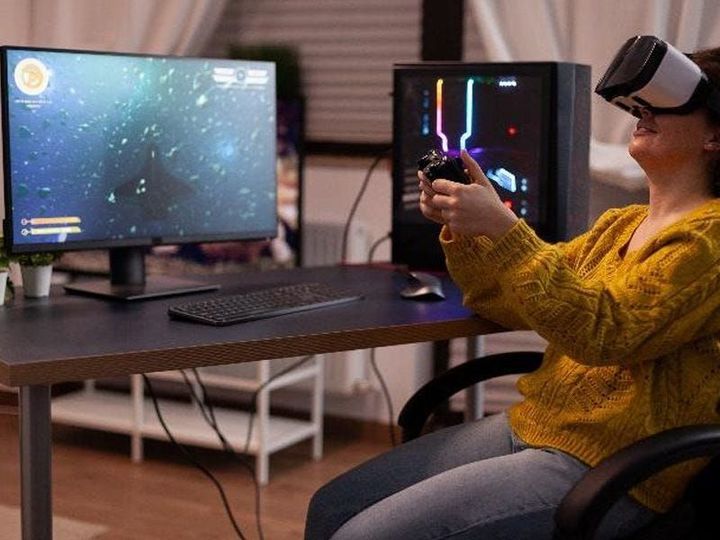
VR and AR development are becoming more common within training programs, helping learners explore spatial design and interactive environments.
These updates help shape modern game development education and guide the skills needed for current and future interactive experiences.
Policies Affecting Game Development Education
Although game development courses are not directly regulated by specific laws, they are influenced by general policies related to digital content and responsible online practices. These guidelines help ensure ethical development and safe user experiences.
Guidelines on data privacy and digital protection
Courses explain the importance of handling player data responsibly, especially for games involving user accounts, analytics, or online interactions. Learners are encouraged to follow standard digital safety principles.
Content rights and intellectual property awareness
Students are taught to respect:
-
Artwork ownership
-
Music and sound rights
-
Character design permissions
-
Licensing rules for game engines and assets
This protects creators and teaches learners how to work with original or properly licensed materials.
Responsible design and accessibility practices
Many programs highlight inclusive design principles such as readable interfaces, color contrast, subtitles, and user-friendly navigation. This helps developers create games accessible to a wider audience.
These policies guide learners toward ethical creation and responsible digital practices.
Tools and Resources for Game Development Education
Various tools and platforms support learning and make game development more approachable for beginners.
Game Engines
-
Unity – Suitable for beginners and widely used for 2D and 3D projects
-
Unreal Engine – Known for high-quality visuals and advanced environments
-
Godot Engine – Lightweight, open-source, and beginner-friendly
-
CryEngine – Designed for complex rendering and immersive worlds
Design and Art Tools
-
Blender – 3D modeling, animation, and sculpting
-
GIMP – Image editing for textures and assets
-
Krita – Drawing and character concept design
-
Photoshop – Advanced digital art creation
Programming and Debugging Utilities
-
Visual Studio Code – Widely used for coding and scripting
-
GitHub – Helpful for version control and collaboration
-
C# and Python tutorials – Support learning basic logic for gameplay
Sound and Audio Tools
-
Audacity – Simple sound editing
-
LMMS – Basic music composition tool
Educational Websites and Documentation
-
Official documentation for major game engines
-
Online learning portals offering structured tutorials
-
Community forums for discussion and problem-solving
Templates and Learning Assets
-
Sample project files
-
Prebuilt scenes
-
Character and environment prototypes
-
Asset libraries for textures and models
These tools help learners explore core concepts and practice real development workflows.
FAQs
What do beginners learn first in a game development course?
Beginners usually start with basic programming, game engine navigation, object movement, simple animation, and understanding how gameplay logic works.
Do I need coding skills before starting a game development course?
No. Many courses start with introductory programming lessons before moving into more advanced game logic and scripts.
Which engine is recommended for learning game development?
Unity and Godot are common beginner choices because they offer simple interfaces and extensive learning materials. Unreal Engine is preferred once learners are comfortable with more advanced 3D concepts.
Is game development only for entertainment?
No. Game development is also used in simulations, training modules, virtual experiences, research environments, education platforms, and interactive media.
What topics are usually covered in a full game development course?
Topics include foundational programming, 2D/3D game creation, design theory, animation, physics, UI systems, testing methods, and performance optimization.
Conclusion
Game development courses offer a structured way to learn how interactive digital experiences are created. They help learners understand programming fundamentals, creative design concepts, animation, and user interaction. As technology continues to evolve with immersive environments, AI integration, and cloud tools, game development education plays an essential role in preparing individuals for digital creation and innovation. By learning the basics and exploring modern engines, learners can build practical skills that support creativity, analytical thinking, and problem-solving across many digital fields.