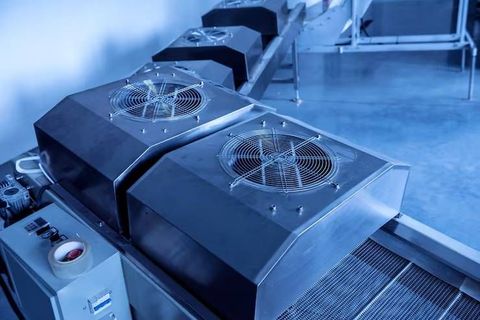
Eddy Current Separators: Guide to Working Principles and Industrial Applications
Eddy Current Separators are industrial separation machines designed to remove non-ferrous metals from mixed material streams. Common target metals include aluminum, copper, brass, and other electrically conductive materials.
These machines are widely associated with recycling and material recovery operations. They can separate non-ferrous metals from materials such as shredded packaging, municipal waste, electronic waste, construction debris, automobile scrap, and processed industrial materials.
The technology works through electromagnetic induction. A rapidly rotating magnetic rotor creates changing magnetic fields that induce electrical currents, known as eddy currents, inside conductive metal particles. The interaction produces a repelling force that helps move the metal away from the main material flow.
How the Separation Process Works
An Eddy Current Separator generally contains a conveyor belt, an external drum, a high-speed magnetic rotor, a drive system, and supporting controls.
The material first travels along a conveyor. When it reaches the separation zone, the magnetic rotor creates a rapidly changing magnetic field.
When a conductive non-ferrous metal particle passes through this field, electrical currents are induced within the particle. These currents generate a magnetic field that interacts with the rotor's field.
The resulting force causes the non-ferrous particle to follow a different trajectory from non-metallic material. Adjustable splitter positions can then direct the separated fractions into different collection areas.
The external drum and internal rotor can operate at different speeds. Modern systems commonly use permanent rare-earth magnetic circuits to create strong alternating magnetic fields.
Ferrous and Non-Ferrous Separation
Eddy current technology is different from a conventional magnetic separator.
Ferrous metals such as iron and many steel materials respond strongly to conventional magnetic fields and can generally be removed with magnetic separation equipment.
Non-ferrous metals do not behave in the same way. Aluminum, copper, brass, and similar conductive metals can instead be separated through induced eddy currents.
A recycling plant may therefore use magnetic separation first to remove ferrous metals and an Eddy Current Separator afterward to recover selected non-ferrous materials.
Main Components
Conveyor belt carries the incoming material toward the separation zone at a controlled speed.
Magnetic rotor contains alternating magnetic poles and rotates at high speed to generate the changing magnetic field.
External drum surrounds the rotor and provides the moving surface over which material travels.
Drive system controls the movement of the conveyor and rotating components.
Splitter divides the material according to its trajectory after separation.
Control system can regulate operating parameters and monitor equipment conditions.
Importance
Recovering Non-Ferrous Metals
One of the primary purposes of Eddy Current Separators is the recovery of non-ferrous metals from mixed material streams.
For example, a recycling facility may receive shredded material containing plastic, paper, glass, aluminum pieces, and other components. An eddy current system can redirect conductive metal particles while allowing many non-metallic materials to continue along another path.
Improving Material Purity
Material separation is important because different recovered materials may require different downstream treatment. Removing unwanted metals can improve the composition of individual material streams.
This is particularly relevant when recycled materials are prepared for further processing.
Supporting Automated Recycling
Modern recycling plants handle large volumes of mixed material. Automated separation equipment can continuously process material without requiring each metal item to be manually identified.
Eddy current technology can therefore form one stage within a larger automated sorting line that may also contain screens, magnets, optical sorters, air classifiers, conveyors, and shredders.
Common Applications
| Industry | Typical Material | Eddy Current Role |
|---|---|---|
| Metal recycling | Mixed scrap | Non-ferrous recovery |
| Municipal recycling | Mixed packaging | Aluminum separation |
| Automotive recycling | Shredded vehicles | Metal recovery |
| Electronic recycling | Processed electronic material | Conductive metal separation |
| Construction recycling | Demolition material | Non-ferrous recovery |
| Glass recycling | Processed glass stream | Metal removal |
| Plastic recycling | Mixed plastic streams | Metal separation |
| Waste processing | Mixed dry waste | Conductive metal recovery |
Factors Affecting Separation
Performance depends on several factors rather than the separator alone.
Important variables include:
Particle size and shape
Material composition
Conveyor speed
Rotor speed
Magnetic field configuration
Material-layer thickness
Moisture and contamination
Feed distribution
Splitter position
Distance between the material and magnetic rotor
Small, thin, or differently shaped particles can behave differently from larger pieces. Plant operators therefore normally configure the equipment according to the incoming material stream.
Recent Updates
Rare-Earth Magnetic Technology
Modern Eddy Current Separators increasingly use permanent rare-earth magnets. These magnetic systems can create strong alternating fields while maintaining a compact rotor arrangement. Eriez describes current systems using rare-earth magnetic material to strengthen the eddy-current effect and improve separation of non-ferrous materials.
Higher Levels of Automation
Recycling plants are increasingly combining several separation technologies into automated material-recovery systems. Sensors, conveyors, control systems, cameras, optical sorting equipment, and data monitoring can work together to classify and separate different material categories.
The eddy current stage is therefore increasingly treated as one component within a complete material-sorting line rather than as an isolated machine.
Electronic Waste Processing
Electronic waste contains mixtures of plastics, ferrous metals, non-ferrous metals, circuit-board materials, and other components.
Eddy current separation can be incorporated after shredding and size classification to recover conductive fractions. International controls on cross-border electronic waste have also become more significant. Amendments to the Basel Convention took effect on January 1, 2025, expanding controls so that all electrical and electronic waste covered by the amendments is subject to the prior informed consent procedure.
Circular Material Recovery
Global waste-management policies increasingly emphasize material recovery, recycling, and environmentally sound handling of waste.
The Basel Convention's Plastic Waste Amendments established additional controls over international movements of plastic waste, including specific categories associated with environmentally sound recycling. The amendments became effective in 2021.
These developments increase the importance of accurate sorting technologies because different waste materials may need to be separated before further treatment or cross-border movement.
Digital Monitoring
Modern separation lines can incorporate monitoring systems that track conveyor operation, rotor conditions, material flow, alarms, and selected equipment parameters.
Digital monitoring can help operators identify unusual operating conditions and maintain consistent separation settings.
Laws or Policies
International Waste Controls
Eddy Current Separators are not generally governed by one worldwide law. Their regulatory context depends on the material being processed, the country where the facility operates, and whether waste crosses national borders.
The Basel Convention is particularly relevant to international movements of hazardous and other controlled wastes. Its framework includes controls for certain transboundary waste movements and environmentally sound management.
Electronic Waste
The Basel Convention's e-waste amendments are particularly relevant to facilities involved in international movement of electrical and electronic waste. The amendments adopted in 2022 expanded the scope of controls, with the changes taking effect in 2025.
This does not establish a universal technical requirement for every Eddy Current Separator. Instead, it creates an international framework affecting how covered e-waste movements are controlled.
Plastic Waste
Plastic recycling facilities may also encounter international requirements concerning plastic waste. The Basel Convention amendments distinguish among categories of plastic waste and establish conditions for certain waste streams intended for environmentally sound recycling.
National Waste Regulations
Individual countries may have additional rules covering waste collection, recycling facilities, emissions, worker safety, equipment installation, hazardous materials, and waste transportation.
For example, India's Ministry of Environment, Forest and Climate Change maintains regulations covering plastic waste and electronic waste, while its recent reports describe continued development of digital monitoring and extended producer responsibility systems.
In the European Union, North America, Asia-Pacific, and other regions, operators need to consult the waste-management and environmental authorities applicable to their facility.
Tools and Resources
Material Testing
Before configuring an Eddy Current Separator, facilities can analyze the incoming material stream. Testing can identify particle size, metal composition, moisture, contamination, and material distribution.
This information helps determine appropriate conveyor and rotor settings.
Magnetic Field Analysis
Engineering tools can model magnetic-field behavior and help designers study how conductive particles respond to different rotor configurations.
Such analysis can support equipment development and application-specific configuration.
Conveyor Monitoring
Monitoring conveyor speed and material loading is important because changes in feed rate can affect separation trajectories.
Sensors and control systems can track selected conveyor parameters and provide operational information.
Particle Size Classification
Screens and sizing equipment can separate material into different size ranges before eddy current separation.
Consistent particle sizes can make the downstream separation stage easier to control.
Optical Sorting
Optical sorting systems can identify materials based on characteristics such as color, shape, or spectral response. They can operate alongside eddy current technology when a recycling plant needs to separate several material categories.
Maintenance and Inspection
Routine inspection can include checking conveyor components, bearings, belts, rotor condition, protective covers, electrical systems, and material buildup.
The inspection schedule should follow the equipment manufacturer's technical documentation and the operating environment.
FAQs
What are Eddy Current Separators?
Eddy Current Separators are industrial machines that use changing magnetic fields to separate electrically conductive non-ferrous metals from mixed material streams.
How do Eddy Current Separators work?
A high-speed magnetic rotor creates a changing magnetic field. This induces eddy currents in conductive metal particles, producing a repelling force that changes their trajectory and separates them from other materials.
Which metals can Eddy Current Separators remove?
Common target materials include aluminum, copper, brass, and other electrically conductive non-ferrous metals. Actual separation performance depends on particle characteristics and equipment configuration.
Where are Eddy Current Separators used?
They are used in recycling, municipal waste processing, automotive scrap recovery, electronic waste processing, construction-material recovery, glass recycling, and other material-separation applications.
Are Eddy Current Separators magnetic separators?
They use magnetic fields, but their operating principle differs from conventional magnetic separation. Conventional magnets are primarily used for ferrous metals, while eddy current systems use electromagnetic induction to separate conductive non-ferrous metals.
Conclusion
Eddy Current Separators use electromagnetic induction to separate conductive non-ferrous metals from mixed material streams. Their applications span recycling, waste processing, automotive recovery, electronic waste, construction materials, and other industrial separation systems. Recent developments include stronger rare-earth magnetic rotors, automated sorting lines, digital monitoring, and greater integration with other separation technologies. International waste regulations, including Basel Convention controls for plastic and electronic waste, also make accurate material identification and environmentally sound handling increasingly important.