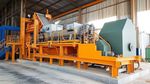
Dust Collectors: Guide to Dust Separation Methods
Dust collectors are systems designed to capture, separate, and collect airborne dust and particulate matter generated during industrial or commercial processes. They are used in woodworking, metal processing, cement production, mining, food processing, pharmaceuticals, chemicals, plastics, grain handling, construction-material processing, and many other environments.
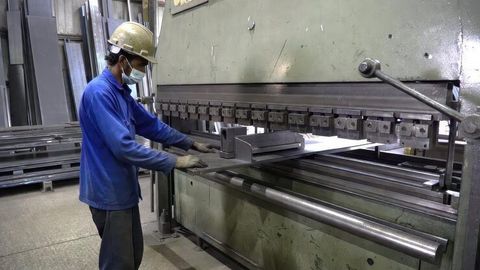
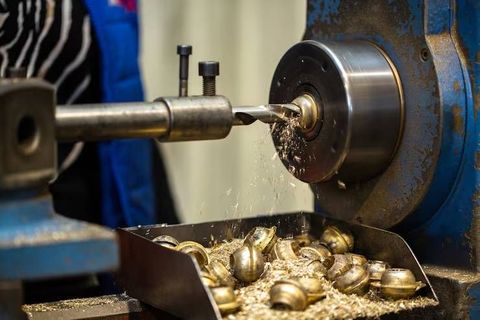
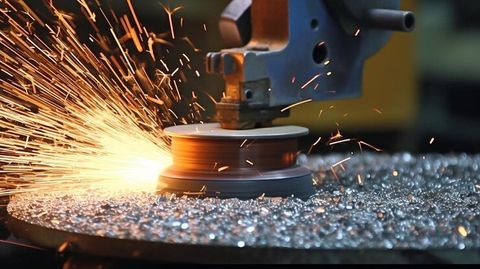
Dust can be generated during cutting, grinding, crushing, drilling, mixing, conveying, sanding, polishing, milling, and material handling. If it is not properly controlled, airborne particles can spread through a work area and may affect equipment, housekeeping, process conditions, and workplace air quality.
A dust collection system generally captures dust close to its source, transports the dust-laden air through ductwork, separates particles from the air, and releases cleaned air or directs it through additional treatment equipment.
How Dust Collection Works
A typical dust collection system has four main stages:
- Capture – A hood or extraction point draws dust from the generation area.
- Transport – A fan moves the dust-laden air through ductwork.
- Separation – A filter or other separation device removes particles from the air stream.
- Collection – The separated dust is stored in a hopper, bin, bag, drum, or another collection arrangement.
The design must account for particle size, dust characteristics, airflow, pressure drop, temperature, moisture, and the process generating the dust.
Main Dust Collector Components
Common components include:
- Collection hood
- Ductwork
- Blower or fan
- Filter elements
- Filter bags or cartridges
- Cyclone body
- Hopper
- Dust discharge equipment
- Valves
- Pressure gauges
- Differential-pressure sensors
- Control panel
- Cleaning mechanism
The exact arrangement depends on the dust type and the required separation performance.
Importance
Airborne Particle Control
Dust collectors help capture particulate matter before it spreads throughout a facility. Source capture is generally more effective than relying only on general room ventilation because the dust is intercepted close to where it is generated.
BIS machinery-safety material includes standards addressing the evaluation of airborne hazardous-substance emissions and the capture efficiency and separation efficiency of air-cleaning systems.
Equipment Protection
Dust can accumulate on machinery, motors, electrical equipment, sensors, ventilation components, and other surfaces. A properly designed collection system can reduce the amount of airborne material reaching these components.
This can support cleaner operating areas and reduce the accumulation of process residues.
Process Cleanliness
Industries such as food processing, pharmaceuticals, electronics, woodworking, and precision manufacturing can have specific cleanliness requirements. Dust collection helps control unwanted airborne and surface particles around process areas.
Fire and Explosion Considerations
Certain dusts can present fire or explosion hazards when dispersed in air. The characteristics of the material should therefore be evaluated before selecting a collection system.
BIS fire and life-safety material states that equipment or machinery generating or emitting combustible or explosive dust or fibres should have an adequate dust collecting and exhaust system.
The appropriate protection measures depend on the material, concentration, ignition sources, equipment arrangement, and applicable safety requirements.
Common Dust Separation Methods
| Separation Method | Main Principle | Typical Application |
|---|---|---|
| Cyclone | Centrifugal separation | Coarse and medium particles |
| Bag Filter | Filtration through fabric bags | Industrial dust collection |
| Cartridge Filter | Filtration through compact elements | Fine particulate collection |
| Wet Scrubber | Contact with liquid | Selected gases and particulate streams |
| Electrostatic Precipitator | Electrical particle charging | Large gas-flow applications |
| Inertial Separator | Particle momentum | Preliminary separation |
| Multi-Stage Collector | Combination of methods | High or varied dust loads |
No single method is suitable for every dust type. Systems are often selected according to particle size, dust loading, gas temperature, moisture, chemical characteristics, and required outlet conditions.
Recent Updates
Greater Focus on Airborne-Hazard Control
Modern machinery design increasingly considers the capture and separation of airborne hazardous substances as part of equipment safety.
BIS lists the IS 16806 series for evaluating airborne hazardous-substance emissions. The series includes methods for measuring pollutant emission rates, capture efficiency of exhaust systems, and separation efficiency by mass of air-cleaning systems.
These standards provide useful technical context for evaluating how effectively extraction and air-cleaning arrangements control airborne contaminants.
Improved Filter Monitoring
Differential-pressure monitoring has become an important feature in many dust collection systems. A sensor can measure the pressure difference across a filter and provide an indication of changing airflow resistance.
As dust accumulates on a filter, pressure drop can increase. Monitoring this value can help determine when cleaning or inspection may be required.
Automated Filter Cleaning
Many industrial collectors use automated cleaning systems. Common approaches include pulse-jet cleaning, mechanical shaking, or reverse-air cleaning.
Automated cleaning can help maintain airflow while allowing collected dust to fall into a hopper or collection container.
Compact Filter Technology
Cartridge filters can provide a large filtration area within a relatively compact housing. This can be useful where installation space is limited.
The appropriate filter media still depends on dust characteristics, temperature, moisture, chemical exposure, and the required filtration performance.
Multi-Stage Separation
Some systems combine multiple separation methods. For example, a cyclone can remove larger particles before air reaches a finer filter.
This arrangement can reduce the particle loading on the final filtration stage and may support more stable operation.
Digital Monitoring
Modern dust collection systems can incorporate sensors and control systems for:
- Airflow
- Filter differential pressure
- Fan speed
- Motor condition
- Hopper level
- Temperature
- Filter-cleaning cycles
- Alarm conditions
These measurements can help operators identify changes in system performance and support planned inspection.
Laws or Policies
Indian Standards
BIS provides standards relating to machinery safety, airborne hazardous-substance emissions, air-cleaning systems, and other equipment-related requirements.
The BIS Know Your Standard portal allows users to search standards using an Indian Standard number or a keyword such as a product name. It provides access to available standards, amendments, gazette notifications, testing information, laboratories, and related details. The portal was updated on May 8, 2026.
The appropriate standard should be identified according to the dust collector's design, application, and installation.
Machinery Safety
Dust collectors are mechanical systems containing fans, motors, moving parts, filters, access doors, electrical controls, and sometimes automated discharge equipment.
Risk assessment can therefore consider:
- Moving components
- Electrical hazards
- Pressure differences
- Access to filter chambers
- Dust accumulation
- Hot surfaces
- Fire hazards
- Explosion hazards
- Maintenance activities
- Unexpected equipment start-up
BIS machinery-safety publications provide standards related to risk reduction and the evaluation of airborne hazardous substances.
BIS Certification
BIS states that its certification system is generally voluntary. However, the Central Government can make compliance compulsory for particular products through Quality Control Orders.
Therefore, the presence of an Indian Standard does not automatically mean that every dust collector requires BIS certification. The specific equipment category and current government requirements should be checked.
BIS also explains that its licensing process starts with identifying the relevant Indian Standard and assessing manufacturing infrastructure, process controls, quality control, and testing capabilities.
Environmental Requirements
Industrial dust emissions can also be subject to environmental requirements depending on the industry, plant type, location, process, and applicable consent conditions.
The Central Pollution Control Board publishes technical guidance related to particulate and dust management. For example, CPCB has issued guidance covering dust mitigation measures associated with construction-material and construction-and-demolition waste handling.
Actual emission limits and control requirements should therefore be checked against the specific industry and current requirements of the relevant pollution-control authority.
Fire and Explosion Safety
Combustible dust requires additional attention. Material characteristics, dust concentration, ignition sources, static electricity, duct arrangement, filter location, and collection-container design can all influence the risk profile.
Where combustible or explosive dust is generated, the dust collection arrangement should be designed with the applicable fire-safety and process-safety requirements in mind.
Tools and Resources
Airflow Measurement
Airflow measurement helps determine whether sufficient air is being captured at extraction points.
Anemometers, airflow sensors, pitot-tube systems, and other measurement devices can be used according to the system design.
Differential-Pressure Gauges
Differential-pressure instruments can monitor the pressure difference across filters.
A change in pressure drop can indicate filter loading, airflow changes, blockage, or other operating conditions.
Particle Measurement
Particle counters and particulate monitoring instruments can provide information about airborne particle concentrations.
The appropriate instrument depends on particle size, concentration, material characteristics, and the measurement objective.
Filter Inspection
Filter inspection can include checking:
- Filter surface condition
- Filter loading
- Leakage
- Damage
- Sealing
- Cleaning performance
- Pressure drop
Filter condition is important because damaged or poorly sealed elements can reduce the effectiveness of the collection system.
Ductwork Inspection
Ductwork should be inspected for leakage, accumulation, corrosion, physical damage, and changes in airflow.
Poor duct design or excessive dust accumulation can affect system performance and may introduce additional safety concerns for certain materials.
BIS Standards Portal
The BIS Know Your Standard portal is a useful starting point for identifying relevant Indian Standards. Users can search by keyword or IS number and review available standards, amendments, laboratories, and testing information.
FAQs
What are dust collectors?
Dust collectors are systems that capture and separate airborne dust and particulate matter from an air stream. They commonly use filters, cyclones, wet separation, electrostatic methods, or combinations of these technologies.
How do dust collectors separate particles?
Dust collectors use physical or electrical separation principles. Cyclones use centrifugal force, filters trap particles on a media surface, wet scrubbers use liquid contact, and electrostatic precipitators use electrically charged particles and collection surfaces.
What are the main types of dust collectors?
Common types include cyclone collectors, bag filters, cartridge collectors, wet scrubbers, electrostatic precipitators, and multi-stage systems. The appropriate type depends on dust characteristics and process conditions.
What factors affect dust collector performance?
Important factors include particle size, dust loading, airflow, filter area, pressure drop, moisture, temperature, filter-media characteristics, duct design, and the condition of the collection equipment.
Why is dust collection important for industrial machinery?
Dust collection can control airborne particles, improve process cleanliness, protect equipment from dust accumulation, and support workplace and environmental control requirements. Certain combustible dusts may also require specific fire and explosion protection measures.
Conclusion
Dust collectors use different separation methods to capture airborne particles generated during industrial processes. Cyclones, bag filters, cartridge filters, wet scrubbers, and electrostatic systems each have different operating characteristics and application areas. Current equipment design increasingly combines effective particle separation with automated filter cleaning, differential-pressure monitoring, airflow measurement, and machinery-safety considerations. Selecting the appropriate technology requires attention to dust characteristics, process conditions, applicable standards, and environmental and safety requirements.