Cylindrical Grinding Machines: Discover Working Methods, Components, and Applications
Cylindrical grinding machines are precision machine tools used to remove small amounts of material from the outside or inside surfaces of round workpieces.
They use a rotating abrasive wheel to produce accurate dimensions, smooth surfaces, and controlled geometric shapes.
These machines are commonly associated with components such as shafts, pins, bearings, sleeves, bushings, rollers, and other cylindrical parts. They are used when ordinary cutting processes cannot provide the required surface finish or dimensional accuracy.
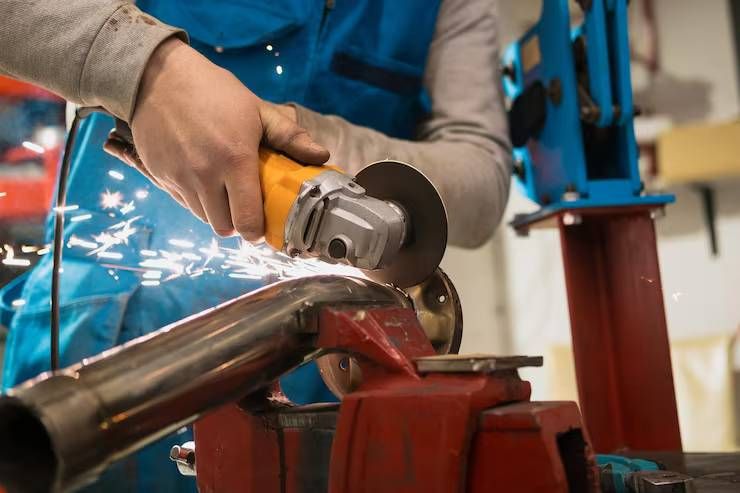
A typical cylindrical grinding machine includes:
- Grinding wheel and spindle
- Workholding device or chuck
- Headstock and tailstock
- Machine table
- Wheel dressing equipment
- Coolant system
- Control system
- Measuring or inspection equipment
The basic process involves rotating the workpiece while an abrasive wheel moves against its surface. Material is removed gradually rather than in large cuts. This controlled process makes precision grinding suitable for finishing operations.
How Cylindrical Grinding Works
The workpiece is secured between centers, in a chuck, or through another suitable holding arrangement. The grinding wheel rotates at a high speed while the workpiece may rotate at a lower controlled speed.
The wheel and workpiece are positioned according to the required grinding method. A small amount of material is removed during each pass.
Important operating factors include:
- Wheel speed
- Workpiece speed
- Feed rate
- Grinding depth
- Wheel specification
- Workpiece material
- Coolant flow
- Dressing frequency
Correct control of these factors helps reduce thermal damage, vibration, excessive wheel wear, and dimensional variation.
Main Types of Cylindrical Grinding Machines
Cylindrical grinders can be classified according to the type of surface being processed and how the workpiece is supported.
| Type | Main Purpose | Typical Application |
|---|---|---|
| External cylindrical grinder | Processes outside diameters | Shafts and pins |
| Internal cylindrical grinder | Processes internal diameters | Bores and sleeves |
| Universal cylindrical grinder | Handles multiple grinding operations | Complex cylindrical parts |
| Centreless grinder | Supports the workpiece without centers | High-volume round components |
| CNC cylindrical grinder | Uses programmed control | Precision and repeatable production |
| Plunge grinding machine | Makes radial infeed without traversing | Shoulders and defined sections |
The appropriate machine depends on the component geometry, required tolerance, material, production volume, and inspection requirements.
Why Cylindrical Grinding Matters
Precision manufacturing increasingly depends on components that must fit together accurately. Small dimensional differences can influence alignment, rotation, sealing, vibration, and component life.
Cylindrical grinding machines help address these requirements by providing controlled finishing operations.
They are important in several industries, including:
- Automotive manufacturing
- Aerospace manufacturing
- Bearing production
- Tool and die production
- Industrial machinery
- Medical equipment manufacturing
- Energy equipment
- General engineering
- Precision component manufacturing
CNC grinding machines are particularly relevant where repeated components require consistent dimensional control. Programmable controls can coordinate wheel movement, workpiece rotation, dressing cycles, and other operations.
Precision Grinding and Surface Quality
Precision grinding is not only about removing material. It also influences surface texture, roundness, straightness, concentricity, and dimensional consistency.
A grinding operation may be selected after turning or another machining process has produced a component close to its final dimensions.
The final grinding stage can address relatively small variations that remain after earlier operations.
Important inspection characteristics include:
- Diameter
- Roundness
- Cylindricity
- Concentricity
- Surface roughness
- Taper
- Straightness
Measurement equipment may include micrometers, bore gauges, roundness measuring systems, profilometers, and coordinate measuring machines.
Recent Developments in Cylindrical Grinding Technology
Cylindrical grinding technology continues to move toward automation, digital control, process monitoring, and integration with wider manufacturing systems.
In February 2026, India's Office of the Principal Scientific Adviser and Ministry of Heavy Industries held a stakeholder consultation at CMTI, Bengaluru, focused on advanced manufacturing systems. Discussions included CNC machine tools and controllers, advanced machines, robotics, testing and metrology infrastructure, and related technologies.
Developments visible during 2026 also include multi-process CNC cylindrical grinding systems. Some modern machines combine external and internal grinding operations within a coordinated setup, reducing the number of workpiece repositioning stages.
Other notable technology directions include:
- Automated workpiece loading
- Robotic material handling
- In-process measurement
- Digital machine monitoring
- Automatic wheel dressing
- Advanced CNC controls
- Multi-axis grinding
- Energy monitoring
- Data-based process analysis
These developments reflect a broader movement toward connected and automated manufacturing rather than isolated machine operation.
Safety, Accuracy, and Process Control
Grinding involves rotating wheels, high speeds, abrasive particles, moving components, and potentially hot workpieces. Safety therefore needs to be considered alongside productivity and accuracy.
Basic precautions include:
- Inspecting grinding wheels before use
- Using appropriate guards
- Following the specified wheel speed
- Securing the workpiece correctly
- Maintaining suitable clearance
- Using appropriate eye and face protection
- Controlling airborne particles where necessary
- Keeping the machine area orderly
- Following the manufacturer's operating instructions
- Inspecting equipment regularly
Wheel selection is also important. The abrasive type, grade, bond, structure, dimensions, and permitted operating speed should match the intended application.
Laws, Standards, and Policies in India
In India, cylindrical grinding equipment can be affected by machinery safety requirements, occupational safety rules, and relevant Indian Standards.
The Machinery and Electrical Equipment Safety (Omnibus Technical Regulation) Order, 2024 was issued by the Ministry of Heavy Industries on August 28, 2024. The order states that it comes into force one year after publication in the Official Gazette and establishes a regulatory framework for specified machinery and electrical equipment.
The Bureau of Indian Standards has also published machine-category guidance under this framework for metal-cutting machines. The guidance covers technical documentation, machine-category requirements, marking, and conformity-related procedures.
Grinding-wheel safety is another important area. BIS records IS 1991 provisions covering definitions, general machine requirements, safety guards, inspection and mounting, and standard speeds for abrasive grinding wheels.
The Occupational Safety, Health and Working Conditions Code, 2020 also identifies matters such as machinery fencing, work near moving machinery, revolving machinery, protection of eyes, and safety of buildings and machinery.
Manufacturers and industrial users should verify the latest applicable requirements because regulatory applicability can depend on machine category, workplace conditions, and current notifications.
Tools and Resources for Cylindrical Grinding
Several resources can help engineers, students, technicians, and manufacturing teams understand cylindrical grinding.
BIS Know Your Standard: The BIS platform allows users to search Indian Standards by standard number or keyword and access related documents and information.
Grinding parameters calculators: Online calculators can help estimate wheel speed, surface speed, feed relationships, and related machining parameters. Results should always be checked against the machine, wheel, workpiece, and manufacturer's specifications.
Metrology tools: Micrometers, bore gauges, profilometers, roundness testers, and coordinate measuring machines help verify the finished component.
CNC simulation software: Simulation tools can help examine tool paths, machine movements, interference risks, and programmed grinding sequences before actual machining.
Machine manuals and technical documentation: Manufacturer documentation remains an important reference for spindle limits, wheel specifications, setup procedures, maintenance intervals, alarms, and operating instructions.
Practical Factors When Selecting a Grinding Process
Choosing a cylindrical grinding method requires more than identifying the workpiece as round.
Consider:
- Outside or inside diameter
- Workpiece length
- Material hardness
- Required dimensional tolerance
- Surface roughness requirement
- Required roundness
- Workholding method
- Production quantity
- Automation requirements
- Inspection method
- Wheel specification
- Coolant requirements
A simple process-selection table can help:
| Requirement | Suitable Consideration |
|---|---|
| Outside diameter | External cylindrical grinding |
| Internal bore | Internal cylindrical grinding |
| Multiple operations | Universal grinding |
| Repeated round components | Centreless grinding |
| Programmable precision | CNC cylindrical grinding |
| Short defined section | Plunge grinding |
The correct process should be established through engineering requirements rather than machine type alone.
Frequently Asked Questions
What is a cylindrical grinding machine used for?
It is mainly used to finish cylindrical surfaces and achieve controlled dimensions, geometry, and surface quality on round components.
What is the difference between external and internal grinding?
External grinding processes the outside diameter of a component, while internal grinding processes an internal bore or cylindrical opening.
Why are CNC cylindrical grinding machines important?
CNC controls allow grinding movements and process sequences to be programmed and repeated with a high level of consistency when the process is properly set and verified.
What materials can be processed by cylindrical grinding?
Many metallic materials can be ground, including various steels, hardened steels, cast materials, and other engineering alloys. The abrasive wheel and grinding parameters must match the material.
What are the main safety concerns?
Major concerns include grinding-wheel failure, contact with rotating components, improper workholding, excessive wheel speed, airborne particles, and inadequate guarding. Appropriate safety procedures and applicable standards should always be followed.
Conclusion
Cylindrical grinding machines remain important precision machine tools because they can produce controlled dimensions, surface finishes, and geometric accuracy on round components.
Modern CNC systems are expanding the role of cylindrical grinding through programmable operation, automated handling, measurement integration, process monitoring, and multi-process capabilities. At the same time, safety standards and regulatory requirements remain essential considerations.