Custom Engagement Rings: Explore Personalized Designs and Distinctive Style Options
Custom engagement rings allow center stones, settings, metals, bands, and details to be selected around a personalized design. Explore distinctive styles, diamond shapes, settings, and current bridal trends.
Context
Understanding Custom Engagement Rings
Custom engagement rings are designed around selected preferences rather than following one fixed ring configuration. The design can be developed around a particular center diamond or gemstone, metal, setting structure, band profile, or decorative detail.
Customization can range from small changes to an existing design concept to a completely individualized ring structure. Some designs focus on a distinctive center stone, while others emphasize unusual bands, mixed metals, hidden details, or symbolic elements.
The process usually involves several connected decisions. Stone selection affects the setting, the setting influences the band structure, and the overall proportions determine how the finished ring appears when viewed from different angles.
Main Components
A custom engagement ring can include:
Center diamond or gemstone
Side stones or accent diamonds
Metal type
Ring setting
Band profile
Prong or bezel structure
Gallery or hidden details
Engraving
Mixed-metal elements
Decorative textures
The combination of these elements allows a ring to have a more individualized appearance.
Custom Design vs Standard Designs
A standard ring generally follows an established configuration with predetermined proportions and components.
A custom design provides greater flexibility in selecting individual elements. For example, an oval diamond can be combined with a sculptural band, a hidden halo, or a particular metal combination rather than following one predetermined setting.
Customization does not necessarily mean every component must be unique. A ring can use a familiar setting while incorporating a personalized center stone or band detail.
Design Planning
The design process generally begins with the overall visual direction.
Some people start with a diamond shape, while others begin with a metal preference, a vintage reference, an existing family jewelry element, or a particular band silhouette.
Creating a clear design concept before selecting individual components can help maintain consistency between the center stone, setting, band, and accent details.
Importance
Center Stone Selection
The center stone usually has the strongest visual influence on an engagement ring.
Common diamond shapes include round, oval, cushion, emerald, radiant, pear, and marquise. Each shape has different proportions and interacts differently with the surrounding setting.
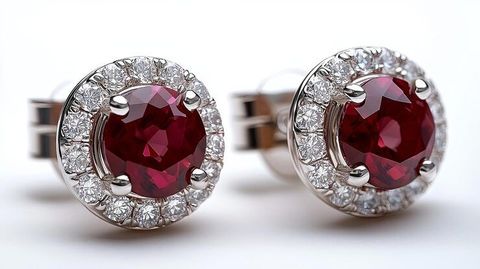
Colored gemstones can also become the primary stone in a custom engagement ring. Sapphires, rubies, emeralds, and other gemstones can create a different color and visual character.
Diamond Shape and Setting Compatibility
The setting should be designed around the dimensions and outline of the selected stone.
An oval diamond requires a different structure from an emerald-cut diamond. Pear and marquise stones also require attention to their pointed ends and directional proportions.
| Center Stone | Suitable Design Direction | Common Setting Consideration |
|---|---|---|
| Round | Classic or contemporary | Symmetrical prongs |
| Oval | Elongated | Contoured prongs |
| Cushion | Soft and rounded | Four or six-prong structures |
| Emerald | Geometric | Corner protection |
| Radiant | Angular | Structured prong arrangement |
| Pear | Distinctive and directional | Protection around point |
| Marquise | Elongated | End protection |
Metal Selection
Custom engagement rings can be produced using platinum, white gold, yellow gold, rose gold, and other appropriate jewelry metals.
Platinum can create a naturally white appearance, while white gold provides another white-metal option. Yellow gold introduces a warmer visual contrast, particularly around white diamonds.
Rose gold can create a softer color relationship and can complement vintage-inspired or contemporary designs.
Band Profile
The band is an important part of the ring's overall character.
Common band profiles include:
Straight bands
Tapered bands
Knife-edge bands
Rounded bands
Flat bands
Split-shank designs
Sculptural bands
Pavé bands
The band width and shape should correspond with the size of the center stone and setting.
Setting Styles
The setting determines how the center stone and accent stones are positioned and secured.
Common setting approaches include:
Prong settings
Bezel settings
Pavé settings
Micro-pavé settings
Cathedral settings
Halo settings
Hidden halo structures
East-west settings
A custom ring can combine several of these elements into one design.
Personal Details
Personalization can include engraving, hidden gemstones, meaningful dates, initials, symbolic shapes, or design elements inspired by shared experiences.
These details can be placed inside the band, beneath the center stone, along the gallery, or within the setting structure.
The most subtle personalized elements may not be visible from the top but can add meaning to the overall design.
Proportion and Balance
A custom ring should be considered as a complete composition.
A very large center stone with a narrow band creates a different visual relationship from a smaller center stone with a wide sculptural band.
The dimensions of the setting, band, accent stones, and center stone should work together rather than being selected independently.
Recent Updates
Individualized Jewelry Design
Current 2026 jewelry coverage shows growing attention to distinctive, personalized designs and jewelry with a strong individual identity. Contemporary designers are experimenting with sculptural forms, unusual proportions, historical references, and different gemstone arrangements.
Custom engagement rings naturally fit this direction because individual components can be combined into a specific design rather than following a single standard format.
Sculptural Ring Structures
Sculptural bands and architectural profiles are gaining attention in contemporary engagement jewelry.
Designs can use curved shoulders, knife-edge profiles, unusual gallery structures, or strong geometric forms to make the band itself an important visual feature.
This approach can create a distinctive ring without relying on a large number of accent stones.
Vintage and Historical References
Historical jewelry continues to influence contemporary custom designs.
Art Deco geometry, antique-style diamond cuts, engraved details, milgrain textures, signet-inspired structures, and vintage metal colors can be incorporated into modern ring designs.
Recent 2026 jewelry coverage also shows designers combining historical references with modern proportions and materials.
Alternative Gemstones
Interest in gemstones beyond traditional diamonds is becoming more visible in contemporary jewelry.
Recent market coverage points to continued attention toward distinctive colored gemstones, including spinels, garnets, tourmalines, kunzite, peridot, and unheated sapphires. Scarcity and provenance are also becoming more significant considerations for certain natural gemstones.
A custom engagement ring can incorporate a colored gemstone as the center stone or as an accent.
Hidden Halos
A hidden halo places small accent stones beneath the center stone rather than forming a visible frame around its perimeter.
This arrangement can add detail from side angles while preserving a relatively simple appearance from above.
Hidden halos can be incorporated into custom designs alongside unusual center shapes, sculptural bands, or mixed-metal structures.
Mixed Metals
Combining different metal colors can create contrast within one ring.
A white-metal setting can be paired with a yellow-gold band, for example. This allows the diamond setting and band to have visually distinct roles while remaining part of one design.
Laboratory-Grown Diamonds
Custom engagement rings can incorporate laboratory-grown diamonds where appropriate.
When a laboratory-grown diamond is used, its origin should be clearly identified in jewelry descriptions. The FTC Jewelry Guides emphasize truthful representation of diamond type, quality, characteristics, and origin.
Digital Design and Visualization
Digital design tools can help visualize a ring before physical production.
Three-dimensional modeling can show the relationship between the center stone, setting, band, and accent elements. This can be particularly useful when the design includes unusual proportions or multiple structural components.
Laws or Policies
Accurate Jewelry Descriptions
Jewelry descriptions should accurately represent the type, quality, size, weight, composition, treatment, origin, and other material characteristics of the jewelry.
The U.S. Federal Trade Commission's Jewelry Guides address truthful representation of gemstones, laboratory-created stones, precious metals, and other jewelry materials.
This is particularly relevant to custom rings because a highly individualized design may contain several different materials.
Diamond Origin
Diamond origin should be clearly identified when relevant.
Natural diamonds, laboratory-grown diamonds, treated diamonds, and diamond simulants are distinct categories. Descriptions should not create confusion between them. FTC guidance specifically addresses disclosure and accurate representation for diamonds and gemstones.
Diamond Documentation
A grading report can document characteristics of an individual diamond.
Depending on the stone and report, information may include:
Carat weight
Color
Clarity
Measurements
Cut-related information
Polish
Symmetry
Fluorescence
Identification number
Origin information where applicable
For a custom ring containing multiple significant stones, documentation can help keep the individual components clearly identified.
Gold Hallmarking in India
Gold used in custom engagement rings in India falls within the applicable BIS hallmarking framework.
BIS states that gold and silver are currently covered by its Hallmarking Scheme. Hallmarking records the proportion of precious metal in an article and provides an indication of purity or fineness.
HUID Identification
Hallmarked gold jewelry in India includes a Hallmark Unique Identification number, commonly called HUID.
BIS describes HUID as a unique six-character alphanumeric identification associated with each hallmarked gold item. The number can be verified using the BIS Care application.
Current Hallmarking Updates
India's mandatory hallmarking framework continues to be updated through amendments and expanded district coverage.
BIS's current mandatory hallmarking page lists amendments issued in 2026, including updates dated March, April, and August 2026.
Therefore, current BIS requirements should be checked when evaluating a custom gold engagement ring in India.
Tools and Resources
Diamond Grading Reports
Diamond grading reports are useful for documenting important characteristics of the center stone.
A report can help distinguish one diamond from another and provide standardized information for design records.
CAD Design
Computer-aided design can represent the ring digitally before production.
CAD visualization can help assess:
Band width
Setting height
Stone placement
Prong position
Gallery structure
Halo proportions
Wedding-band clearance
3D Visualization
Three-dimensional renderings can show how a custom ring may appear from the top, side, and angled views.
This can be useful for complex designs where the final appearance cannot be easily understood from a simple sketch.
Design Comparison
| Custom Element | Design Choices | Main Consideration |
|---|---|---|
| Center stone | Diamond or gemstone | Shape and proportions |
| Metal | Platinum, white, yellow, rose gold | Color and structure |
| Setting | Prong, bezel, halo | Stone placement |
| Band | Straight, tapered, sculptural | Overall balance |
| Accent stones | Round, baguette, pear, etc. | Visual contrast |
| Gallery | Open, detailed, hidden | Side profile |
| Engraving | Text or symbols | Personal meaning |
| Finish | Polished, textured, milgrain | Surface appearance |
Ring Size Measurement
Accurate ring sizing is particularly important for custom designs because the finished ring may contain a specific band width and setting structure.
Finger measurements can vary during the day and with temperature. Professional measurement can help establish an appropriate size before the final ring is produced.
Wedding-Band Planning
The engagement ring should be considered alongside a potential wedding band.
A wide setting, halo structure, or low center stone can affect how closely a wedding band sits against the engagement ring.
A curved, contoured, or custom-shaped wedding band may be appropriate for some designs.
Stone Security
Custom rings may contain unusual settings or multiple accent stones, so stone security should be considered during design development.
Prongs, bezels, and other retaining structures should be proportioned appropriately for the selected stones and intended ring profile.
Care and Maintenance
Care requirements depend on the metal, gemstones, treatments, and setting.
Soft gemstones and delicate structures may require different handling from diamond-centered designs. Cleaning methods should follow appropriate jewelry-care instructions for the materials used.
Custom Design Checklist
A practical design process can include:
Establish the overall design direction.
Select the center stone.
Confirm diamond or gemstone documentation.
Choose the metal.
Select the setting structure.
Determine the band profile.
Add accent stones or hidden details.
Review CAD or three-dimensional designs.
Confirm ring size.
Check compatibility with a future wedding band.
Review care requirements.
Confirm the final material specifications.
FAQs
What are custom engagement rings?
Custom engagement rings are individually designed rings in which elements such as the center stone, setting, metal, band, accent stones, and decorative details can be selected or modified according to a specific design concept.
How are custom engagement rings designed?
Custom engagement rings can be developed through sketches, digital CAD models, three-dimensional visualizations, and physical design reviews. The process generally connects the center stone, setting, metal, band, and decorative elements.
Can custom engagement rings use colored gemstones?
Yes. Sapphires, rubies, emeralds, and other gemstones can be used as center stones or accent stones. Distinctive gemstones can create a different color palette from traditional diamond-centered designs.
Can laboratory-grown diamonds be used in custom engagement rings?
Yes. Laboratory-grown diamonds can be incorporated into custom engagement-ring designs. Their laboratory-grown origin should be accurately identified in jewelry descriptions in accordance with applicable disclosure requirements.
What should be considered when designing a custom engagement ring?
Important considerations include the center stone, diamond or gemstone documentation, metal, setting, band proportions, accent stones, ring size, wedding-band compatibility, stone security, and long-term care.
Conclusion
Custom engagement rings provide flexibility in combining center stones, settings, metals, bands, accent stones, and personalized details into an individual design. Current jewelry trends emphasize sculptural forms, distinctive gemstones, vintage references, mixed metals, hidden details, and greater design individuality. Digital modeling and gemstone documentation can help clarify the structure and specifications before production. Accurate material descriptions and applicable hallmarking requirements are also important when documenting a finished ring.