Commercial High-Speed Liquid & Tablet Packaging Machinery Explanation for Production Systems
Commercial high-speed liquid and tablet packaging machinery refers to automated equipment designed to prepare, fill, close, label, and package liquid or tablet products in organized production environments.
These systems developed from the need to handle larger production volumes while maintaining consistent packaging procedures and reducing the amount of repetitive manual handling.
Liquid and tablet products have different physical characteristics, so their packaging systems are designed around specific material behaviors. Liquids may flow easily, contain suspended particles, or have varying thickness, while tablets require controlled counting, feeding, and placement into containers or other packaging formats.
How Packaging Systems Developed
Traditional packaging depended heavily on manual filling, counting, sealing, and labeling. As manufacturing volumes increased, mechanical equipment was introduced to make individual stages more consistent and easier to coordinate.
Modern systems can combine several stages within one production line. Depending on the application, a line may include product feeding, container handling, filling or counting, closure placement, sealing, labeling, inspection, and packaging into secondary containers.
Liquid and Tablet Packaging Differences
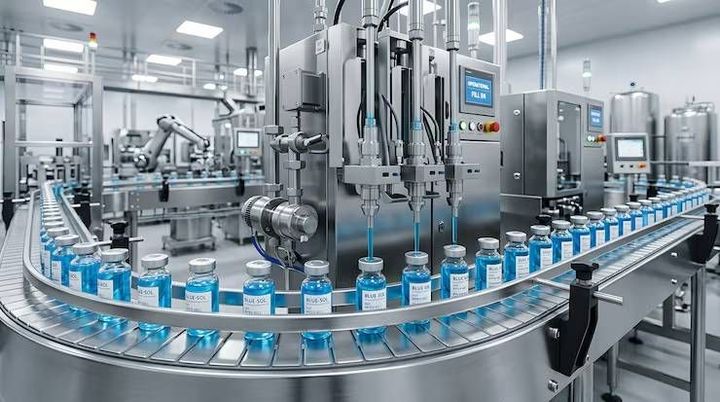
Liquid packaging generally focuses on controlled product flow. Pumps, filling nozzles, reservoirs, and sensors can work together to place a defined quantity into each container. The equipment configuration depends on factors such as liquid thickness, container design, and filling method.
Tablet packaging requires different mechanisms because solid units must be counted or positioned before entering their final containers or blister formats. Feeding systems, counting mechanisms, chutes, sensors, and container-handling equipment may work together to maintain a controlled sequence.
Importance
Commercial high-speed liquid and tablet packaging machinery matters because packaging is an important part of manufacturing, distribution, storage, and product identification. Consistent packaging helps production teams maintain organized workflows while reducing unnecessary variation between individual packages.
The subject affects manufacturers, packaging personnel, warehouse teams, quality-control groups, distributors, and consumers. Although the machinery itself operates in production environments, its performance can influence how products are identified, protected, transported, and presented to users.
Production Consistency
Automated packaging equipment can repeat defined mechanical processes according to programmed settings. This can help maintain consistency in filling, tablet counting, container positioning, closure placement, and labeling.
Consistency does not mean that every production line operates identically. Equipment settings, product properties, container dimensions, environmental conditions, and maintenance practices can all influence packaging results.
Product Protection and Identification
Packaging provides a physical barrier between a product and its surrounding environment. Depending on the packaging format, containers and closures may help protect contents from moisture, contamination, handling, or accidental opening.
Labels and printed information also help identify packaged products. Typical information can include product identification, batch references, handling information, dates, and other details required for the applicable product category and market.
Operational Coordination
High-speed packaging systems normally involve several connected stages. If one stage operates at a different rate from another, products can accumulate, containers can become misaligned, or downstream equipment can remain idle.
For this reason, packaging lines are often designed as coordinated systems rather than as isolated machines. Sensors, conveyors, control systems, and inspection equipment can help synchronize different stages.
| Packaging area | Common function | Typical equipment |
|---|---|---|
| Liquid filling | Places measured liquid into containers | Pumps, nozzles, filling heads |
| Tablet handling | Counts or directs tablets | Feeders, counters, chutes |
| Container handling | Moves containers through stages | Conveyors, guides, indexing systems |
| Closing | Positions and secures closures | Capping or sealing mechanisms |
| Labeling | Applies identification labels | Labeling units and sensors |
| Inspection | Checks selected packaging characteristics | Cameras, sensors, inspection systems |
Recent Updates
From 2024 through 2026, packaging automation has continued moving toward greater integration, monitoring, flexibility, and data collection. The general direction has been toward systems that can coordinate multiple packaging stages while providing operators with more information about equipment performance and production conditions.
Greater Automation and Monitoring
Modern packaging machinery increasingly incorporates sensors and digital control interfaces. These systems can monitor factors such as container position, filling sequences, machine status, and selected operating conditions.
Digital monitoring can also make it easier for operators to identify interruptions and review equipment conditions. The exact capabilities vary according to machine design, production requirements, and control architecture.
Flexible Production Formats
Manufacturers may need to handle different container sizes, closures, labels, or product formats on the same production floor. This has encouraged the development of packaging equipment with adjustable guides, programmable controls, and changeover features.
For liquid systems, flexibility may involve different bottle dimensions or filling characteristics. For tablet systems, it may involve changes in tablet size, container format, counting configuration, or packaging layout.
Data and Connected Equipment
Industrial connectivity has become increasingly relevant to packaging operations. Equipment can exchange information with supervisory systems and manufacturing software, depending on the installation.
Collected information may support production monitoring, maintenance planning, quality records, and equipment analysis. However, connected machinery also requires appropriate access controls, network management, software maintenance, and data protection practices.
Resource and Material Efficiency
Current packaging development also considers efficient use of materials, energy, and production inputs. Equipment designers may focus on accurate filling, controlled product handling, reduced material waste, and efficient machine operation.
These developments do not eliminate the need for appropriate machine setup and human oversight. Packaging performance still depends on suitable equipment selection, product characteristics, operating procedures, and regular inspection.
Tools and Resources
Understanding packaging machinery can be easier when technical information is combined with practical reference materials. Several types of resources can help readers understand how different systems operate.
Equipment Specifications
Technical specification sheets can provide information about container dimensions, production rates, filling ranges, power requirements, machine dimensions, and compatible packaging formats. These documents are useful for understanding the operating boundaries of particular equipment.
Production Calculators
Basic production calculations can estimate theoretical throughput from container counts, cycle times, filling heads, or tablet-counting rates. Actual production capacity can differ because of changeovers, inspection requirements, machine interruptions, product characteristics, and operator procedures.
Packaging Standards and Regulatory Resources
Government and industry regulatory websites can provide information about packaging, labeling, manufacturing practices, and product-specific requirements. The applicable rules depend on the product category and country or region.
Digital Maintenance Records
Maintenance templates can record inspection activities, machine adjustments, component replacement, cleaning procedures, and operational observations. Organized records can help production teams understand recurring equipment conditions and maintenance history.
Process Flow Diagrams
A simple process flow can show how containers or products move through a packaging line:
Product supply → Filling or counting → Container handling → Closing → Labeling → Inspection → Secondary packaging
The exact sequence varies according to the product and packaging format.
FAQs
What is commercial high-speed liquid and tablet packaging machinery?
It is a group of automated machines used to handle packaging processes for liquid and tablet products. Depending on the system, these processes can include filling, counting, closing, labeling, inspection, and product transfer.
How does liquid packaging machinery work?
Liquid packaging machinery generally transfers a controlled quantity of liquid into containers through filling mechanisms. Pumps, valves, nozzles, sensors, and control systems may be used depending on the liquid and container format.
How does tablet packaging machinery count products?
Tablet packaging machinery commonly uses feeding and counting mechanisms to direct individual tablets through controlled pathways. Sensors or electronic counting systems can detect tablets and determine when the required quantity has entered a container or packaging format.
What recent trends affect commercial high-speed packaging machinery?
Recent trends include increased automation, digital monitoring, flexible machine configurations, connected equipment, and greater attention to material and energy efficiency. The specific features available depend on the equipment design and production environment.
What factors influence packaging machine performance?
Performance can be influenced by product properties, container dimensions, machine configuration, operating settings, maintenance, environmental conditions, and the coordination of different packaging stages.
Conclusion
Commercial high-speed liquid and tablet packaging machinery combines mechanical handling, controlled filling or counting, container movement, closing, labeling, and inspection into organized production processes. Liquid and tablet products require different equipment approaches because their physical characteristics and handling requirements differ. From 2024 through 2026, packaging systems have continued developing around automation, digital monitoring, flexibility, connectivity, and resource efficiency. Understanding these functions provides useful context for how modern packaging lines operate.