Carbon Capture Equipment: Guide to Types, Components, and Practical Insights
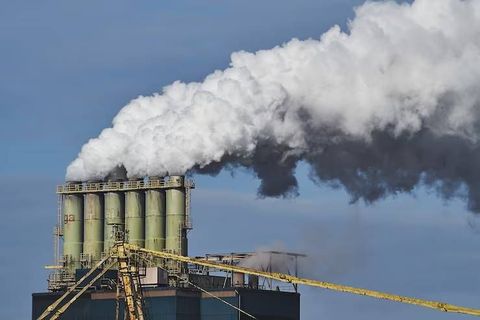
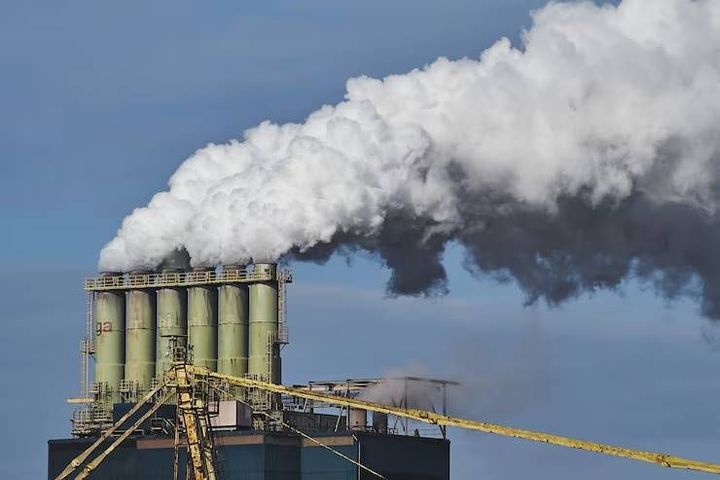
Carbon capture equipment is a group of industrial machines and systems designed to separate carbon dioxide (CO₂) from gases produced by industrial processes, power generation, and other large emission sources. The captured CO₂ can then be compressed, transported, stored underground, or used in selected industrial applications.
Carbon capture equipment is commonly associated with carbon capture, utilization, and storage (CCUS) and carbon capture and storage (CCS) systems. These technologies are being developed for facilities where reducing emissions directly at the production stage can be technically difficult.
A typical carbon capture plant contains several connected stages. Flue gas or process gas first enters a separation system, where CO₂ is removed from the gas stream. The captured CO₂ then passes through purification, dehydration, compression, and transportation equipment.
Where Is Carbon Capture Equipment Used?
Carbon capture equipment can be integrated into industries with concentrated CO₂ emissions. Common applications include:
Cement manufacturing
Steel production
Natural gas processing
Hydrogen production
Refining
Chemical manufacturing
Waste-to-energy facilities
Biomass-based industrial plants
Selected power-generation facilities
The equipment configuration depends heavily on the gas composition, CO₂ concentration, temperature, pressure, and operating conditions of the facility.
Main Carbon Capture Approaches
There are three major approaches used for capturing CO₂ from industrial processes.
| Capture Approach | General Principle | Common Application |
|---|---|---|
| Post-combustion capture | Removes CO₂ from exhaust gases after combustion | Power and industrial plants |
| Pre-combustion capture | Separates CO₂ before combustion or final fuel conversion | Hydrogen and gasification systems |
| Oxy-fuel combustion | Uses oxygen-rich combustion to create a CO₂-rich exhaust stream | Selected industrial processes |
Post-combustion systems are particularly relevant for facilities that already have operating combustion equipment because the capture system can potentially be integrated with existing processes.
Importance
Reducing Industrial CO₂ Emissions
Industrial processes can produce substantial quantities of CO₂, particularly where fossil fuels or carbon-containing raw materials are involved. Carbon capture equipment provides a method for separating part of that CO₂ before it reaches the atmosphere.
The effectiveness of a capture system depends on several factors, including capture rate, energy consumption, equipment configuration, gas composition, operating conditions, and downstream CO₂ handling.
Supporting Difficult-to-Decarbonize Industries
Some industrial processes generate CO₂ not only from fuel combustion but also from chemical reactions. Cement production is an important example because limestone releases CO₂ during clinker production.
In these situations, carbon capture can address process-related emissions that may remain even when other energy-efficiency measures are introduced.
Improving CO₂ Handling
Capturing CO₂ is only one part of the overall process. After separation, the gas generally requires treatment to remove water and impurities before compression and transportation.
This creates demand for integrated equipment covering:
Gas cooling
Gas cleaning
CO₂ separation
Solvent regeneration
CO₂ dehydration
CO₂ compression
Purification
Measurement and monitoring
Pipeline or storage preparation
Energy and Operational Considerations
Carbon capture systems can require significant energy, particularly during solvent regeneration and CO₂ compression. This additional energy requirement is often called the energy penalty.
Engineers therefore evaluate capture equipment together with the existing industrial process. Heat integration, equipment efficiency, solvent selection, and process optimization can influence the overall energy requirement.
Recent Updates
Development of Lower-Energy Capture Systems
Research and industrial development continue to focus on reducing the energy required to separate CO₂. Conventional amine-based systems remain an important technology, while newer solvents, membranes, solid sorbents, and other separation methods are being developed.
The objective is to increase CO₂ separation performance while reducing regeneration energy and equipment requirements.
Membrane-Based Carbon Capture
Membrane systems use specially designed materials that allow certain molecules to pass through more readily than others.
For carbon capture, membranes can separate CO₂ from gases based on differences in permeability and pressure. They can have a compact physical footprint and may be useful for specific gas compositions.
However, membrane performance depends strongly on pressure, gas composition, selectivity, and the characteristics of the membrane material.
Solid Sorbent Technology
Solid sorbents capture CO₂ on the surface or within the structure of a solid material. When conditions such as temperature or pressure are changed, the sorbent can release the captured CO₂.
Different sorbent materials are being investigated for improved capacity, selectivity, durability, and regeneration performance.
Direct Air Capture Equipment
Direct air capture, or DAC, removes CO₂ directly from ambient air rather than from a concentrated industrial exhaust stream.
Because atmospheric CO₂ is relatively dilute, DAC equipment faces different technical requirements from industrial point-source capture systems. It generally requires large volumes of air to pass through contactors containing a chemical or solid capture material.
Digital Monitoring and Process Control
Modern carbon capture facilities increasingly use sensors, process control systems, data analytics, and automated monitoring.
These systems can monitor variables such as:
CO₂ concentration
Gas flow
Temperature
Pressure
Solvent condition
Compressor performance
Moisture content
Equipment operating status
Digital monitoring can help operators identify changes in process performance and support maintenance planning.
Laws or Policies
International Climate Frameworks
Carbon capture projects operate within national environmental regulations and broader climate-policy frameworks. The legal requirements vary significantly by country and by the type of facility involved.
International climate agreements have increased attention on reducing greenhouse-gas emissions, while individual governments establish rules covering emissions, industrial operations, CO₂ transportation, underground storage, environmental protection, and monitoring.
CO₂ Storage Regulations
Geological CO₂ storage requires careful assessment of the storage formation and surrounding geology. Regulatory frameworks may address:
Site characterization
Injection permits
Well construction
Monitoring
Leakage management
Environmental protection
Measurement and reporting
Long-term storage responsibilities
Industrial Safety Requirements
Carbon capture facilities handle gases, chemicals, high-pressure equipment, rotating machinery, and heat-transfer systems. Appropriate industrial safety requirements therefore apply to equipment design and operation.
Relevant standards may include frameworks from organizations such as ISO, ASME, API, IEC, and national regulatory authorities, depending on the equipment and project location.
Emissions Measurement and Reporting
Carbon capture projects generally require reliable measurement of captured, transported, utilized, or stored CO₂. Accurate monitoring helps demonstrate system performance and supports regulatory reporting where applicable.
The exact requirements depend on the jurisdiction, project type, and destination of the captured CO₂.
Tools and Resources
CO₂ Capture Absorbers
Absorber columns are widely used in solvent-based capture systems. Flue gas enters the absorber and contacts a liquid solvent that selectively captures CO₂.
The treated gas exits from the upper section, while the CO₂-rich solvent moves toward the regeneration stage.
Strippers and Regeneration Units
The CO₂-rich solvent enters a stripper or regeneration column. Heat is applied to release the absorbed CO₂ so that the solvent can return to the absorber.
The regenerated solvent is recycled through the capture process.
Gas Coolers and Heat Exchangers
Temperature control is important throughout a carbon capture plant. Heat exchangers transfer thermal energy between process streams and can help reduce unnecessary energy consumption.
CO₂ Compressors
Captured CO₂ normally needs compression before transportation or storage. Multi-stage compressors may be used because the pressure increase can be substantial.
Intercoolers can be installed between compression stages to manage temperature and improve process operation.
Dehydration Systems
Water must often be removed from compressed CO₂ before pipeline transportation or certain storage applications.
Dehydration equipment may use technologies such as molecular sieves or glycol-based systems, depending on the project requirements.
CO₂ Purification Units
Captured CO₂ may contain water, nitrogen, oxygen, sulfur compounds, hydrocarbons, or other impurities. Purification systems help bring the CO₂ stream within the required specification for transportation, utilization, or storage.
Monitoring and Measurement Equipment
Instrumentation is essential for monitoring the capture process. Typical equipment includes:
Pressure sensors
Temperature sensors
Flow meters
Gas analyzers
CO₂ concentration analyzers
Moisture analyzers
Control valves
Data acquisition systems
Carbon Capture Equipment Selection Factors
| Selection Factor | Why It Matters |
|---|---|
| CO₂ concentration | Influences separation requirements |
| Gas temperature | Affects capture materials and equipment |
| Gas pressure | Influences separation and compression |
| Gas impurities | Determines pretreatment and purification needs |
| Capture target | Determines equipment capacity |
| Energy availability | Influences system integration |
| CO₂ destination | Determines purification and compression requirements |
| Plant configuration | Determines installation and integration approach |
Practical Integration
Carbon capture equipment should be evaluated as part of the entire industrial process rather than as an isolated machine.
Engineers typically examine the available space, gas composition, heat sources, utility requirements, equipment connections, control systems, maintenance access, and downstream CO₂ infrastructure.
For an existing facility, integration can be more complicated because the capture plant must operate alongside established production equipment. New facilities may have greater flexibility to incorporate capture systems into the original process design.
FAQs
What Is Carbon Capture Equipment Used For?
Carbon capture equipment separates CO₂ from industrial gases or, in some technologies, from ambient air. The captured CO₂ can then undergo purification, compression, transportation, utilization, or geological storage.
What Are the Main Types of Carbon Capture Equipment?
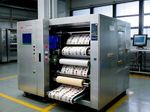
Major equipment categories include absorbers, strippers, membrane modules, solid-sorbent contactors, gas coolers, heat exchangers, compressors, dehydration units, purification systems, and monitoring equipment.
How Does Post-Combustion Carbon Capture Work?
Post-combustion capture treats exhaust gas after fuel combustion. In a solvent-based system, the gas enters an absorber where CO₂ is captured by the solvent. The solvent is subsequently regenerated, producing a concentrated CO₂ stream.
Why Is CO₂ Compression Necessary?
Captured CO₂ occupies a large volume at low pressure. Compression increases its density, making transportation and certain storage or utilization processes more practical.
What Industries Use Carbon Capture Equipment?
Carbon capture equipment can be used in cement, steel, refining, chemicals, hydrogen production, natural gas processing, waste-to-energy, and other industrial applications where concentrated CO₂ emissions are present.
Conclusion
Carbon capture equipment combines separation, gas treatment, compression, monitoring, and process-control technologies to remove CO₂ from industrial gas streams. The appropriate configuration depends on the emission source, gas composition, operating conditions, capture target, and downstream CO₂ pathway.
Post-combustion, pre-combustion, membrane, solvent, solid-sorbent, and direct-air systems represent different approaches to CO₂ separation. Continued development is focused on improving energy performance, equipment durability, process integration, and monitoring.
For industrial projects, understanding the complete carbon capture chain—from initial gas conditioning through CO₂ storage or utilization—is essential for evaluating technical requirements and operational considerations.