Bottle Filling Lines: Overview of Design and Uses
Bottle filling lines are integrated production systems used to fill liquid or semi-liquid products into bottles and prepare those bottles for further packaging. Instead of treating filling as one isolated operation, a bottle filling line connects several stages such as bottle handling, filling, capping, inspection, labelling, and coding.
These lines can be configured for different bottle materials, product viscosities, container shapes, and production requirements. Common applications include pharmaceuticals, beverages, food products, cosmetics, chemicals, and household liquids.
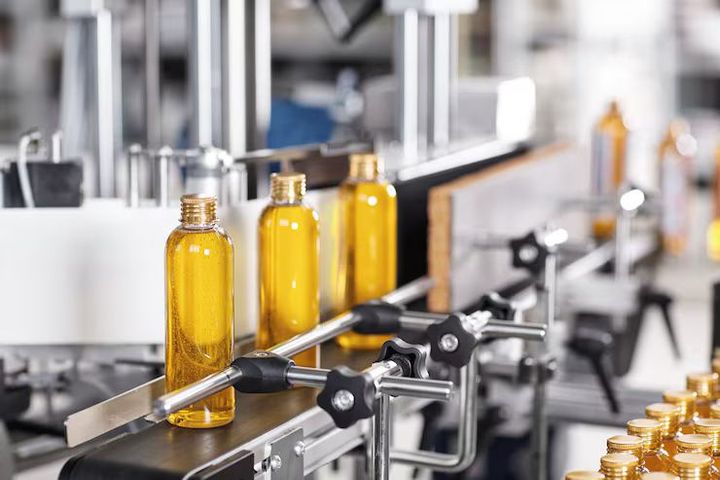
A typical bottle filling line may include conveyors, bottle unscramblers, rinsing units, filling machines, cap feeders, capping machines, labelling equipment, inspection systems, and coding units. The exact arrangement depends on the product and packaging process.
Basic Bottle Filling Process
A bottle filling line generally follows a sequence similar to this:
- Empty bottles enter the line through a conveyor.
- Bottles are oriented and positioned correctly.
- Containers may be cleaned or rinsed where required.
- The filling system dispenses a defined quantity of product.
- Filled bottles move toward the capping station.
- Caps are supplied, positioned, and tightened or sealed.
- Filled and closed bottles pass through inspection.
- Labels, batch information, dates, or other required markings are applied.
- Finished bottles move toward secondary packaging.
The sequence can change depending on the product and container design.
Main Types of Bottle Filling Lines
Bottle filling lines can be categorized according to the product being handled and the filling method.
| Line Type | Typical Application | Important Consideration |
|---|---|---|
| Liquid filling line | Water, beverages, solutions | Flow and volume control |
| Pharmaceutical filling line | Oral liquids and pharmaceutical preparations | Hygiene and process control |
| Aseptic filling line | Sterile liquid products | Controlled environment |
| Viscous product filling line | Oils, creams, syrups | Product viscosity |
| Food filling line | Sauces, juices, dairy products | Food-contact requirements |
| Cosmetic filling line | Lotions, shampoos, liquid formulations | Container and product compatibility |
| Chemical filling line | Industrial liquid products | Material compatibility and containment |
Importance
Bottle filling lines are important because filling accuracy, container handling, closure quality, and inspection all influence the consistency of packaged products. An integrated line can coordinate these activities through controlled material movement.
Filling Accuracy
The filling mechanism determines how much product enters each container. Common approaches include volumetric filling, piston filling, gravity filling, pump-based filling, and flow-meter-based filling.
The suitable method depends on factors such as viscosity, foaming behavior, density, particle content, and required filling volume.
Integrated Material Movement
Conveyors connect different stations and maintain controlled bottle movement. Sensors can detect bottle presence, spacing, accumulation, and positioning.
This coordination helps reduce interruptions caused by incorrectly positioned containers or missing bottles.
Closure Control
After filling, bottles normally pass through a cap feeding and capping stage. Closure systems may use screw caps, snap-fit caps, crimped closures, or other container-specific designs.
For products where container integrity is important, closure inspection can be incorporated into the line.
Inspection and Traceability
Modern lines can incorporate sensors, cameras, checkweighers, level inspection systems, and coding equipment. These systems can help identify issues such as missing caps, incorrect fill levels, damaged containers, or unreadable markings.
For pharmaceutical applications, traceability and documented process controls can have additional importance because packaging operations are subject to regulatory requirements.
Flexible Production
Bottle filling lines can be configured for different container sizes and product characteristics. Change parts, adjustable filling heads, programmable controls, and recipe management can help a line handle multiple formats.
However, greater flexibility generally requires careful changeover planning and process verification.
Recent Updates
Bottle filling technology is increasingly incorporating automation, electronic controls, machine vision, and process monitoring. These developments are intended to improve consistency and provide better information about production conditions.
Automation and Process Monitoring
Programmable logic controllers, human-machine interfaces, sensors, and servo-driven mechanisms are common components of modern filling systems. Operators can monitor parameters such as filling cycles, conveyor movement, cap presence, and equipment status.
Data collection can also support production records and analysis of recurring process deviations.
Vision Inspection
Machine vision is increasingly used for container inspection. Cameras can examine bottle orientation, cap presence, label position, fill level, and printed information.
Vision-based inspection can be positioned at different stages depending on the risks associated with the packaging process.
Flexible Filling Systems
Manufacturers increasingly need lines capable of handling different bottle dimensions and product formulations. As a result, filling systems may include adjustable nozzles, change parts, servo drives, and programmable recipes.
The design needs to balance flexibility with cleaning, changeover, validation, and operating requirements.
Sustainable Packaging Considerations
Bottle filling systems are also being considered alongside changes in packaging materials. In India, the Food Safety and Standards Authority of India has continued updating its packaging framework. Its 2025 amendment addressed the use of recycled PET in food packaging when applicable standards and guidelines are notified.
This can influence container selection, handling characteristics, inspection requirements, and compatibility with filling equipment.
Laws or Policies
The regulatory requirements for a bottle filling line depend on the product category. Food, pharmaceuticals, cosmetics, chemicals, and other products may be subject to different rules.
Food Packaging Requirements
In India, the Food Safety and Standards Authority of India (FSSAI) regulates food packaging requirements. The Food Safety and Standards (Packaging) Regulations, 2018 establish requirements for food-contact packaging materials and include bottles among recognized package or container types.
The regulations also address materials that come into direct contact with food and specify requirements concerning packaging safety and suitability.
For certain food products, container sealing and packaging conditions can have specific requirements. The FSSAI compendium, for example, includes glass bottles with metal or plastic caps among recognized packaging formats.
Pharmaceutical Requirements
Pharmaceutical bottle filling lines are subject to additional manufacturing and packaging controls. The Central Drugs Standard Control Organization provides the Drugs Rules, 1945 and related notifications for pharmaceutical regulation in India. The current CDSCO listing includes the Drugs Rules dated 1 July 2024.
The updated Schedule M notification issued in December 2023 introduced revised GMP-related requirements for pharmaceutical manufacturing facilities.
For oral liquid pharmaceutical preparations, Schedule M identifies equipment such as semi-automatic or automatic bottle filling machines, cap sealing machines, filtration equipment, and clarity inspection units among applicable manufacturing equipment.
For sterile applications, environmental control becomes particularly important. CDSCO material covering aseptic manufacturing describes controlled environments and specific requirements for filling operations depending on the sterilization process and product category.
Regulatory Monitoring
Because food and pharmaceutical regulations can change, organizations using bottle filling equipment should refer to current notifications, standards, and product-specific requirements rather than relying only on older machinery documentation.
Tools and Resources
Several tools and systems contribute to the operation and monitoring of a bottle filling line.
Filling Equipment
Filling machines control the quantity of liquid introduced into each bottle. Selection depends on product properties, container size, filling volume, and required process conditions.
Bottle Conveyors
Conveyors transfer containers between different stations. Their design considers bottle dimensions, speed, spacing, accumulation, and line layout.
Capping Equipment
Capping machines position and secure closures. Torque monitoring may be used for screw-cap applications where closure tightness needs to remain within a defined range.
Sensors and Control Systems
Sensors detect bottles, caps, product levels, and equipment conditions. PLCs coordinate different machine functions, while HMIs provide operator interfaces.
Inspection Systems
Inspection equipment can include:
- Fill-level inspection
- Cap-presence inspection
- Label-position inspection
- Container-damage inspection
- Code verification
- Checkweighing
- Vision inspection
Documentation and Technical Resources
Useful resources include equipment manuals, process specifications, cleaning procedures, calibration records, packaging specifications, applicable BIS standards, FSSAI regulations, and CDSCO requirements where applicable.
FAQs
What is a bottle filling line?
A bottle filling line is an integrated system that moves empty bottles through filling, closure, inspection, labelling, and related packaging operations.
How does a bottle filling machine work?
A bottle filling machine positions containers under filling nozzles and dispenses a predetermined quantity using a suitable filling mechanism. The filled bottles then move to subsequent packaging stages.
What equipment is used in a bottle filling line?
Common equipment includes bottle conveyors, rinsing systems, filling machines, cap feeders, capping machines, inspection systems, labelling machines, coding equipment, and control systems.
Where are bottle filling lines used?
Bottle filling lines are used in pharmaceutical, food, beverage, cosmetic, chemical, and other liquid-product packaging applications.
What factors affect bottle filling line design?
Important factors include product viscosity, filling volume, bottle dimensions, container material, production rate, cleaning requirements, closure type, inspection needs, and applicable regulatory requirements.
Conclusion
Bottle filling lines combine filling, container handling, closure, inspection, and packaging operations into a coordinated production system. Their design depends heavily on product characteristics, bottle format, process requirements, and regulatory conditions. Automation, machine vision, electronic controls, and process monitoring are becoming important features in modern bottle filling systems. Careful equipment selection and process control can help maintain consistent filling and packaging operations.