Autonomous Warehouse Vehicles: Guide to Types, Functions, and Practical Insights
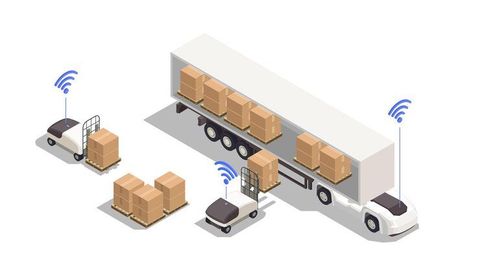
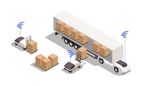
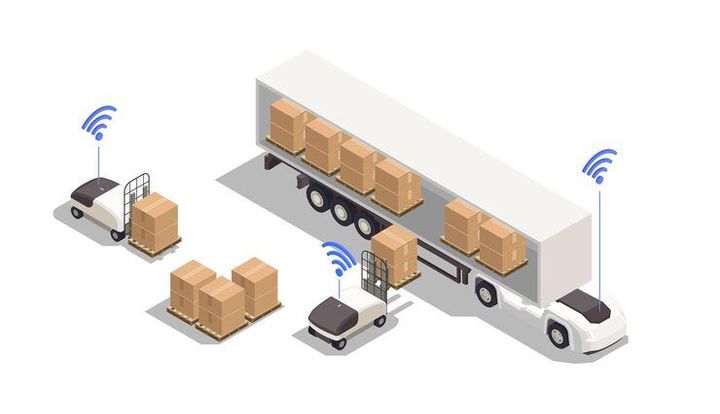
Autonomous Warehouse Vehicles are mobile machines designed to move materials, products, pallets, containers, or other loads through warehouses with limited direct human control. They use combinations of sensors, software, navigation systems, onboard computing, and warehouse-management integration to determine where to travel and how to move around the facility.
These vehicles are part of a broader category of warehouse automation that includes automated guided vehicles, autonomous mobile robots, robotic forklifts, pallet-moving robots, and other mobile systems. Some follow predefined routes, while others can dynamically select paths based on their surroundings.
The distinction between different vehicle categories can sometimes be confusing. An automated guided vehicle generally follows defined guidance methods, while an autonomous mobile robot can use sensors and software to navigate changing environments. In practice, manufacturers and warehouse operators may use different terminology for similar equipment.
How Autonomous Warehouse Vehicles Work
An autonomous vehicle normally combines several technologies to complete a movement task.
Sensors collect information about obstacles, people, racks, pallets, walls, and other objects. Depending on the system, sensors may include cameras, laser scanners, proximity sensors, encoders, and other detection technologies.
Navigation software interprets sensor information and determines the vehicle's position and movement path. Technologies such as simultaneous localization and mapping, laser-based navigation, visual navigation, magnetic guidance, or predefined markers may be used.
Fleet-management software coordinates multiple vehicles. It can assign tasks, manage traffic, monitor vehicle status, and communicate with warehouse systems.
Warehouse integration connects robotic movement with warehouse-management or warehouse-control software. This allows transportation tasks to be generated from inventory, order, replenishment, or production requirements.
Drive and lifting mechanisms provide physical movement. Some vehicles only transport loads, while others can lift pallets, tow carts, or interact directly with storage systems.
Main Types
Autonomous mobile robots (AMRs) navigate dynamically through warehouse areas and can transport bins, shelves, cartons, or other loads.
Automated guided vehicles (AGVs) typically use predefined guidance methods such as magnetic tracks, markers, reflectors, or mapped routes.
Autonomous forklifts can move pallets and perform selected lifting and transportation activities without continuous manual driving.
Pallet-moving vehicles are designed to collect, transport, and position pallets between designated locations.
Tugger robots pull one or more carts or trailers and are useful for moving multiple loads in a single trip.
Shelf-moving robots can move storage racks or shelving units toward picking areas, allowing workers to access products without walking through the entire storage area.
Importance
Material Transportation
Transportation is one of the most repetitive activities inside a warehouse. Products may need to move between receiving areas, storage locations, picking stations, packing areas, and dispatch zones.
Autonomous vehicles can coordinate these movements according to programmed tasks and warehouse-management instructions.
Supporting Warehouse Throughput
When transportation tasks are coordinated digitally, vehicles can receive assignments based on workload and location. Fleet-management software can distribute tasks across multiple machines and help avoid unnecessary travel.
The actual improvement depends on warehouse layout, vehicle capacity, traffic conditions, software integration, and the type of material being moved.
Reducing Repetitive Manual Movement
Warehouse employees may otherwise spend substantial time transporting containers, carts, or pallets between locations. Autonomous vehicles can perform selected transportation activities while workers concentrate on picking, inspection, packing, replenishment, or other tasks.
This changes the distribution of work rather than eliminating the need for human involvement across the warehouse.
Improving Traceability
Connected vehicles can generate information about task assignments, movement, location, battery condition, and operational status.
When integrated with warehouse software, this information can contribute to a more detailed digital record of material movement.
Supporting Flexible Warehouse Layouts
Some autonomous vehicles can navigate around changing routes and temporary obstacles. This can make them suitable for facilities where layouts or task patterns change more frequently.
However, navigation flexibility does not mean that every warehouse is immediately suitable for autonomous operation. Floor conditions, aisle dimensions, rack placement, pedestrian traffic, lighting, network coverage, and safety controls all influence deployment.
Equipment Comparison
| Vehicle Type | Navigation Approach | Main Function | Typical Load |
|---|---|---|---|
| AMR | Dynamic navigation | Transport and picking support | Bins, cartons, shelves |
| AGV | Defined guidance | Repetitive transportation | Pallets, carts |
| Autonomous forklift | Navigation and sensing | Pallet handling | Pallets |
| Tugger robot | Mapped or guided routes | Cart towing | Multiple carts |
| Pallet robot | Navigation and load detection | Pallet movement | Pallets |
| Shelf-moving robot | Floor navigation | Rack transportation | Storage shelves |
Recent Updates
Growth of Warehouse Robotics
Warehouse automation continues to expand as logistics operations adopt robotics, digital inventory systems, machine vision, and connected material-handling equipment. India's Department for Promotion of Industry and Internal Trade describes autonomous forklifts, picking systems, heavy carriers, machine-vision applications, and other robotic technologies as part of modern warehouse automation.
A 2025 analysis cited in a SEBI-hosted document identified mobile robots as one component of India's warehouse automation landscape, alongside conveyor and sorting systems, automated storage and retrieval systems, warehouse-management systems, and automatic identification technologies.
Globally, robotics adoption is also expanding across industrial environments. The International Federation of Robotics reported in September 2026 that more than five million industrial robots were operating in factories worldwide at the end of 2025, illustrating the broader expansion of industrial automation.
Artificial Intelligence and Physical Automation
Artificial intelligence is increasingly being connected with warehouse robotics through perception, object recognition, route planning, task allocation, and adaptive decision-making.
The Indian Government's 2026 robotics roadmap discussions included physical AI and warehouse automation, with industry participants describing large-scale deployment of physical AI in warehouse and retail environments.
AI does not automatically make a vehicle autonomous. The complete system still requires sensors, navigation software, controls, communications, safety functions, and appropriate validation.
Improved Machine Vision
Machine vision allows autonomous vehicles to interpret visual information from their surroundings. Cameras can help identify objects, detect selected obstacles, read labels, recognize locations, or support navigation.
Combining vision with other sensing technologies can help vehicles operate in more variable environments, although performance can be affected by lighting, reflective surfaces, dust, obstructions, and other site conditions.
Fleet Coordination
Modern warehouse systems increasingly coordinate groups of robots rather than treating each vehicle as an isolated machine.
Fleet software can assign tasks according to vehicle position, battery level, workload, priority, and traffic conditions. This approach can help coordinate large numbers of mobile robots operating within the same facility.
Developing Safety Standards
Safety requirements for driverless industrial trucks are continuing to evolve internationally. ISO 3691-4:2023 covers safety requirements and verification for driverless industrial trucks and specifically includes autonomous mobile robots, automated guided vehicles, bots, and related systems.
As of September 2026, a new ISO/DIS 3691-4 draft is under development and is intended to replace the 2023 edition. The draft remains in the international standards-development process rather than being a final published standard.
A separate ISO working draft, ISO/WD 26058-1, is also being developed for safety requirements for industrial mobile robots.
Laws or Policies
International Safety Frameworks
Autonomous Warehouse Vehicles operate within a broader framework of machinery, workplace, electrical, and occupational safety requirements. The exact legal requirements vary by country and application.
ISO 3691-4 is particularly relevant to driverless industrial trucks. It addresses safety requirements and verification and considers hazards throughout the life cycle of applicable equipment.
Because standards can be adopted differently by national authorities, companies should identify the requirements applicable in the country where the equipment will operate.
European Requirements
In European markets, autonomous warehouse vehicles can fall within machinery and workplace-safety frameworks depending on their design and application. Equipment may also interact with requirements covering electrical safety, electromagnetic compatibility, radio equipment, and workplace risk management.
The exact conformity pathway depends on the equipment configuration and intended use.
United States Requirements
In the United States, warehouse operators may need to consider occupational safety requirements, industrial truck rules, electrical requirements, and recognized standards relevant to the equipment.
The specific requirements depend on the vehicle type, workplace, operating environment, and whether workers interact directly with the equipment.
Risk Assessment
A warehouse should evaluate the complete robotic system rather than examining only the vehicle.
Important considerations include:
Pedestrian and vehicle interaction.
Emergency stopping.
Obstacle detection.
Load stability.
Rack and aisle dimensions.
Floor conditions.
Charging areas.
Battery hazards.
Network and communication reliability.
Manual intervention procedures.
Maintenance access.
Changes to warehouse layouts.
Safety measures should be validated for the actual application and operating environment.
Human-Robot Interaction
Warehouses often contain workers, visitors, forklifts, carts, conveyors, and autonomous vehicles in the same general area. Clear traffic arrangements, visual indicators, warning systems, speed controls, separation measures, and defined operating procedures can help manage these interactions.
A vehicle's ability to detect an obstacle does not remove the need for appropriate facility design and operating procedures.
Tools and Resources
Warehouse Management Systems
A warehouse-management system can coordinate inventory, receiving, picking, replenishment, and dispatch activities. Integration with autonomous vehicles allows transportation tasks to be generated from warehouse operations.
Fleet Management Software
Fleet platforms coordinate multiple vehicles and can monitor location, battery state, assignments, traffic, and equipment status.
Warehouse Simulation
Simulation software can model warehouse layouts, vehicle routes, storage locations, order flows, and traffic patterns before physical deployment.
This can help identify potential bottlenecks and determine how vehicle numbers and routes could interact.
Mapping and Navigation Systems
Mapping technologies allow autonomous vehicles to build or use digital representations of warehouse environments. Depending on the equipment, maps can be created using laser scanners, cameras, markers, or other positioning technologies.
Machine Vision
Machine-vision systems can support object recognition, pallet identification, barcode reading, obstacle detection, and selected inspection tasks.
Battery and Charging Management
Electric autonomous vehicles require appropriate battery monitoring and charging arrangements. Fleet software can coordinate charging schedules so that vehicles are available according to operational demand.
Performance Monitoring
Useful measurements can include:
Vehicle utilization.
Completed transportation tasks.
Average travel distance.
Battery consumption.
Waiting time.
Task completion time.
Traffic interruptions.
Manual intervention frequency.
Equipment downtime.
These measurements can help warehouse teams understand how autonomous vehicles are performing within the actual operating environment.
FAQs
What are Autonomous Warehouse Vehicles?
Autonomous Warehouse Vehicles are mobile robotic systems designed to transport materials, pallets, containers, or other loads through warehouse environments with limited direct human control.
How do Autonomous Warehouse Vehicles navigate?
They can use technologies such as laser scanning, cameras, mapping software, positioning systems, magnetic guidance, markers, and onboard sensors. The exact navigation method depends on the vehicle design.
What is the difference between AMRs and AGVs?
AMRs generally use sensors and software to navigate more dynamically around their environment, while AGVs traditionally use predefined guidance methods or fixed routes. Modern systems can combine characteristics of both categories.
Where are Autonomous Warehouse Vehicles used?
They are used in distribution centers, manufacturing warehouses, fulfillment facilities, storage operations, retail logistics, and other environments where materials need to move between defined locations.
Are Autonomous Warehouse Vehicles safe around workers?
Safety depends on the complete system and its application. Vehicle sensing, speed controls, emergency stopping, workspace design, risk assessment, operating procedures, and applicable safety requirements all contribute to safe operation.
Conclusion
Autonomous Warehouse Vehicles combine mobile robotics, sensors, navigation software, fleet coordination, and warehouse-system integration to automate selected material movements. AMRs, AGVs, autonomous forklifts, pallet robots, tugger systems, and shelf-moving robots address different warehouse transportation requirements. Recent developments are connecting these vehicles with machine vision, artificial intelligence, digital warehouse platforms, and increasingly detailed safety frameworks. Understanding the vehicle type, operating environment, software integration, load requirements, and applicable regulations is important when evaluating autonomous warehouse transportation systems.