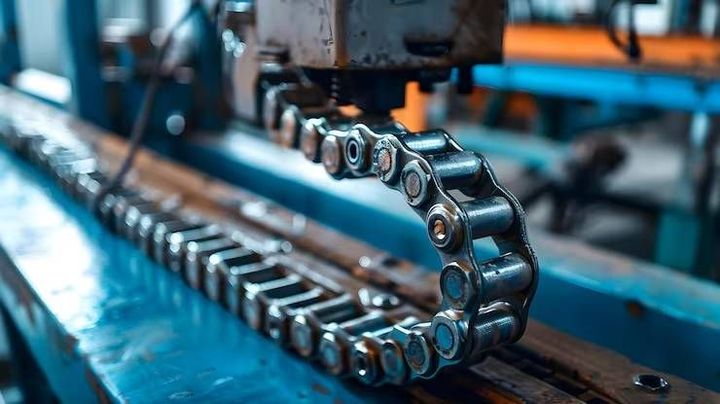
Automatic Chain Making Machines: Guide to Modern Manufacturing Technology
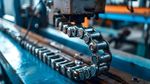
Automatic Chain Making Machines are specialized manufacturing machines designed to produce metal chains through a sequence of forming, bending, joining, cutting, and finishing operations. They are used in jewelry production as well as selected industrial applications where consistent chain structures are required.
A traditional chain-making process can involve manually forming individual links and connecting them one by one. Automatic machinery uses mechanical, electrical, pneumatic, hydraulic, or computerized controls to perform many of these repetitive movements in a coordinated sequence.
The exact machine design depends on the chain type, material, link dimensions, wire diameter, production method, and required finish. Jewelry chains may require extremely precise forming, while industrial chains can use heavier wire or different manufacturing mechanisms.
How Chain Making Machines Work
Although designs vary, many automatic systems follow a basic production sequence.
Wire feeding: Metal wire is supplied continuously from a coil or spool.
Straightening: Rollers or guides help remove unwanted bends from the incoming wire.
Forming: Mechanical tools bend the wire into a specific link shape.
Cutting: A cutting mechanism separates the formed section at a defined point.
Link formation: The separated section is shaped into an individual chain link.
Interlocking: Links are connected with previously formed links to create a continuous chain.
Closing: The link opening is closed using a controlled forming operation.
Finishing: Additional processes can include polishing, cleaning, sizing, inspection, or surface treatment.
Some machines combine several stages within one automated system, while others are designed for a particular part of chain production.
Types of Chains Produced
Different chain designs require different forming mechanisms and machine configurations.
Curb chains contain links that are commonly twisted or positioned to create a relatively flat appearance.
Cable chains consist of interconnected oval or round links and are widely associated with jewelry applications.
Rolo chains use rounded links arranged in a continuous sequence.
Figaro chains use a repeating pattern involving links of different lengths.
Ball chains are formed from connected spherical elements rather than conventional wire links.
Industrial chains can include roller chains, conveyor chains, leaf chains, and other engineered configurations. These require different machinery from jewelry-chain production because their dimensions, loads, materials, and performance requirements differ.
Importance
Consistent Link Formation
One major role of automatic machinery is maintaining consistency between individual links. A chain can contain hundreds or thousands of interconnected elements, so variations in dimensions can affect appearance, movement, and assembly.
Automated forming mechanisms can repeat programmed or mechanically defined movements with controlled parameters. Consistency still depends on machine condition, tooling accuracy, wire quality, calibration, and operating settings.
Higher Production Capacity
Automatic systems can perform repetitive forming operations continuously at controlled speeds. This allows manufacturers to organize production around repeatable machine cycles rather than relying entirely on manual link formation.
Actual output depends on chain design, wire diameter, machine configuration, operating speed, setup time, material characteristics, and quality requirements.
Material Control
Wire is one of the main raw materials used in many chain-making processes. Common materials can include gold, silver, platinum, stainless steel, copper alloys, and other metals depending on the intended application.
Precise wire feeding and forming can help reduce unwanted variation. Material selection also influences bending characteristics, tool wear, surface appearance, and final chain properties.
Product Variety
Modern machinery can be configured for different link shapes and chain patterns. Some systems use interchangeable tooling or adjustable settings to accommodate multiple designs.
This flexibility is particularly relevant in jewelry manufacturing, where chain patterns can vary significantly in dimensions and appearance.
Main Machine Components
| Component | Main Function | Manufacturing Role |
|---|---|---|
| Wire feeder | Moves wire into the machine | Material feeding |
| Straightening unit | Aligns incoming wire | Wire preparation |
| Forming tools | Bends and shapes wire | Link creation |
| Cutting unit | Separates wire sections | Link separation |
| Link guide | Positions formed elements | Chain alignment |
| Drive system | Powers machine movements | Mechanical operation |
| Controller | Coordinates machine functions | Process control |
| Inspection system | Checks selected characteristics | Quality monitoring |
Recent Updates
Computerized Machine Controls
Modern Automatic Chain Making Machines increasingly incorporate electronic controls that allow operators to configure machine parameters more precisely.
Digital interfaces can display operating settings, production information, alarms, and selected machine conditions. Depending on the machine, programmable controls can also support repeatable production sequences.
Servo-Driven Motion
Servo motors can provide controlled movement for feeding, forming, cutting, and positioning mechanisms. Compared with purely mechanical arrangements, electronically controlled motion can provide greater flexibility in selected applications.
Servo systems can also be integrated with sensors and control software to monitor machine movement and detect deviations.
Automated Wire Feeding
Modern wire-feeding systems can use controlled rollers and sensors to maintain consistent material movement. Feeding accuracy is important because even small variations can affect the dimensions of formed links.
Some systems incorporate automatic adjustments or monitoring functions to help maintain stable production conditions.
Vision-Based Inspection
Machine vision technology is increasingly used across manufacturing for automated inspection. Cameras can capture images of components while software analyzes selected characteristics.
For chain production, vision systems can potentially examine link shape, alignment, surface characteristics, missing components, or dimensional differences. The exact inspection capability depends on the camera system, lighting, software, and chain design.
Automation and Connected Manufacturing
Modern production environments increasingly connect machinery with digital monitoring systems. Machine data can be collected to examine operating conditions, production cycles, downtime, and maintenance requirements.
This approach can support more structured production monitoring and help manufacturers identify recurring process variations.
Advanced Manufacturing Materials
Chain production can involve materials with different hardness, ductility, surface characteristics, and forming behavior. Advances in tooling materials and precision manufacturing can support more controlled forming of smaller or more complex components.
Tool design remains important because repeated bending and cutting can create substantial mechanical demands on forming components.
Energy and Resource Efficiency
Manufacturers are also examining energy consumption, material utilization, machine efficiency, and production waste. Efficient feeding and forming can reduce unnecessary material losses, while modern drive systems can provide more controlled energy use during selected operating conditions.
Resource efficiency depends on the complete production system rather than one machine component.
Laws or Policies
Machinery Safety
Automatic chain-making equipment falls within broader machinery-safety frameworks that vary by country or region. Manufacturers and users may need to consider requirements related to machine guarding, emergency stops, electrical safety, moving parts, noise, operator access, and workplace procedures.
In the European Union, the Machinery Regulation establishes requirements for machinery placed on the EU market. Regulation (EU) 2023/1230 will replace the Machinery Directive under its applicable transition framework.
International Standards
International standards can provide technical guidance for machinery safety, electrical systems, risk assessment, and manufacturing equipment.
ISO 12100 is an important reference for machinery safety because it provides principles for risk assessment and risk reduction during machine design.
Other standards may apply depending on the machine's electrical equipment, control systems, guarding, emergency functions, and intended market.
Workplace Safety
Operators working with automatic forming machinery may encounter moving parts, sharp tooling, rotating mechanisms, electrical equipment, noise, and metal particles.
Workplaces therefore commonly use protective guards, emergency stopping systems, operating procedures, maintenance controls, and appropriate personal protective equipment according to the identified hazards.
Product and Material Regulations
When machines are used to manufacture jewelry or products made from regulated materials, additional requirements can apply to material composition, labeling, chemical substances, environmental practices, or product declarations.
Requirements vary considerably between countries. Manufacturers exporting chain products therefore need to consider the rules applicable in each destination market.
Environmental Requirements
Industrial production can generate metal waste, polishing residues, lubricants, cleaning materials, and other manufacturing by-products.
Environmental requirements can govern waste handling, emissions, chemical use, water discharge, and resource management. The specific obligations depend on the production process and jurisdiction.
Tools and Resources
CAD and Machine Design Software
Computer-aided design software can be used to develop machine components, tooling, fixtures, and chain geometries. Three-dimensional models can help engineers examine dimensions and mechanical relationships before manufacturing components.
CNC Tooling Equipment
CNC machining systems can manufacture precision tooling and replacement components used with chain-making equipment. Accurate tooling is particularly important when producing small links with tight dimensional requirements.
Digital Measurement Systems
Calipers, micrometers, optical measurement equipment, coordinate measurement systems, and specialized gauges can be used to examine chain dimensions and machine components.
For small jewelry links, optical or digital measurement systems can provide detailed information about shape and dimensions.
Machine Vision Systems
Camera-based inspection systems can help identify selected dimensional or visual characteristics. They are particularly useful where large numbers of repetitive components need consistent inspection.
Maintenance Monitoring
Sensors and digital monitoring systems can track selected machine conditions such as vibration, temperature, motor behavior, operating cycles, and other parameters.
This information can help maintenance teams identify changes in machine behavior and plan inspections around actual operating conditions.
Manufacturer Documentation
Technical manuals, machine specifications, tooling instructions, maintenance schedules, electrical diagrams, and safety documentation are important resources for understanding a particular chain-making machine.
Because machine configurations vary widely, the manufacturer's technical documentation should be used alongside applicable standards and workplace procedures.
FAQs
What are Automatic Chain Making Machines?
Automatic Chain Making Machines are specialized machines that automate repetitive operations involved in producing interconnected metal chains. They can perform tasks such as wire feeding, bending, forming, cutting, joining, and link closing.
How do Automatic Chain Making Machines work?
Automatic Chain Making Machines generally feed metal wire into forming tools, shape it into links, cut and interconnect the sections, and continue the sequence to create a continuous chain. The exact mechanism depends on the chain design.
What materials can be used with chain-making machines?
Materials can include gold, silver, platinum, stainless steel, copper alloys, and other metals. The machine and tooling must be appropriate for the material's physical characteristics.
Where are Automatic Chain Making Machines used?
They are widely associated with jewelry manufacturing and can also be used for selected industrial chain production. Industrial applications generally require different machine configurations because the chains may need greater mechanical strength and different dimensions.
What technologies are used in modern chain-making machines?
Modern systems can incorporate computerized controls, servo motors, automated wire feeding, sensors, digital measurement, machine vision, and production monitoring systems.
Conclusion
Automatic Chain Making Machines automate many repetitive operations involved in forming and connecting metal links into continuous chains. Their design can include wire-feeding systems, forming tools, cutting mechanisms, computerized controls, sensors, and inspection technologies. Recent manufacturing developments are increasing the use of digital controls, servo motion, machine vision, and connected production monitoring. Understanding machine configuration, material characteristics, tooling, safety requirements, and quality-control methods provides useful context for modern chain manufacturing across global markets.