Accessible Adventure Travel: Guide to Destinations, Activities, and Practical Insights
Accessible adventure travel refers to trips and outdoor activities designed or adapted so that people with different mobility, sensory, communication, or other access needs can participate. It can include activities such as adapted kayaking, accessible hiking, wheelchair-friendly sightseeing, adaptive skiing, accessible cycling, and nature-based excursions.
The idea goes beyond physical access to a building. A complete accessible adventure travel experience can involve transportation, accommodation, activity equipment, communication, information, routes, rest areas, and emergency planning.
Accessibility requirements differ from person to person. One traveler may need step-free routes, while another may require accessible communication, hearing support, visual information, adaptive equipment, or assistance with transfers.
How Accessible Adventure Travel Works
Planning usually begins by identifying the traveler's specific requirements and matching them with the physical conditions and activity arrangements at a destination. Important details can include trail surfaces, gradients, vehicle access, restroom design, transfer procedures, equipment dimensions, water access, and emergency arrangements.
Reliable accessibility information should be specific rather than simply using terms such as “accessible” or “wheelchair friendly.” For example, a destination description can explain doorway widths, ramp gradients, trail surfaces, accessible parking locations, or the type of adaptive equipment available.
ISO 21902:2021 provides international requirements and recommendations for accessible tourism and covers areas including infrastructure, information, transport, accommodation, activities, and destination management. The standard is currently under systematic review as of 2026.
Main Categories of Accessible Adventure Travel
Accessible adventure travel can include many different activity categories:
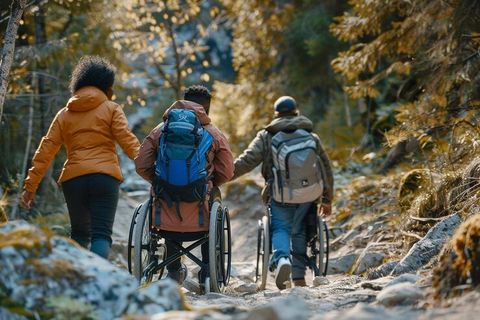
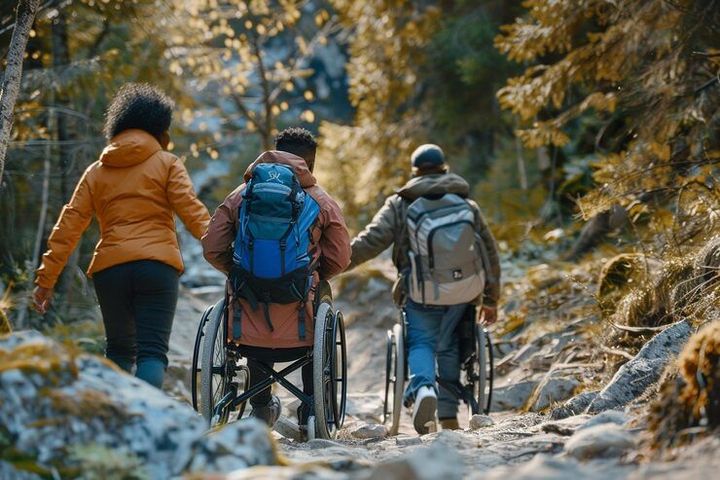
Accessible hiking: Trails may include firm surfaces, suitable gradients, accessible viewpoints, rest areas, and route information.
Adaptive water activities: Kayaking, canoeing, sailing, and other activities can use adapted seating, transfer equipment, flotation systems, or modified controls.
Adaptive winter sports: Skiing and snow activities can use specialized equipment and instruction suited to different mobility requirements.
Accessible cycling: Handcycles, recumbent cycles, tandem bicycles, and other adapted bicycles can support different physical abilities.
Nature and wildlife travel: National parks and outdoor areas may provide accessible boardwalks, viewing platforms, accessible vehicles, and interpretation systems.
Adventure parks: Some parks adapt climbing, ropes, zip-line, or similar activities with specialized equipment and participant assessment.
Accessible cultural adventure: Historical landscapes, archaeological areas, and outdoor heritage sites can combine accessible routes with educational activities.
A simple example is an accessible nature trip where a visitor uses an all-terrain wheelchair on a firm trail, reaches an accessible viewing platform, and uses an audio guide or large-print information to understand the surrounding environment.
Importance
Why Accessible Adventure Travel Matters
Adventure travel is often associated with physically demanding environments, but accessibility can expand participation through thoughtful design, adaptive equipment, route planning, and appropriate communication.
Accessible travel also benefits people beyond permanent disabilities. Older travelers, people recovering from temporary injuries, families with children, and travelers with different mobility or sensory requirements may all benefit from accessible infrastructure.
ISO explains that accessible tourism is intended to support equal access and enjoyment for people of different ages and abilities. Its framework is designed for stakeholders across the tourism sector and can be applied at local, regional, national, and international levels.
Who Uses Accessible Adventure Travel
The audience is diverse. Travelers with mobility disabilities may require step-free routes, transfer equipment, adapted vehicles, or specialized activity equipment.
People with visual or hearing disabilities may require tactile information, audio descriptions, captions, sign-language interpretation, or clearly structured communication. Travelers with other access requirements may need additional planning around fatigue, sensory environments, medication storage, or rest opportunities.
Family members, companions, guides, destination managers, transport operators, accommodation providers, park authorities, and activity organizations can also be involved in planning an accessible trip.
Important Planning Factors
Several factors influence whether an adventure activity is genuinely accessible:
Physical access: Check entrances, paths, slopes, surfaces, bridges, seating, restrooms, and viewing areas.
Transportation: Consider vehicle dimensions, boarding arrangements, luggage space, transfer requirements, and accessible public transport.
Equipment: Adaptive equipment should match the participant, activity, environment, and safety requirements.
Communication: Travelers may need information in accessible digital formats, large print, audio, captions, or other formats.
Activity conditions: Weather, water conditions, terrain, altitude, distance, and physical exertion can affect participation.
Emergency planning: Accessible evacuation routes, communication methods, medical arrangements, and emergency contacts should be considered before departure.
Comparing Accessible Adventure Activities
| Activity | Possible Accessibility Features | Important Planning Factor |
|---|---|---|
| Hiking | Firm trails, ramps, accessible viewpoints | Surface, slope, distance |
| Kayaking | Adaptive seats, transfer aids | Water entry and transfer method |
| Cycling | Handcycles, recumbent cycles | Terrain and bicycle configuration |
| Skiing | Sit-skis, adaptive controls | Snow conditions and instruction |
| Wildlife trips | Accessible vehicles, viewing platforms | Terrain and vehicle access |
| Adventure parks | Modified harnesses, adapted systems | Participant assessment and equipment |
| Cultural sites | Ramps, accessible paths, digital guides | Building layout and conservation rules |
Common Challenges
Accessibility can vary even within the same destination. A hotel may have an accessible entrance but limited bathroom access, while a trail may have an accessible starting point but difficult terrain farther along the route.
Another challenge is inaccurate or incomplete information. Travelers may encounter descriptions that use broad accessibility terms without providing measurements or detailed conditions. Direct confirmation of important requirements can therefore be useful when planning a complex trip.
Recent Updates
Digital Accessibility Information
From 2024 through 2026, digital accessibility has remained an important part of travel planning. Websites, mobile applications, online maps, digital booking systems, and destination databases increasingly need to present information in formats that can be used by people with different access requirements.
Digital maps can identify accessible entrances, routes, parking areas, restrooms, viewpoints, and transport connections. Structured accessibility information can make trip planning more precise than general descriptions.
AI and Personalized Travel Planning
AI-based travel tools are increasingly capable of organizing large amounts of destination information and generating personalized itineraries. In accessible adventure travel, such systems could help compare routes according to mobility requirements, activity duration, terrain, transportation, and available facilities.
However, AI-generated information can become outdated or misunderstand a site's actual physical conditions. Accessibility data should therefore be checked against current information from destination authorities, parks, transport organizations, and activity providers.
Adaptive Equipment Developments
Adaptive equipment continues to develop across outdoor recreation. Examples include lighter mobility equipment, specialized bicycles, adaptive seating systems, improved transfer equipment, and modified controls for outdoor activities.
Technology can also improve independence through navigation aids, wearable communication devices, location systems, and accessible digital instructions. The suitability of any equipment depends on the individual, activity, terrain, and safety conditions.
Accessibility in European Travel
A significant regulatory development occurred in the European Union in 2025. The European Accessibility Act began applying on 28 June 2025 to covered products and digital or physical activities, including areas such as public transport information, banking, electronic communications, and e-commerce. It is relevant to travel because accessible digital information and transport interfaces are part of the wider travel journey.
The EU also adopted the European Disability Card framework in 2024. The framework is intended to support recognition of disability status across EU countries for certain special conditions and facilities, with implementation depending on applicable national arrangements.
Laws or Policies
International Accessibility Frameworks
There is no single worldwide tourism law that defines accessibility for every destination. Requirements depend on national legislation, local building rules, transport regulations, protected-area policies, and activity-specific requirements.
The United Nations Convention on the Rights of Persons with Disabilities provides a major international human-rights framework concerning accessibility and participation. Tourism-related implementation, however, depends on national and regional laws.
ISO 21902:2021 is an international standard specifically addressing accessible tourism. It provides requirements and recommendations covering the tourism environment and different participants in the tourism supply chain. It is not automatically a law in every country.
Regional Differences
In the United States, accessibility requirements can involve federal laws such as the Americans with Disabilities Act, along with other federal, state, and local rules. Application varies according to the type of facility, activity, transportation arrangement, and organization involved.
In the European Union, accessibility requirements are influenced by EU legislation and national implementation. The European Accessibility Act became applicable in 2025 for covered products and activities, while individual countries retain additional national requirements.
The United Kingdom has its own legal framework, including the Equality Act 2010, while other countries use different legislation and technical standards. Protected natural areas can also have additional restrictions because conservation requirements may limit physical modifications.
Adventure Activity Safety Rules
Adventure activities can have additional safety requirements involving equipment, training, supervision, weather conditions, participant assessment, and emergency procedures. These requirements may differ according to the country and activity.
Travelers should therefore distinguish between accessibility information and safety approval. An accessible route does not automatically mean that every adventure activity is suitable under every environmental condition.
Tools and Resources
Accessibility Databases and Destination Maps
Online accessibility databases can help travelers identify accessible accommodation, attractions, transport connections, trails, beaches, parks, and cultural locations. Official destination authorities and public agencies can provide particularly useful information about infrastructure and local rules.
Route and Mapping Tools
Digital maps can help evaluate distance, elevation, terrain, route surfaces, entrances, and transport connections. Satellite imagery and geographic information systems can also help planners understand the physical layout of a destination.
Adaptive Equipment Planning
Equipment databases and manufacturers' technical documentation can help travelers compare dimensions, weight limits, transfer requirements, control systems, and terrain suitability. Activity-specific professionals can also help determine whether particular adaptive equipment is appropriate.
Accessibility Standards and Government Resources
ISO 21902 is a useful international reference for understanding accessible tourism principles. National accessibility authorities, transport agencies, protected-area organizations, and disability organizations can provide additional country-specific information.
Digital Accessibility Tools
Screen readers, captions, text enlargement, voice control, audio descriptions, tactile maps, and accessible navigation applications can support different stages of a journey. These tools can be particularly useful when combined with accurate destination information.
FAQs
What is accessible adventure travel?
Accessible adventure travel involves outdoor and adventure activities planned or adapted for people with different mobility, sensory, communication, or access requirements. It can include hiking, cycling, kayaking, skiing, wildlife trips, and nature activities.
Which destinations are suitable for accessible adventure travel?
Suitable destinations vary according to the traveler's requirements and the activity involved. National parks, coastal areas, mountain destinations, cities with accessible transport, and nature reserves may provide different combinations of accessible routes, adapted equipment, and accessible facilities.
What activities are available for accessible adventure travel?
Accessible adventure travel can include adaptive kayaking, accessible hiking, adapted cycling, adaptive skiing, wildlife viewing, accessible boating, and modified adventure-park activities. Availability depends on the destination, equipment, terrain, and local safety arrangements.
How can I plan an accessible adventure trip?
Start by identifying specific access requirements and then check transportation, accommodation, activity conditions, route surfaces, equipment, rest areas, communication formats, and emergency arrangements. Detailed measurements and current site information can be more useful than general accessibility labels.
What technology supports accessible adventure travel?
Digital maps, accessibility databases, mobile navigation, adaptive equipment, GPS systems, audio guides, captions, screen readers, and AI-assisted planning tools can support different stages of accessible adventure travel. Information should be verified because digital data may not always reflect recent physical changes.
Conclusion
Accessible adventure travel combines outdoor exploration with thoughtful planning, inclusive infrastructure, adaptive equipment, and accessible information. Activities can range from hiking and cycling to kayaking, skiing, wildlife travel, and nature-based experiences, with requirements varying from one traveler to another. Digital mapping, adaptive technology, AI-assisted planning, and evolving accessibility frameworks are influencing the sector through 2024–2026. Accurate information, appropriate equipment, safety planning, and awareness of local requirements remain important parts of accessible adventure travel.