Wood Dust Collection Systems: Guide to Design, Operation, and Applications
Wood Dust Collection Systems are mechanical systems designed to capture, transport, separate, and contain dust and small wood particles produced during woodworking activities. They are commonly used in sawmills, furniture production, cabinet making, carpentry workshops, panel processing, and other facilities where machines cut, sand, drill, or shape wood.
Woodworking equipment can generate different types of particles. A saw may produce chips and larger particles, while sanding equipment can generate much finer dust. A collection system is designed to capture these materials close to the point where they are produced and move them through ductwork toward a collection unit.
A basic system usually contains four main elements: a dust hood or pickup point, ductwork, a dust collector, and a fan or air-moving device. Some systems also include separators, filters, spark detection equipment, discharge systems, and storage containers.
How a Wood Dust Collection System Works
The process begins when a woodworking machine generates airborne particles. A hood positioned near the cutting, sanding, routing, or drilling point captures the dust-laden air.
The air then travels through ducts because of airflow created by a fan. Larger particles may be separated before the air reaches the main filter, depending on the system design.
The collector removes dust from the moving air. Depending on the equipment, this can involve filter bags, cartridge filters, cyclonic separation, or combinations of different technologies.
Cleaned air is then discharged according to the system design, while collected material is directed into a bin, bag, hopper, or other containment arrangement.
Where Wood Dust Is Generated
Wood dust can be produced by many common woodworking machines.
Table saws: Generate particles during cutting operations.
Band saws: Produce dust while continuously cutting wood.
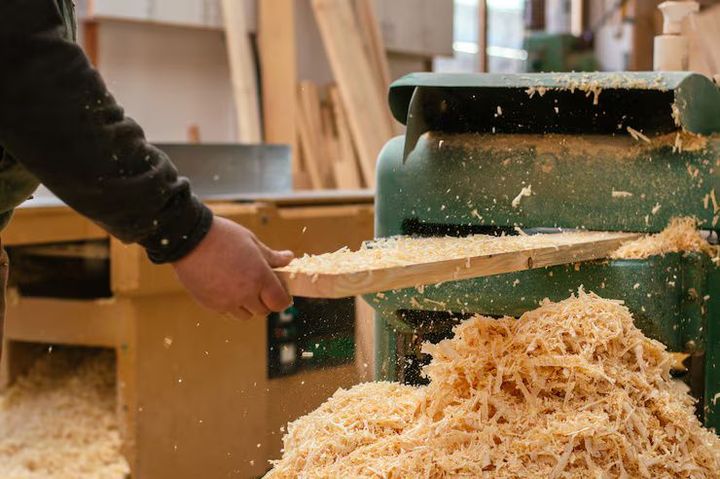
Planers: Generate chips and particles while removing material.
Jointers: Produce chips while creating flat or straight surfaces.
Routers: Generate fine particles during edge and surface shaping.
Sanders: Can produce relatively fine airborne dust.
CNC woodworking machines: Generate particles during automated cutting and routing.
Drilling machines: Produce chips and smaller particles around drilled openings.
Because different machines generate different particle patterns, a collection system may use different pickup arrangements for each machine.
Basic System Components
A typical Wood Dust Collection Systems arrangement may contain:
Collection hood: Captures dust near its source.
Ductwork: Transports dust-laden air.
Blast gates: Direct airflow to selected machines.
Fan: Creates the airflow needed to move material.
Cyclone: Separates larger particles from the air stream.
Filter: Removes finer particles.
Hopper or bin: Holds collected material.
Control panel: Operates fans, cleaning systems, and monitoring devices.
Importance
Maintaining Cleaner Work Areas
Woodworking can create substantial amounts of airborne particles and settled dust. Capturing particles near the source helps prevent them from spreading throughout the work area.
A well-designed system can also reduce the amount of dust that settles on machinery, floors, work surfaces, and stored materials.
Supporting Workplace Air Quality
Fine wood particles can remain suspended in air and may be inhaled. The U.S. Occupational Safety and Health Administration identifies wood dust as a workplace exposure associated with woodworking operations and provides requirements and guidance for controlling exposure.
Source capture and appropriate ventilation are important parts of controlling airborne contaminants. The exact controls depend on the material, process, workplace configuration, and applicable regulations.
Reducing Fire and Explosion Hazards
Wood dust is combustible. When sufficiently fine particles become suspended in air at an appropriate concentration, an ignition source can create a fire or explosion hazard.
For this reason, dust collection involves more than simply moving particles away from a machine. System design may need to consider spark sources, static electricity, collector location, duct arrangement, explosion protection, and housekeeping.
The U.S. National Fire Protection Association publishes NFPA 660, which consolidates combustible-dust requirements into a unified standard covering combustible particulate solids and related hazards.
Protecting Machinery
Dust can accumulate around motors, electrical components, bearings, moving mechanisms, and machine surfaces. Excessive accumulation can interfere with equipment operation and increase cleaning requirements.
Capturing dust near its source can help keep machinery areas more orderly.
Supporting Production Areas
Dust can affect visibility, housekeeping, product surfaces, finishing operations, and maintenance activities. A properly designed collection system can help control airborne and settled material within production areas.
Common System Elements
| Component | Main Function | Typical Application |
|---|---|---|
| Hood | Captures dust | Sawing and sanding |
| Duct | Moves air and particles | Connecting machines |
| Fan | Creates airflow | Entire collection system |
| Cyclone | Separates larger particles | Chip and dust separation |
| Filter | Removes finer particles | Final air cleaning |
| Hopper | Collects material | Central collectors |
| Blast gate | Controls airflow | Multiple machines |
| Dust bin | Stores collected material | Collection and disposal |
Recent Updates
More Efficient Dust Capture
Modern systems increasingly emphasize source capture rather than relying only on general room ventilation. A hood positioned close to the point where dust is generated can capture particles before they spread through the workspace.
This approach can reduce the amount of airborne material that needs to be handled by general ventilation.
Automated Filter Cleaning
Many modern collectors use automatic filter-cleaning systems. These may use compressed air pulses, mechanical shaking, or other methods to remove accumulated dust from filter surfaces.
Automatic cleaning can help maintain airflow as dust loads increase. Pressure monitoring can also indicate when filters require attention.
Variable-Speed Fans
Variable-frequency drives can allow fan speed to change according to system demand. In facilities with multiple machines, airflow requirements can vary depending on which machines are operating.
A properly configured control system can adjust fan operation according to selected demand conditions.
Improved Monitoring
Sensors can monitor differential pressure, airflow, fan operation, filter condition, temperature, and other parameters.
Digital monitoring can provide operators with information about system performance and can help identify unusual conditions before they develop into larger operational problems.
Combustible-Dust Protection
Recent industrial safety attention continues to emphasize combustible-dust hazards. NFPA 660 became a consolidated standard for combustible particulate solids, bringing together requirements that previously appeared across several NFPA standards.
Protection measures can include appropriate equipment selection, grounding and bonding, spark detection, fire protection, explosion venting, isolation, and housekeeping, depending on the hazard assessment.
Energy Considerations
Fans can represent a significant portion of the electrical demand of a central collection system. System designers increasingly consider duct sizing, pressure losses, fan selection, leakage, and demand-based control when developing new installations.
Reducing unnecessary airflow can lower energy requirements while maintaining appropriate capture performance.
Laws or Policies
Workplace Safety in India
Woodworking facilities in India may fall under different occupational safety and workplace requirements depending on their location, establishment type, workforce, and applicable legislation.
The Occupational Safety, Health and Working Conditions Code, 2020 provides a broad framework for occupational safety and working conditions. Its application should be considered together with current rules and notifications relevant to the particular workplace.
Factory Safety Requirements
Where woodworking takes place in a covered factory, requirements concerning ventilation, machinery safety, cleanliness, fire protection, and workplace conditions may apply.
Dust collection should therefore be considered as part of the broader workplace safety arrangement rather than as an isolated machine installation.
Fire Safety
Wood dust can contribute to combustible-dust hazards, while woodworking facilities may also contain large quantities of combustible wood products.
Fire-safety planning can include appropriate electrical equipment, ignition-source control, housekeeping, emergency arrangements, fire detection, and suitable suppression measures according to the facility's risk profile.
Environmental Considerations
Facilities that discharge collected or filtered air may need to consider applicable environmental requirements. The type of woodworking activity, location, emissions, equipment configuration, and applicable State Pollution Control Board requirements can influence the relevant controls.
The collected dust should also be handled according to applicable waste, storage, and workplace procedures.
Equipment Standards
International standards and technical guidance can assist with dust-collection design, combustible-dust assessment, ventilation, fan selection, filtration, and fire protection.
The applicable standard depends on the facility, process, equipment, and jurisdiction. Engineers should verify current editions and local requirements before designing or modifying an industrial system.
Tools and Resources
Airflow Measurement Instruments
Anemometers and other airflow instruments can measure air velocity at selected points. These measurements can help determine whether collection points are receiving the intended airflow.
Differential Pressure Gauges
Differential pressure gauges measure the pressure difference across filters or other system components. A rising pressure difference can indicate increasing filter loading or another airflow restriction.
Dust Particle Measurement
Particle-monitoring instruments can provide information about airborne particulate concentrations. These measurements can be useful for workplace assessments and evaluating the effectiveness of control measures.
Duct Design Calculations
Engineering calculations can evaluate duct diameter, airflow, velocity, pressure losses, branch arrangements, and fan requirements.
Important variables include the number of machines connected, duct length, bends, fittings, particle characteristics, and operating conditions.
Filter Selection Tools
Filter manufacturers and engineering references provide technical information about filter media, filtration efficiency, pressure drop, temperature limits, cleaning methods, and suitable applications.
The filter should be selected according to the particle characteristics and operating conditions rather than by size alone.
Safety Assessment Resources
Combustible-dust assessment methods, workplace exposure guidance, fire-protection references, and machinery documentation can help facility teams evaluate risks.
In India, applicable state and central workplace requirements should be reviewed alongside relevant technical standards.
FAQs
What are Wood Dust Collection Systems?
Wood Dust Collection Systems are equipment arrangements designed to capture and remove dust, chips, and particles generated during woodworking operations such as sawing, sanding, routing, drilling, and planing.
How do Wood Dust Collection Systems work?
A collection hood captures dust near the woodworking machine. A fan creates airflow that carries the particles through ductwork toward a separator or filter, where the material is removed from the air stream.
What equipment is used in a wood dust collection system?
Common components include collection hoods, ducts, fans, blast gates, cyclones, filters, hoppers, dust bins, pressure gauges, and control systems.
Why is wood dust collection important?
Wood dust collection can help control airborne particles, maintain cleaner work areas, support workplace exposure controls, protect equipment, and address combustible-dust hazards.
Are wood dust collection systems required in every woodworking facility?
Requirements depend on the workplace, equipment, processes, exposure conditions, local regulations, and fire-safety considerations. A facility should evaluate its particular conditions and applicable requirements rather than applying one arrangement to every woodworking operation.
Conclusion
Wood Dust Collection Systems capture and transport particles produced by woodworking machinery before they spread through a work area. A complete system can include collection hoods, ductwork, fans, separators, filters, storage units, monitoring equipment, and safety controls. Modern systems increasingly use automated filter cleaning, variable-speed fans, sensors, and improved combustible-dust protection approaches. Effective design requires consideration of airflow, particle characteristics, equipment layout, workplace exposure, fire hazards, maintenance, and applicable regulations.