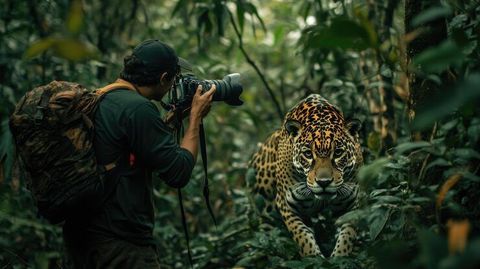
Wildlife Corridor Tourism: Guide to Conservation Travel and Practical Insights
Wildlife corridor tourism is a form of nature travel connected with landscapes that allow wild animals to move between separate habitats. A wildlife corridor may link forests, grasslands, wetlands, mountain areas, or protected landscapes that have become separated by roads, farms, settlements, or other forms of development.
These connected areas are important because many species need to move seasonally in search of food, water, shelter, breeding areas, or safer habitats. Tourism around such landscapes can create opportunities for visitors to understand wildlife movement while supporting conservation-focused activities.
Examples include elephant corridors in Asia and Africa, jaguar movement areas in Central and South America, and habitat connections used by large mammals in North America and Europe.
How Wildlife Corridors Work
A corridor does not always look like a narrow strip of untouched forest. It can include a mixture of protected land, privately managed areas, agricultural landscapes, river systems, ecological restoration zones, and other habitats.
Wildlife movement may take place through:
Forest connections
River valleys
Grassland routes
Mountain passes
Wetland systems
Restored habitat
Community-managed landscapes
Protected-area buffer zones
For visitors, these landscapes provide a broader understanding of conservation because wildlife protection extends beyond the boundaries of individual national parks.
Importance
Supporting Habitat Connectivity
Habitat connectivity helps animals move between areas that would otherwise be isolated. This can support migration, breeding, genetic exchange, and access to seasonal resources.
For species with large home ranges, connected habitats can be particularly important. Animals such as elephants, big cats, bears, wolves, and large herbivores may travel considerable distances during their lifecycles.
Connecting Tourism With Conservation
Wildlife corridor tourism can connect visitor spending with conservation programs when tourism activities are designed around responsible environmental management.
Tourism-related revenue may contribute to areas such as:
Habitat restoration
Wildlife monitoring
Ranger programs
Community conservation initiatives
Environmental education
Research activities
Infrastructure designed to reduce wildlife conflicts
The exact financial structure varies considerably between destinations.
Supporting Local Communities
Corridor landscapes frequently overlap with areas where people live and work. Local communities may participate through nature interpretation, guiding, accommodation, transport, handicrafts, food production, or conservation programs.
Community participation can help create economic incentives for maintaining habitat connectivity while also recognizing local land-use needs.
Improving Visitor Awareness
A conventional wildlife visit may focus primarily on seeing animals. Corridor tourism can introduce a wider conservation perspective by explaining why animals move, what obstacles they face, and how landscapes are connected.
This makes the travel experience more focused on ecological systems rather than only individual wildlife sightings.
Recent Updates
Wildlife Crossings and Transportation Planning
One major development in wildlife conservation is the integration of animal movement into transportation planning. Roads and railways can divide habitats and create collision risks.
Wildlife crossings such as overpasses, underpasses, tunnels, and modified bridges are increasingly incorporated into infrastructure planning in several regions.
These structures can allow animals to cross transportation routes while reducing interaction with vehicles.
Technology for Wildlife Monitoring
Modern conservation programs increasingly use technologies such as camera traps, GPS collars, acoustic monitoring, satellite imagery, and geographic information systems.
For example, GPS data can help researchers understand movement patterns, while camera traps can identify species using particular corridor areas.
Tourism operators may use publicly available conservation information to explain these projects without revealing sensitive locations.
Restoration of Fragmented Habitats
Habitat restoration is another important area. Conservation organizations and governments may restore native vegetation, reconnect forest patches, improve river environments, or establish protected connections between existing habitats.
Restoration can take many years because ecological connectivity depends on land ownership, vegetation recovery, wildlife behavior, and surrounding development.
Digital Interpretation
Digital maps and mobile technology are also changing how visitors learn about conservation landscapes. Interactive maps can show migration routes, protected areas, ecological zones, and wildlife crossing infrastructure.
However, sensitive wildlife-location data should not be publicly shared when disclosure could increase disturbance, illegal hunting, or other risks.
Laws or Policies
Protected Areas and Habitat Regulations
Wildlife corridor tourism operates within different legal systems depending on the destination. National parks, wildlife reserves, forest areas, wetlands, and other protected landscapes may have specific access rules.
Visitors may need to follow restrictions involving:
Vehicle movement
Walking routes
Photography
Drones
Camping
Noise levels
Wildlife distance
Feeding or approaching animals
Rules can differ significantly between countries and individual protected areas.
International Conservation Frameworks
Several international frameworks influence wildlife conservation and sustainable tourism. The Convention on Biological Diversity provides a global framework for biodiversity conservation and sustainable use.
The Convention on Migratory Species is particularly relevant to animals that move across national boundaries during their lifecycles.
The Ramsar Convention also has importance where wildlife corridors include internationally recognized wetlands.
Wildlife Protection
National wildlife legislation can regulate hunting, habitat disturbance, wildlife trade, protected species, and activities inside conservation areas.
Travelers should check destination-specific regulations before visiting a corridor landscape because legal requirements can change according to species, season, location, and conservation status.
Tools and Resources
Conservation Maps
Geographic information systems can help researchers and planners identify habitat connections, barriers, and potential restoration areas.
For travelers, public conservation maps can provide useful background information about the broader ecosystem without exposing sensitive animal locations.
Camera Traps
Camera traps are motion-triggered cameras used to document wildlife activity. They can operate continuously and help researchers understand which species use particular areas.
Visitors may encounter camera traps during guided conservation activities, but equipment should never be touched or moved.
GPS and Tracking Systems
GPS collars and other tracking technologies can provide information about animal movement. Researchers can use these data to identify frequently used routes and potential barriers.
Exact tracking information is often kept restricted to reduce disturbance and protect vulnerable species.
Responsible Wildlife Tourism Guidelines
Before traveling, visitors should review the rules of the protected area, national wildlife authority, conservation organization, or official tourism authority.
Useful preparation includes:
Checking seasonal access requirements
Understanding wildlife-distance rules
Using permitted routes
Avoiding wildlife feeding
Following guide instructions
Limiting noise
Respecting local communities
Avoiding unauthorized drone use
Carrying reusable travel items where practical
Choosing a Corridor Tourism Experience
Travelers can compare programs based on their conservation connection rather than simply the number of wildlife sightings.
Useful factors include:
| Factor | What to Consider |
|---|---|
| Conservation focus | Whether the activity explains habitat connectivity |
| Local participation | Role of nearby communities |
| Wildlife rules | Distance, vehicle, and photography requirements |
| Habitat protection | Relationship with protected or restored landscapes |
| Group size | Number of participants during activities |
| Interpretation | Quality of ecological information |
| Data protection | Treatment of sensitive wildlife locations |
FAQs
What Is Wildlife Corridor Tourism?
Wildlife corridor tourism involves travel experiences connected with landscapes that allow animals to move between separated habitats. It can help visitors understand habitat connectivity and conservation challenges.
Why Are Wildlife Corridors Important?
Wildlife corridors can connect fragmented habitats and provide movement routes for animals seeking food, water, breeding areas, or seasonal habitats. They can also support genetic connectivity between wildlife populations.
Where Can Travelers Experience Wildlife Corridor Tourism?
Examples can be found in regions containing elephant corridors, big-cat movement landscapes, mountain passes, forest connections, grassland systems, and wetland networks. Access varies according to local conservation rules.
Can Tourism Support Wildlife Corridors?
Tourism can contribute through conservation-focused activities, local employment, environmental education, habitat programs, and visitor contributions. The actual effect depends on how tourism is planned and managed.
How Can Travelers Protect Wildlife Corridors?
Travelers can follow official rules, maintain appropriate wildlife distances, avoid feeding animals, stay on permitted routes, respect local communities, reduce disturbance, and avoid sharing sensitive wildlife-location information.
Conclusion
Wildlife corridor tourism provides a way to explore nature while learning about the landscapes that connect wildlife habitats. Instead of focusing only on individual protected areas, it highlights animal movement, habitat connectivity, restoration, and relationships between conservation and communities.
Modern monitoring technology, wildlife crossings, habitat restoration, and improved land-use planning are expanding the understanding of connected ecosystems. For travelers, responsible behavior remains an important part of visiting these landscapes.
A thoughtful wildlife corridor experience combines ecological education, respect for wildlife, awareness of local communities, and compliance with conservation regulations. This approach can help visitors understand why connected habitats matter for wildlife and the wider environment.