What Are Industrial Weighing Systems and How Do They Work?
Industrial weighing systems are engineered measurement solutions used to determine the weight or mass of materials, products, components, vehicles, and bulk loads in manufacturing and processing environments.
These systems range from platform scales and hopper weighing systems to conveyor scales, truck scales, and automated checkweighing equipment.
Unlike basic weighing devices, industrial systems are designed for continuous production, demanding environments, and integration with process-control equipment. They can use load cells, weighing indicators, controllers, software, and communication interfaces to provide reliable measurements.
Why Industrial Weighing Systems Matter
Accurate weight measurement is important across many industrial processes. Manufacturers use weighing systems to control material quantities, monitor production, verify packaged products, manage inventories, and automate batching operations.
Common applications include:
- Raw material measurement
- Ingredient batching
- Bulk material handling
- Production monitoring
- Package weight verification
- Inventory management
- Vehicle weighing
- Conveyor-based material measurement
- Automated process control
The appropriate weighing technology depends on the material, load range, operating environment, required accuracy, and production process.
How Industrial Weighing Systems Work
Most industrial weighing systems follow a basic measurement sequence, although the equipment configuration can vary significantly.
1. Load Is Applied
The material, product, container, or vehicle is placed on or transferred across a weighing structure.
The weighing platform, hopper, conveyor, or other load-bearing structure transfers the applied force to the load cells.
2. Load Cells Detect Force
Load cells are the primary sensing components in many industrial weighing systems.
When a load is applied, the load cell undergoes a small mechanical deformation. Strain gauges within the load cell detect this deformation and produce an electrical signal corresponding to the applied force.
3. Signal Processing
The electrical output from the load cell is sent to a weighing indicator, transmitter, or controller.
The system conditions and converts the signal into a usable weight measurement. Compensation and calibration parameters can be applied to improve measurement consistency.
4. Weight Is Displayed or Recorded
The processed measurement can be displayed on a digital indicator or transmitted to a control system.
Depending on the application, weight information may also be recorded in production software, supervisory systems, databases, or other digital platforms.
5. Automated Actions Can Follow
In automated production environments, the measured weight can trigger a programmed action.
For example, a batching system may stop material flow after reaching a target quantity. A checkweigher may identify a package outside its defined weight range for further inspection.
Main Types of Industrial Weighing Systems
Different industrial applications require different weighing configurations.
Platform Weighing Systems
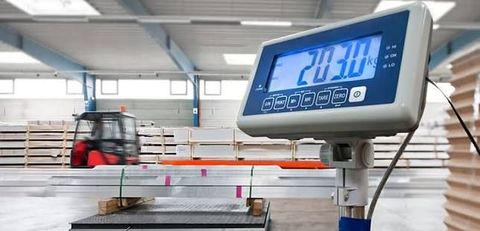
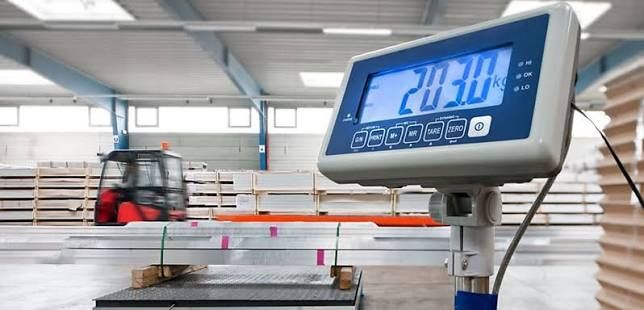
Platform scales use a rigid weighing platform supported by load cells.
They are commonly used for:
- Containers
- Components
- Boxes
- Pallets
- Raw materials
- Finished products
Platform systems are available in different capacities and platform dimensions.
Hopper Weighing Systems
Hopper scales measure materials inside a storage or processing hopper.
They are frequently used in batching and material-dosing applications. Load cells positioned beneath the hopper measure changes in material quantity as product enters or leaves the vessel.
Conveyor Weighing Systems
Conveyor weighing systems measure materials while they are moving through a production or material-handling line.
Belt scales can continuously measure bulk materials on conveyors, while checkweighers can verify individual products moving along a packaging line.
Truck Weighing Systems
Truck scales, also called weighbridges, measure the weight of vehicles and their loads.
They are commonly used at industrial facilities, warehouses, mining operations, agricultural facilities, and material-handling sites.
Checkweighing Systems
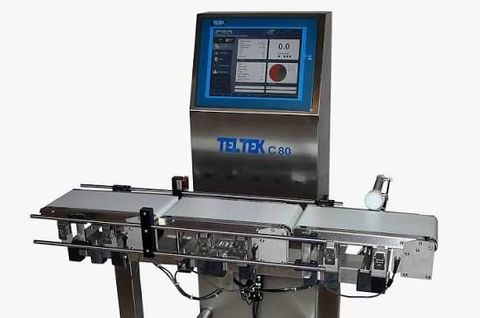
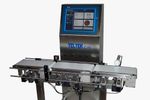
Automatic checkweighers measure individual packages while they move through a production line.
They can identify products outside predefined weight limits and communicate with downstream equipment.
Industrial Weighing System Comparison
| System Type | Typical Application | Measurement Method |
|---|---|---|
| Platform scale | Pallets and containers | Static weighing |
| Hopper scale | Batching and processing | Load-cell measurement |
| Conveyor scale | Bulk material handling | Continuous weighing |
| Checkweigher | Packaged products | Dynamic weighing |
| Truck scale | Vehicles and bulk loads | Static vehicle weighing |
Factors That Affect Weighing Accuracy
Several factors can influence the performance of an industrial weighing system.
Load Cell Selection
Load cells should be matched to the expected load range and mechanical configuration. Selecting an inappropriate capacity can affect measurement performance and system longevity.
Environmental Conditions
Temperature changes, moisture, dust, vibration, and other environmental conditions can influence weighing equipment.
Industrial systems may therefore require suitable enclosures, mounting arrangements, environmental protection, and installation practices.
Mechanical Installation
The weighing structure must be installed correctly. Mechanical friction, restricted movement, uneven loading, or unwanted contact can introduce measurement errors.
Calibration
Regular calibration and verification help maintain measurement performance. Calibration procedures should follow the requirements established for the equipment and application.
Applications of Industrial Weighing Systems
Industrial weighing technologies are used across numerous sectors.
| Industry | Typical Applications |
|---|---|
| Manufacturing | Component and material measurement |
| Food processing | Ingredient batching and package verification |
| Pharmaceuticals | Controlled material measurement |
| Chemicals | Batch and bulk material measurement |
| Mining | Bulk material and vehicle weighing |
| Agriculture | Grain, feed, and produce measurement |
| Logistics | Pallet and shipment weighing |
| Packaging | Automated checkweighing |
Automation and 2026 Technology Trends
Modern industrial weighing systems can connect with programmable controllers, production software, sensors, and industrial communication networks.
Digital indicators and controllers can provide real-time measurement data, while automated systems can use weight information to regulate material flow or trigger process actions.
Advanced systems may also support remote monitoring, production data collection, recipe management, and integration with broader manufacturing automation. The appropriate level of connectivity depends on the operational requirements of the facility.
Best Practices for Industrial Weighing
Consistent weighing performance requires both appropriate equipment selection and proper maintenance.
Key practices include:
- Keep weighing platforms and structures clean.
- Prevent unwanted contact around weighing components.
- Check load cells and cables regularly.
- Verify calibration according to established procedures.
- Inspect mounting structures for mechanical problems.
- Protect equipment from unsuitable environmental conditions.
- Avoid loads beyond the rated capacity.
- Check zero readings during routine inspections.
- Review unusual measurement changes promptly.
- Maintain records of calibration and verification activities.
Frequently Asked Questions
What are industrial weighing systems?
Industrial weighing systems are measurement systems used to determine the mass or weight of materials, products, containers, vehicles, and bulk loads in industrial environments.
How does an industrial weighing system work?
A load is applied to a weighing structure, load cells detect the resulting force, and electronic equipment converts the signal into a weight measurement that can be displayed, recorded, or used for process control.
What is a load cell?
A load cell is a sensing component that converts mechanical force from an applied load into an electrical signal that can be processed into a weight measurement.
What are industrial weighing systems used for?
They are used for batching, material measurement, inventory monitoring, package verification, bulk handling, vehicle weighing, production control, and automated manufacturing processes.
How do I choose an industrial weighing system?
Consider the material being measured, expected load range, required accuracy, static or dynamic operation, environmental conditions, weighing structure, production rate, and integration requirements.
Conclusion
Industrial weighing systems combine mechanical structures, load cells, electronic measurement components, and control technologies to provide weight information for industrial processes. Platform scales, hopper systems, conveyor scales, truck scales, and checkweighers address different measurement requirements.
Selecting the right system requires consideration of load range, material characteristics, operating conditions, required accuracy, installation environment, and automation needs. Proper installation, calibration, verification, and maintenance are equally important for maintaining reliable weighing performance.