Top Tips and Tricks for Choosing the Best Modern Office Furniture
Practical guidance on ergonomics, flexible layouts, durability, sustainability, Indian standards, and planning tools for modern office furniture.
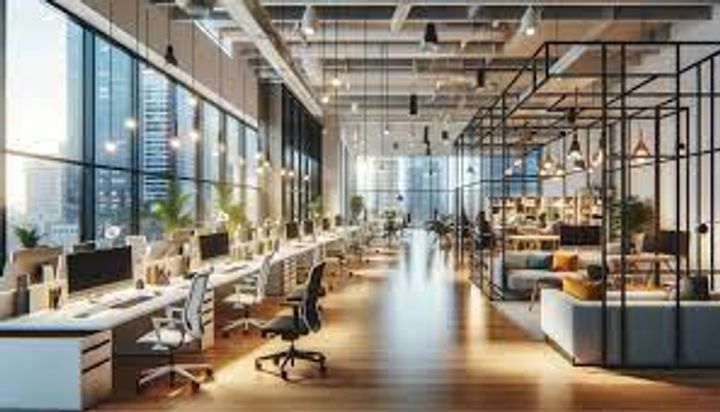
Modern office furniture reflects how workplaces operate today. Instead of focusing only on appearance, contemporary offices often combine ergonomic chairs, adaptable desks, collaborative areas, storage, acoustic elements, and technology-ready layouts. The goal is to support concentration, communication, movement, and practical use of office space.
The right selection depends on office size, number of users, work patterns, equipment, and daily activities. A useful approach begins with workplace requirements rather than trends alone.
Why the Choice Matters
Furniture influences posture, movement, organization, accessibility, and daily comfort. Poorly arranged workstations may encourage awkward positions or limit movement, while adjustable furniture can help users maintain more neutral working postures. OSHA guidance recommends adjustable furniture, suitable workstation arrangements, adequate desk clearance, and appropriate monitor placement.
This matters to employees, facility teams, business owners, and workplace designers. It is particularly relevant in hybrid offices, where desks may be shared by different users.
A practical checklist includes:
- Adjustable seating with suitable back and arm support
- Desk space for equipment and leg movement
- Cable management for computers and charging devices
- Storage suited to daily work habits
- Furniture that can be rearranged as needs change
Recent Workplace Developments
Workplace planning changed notably during 2025 and 2026. CBRE’s India Office Occupier Survey, published September 9, 2025, reported that 94% of surveyed occupiers preferred at least three office days per week, while 73% planned to use physical workplace design to improve office experience. The survey also highlighted attention to next-generation workplaces and sustainability goals.
In January 2026, CBRE described offices as increasingly dynamic environments focused on connection, collaboration, and community, with hybrid work influencing workplace design.
Recent Indian furniture trends include modular workstations, height-adjustable desks, personal storage, privacy areas, natural finishes, and technology integration. These features support focused work, collaboration, and changing occupancy patterns.
| Feature | Practical purpose |
|---|---|
| Height-adjustable desk | Supports varied working positions |
| Ergonomic chair | Improves adjustment and support |
| Modular workstation | Enables layout changes |
| Acoustic divider | Separates activity zones |
| Mobile storage | Supports flexible desk use |
Rules and Standards in India
Indian office furniture can be affected by BIS standards and quality-control requirements. A Press Information Bureau update dated May 27, 2026, discussed recent amendments and implementation matters involving furniture standards, including work chairs and general-purpose chairs.
Another PIB update stated that Quality Control Order S.O.801(E), dated February 14, 2025, made specified furniture standards mandatory for large-scale industries from February 13, 2026, and for MSMEs from August 13, 2026. Categories include work chairs, tables, desks, and storage units.
Organizations should check the latest applicable BIS requirements for their furniture category and organization type. Ergonomic guidance is also important because furniture dimensions and adjustability affect computer workstation setup.
Tools and Resources
Useful planning resources include:
- Space-planning templates for desks, walkways, meeting areas, and storage
- Ergonomic checklists for chairs, desks, monitors, and keyboards
- Room-planning software for comparing layouts
- Measurement worksheets for dimensions and clearances
- Sustainability checklists covering materials, durability, and environmental documentation
Frequently Asked Questions
What is the most important feature in modern office furniture?
Ergonomic adjustability is particularly useful for computer-based work. Seating and desks should allow comfortable, neutral positions and posture changes during the day.
Are height-adjustable desks necessary for every office?
No. Their usefulness depends on work roles, equipment, space, and user preferences.
How can furniture support hybrid work?
Flexible layouts, shared desks, personal storage, accessible power, and multipurpose areas can help accommodate changing attendance patterns.
Why do furniture standards matter in India?
Applicable standards establish requirements for factors such as strength, stability, durability, materials, and workmanship.
Should appearance be the main selection criterion?
No. Design matters, but ergonomic fit, dimensions, durability, flexibility, accessibility, and maintenance should also guide the decision.
Conclusion
Choosing modern office furniture is mainly a planning exercise. A balanced approach combines ergonomic design, flexible layouts, practical dimensions, useful storage, durable materials, and awareness of applicable Indian standards. Recent workplace developments point toward adaptable, hybrid, sustainable, and technology-ready environments. Selecting furniture around real work patterns can help create an office that remains practical as needs evolve.
Disclaimer
This article provides general educational information and is not a substitute for professional ergonomic, architectural, workplace, or regulatory guidance. Rules and standards may change, so readers should verify current requirements applicable to their situation.