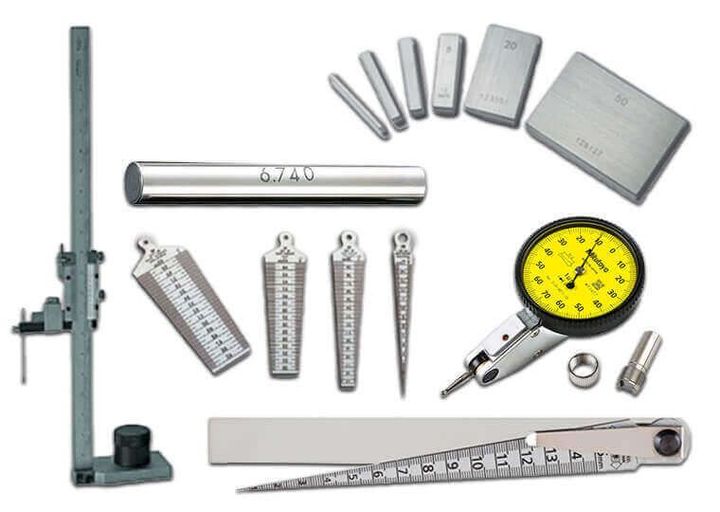
Precision Measuring Instruments Explained: A Complete Guide with Insights, Tips & Useful Information
Precision measuring instruments are specialized devices designed to determine dimensions, force, pressure, time, temperature, and other physical parameters with a high level of accuracy. These tools exist to support industries where even small deviations can influence performance, reliability, and safety. They are widely used in engineering, scientific research, manufacturing, industrial automation, laboratory testing, and material quality evaluation.
Their development began with early mechanical tools like calipers and micrometers, and has expanded into advanced digital and optical systems capable of capturing extremely fine measurements. Today, modern technologies such as laser scanning, coordinate measuring machines (CMM), and electronic metrology systems allow professionals to evaluate tolerances with more precision than ever before.
Precision instruments exist because industries rely on standardized accuracy to maintain consistency in processes. Whether creating machine parts, conducting scientific experiments, inspecting structural elements, or testing materials, reliable measurement ensures correct functionality and reduces errors in critical applications.
Importance: Why Precision Measurement Matters Today
Accuracy is central to modern engineering and quality assurance. Precision measuring instruments support reliability, safety, compliance, and standardization. Their importance can be understood across several key areas.
Modern Applications
-
Manufacturing and production: Ensures components are within defined tolerance limits.
-
Aerospace and automotive sectors: Supports safe mechanical performance and structural integrity.
-
Healthcare and laboratory science: Enables accuracy in diagnostics, testing, and equipment calibration.
-
Industrial automation: Helps machines operate efficiently with controlled variability.
-
Material analysis: Verifies hardness, thickness, tensile strength, or microstructure.
Who It Affects
-
Engineers
-
Technicians
-
Researchers
-
Product designers
-
Quality control teams
-
Laboratory analysts
Problems Solved
Precision measuring instruments provide solutions to issues that arise from unreliable measurements:
-
Inconsistent production quality
-
Defective components and equipment malfunction
-
Safety risks in structural or mechanical systems
-
Errors in scientific experiments
-
Non-compliance with global or national standards
-
Uncertainty in performance testing
In industries that depend heavily on accurate data, precision measurement strengthens decision-making, increases reliability, and allows for systematic improvement.
Recent Updates: Trends and Developments in 2024–2025
Technology for precision measurement continues to evolve. Over the past year, several notable advancements have been observed across various sectors.
Digital Transformation
• 2024–2025 saw a rise in digital metrology, including Bluetooth-enabled micrometers, cloud-based calibration logs, and AI-driven measurement analytics. These systems improve data accuracy and simplify documentation for quality control environments.
Growth of Non-Contact Measurement
• Laser, optical, and 3D scanning tools have grown in adoption due to their ability to measure delicate or complex surfaces without physical contact. This trend increased significantly between March 2024 and February 2025, especially in electronics and aerospace.
Integration with Industrial Automation
• Intelligent measurement sensors are increasingly connected to Industry 4.0 platforms, enabling automated error detection and real-time equipment monitoring.
• Many industries integrated advanced coordinate measuring machines (CMM) with robotics during late 2024.
Sustainability and Material Efficiency
• Updated engineering guidelines in mid-2024 placed higher emphasis on recycling, resource optimization, and energy-efficient production, increasing demand for precise measurements to reduce material waste.
Laws or Policies Influencing Precision Measuring Instruments
Regulations play an important role in maintaining standardized measurement practices across industries. While policies vary by country, several common frameworks apply internationally.
Metrology Standards
-
Many nations follow principles outlined by the International Organization for Standardization (ISO) and the International Bureau of Weights and Measures (BIPM).
-
ISO 9001 and ISO/IEC 17025 outline quality requirements for calibration and testing laboratories.
-
These guidelines ensure consistent measurement techniques and reliable calibration.
Industry-Specific Requirements
-
Aerospace sectors follow guidelines similar to AS9100, which emphasize traceability and precision.
-
Pharmaceutical and healthcare industries follow strict measurement accuracy under Good Laboratory Practices (GLP) and Good Manufacturing Practices (GMP).
-
Engineering, construction, and automotive sectors often follow national metrology acts that regulate measurement accuracy.
Government Programs
-
Some countries operate national metrology institutes (NMIs) that maintain primary reference standards. Examples include NIST (USA), NPL (India), and NPL (UK).
-
These institutions support calibration, measurement verification, and scientific research to uphold accuracy across industries.
Tools and Resources: Helpful References and Applications
Professionals working with precision measuring instruments benefit from digital tools, calibration guidelines, and industry-specific resources. The following categories provide useful insights.
Measurement and Calibration Tools
-
Metrology software for dimensional analysis
-
Digital measurement logbooks for tracking instrument accuracy
-
Sensor analytics platforms for interpreting measurement data
-
Online converters for dimensional, thermal, and mechanical calculations
Industry Guidelines and Portals
-
ISO Online Browsing Platform (for standards)
-
National metrology institute websites (NIST, NPL, PTB, etc.)
-
Engineering manuals and technical handbooks
-
Industrial automation knowledge bases
Instrument Categories
Below is a simple table that outlines major types of precision measuring instruments and their typical applications.
| Instrument Type | Function | Common Usage |
|---|---|---|
| Micrometers | Measures small dimensions | Machining, manufacturing |
| Vernier calipers | Linear dimensions | Mechanical workshops |
| Dial indicators | Surface variations | Quality inspection |
| CMM systems | 3D dimensional accuracy | Aerospace, automotive |
| Laser scanners | Non-contact scans | Electronics, design |
| Pressure gauges | Pressure monitoring | Industrial processes |
| Thermometers & thermal sensors | Temperature data | Laboratories, HVAC |
Key Practices for Better Accuracy
-
Maintain a consistent calibration schedule
-
Store instruments in controlled environments
-
Avoid excessive force while using mechanical tools
-
Record data using standardized units
-
Cross-check measurements with reference instruments
FAQs
What are precision measuring instruments used for?
They are used to determine measurements—such as length, angle, pressure, or temperature—with high accuracy in engineering, laboratory, and manufacturing environments.
How often should measuring instruments be calibrated?
Calibration schedules differ depending on usage, environment, and instrument type. Many laboratories follow a six-month or annual calibration routine based on guidelines from national metrology institutes.
What affects the accuracy of precision measuring tools?
Temperature changes, improper handling, environmental conditions, wear over time, and incorrect measurement techniques can all influence accuracy.
Are digital measuring tools more accurate than mechanical ones?
Digital instruments provide easier readings and improved repeatability, but the overall accuracy depends on the design, calibration, and environmental conditions.
Why is traceability important in measurement?
Traceability ensures that measurement results can be linked to recognized national or international standards, improving reliability and comparability across industries.
Conclusion
Precision measuring instruments play a critical role in engineering, science, and industrial operations. They support accuracy, reliability, and standardized performance across multiple fields. As industries adopt digital platforms, automation, and advanced analytics, measurement tools continue evolving to meet modern expectations. Understanding their purpose, regulatory framework, and best practices helps professionals work with greater confidence and improve the quality of processes—strengthening innovation and ensuring dependable results.