Pharmaceutical Manufacturing Equipment: Explore Types, Functions, and Applications
Pharmaceutical Manufacturing Equipment includes the machines, processing systems, laboratory equipment, utilities, and controlled-environment systems used to produce medicines. These systems can support activities ranging from preparation of raw materials and mixing to drying, tablet production, filling, sterilization, packaging, and quality testing.
The exact equipment depends on the type of pharmaceutical product being produced. Tablets and capsules require different machinery from liquids, creams, ointments, sterile injections, biological products, or inhalation products.
Pharmaceutical equipment is designed with particular attention to cleanliness, controlled processing, material compatibility, repeatable operation, and documentation. These characteristics are important because contamination, incorrect quantities, unsuitable processing conditions, and equipment-related variation can affect the quality of a finished medicine.
How Pharmaceutical Manufacturing Equipment Works
A typical pharmaceutical production sequence can contain several stages:
Material handling: Raw materials are received, identified, weighed, and transferred.
Size reduction: Mills or pulverizers reduce particles to a suitable size where required.
Mixing: Blenders and mixers combine active ingredients with other formulation materials.
Granulation: Granulators convert powders into granules with suitable physical characteristics.
Drying: Fluid bed dryers or other drying systems remove moisture.
Compression or filling: Tablet presses form tablets, while capsule or liquid filling machines place formulations into their containers.
Coating: Tablet coating equipment applies controlled layers to selected tablets.
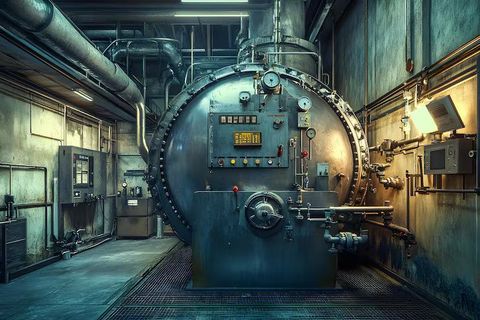
Sterilization: Autoclaves and other systems are used for suitable sterile-product processes.
Packaging: Blister, bottle, vial, ampoule, labeling, and cartoning equipment prepares products for distribution.
Quality testing: Laboratory instruments examine materials, intermediates, and finished products.
Not every pharmaceutical product passes through every stage. The production sequence depends on its dosage form and formulation.
Major Types of Pharmaceutical Equipment
Granulators convert powders into granules by controlled wet or dry processing. Granules can have improved flow and handling characteristics for subsequent production stages.
Fluid bed dryers use controlled airflow to remove moisture from granules or other suitable materials. The material is suspended or moved by heated air while moisture is removed.
Tablet compression machines apply controlled force to powder or granules inside dies to produce tablets.
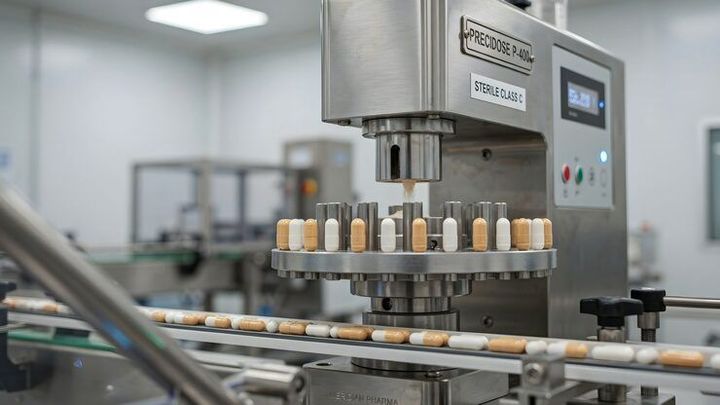
Capsule filling machines place measured quantities of pharmaceutical material into hard-shell capsules.
Liquid filling machines transfer measured quantities of liquid formulations into bottles, vials, or other containers.
Ointment and cream manufacturing systems combine and process ingredients to produce semisolid formulations.
Sterilization autoclaves use controlled heat and pressure to sterilize appropriate equipment, materials, or products.
Blister packaging machines form cavities, place tablets or capsules into them, and seal the package with a suitable lidding material.
Importance
Supporting Consistent Production
Pharmaceutical manufacturing requires controlled processing because each batch needs to meet defined specifications. Equipment helps control factors such as mixing time, temperature, pressure, particle size, moisture, fill quantity, and compression force.
Automation and electronic controls can record selected process parameters, helping production teams review whether operations remained within established limits.
Reducing Contamination Risks
Contamination and cross-contamination are important concerns in pharmaceutical production. Equipment surfaces that contact products must be appropriately designed, cleaned, maintained, and controlled.
WHO GMP guidance identifies contamination and cross-contamination among the major risks associated with pharmaceutical production. It also emphasizes suitable premises, equipment, materials, procedures, and documented controls.
Supporting Different Dosage Forms
Pharmaceutical Manufacturing Equipment is adapted to different dosage forms.
| Dosage Form | Common Equipment | Main Function |
|---|---|---|
| Tablets | Granulator, blender, tablet press | Forming solid doses |
| Capsules | Mixer, capsule filler | Filling capsule shells |
| Oral liquids | Mixing tank, liquid filler | Preparing and filling liquids |
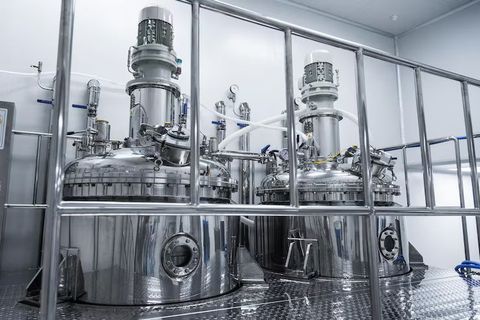
| Creams | Homogenizer, manufacturing vessel | Producing semisolid formulations |
| Ointments | Ointment vessel, homogenizer | Mixing and processing semisolids |
| Injections | Sterile filling system, autoclave | Controlled sterile production |
| Dry powders | Mill, blender, dryer | Processing powdered materials |
| Packaged medicines | Blister, bottle, labeling equipment | Product packaging |
Improving Process Control
Modern equipment can use sensors and automated controls to monitor temperature, pressure, speed, weight, humidity, and other variables.
For example, a mixing vessel may contain temperature sensors and controlled agitation. A tablet press may monitor compression conditions and reject selected units when defined parameters are outside the established range.
Supporting Quality Assurance
Equipment qualification and process validation are important parts of pharmaceutical manufacturing. WHO guidance describes GMP as a quality-assurance framework in which production and testing processes should be clearly defined, validated, reviewed, and documented.
This means equipment selection is connected with the broader quality system rather than being an isolated engineering decision.
Recent Updates
Revised Manufacturing Requirements in India
India's revised Schedule M has been a major recent development for pharmaceutical production. The revision updated Good Manufacturing Practices and requirements relating to premises, plant, and equipment for pharmaceutical products. It was notified in December 2023.
The revised requirements became effective for manufacturers with turnover above ₹250 crore from June 2024. A conditional extension was subsequently provided for eligible manufacturers with turnover of ₹250 crore or less, with the extended compliance period running through December 2025.
Equipment Upgradation
India's Department of Pharmaceuticals introduced the Revamped Pharmaceutical Technology Upgradation Assistance Scheme in 2024 to support pharmaceutical units upgrading technology for alignment with revised Schedule M and WHO-GMP requirements.
In a February 2026 update, the government reported that 255 pharmaceutical companies had received approval under the scheme, with sanctioned assistance totaling ₹248.20 crore.
This development has increased attention toward equipment modernization, facility improvements, quality systems, and technology upgrades.
Sterile Manufacturing Controls
Sterile pharmaceutical production requires particularly controlled environments and equipment arrangements. WHO's revised GMP guidance for sterile pharmaceutical products addresses contamination-control principles and related manufacturing requirements.
CDSCO issued a 2024 circular asking manufacturers to take necessary steps toward compliance with revised Schedule M and relevant WHO technical guidance, including the sterile-product GMP framework.
Continuous Manufacturing
Continuous manufacturing is receiving increasing attention as an alternative to some traditional batch-based production approaches. Instead of processing a complete batch through separate stages, material can move continuously through interconnected processing steps.
WHO published points to consider for continuous manufacturing of pharmaceutical products in 2026. The approach can involve continuous feeding, mixing, processing, monitoring, and controlled material flow.
Digital Monitoring and Automation
Pharmaceutical equipment increasingly incorporates sensors, electronic records, automated controls, machine monitoring, and data systems.
These technologies can help production teams monitor process conditions and maintain records. Digital systems also increase the importance of data integrity, access controls, system validation, and appropriate electronic documentation.
Laws or Policies
Drugs and Cosmetics Framework in India
Pharmaceutical manufacturing in India is regulated under the Drugs and Cosmetics Act, 1940 and the Drugs Rules, 1945, with responsibilities shared between central and state regulatory authorities.
The regulatory framework includes requirements concerning manufacturing licenses, premises, equipment, quality systems, inspections, and Good Manufacturing Practices. Government information states that manufacturing premises must comply with applicable license conditions and Schedule M requirements.
Revised Schedule M
Revised Schedule M addresses pharmaceutical quality systems, quality risk management, GMP, qualification, validation, and requirements for premises, plant, and equipment.
For equipment, this means manufacturers need to consider appropriate design, installation, qualification, maintenance, cleaning, operation, and documentation.
Equipment Qualification
Equipment qualification can include several stages, commonly described as:
Design Qualification: Establishes that the proposed design meets defined requirements.
Installation Qualification: Verifies that equipment has been installed according to approved specifications.
Operational Qualification: Checks whether the equipment operates correctly within specified ranges.
Performance Qualification: Confirms that the equipment performs consistently under intended operating conditions.
The exact qualification approach depends on the equipment and its intended use.
Cleaning and Validation
Cleaning procedures are important where equipment comes into contact with pharmaceutical materials. Residues from previous products, cleaning agents, dust, microorganisms, or other materials can create contamination risks.
WHO guidance emphasizes adequate cleaning procedures as part of preventing contamination and cross-contamination.
Inspections and Quality Systems
Regulatory inspections examine whether pharmaceutical manufacturing facilities follow applicable GMP requirements. WHO describes inspections as part of the overall quality-management system and notes that they can be used to assess GMP compliance and manufacturing authorization requirements.
Tools and Resources
Process Control Systems
Industrial control systems can monitor equipment conditions such as temperature, pressure, speed, flow, and weight. These systems can also control selected process steps according to approved operating parameters.
Weighing Systems
Accurate weighing equipment is important during material dispensing and formulation. Electronic balances and weighing systems can record quantities and support material traceability.
Laboratory Testing Equipment
Quality-control laboratories use analytical instruments to examine raw materials, in-process samples, and finished products. Equipment can include chromatography systems, spectroscopic instruments, dissolution testers, hardness testers, moisture analyzers, and microbial testing equipment.
Cleanroom Monitoring
Cleanroom environments can use instruments that monitor temperature, humidity, airborne particles, pressure differences, and other environmental conditions.
HVAC systems are particularly important because controlled temperature, humidity, airflow, and cleanliness can influence pharmaceutical manufacturing environments. WHO guidance addresses HVAC design, installation, qualification, and maintenance for pharmaceutical facilities.
Equipment Documentation
Important equipment records can include:
Equipment specifications
Operating procedures
Cleaning procedures
Maintenance records
Calibration records
Qualification documents
Validation records
Deviation records
Change-control records
Together, these records provide documented evidence about how equipment is installed, operated, maintained, and controlled.
WHO and Indian Regulatory Resources
The WHO pharmaceutical GMP compendium provides extensive guidance covering manufacturing, quality control, equipment qualification, personnel, premises, and related quality systems. The 10th edition of Volume 2 was published in 2024.
In India, CDSCO publications and Schedule M materials provide regulatory references for pharmaceutical manufacturers.
FAQs
What is Pharmaceutical Manufacturing Equipment?
Pharmaceutical Manufacturing Equipment includes machines and supporting systems used to process pharmaceutical materials, manufacture dosage forms, sterilize appropriate products or equipment, package medicines, and support quality testing.
What equipment is used for tablet manufacturing?
Tablet production can involve mills, granulators, blenders, dryers, tablet compression machines, dedusters, metal detectors, and coating equipment. The exact sequence depends on the formulation and manufacturing process.
What is the role of Pharmaceutical Manufacturing Equipment in GMP?
Pharmaceutical Manufacturing Equipment supports controlled processing, cleaning, qualification, validation, monitoring, and documentation. Properly designed and maintained equipment forms part of the broader GMP system.
What equipment is used for sterile pharmaceutical production?
Sterile production can involve cleanroom systems, sterile filling equipment, sterilization systems, filtration equipment, environmental monitoring instruments, and controlled material-transfer systems. Requirements depend on the specific product and process.
Why is equipment qualification important in pharmaceutical manufacturing?
Equipment qualification provides documented evidence that equipment has been appropriately designed or selected, installed, operated, and shown to perform as intended. It is an important part of pharmaceutical quality systems.
Conclusion
Pharmaceutical Manufacturing Equipment covers a broad range of machines and controlled systems used for material preparation, formulation, drying, compression, filling, sterilization, packaging, and testing. Modern pharmaceutical facilities increasingly combine automated controls, sensors, digital records, environmental monitoring, and advanced processing technologies with established GMP principles. In India, revised Schedule M has placed additional emphasis on pharmaceutical quality systems, qualification, validation, premises, plant, and equipment. Understanding these equipment categories helps explain how different pharmaceutical dosage forms move from raw materials through controlled manufacturing stages.