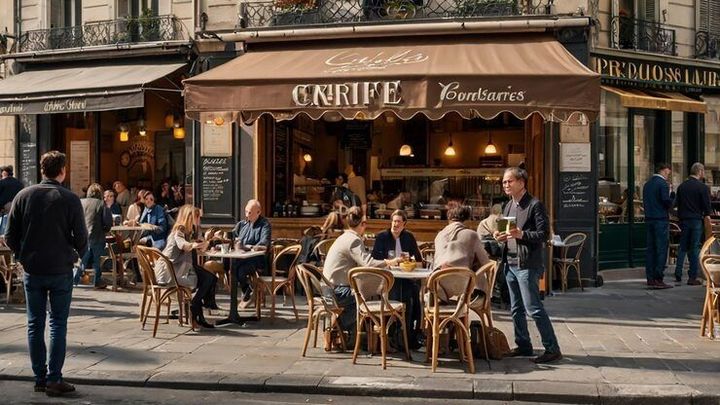
Paris Street Cafes: Learn the Basics of Parisian Cafe Culture and Resources
Paris Street Cafes are cafes located throughout the streets, squares, boulevards, and neighborhoods of Paris, France. They are closely associated with everyday Parisian life and provide places where people can have coffee, meals, pastries, or drinks while spending time indoors or on outdoor terraces.
A Parisian café is not simply a place centered on one particular drink. Historically, cafés have functioned as social spaces where people could meet friends, read newspapers, discuss ideas, work, observe street life, or take a break during the day.
Outdoor seating is one of the most recognizable features. Tables and chairs are often arranged along sidewalks or terraces, allowing visitors to experience the surrounding streetscape while eating or drinking.
Origins of Café Culture
Café culture developed in Paris over several centuries. The emergence of cafés in the city created new public spaces where people from different backgrounds could gather.
During the 18th and 19th centuries, cafés became associated with intellectual, artistic, literary, and political discussions. Writers, artists, journalists, students, and other members of urban society used cafés as places for conversation and observation.
Over time, café culture became integrated into ordinary daily routines rather than remaining limited to intellectual or artistic circles.
Typical Features
Paris Street Cafés can vary considerably, but several characteristics appear frequently:
Outdoor terraces: Tables placed along sidewalks or designated terraces.
Small tables: Compact tables are common where street space is limited.
Chairs facing outward: Seating may be arranged toward the street rather than toward other tables.
Traditional interiors: Some cafés retain older decorative elements, mirrors, woodwork, or tiled floors.
Coffee and pastries: Espresso-based drinks, croissants, and other bakery products are common.
Meals: Many cafés also serve breakfast, lunch, snacks, and evening meals.
Street-facing windows: Large windows can connect the interior with the surrounding neighborhood.
The exact menu, architecture, atmosphere, and opening pattern differ from one establishment to another.
Café, Brasserie, and Bistro
Visitors may encounter several terms when exploring Parisian dining culture.
A café traditionally emphasizes drinks, light meals, snacks, and social use, although many modern cafés have extensive food menus.
A brasserie is generally associated with a broader meal-oriented format and may have a larger menu.
A bistro usually refers to a smaller, more informal restaurant, although the distinctions between these terms are not absolute.
Modern establishments can combine characteristics from several categories, so the name alone does not always describe the complete experience.
Importance
Social Life
Cafés have long provided informal meeting places within Parisian neighborhoods. People may meet for conversation, read, work, or simply spend time outside the home.
This social function helps explain why cafés remain an important part of the city's cultural identity.
Connection With Street Life
Outdoor seating creates a direct relationship between cafés and public streets. Customers can observe pedestrians, cyclists, architecture, traffic, and neighborhood activity while sitting at a table.
For visitors, this arrangement can make a café visit part of exploring the city rather than an isolated indoor activity.
Architectural Character
Many cafés occupy historic buildings or streets with distinctive architectural features. Their façades, awnings, signs, terraces, windows, and seating arrangements contribute to the visual character of Paris.
Cafés can therefore be viewed as part of the broader urban environment rather than only as food and beverage establishments.
Literary and Artistic History
Parisian cafés have been associated with writers, philosophers, artists, musicians, and filmmakers. Certain establishments became gathering places for particular artistic or intellectual communities.
This history contributes to the cultural image of Parisian cafés, although contemporary cafés serve a much broader population.
Tourism
Cafés are also part of the visitor experience in Paris. Travelers often use them as convenient places to rest between museums, monuments, shopping streets, parks, and neighborhoods.
The appeal comes from the combination of food, architecture, outdoor seating, and everyday street activity.
Common Café Features
| Feature | Typical Role | Cultural Connection |
|---|---|---|
| Terrace | Outdoor seating | Street life |
| Espresso | Common coffee choice | Café tradition |
| Croissant | Breakfast or snack | French bakery culture |
| Small tables | Compact dining | Sidewalk layout |
| Awning | Shade and weather protection | Traditional façade |
| Newspaper | Leisure reading | Historical café culture |
| Set menu | Meal option | Everyday dining |
Recent Updates
Changing Café Culture
Parisian café culture continues to evolve as lifestyles, tourism, technology, and neighborhood demographics change. Traditional establishments coexist with specialty coffee shops, contemporary cafés, bakery cafés, and other modern formats.
This means visitors can encounter both historic interiors and newer interpretations of café culture.
Specialty Coffee
Specialty coffee has expanded in Paris alongside broader changes in European coffee culture. Some cafés focus on single-origin beans, manual brewing techniques, espresso preparation, and detailed information about coffee origins.
These establishments may have a different atmosphere from traditional Parisian cafés, but they form part of the city's contemporary café landscape.
Outdoor Seating
Outdoor seating remains a significant feature of Parisian streets. Changes to public-space design have also influenced how terraces, sidewalks, pedestrian areas, and traffic spaces interact.
Paris has expanded pedestrian areas and redesigned sections of public space in recent years, changing the relationship between cafés and surrounding streets.
Sustainability and Local Consumption
Environmental considerations are increasingly visible in the food and hospitality sector. Cafés may incorporate reusable materials, waste separation, seasonal ingredients, lower-waste food preparation, and energy-conscious equipment.
Practices vary by establishment, so sustainability should not be assumed simply from a café's appearance.
Digital Café Experiences
Technology has become part of everyday café use. Visitors may encounter digital menus, online reservations, contactless payment, Wi-Fi, mobile ordering, and digital maps.
At the same time, the traditional social function of sitting at a table and observing the surrounding street remains central to the classic café experience.
Café Preservation
Historic cafés contribute to Paris's cultural heritage, and some establishments have retained architectural elements over long periods.
Preservation can involve maintaining façades, interiors, signage, furniture, and other elements while adapting the establishment to modern safety, accessibility, and operating requirements.
Laws or Policies
Outdoor Terraces
Outdoor café terraces occupy public or regulated spaces and are subject to municipal rules. Paris regulates the installation and use of terraces, including requirements concerning their design, placement, dimensions, circulation space, and operating conditions.
The rules can change according to the type of terrace and location, so visitors and café operators should consult current information from the Ville de Paris.
Public Space Management
Sidewalks and streets must continue to provide appropriate space for pedestrians, accessibility, emergency movement, and other public uses. Café seating therefore operates within a broader public-space framework.
Paris's terrace policies have evolved as the city has experimented with changes to streets and public areas.
Food Hygiene
Cafés handling food are subject to French and European food-hygiene requirements. These rules cover areas such as food handling, storage, cleanliness, temperature control, and traceability.
Food establishments must follow the requirements applicable to their activities.
Accessibility
French accessibility requirements can apply to establishments open to the public. Depending on the building and circumstances, accessibility can involve entrances, circulation, seating, sanitary facilities, and other aspects of the premises.
Historic buildings may have particular constraints, but accessibility remains part of public-establishment planning.
Smoking Rules
Smoking restrictions apply to enclosed public places in France, while additional rules can apply to outdoor areas depending on their configuration and applicable regulations.
Visitors should follow the signs and current local requirements at each establishment.
Tools and Resources
Paris Tourism Resources
The official Paris tourism portal can help visitors explore neighborhoods, cultural attractions, food traditions, walking routes, and other aspects of the city.
It can also provide information about events and areas to explore before visiting different café districts.
Public Transport Maps
Paris has an extensive public transport network. Metro, bus, tram, and regional rail information can help visitors reach café neighborhoods without relying entirely on private transportation.
Transport maps are particularly useful when combining café visits with museums, monuments, markets, or parks.
Digital Maps
Mapping applications can help identify cafés, opening hours, locations, customer reviews, walking routes, and nearby attractions.
Opening information can change, so checking the current listing before visiting is useful.
French Language Resources
Basic French vocabulary can make café interactions easier. Common words include:
Café: Coffee or café establishment, depending on context.
Terrasse: Outdoor seating area.
Menu: Menu or set meal, depending on context.
Addition: The bill.
Eau: Water.
Bonjour: Hello or good day.
Merci: Thank you.
Neighborhood Guides
Different areas of Paris have distinct architectural and cultural characteristics. Neighborhood guides can help visitors understand the surroundings rather than selecting cafés only by name.
Areas such as Saint-Germain-des-Prés, Montmartre, the Latin Quarter, Le Marais, and Canal Saint-Martin each have different urban environments and café patterns.
Café Etiquette Resources
Basic etiquette can make visits more comfortable. Visitors should check whether they are ordering at the counter or sitting at a table, understand that prices can vary by seating arrangement, and observe the establishment's current ordering practices.
FAQs
What are Paris Street Cafés?
Paris Street Cafés are cafés located throughout Paris, often featuring outdoor terraces and street-facing seating. They are associated with coffee, meals, conversation, relaxation, and everyday urban life.
Why are Paris Street Cafés culturally important?
Paris Street Cafés have historically functioned as social and cultural meeting places. They have also been connected with literary, artistic, and intellectual communities while remaining part of ordinary neighborhood life.
What do people usually order at Parisian cafés?
Common choices include espresso, coffee with milk, tea, pastries, sandwiches, salads, and prepared meals. Menus vary between establishments.
What is a Paris café terrace?
A café terrace, or terrasse, is an outdoor seating area associated with a café or restaurant. It may be located directly along a sidewalk or within another regulated public-space arrangement.
Which Paris neighborhoods are associated with café culture?
Saint-Germain-des-Prés, the Latin Quarter, Montmartre, Le Marais, and Canal Saint-Martin are among the areas where visitors can encounter varied café environments. Each neighborhood has its own architectural and street character.
Conclusion
Paris Street Cafés are an important part of the city's social, architectural, and everyday cultural landscape. Their history extends from early public meeting places to contemporary establishments combining traditional café customs with modern food, coffee, and digital practices. Outdoor terraces, compact tables, street-facing seating, and neighborhood locations remain recognizable features. Understanding café types, local etiquette, public-space rules, and neighborhood differences can help visitors better appreciate Parisian café culture.