Organic Metal Jewelry: Guide to Sculptural Styles and Design Details
Organic metal jewelry refers to jewelry designs that use flowing, irregular, curved, textured, or nature-inspired forms rather than strictly geometric shapes. The term “organic” describes the visual language of the design, while the metal can include materials such as silver, gold, platinum, brass, bronze, titanium, or mixed metals.
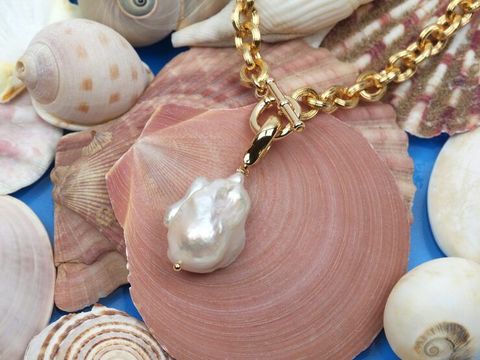
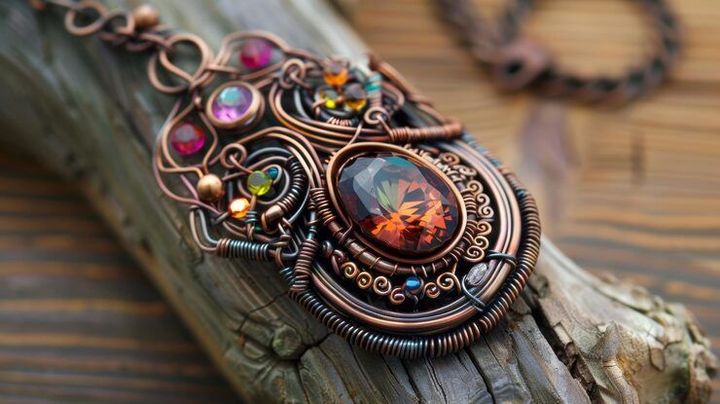
These designs may resemble natural forms such as leaves, waves, branches, stones, shells, droplets, or sculpted surfaces. Some pieces use smooth curves, while others deliberately preserve rough textures, uneven surfaces, hammered marks, or asymmetrical shapes.
How Organic Metal Jewelry Developed
Nature-inspired jewelry has appeared in many historical periods. Art Nouveau jewelry from the late 19th and early 20th centuries, for example, frequently incorporated flowing lines, plants, insects, flowers, and other natural motifs.
Modern organic metal jewelry also developed through advances in metalworking and jewelry fabrication. Techniques such as wax carving, casting, forging, fabrication, texturing, and computer-aided design allow designers to create complex three-dimensional forms.
Contemporary makers may combine traditional craftsmanship with digital modeling. A designer can create a digital form, produce a wax or resin pattern, cast it in metal, and then refine the surface manually.
Main Styles of Organic Metal Jewelry
Organic metal jewelry includes several recognizable design approaches:
Sculptural forms: These pieces use three-dimensional shapes that can resemble small works of sculpture.
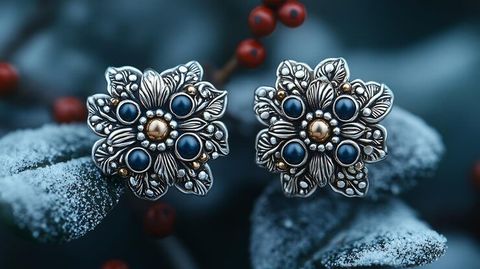
Botanical designs: Leaves, petals, branches, vines, and other plant structures influence the shape.
Fluid forms: Curved surfaces and flowing lines create a visual impression similar to water, waves, or movement.
Hammered textures: Repeated hammer marks create irregular surfaces and variations in how light reflects from the metal.
Asymmetrical designs: One side or element may differ from another instead of following a mirrored pattern.
Natural texture designs: Surfaces may imitate bark, stone, sand, shells, or other natural materials.
Minimal organic forms: Simple curved shapes can create an organic appearance without detailed natural motifs.
Common Metals and Their Characteristics
The choice of metal affects color, weight, hardness, surface appearance, and fabrication methods.
| Metal | Common Appearance | Typical Design Characteristics |
|---|---|---|
| Silver | Bright white-gray | Suitable for detailed textures and sculptural forms |
| Gold | Yellow, white, or rose tones | Used for smooth, textured, and artistic designs |
| Platinum | Naturally white-gray | Dense metal suitable for durable jewelry |
| Brass | Warm yellow-gold tone | Often used for artistic and experimental designs |
| Bronze | Warm brown-gold tone | Suitable for textured sculptural work |
| Titanium | Gray with lightweight structure | Useful for contemporary sculptural designs |
The exact properties of a piece depend on the alloy, manufacturing method, thickness, finishing process, and construction.
Importance
Why Organic Metal Jewelry Matters
Organic metal jewelry provides an alternative to highly symmetrical or geometric design. Its irregular shapes can create visual movement and make the surface itself an important part of the design.
The approach is also useful for designers who want jewelry to resemble natural forms without reproducing them literally. A ring may use a flowing band rather than a perfectly circular profile, while a pendant may use an abstract leaf-like structure.
Where Organic Designs Are Used
Organic metal forms appear across many jewelry categories, including:
Rings with curved or uneven bands
Sculptural necklaces with three-dimensional pendants
Earrings with asymmetrical surfaces
Bracelets with flowing profiles
Brooches inspired by botanical structures
Cuff designs using hammered or irregular textures
Statement pieces combining several sculptural elements
Design and Manufacturing Techniques
Different production methods create different results. Hand forging involves shaping heated or workable metal through controlled hammering and forming. Fabrication involves cutting, bending, joining, and finishing separate metal components.
Casting is another important technique. In lost-wax casting, a model is created in wax or another suitable material, surrounded by an investment material, and processed so the model leaves a cavity. Molten metal is then introduced into the cavity before the casting is removed and finished.
Computer-aided design can also be used for complex organic forms. Digital models allow designers to examine dimensions and shapes before physical production, while technologies such as 3D printing can create patterns or models for casting.
Functional Importance and Limitations
Organic jewelry designs can provide visual variety and distinctive surface textures, but their irregular structures can create practical challenges. Thin projections may be vulnerable to bending, while deep textures can collect dirt or make polishing more difficult.
Wearability also depends on the shape. A large sculptural pendant may require different construction considerations from a smooth ring because weight, balance, edges, and contact with clothing can affect everyday use.
| Design Feature | Main Purpose | Practical Consideration |
|---|---|---|
| Curved surfaces | Create flowing visual movement | Shape should remain comfortable |
| Hammered texture | Add surface variation | Deep marks can require careful cleaning |
| Asymmetry | Create visual individuality | Balance may need additional planning |
| Sculptural volume | Produce three-dimensional forms | Weight can increase with thickness |
| Botanical motifs | Connect design with nature | Fine elements may require reinforcement |
| Mixed textures | Create contrast | Different finishes may require separate maintenance |
Recent Updates
Digital Jewelry Design
From 2024 through 2026, digital jewelry design continues to expand through CAD modeling, 3D printing, digital sculpting, and computer-controlled manufacturing. These tools allow designers to create complicated curves and test proportions before producing physical pieces.
Digital workflows can also support customization. A digital model can be adjusted for dimensions, thickness, surface details, or stone placement before a physical prototype or casting pattern is produced.
3D Printing and Casting
3D printing is particularly relevant to sculptural jewelry because it can produce intricate patterns that would be difficult to create directly by hand. Printed wax or resin patterns can be used in investment casting, while some metal additive manufacturing systems can produce metal components directly.
The technology does not eliminate traditional finishing. Cast or printed pieces may still require support removal, filing, polishing, surface treatment, inspection, and other finishing processes.
AI-Assisted Design
AI-based design tools are also being explored for creative development, image generation, pattern exploration, and design variation. For jewelry, these tools can help generate visual concepts that designers subsequently modify into manufacturable forms.
However, an attractive digital image does not automatically represent a practical physical object. Metal thickness, structural strength, manufacturing limitations, wearability, and finishing requirements still need human evaluation.
Sustainability and Material Traceability
Jewelry production is also receiving greater attention regarding recycled metals, responsible sourcing, production waste, and material traceability. The environmental impact of a piece can depend on the source of its metal, manufacturing process, energy use, finishing methods, packaging, and product lifespan.
The Responsible Jewellery Council maintains standards covering responsible business practices and supply-chain issues within parts of the jewelry and precious-metals sector. Its standards can help organizations establish structured approaches to responsible sourcing and business conduct.
Laws or Policies
Material Disclosure and Consumer Information
Jewelry requirements differ by country and may cover metal purity, precious-metal markings, consumer information, chemical restrictions, product safety, and business practices.
In the European Union, the Registration, Evaluation, Authorisation and Restriction of Chemicals (REACH) framework regulates chemicals and can affect jewelry through restrictions on certain substances. Nickel release from jewelry that comes into prolonged contact with the skin is subject to specific EU restrictions under REACH.
Precious-Metal Hallmarks
Hallmarking systems vary between jurisdictions. The UK has a regulated hallmarking framework for certain precious-metal articles, with official assay offices responsible for testing and hallmarking covered items. (gov.uk)
Other countries use different purity-marking and testing systems. Therefore, a metal stamp or hallmark should be interpreted according to the jurisdiction in which the jewelry is produced, marketed, or sold.
Responsible Sourcing
International frameworks can also address the sourcing of precious metals and gemstones. The OECD Due Diligence Guidance for Responsible Supply Chains provides recommendations for businesses working with minerals from conflict-affected and high-risk areas. (oecd.org)
These frameworks do not create one universal jewelry law. Businesses and consumers need to consider the specific regulations applicable to their jurisdiction and supply chain.
Tools and Resources
CAD and Digital Modeling Tools
Computer-aided design software allows jewelry designers to create and modify three-dimensional forms. It can be particularly useful for organic designs involving complex curves, hollow structures, repeated textures, or precise dimensions.
3D Printing Systems
Resin, wax, and other printing systems can create jewelry patterns for casting. Some specialized metal additive manufacturing systems can produce metal components directly, although equipment requirements and suitable materials vary.
Metalworking Equipment
Traditional jewelry workshops may use saws, files, rotary tools, forming tools, hammers, mandrels, soldering equipment, polishing systems, and casting equipment. Each tool supports a different stage of shaping or finishing.
Measurement and Inspection Tools
Digital calipers, gauges, magnification equipment, scales, and surface inspection tools can help verify dimensions and workmanship. For precious-metal products, specialized testing and assay systems may also be used where required.
Standards and Industry Resources
Organizations such as the International Organization for Standardization, national assay offices, consumer-protection authorities, and responsible-sourcing organizations provide information relevant to materials, testing, supply chains, and product requirements.
FAQs
What is organic metal jewelry?
Organic metal jewelry uses flowing, irregular, asymmetrical, textured, or nature-inspired forms. It can be made from metals such as silver, gold, platinum, brass, bronze, and titanium.
How is organic metal jewelry made?
Organic metal jewelry can be produced through forging, fabrication, casting, wax carving, soldering, machining, and digital manufacturing. Modern workflows may combine CAD modeling and 3D printing with traditional finishing.
What makes organic metal jewelry different from geometric jewelry?
Organic metal jewelry generally emphasizes curves, irregular forms, natural textures, and asymmetry, while geometric jewelry commonly uses recognizable shapes such as circles, squares, triangles, and straight lines.
Is organic metal jewelry durable?
Durability depends on the metal, alloy, thickness, construction, and design. Thin extensions or delicate sculptural elements may require more care than simple solid forms.
How is technology changing organic metal jewelry?
CAD modeling, 3D printing, digital sculpting, and AI-assisted concept development are expanding the range of forms designers can explore. Physical testing and skilled finishing remain important for turning digital concepts into wearable objects.
Conclusion
Organic metal jewelry uses flowing shapes, irregular textures, natural references, and sculptural construction to create distinctive visual forms. Traditional techniques such as forging and casting now work alongside CAD modeling, 3D printing, and other digital methods. Material selection, structural design, finishing, responsible sourcing, and regional regulations all influence the final piece. Understanding these factors helps explain how sculptural jewelry moves from an initial design concept to a finished wearable object.