Learn About Motor Graders: Guide, Knowledge & Helpful Details
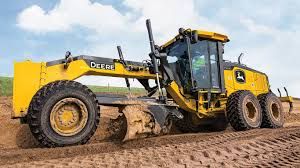
Learn About Motor Graders: Guide, Knowledge & Helpful Details Motor graders are essential pieces of heavy construction equipment widely used in road construction, mining, and land grading. They are designed to create a flat surface by cutting, spreading, and leveling soil or gravel with precision. Equipped with a long adjustable blade, a motor grader ensures smoothness and accuracy in shaping surfaces for roads, airports, and other infrastructure projects.
Motor graders exist because large-scale earthwork and infrastructure projects require machines capable of achieving fine grading and consistent surface finishing. Their ability to perform multiple tasks—such as ditching, leveling, spreading, and shaping—makes them a crucial part of modern construction and maintenance work.
Importance of Motor Graders
Motor graders play a vital role in today’s construction and infrastructure industries. They are not limited to roadwork; they are used in a variety of applications such as mining, agriculture, snow removal, and landscaping. Their precision in grading and ability to handle large-scale earthmoving tasks helps ensure project quality and safety.
Key reasons why motor graders matter today:
-
Infrastructure Development: With the rapid expansion of road networks and urban infrastructure, graders are critical for maintaining surface uniformity.
-
Sustainability and Efficiency: Modern graders are designed for fuel efficiency, reducing emissions while maintaining productivity.
-
Support for Renewable Projects: Graders are used in site preparation for solar farms, wind turbine bases, and other renewable energy setups.
-
Enhanced Safety: Properly graded roads and construction surfaces prevent water accumulation, erosion, and accidents.
Industries such as construction, defense, railways, and mining rely heavily on graders for foundational work. Their efficiency directly influences the timeline, cost, and safety of infrastructure projects, making them indispensable to modern development.
Recent Updates and Technological Trends
The motor grader industry has seen major technological progress in the past few years. Between 2023 and 2025, advancements in automation, telematics, and sustainability have reshaped the sector.
Key updates and innovations include:
-
Automation and Grade Control Systems: Modern graders are now equipped with GPS-based 3D grade control technology. This allows operators to achieve precision grading with reduced human error.
-
Electric and Hybrid Graders: Companies like Caterpillar and Komatsu have introduced prototype electric graders, aligning with global carbon reduction goals.
-
Telematics and IoT Integration: Machines now include sensors that transmit real-time data on performance, fuel usage, and maintenance needs.
-
Operator Comfort and Safety: New cabins feature ergonomic designs, climate control, and enhanced visibility for long working hours.
-
AI-Assisted Diagnostics: Predictive maintenance using AI analytics helps reduce downtime and improve machine life.
According to a 2024 market report by ResearchAndMarkets, the global motor grader market is expected to grow steadily due to infrastructure investments in Asia, Africa, and Latin America. In India, initiatives such as the National Infrastructure Pipeline (NIP) and PM Gati Shakti have significantly increased demand for graders.
Laws and Policies Related to Motor Graders
Motor graders are regulated under various equipment and safety standards to ensure proper usage and environmental compliance. Governments across the world, including India, have introduced guidelines for manufacturing, emissions, and operation.
In India:
-
Emission Standards: The Bharat Stage (CEV Stage IV) Emission Norms for Construction Equipment Vehicles, implemented in April 2021, govern permissible emission levels for graders and similar machines.
-
Import and Manufacturing Regulations: Heavy equipment manufacturers must comply with the Automotive Industry Standards (AIS) for safety and performance certification.
-
Infrastructure Development Schemes: Programs such as Bharatmala Pariyojana and Smart Cities Mission have indirectly boosted grader usage by funding large-scale construction.
-
Occupational Safety Rules: The Factories Act and Building and Other Construction Workers (BOCW) Act outline operator safety measures, training, and maintenance protocols.
Adhering to these regulations ensures safer and environmentally responsible machine operations while maintaining high productivity standards.
Tools and Resources
Professionals and learners can access various digital and educational tools to understand and monitor motor grader operations more efficiently.
Helpful Resources:
-
Manufacturer Resources:
-
Caterpillar Equipment Guide – Offers specifications and operation manuals.
-
Komatsu Grader Technology Portal – Provides insights on smart control systems.
-
-
Government & Standards Bodies:
-
BIS (Bureau of Indian Standards) – Safety and performance guidelines for heavy machines.
-
MoRTH (Ministry of Road Transport & Highways) – Infrastructure project updates and machinery requirements.
-
-
Educational Platforms:
-
Construction Equipment Training Institute (CETI) – Courses on grader operation and maintenance.
-
YouTube Channels (e.g., Volvo CE & CAT University) – Tutorials and demonstrations.
-
-
Apps & Digital Tools:
-
Trimble Earthworks App – 3D grade control and project planning.
-
John Deere JDLink – Remote machine monitoring and analytics.
-
Example: Typical Motor Grader Specifications
| Feature | Description |
|---|---|
| Engine Power | 150–250 HP |
| Blade Width | 3.5–4.3 meters |
| Operating Weight | 15,000–18,000 kg |
| Transmission | Power shift or torque converter |
| Steering Type | Articulated |
| Grade Control | GPS/3D Automated Systems |
These resources help both professionals and enthusiasts better understand the capabilities, operation, and maintenance of motor graders.
FAQs
What is a motor grader used for?
A motor grader is mainly used for creating a level surface during road construction, grading soil, and maintaining unpaved roads. It is also employed in shaping slopes, ditches, and drainage channels.
What are the main parts of a motor grader?
The key components include the moldboard (blade), frame, engine, cab, circle, drawbar, and articulation joint. Each part plays a specific role in maintaining balance and precision during grading tasks.
How does a motor grader differ from a bulldozer?
A bulldozer pushes material using a front-mounted blade, while a motor grader levels the surface using a centrally mounted blade for finer precision and smoother finishes.
Which industries use motor graders most?
Motor graders are used extensively in construction, mining, agriculture, and infrastructure projects, especially for road building and maintenance.
What maintenance practices are important for motor graders?
Regular lubrication, inspection of the hydraulic system, tire pressure monitoring, and blade alignment checks are critical for long-term efficiency.
Conclusion
Motor graders remain an integral part of global infrastructure development, offering unmatched precision and reliability in land leveling and road maintenance. The integration of modern technologies like automation, telematics, and AI-based control systems has transformed how these machines operate, making them more efficient, safe, and environmentally friendly.
As countries continue to expand and modernize infrastructure, the demand for skilled operation and understanding of graders will only increase. With proper adherence to environmental standards, use of advanced tools, and regular training, motor graders will continue to support sustainable development for years to come.