Industrial Pipe Fabrication: Process, Materials, Facts, Applications and Quality Standards
Industrial pipe fabrication is an important part of construction, manufacturing, energy, chemical processing, water treatment, and other industrial operations. It involves cutting, shaping, joining, and finishing pipes and related components according to specific engineering requirements.
A properly fabricated piping system can help businesses manage the safe and efficient movement of liquids, gases, steam, chemicals, and other materials. Because industrial piping can operate under pressure, temperature, and corrosive conditions, fabrication requires careful planning, suitable materials, qualified personnel, and quality control.
What Is Industrial Pipe Fabrication?
Industrial pipe fabrication is the process of manufacturing or assembling pipe sections and fittings into components that can be installed as part of a larger piping system.
Fabrication may include activities such as:
- Measuring and marking pipes
- Cutting and beveling
- Bending or forming
- Welding
- Installing fittings and flanges
- Surface preparation
- Inspection and testing
- Coating or finishing
Fabricated pipe assemblies are commonly prepared in workshops before being transported to an industrial facility for installation. This approach can improve consistency and reduce the amount of fabrication work required at the installation site.
Why Industrial Pipe Fabrication Is Important
Industrial facilities depend on piping networks for many essential operations. A piping system may transport water, fuel, compressed air, steam, chemicals, process fluids, or waste materials.
Operational Efficiency
Accurately fabricated pipe sections can simplify installation and help reduce unnecessary adjustments during construction. Proper dimensional control is particularly important when multiple pipe sections must connect with pumps, valves, tanks, heat exchangers, or other equipment.
Safety and Reliability
Industrial piping may be exposed to high pressure, high temperature, vibration, chemical exposure, and mechanical stress. Proper fabrication and inspection help identify potential problems before a piping system enters service.
Project Cost Management
Pipe fabrication involves material purchasing, labor, equipment, inspection, transportation, and installation. Careful planning can help control material waste and reduce avoidable rework.
Common Materials Used in Pipe Fabrication
The appropriate pipe material depends on operating conditions, pressure, temperature, fluid characteristics, environmental exposure, and applicable engineering requirements.
Carbon Steel
Carbon steel is widely used in industrial piping because of its mechanical strength and availability. It is commonly found in applications involving water, air, oil, gas, and various process systems.
Stainless Steel
Stainless steel provides good resistance to corrosion and is used in industries where cleanliness and corrosion resistance are important.
Typical applications include:
- Food and beverage processing
- Pharmaceutical manufacturing
- Chemical processing
- Water treatment
- Specialized process systems
Alloy Steel
Alloy steels can be selected for applications involving elevated temperatures, pressure, or demanding mechanical requirements. Material selection should be based on engineering specifications and operating conditions.
Plastic and Composite Materials
Certain industrial systems use materials such as PVC, CPVC, HDPE, or composite piping. These materials may be appropriate for particular chemical, water, drainage, or corrosion-resistant applications.
Industrial Pipe Fabrication Process
Pipe fabrication normally follows a sequence of controlled operations. The exact workflow varies according to the project and material.
1. Engineering and Planning
The process begins with engineering drawings, specifications, piping layouts, and material requirements.
Fabricators may review:
- Pipe sizes
- Wall thickness
- Material grades
- Connection types
- Pressure requirements
- Temperature conditions
- Fitting locations
- Welding specifications
Accurate planning helps reduce fabrication errors and material waste.
2. Material Inspection
Before fabrication begins, incoming pipes, fittings, flanges, and other components may be inspected against project documentation.
Material identification can be important because different grades may have different mechanical and chemical properties.
3. Measuring and Marking
Pipe sections are measured and marked according to fabrication drawings. Precise measurements help ensure that fabricated sections fit correctly during installation.
4. Cutting and Beveling
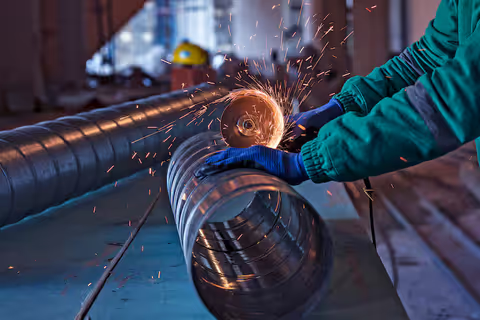
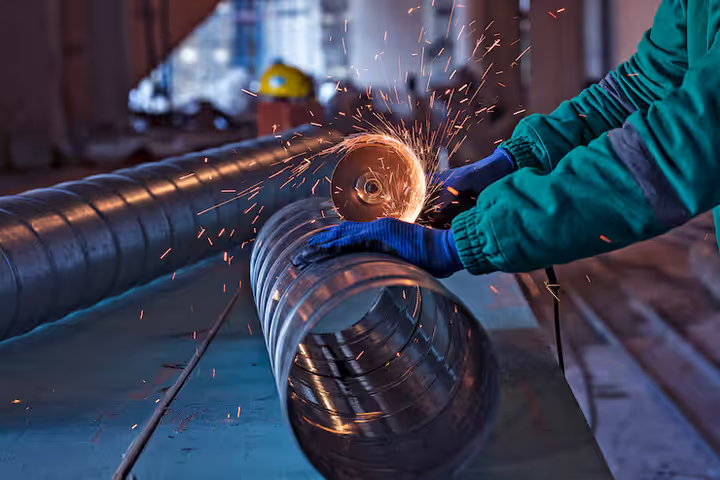
Pipes can be cut using appropriate mechanical or thermal cutting equipment. For welded connections, pipe ends may be beveled to prepare the joint for welding.
The cutting method depends on the pipe material, thickness, project requirements, and available equipment.
5. Fit-Up
During fit-up, pipe sections and fittings are positioned and aligned before permanent joining.
Fabricators check dimensions, alignment, orientation, and joint preparation before welding or other joining processes begin.
6. Welding
Welding is one of the most important operations in industrial pipe fabrication. Common welding processes include:
- GTAW or TIG welding
- GMAW or MIG welding
- SMAW or stick welding
- FCAW
- SAW for selected applications
The appropriate welding procedure depends on the material, thickness, joint design, service conditions, and applicable standards.
7. Inspection and Non-Destructive Testing
Welded joints and fabricated components may undergo visual inspection and non-destructive testing.
Common inspection methods include:
- Visual Testing (VT)
- Dye Penetrant Testing (PT)
- Magnetic Particle Testing (MT)
- Ultrasonic Testing (UT)
- Radiographic Testing (RT)
Non-destructive testing can help identify defects without damaging the component being examined.
8. Surface Preparation and Coating
Some piping systems require cleaning, blasting, painting, lining, insulation, or protective coatings.
Surface treatment depends on the operating environment and the material's exposure to corrosion, moisture, chemicals, or temperature.
9. Final Inspection and Documentation
Before shipment or installation, fabricated assemblies may undergo dimensional checks and final quality inspections.
Project documentation may include:
- Material certificates
- Welding procedure documentation
- Welder qualification records
- Inspection reports
- Non-destructive testing reports
- Pressure test records
- Coating inspection records
Maintaining appropriate documentation can be particularly important for regulated or safety-critical industrial projects.
Types of Industrial Pipe Fabrication
Different fabrication approaches are used depending on project requirements.
Shop Fabrication
Shop fabrication takes place in a controlled workshop environment. It can provide better access to fabrication equipment, lifting systems, inspection tools, and skilled personnel.
Field Fabrication
Field fabrication occurs at or near the installation site. It may be necessary when pipe sections are too large to transport or when final dimensions depend on site conditions.
Modular Pipe Fabrication
Modular fabrication involves producing larger assemblies or modules that can be transported and installed at the project site. This approach is often considered for large industrial construction projects.
Industries That Use Fabricated Piping
Industrial pipe fabrication supports a wide range of industries.
Oil and Gas
Piping systems are used for transporting and processing hydrocarbons, water, steam, and other fluids. Because many applications involve pressure and temperature considerations, material selection and inspection are important.
Chemical Processing
Chemical plants may require specialized piping materials and joining methods because different chemicals can create demanding corrosion conditions.
Power Generation
Power plants use piping for steam, cooling water, fuel, compressed air, and other utility systems.
Water and Wastewater Treatment
Fabricated piping is used for transporting raw water, treated water, chemicals, sludge, and wastewater.
Food and Beverage
Processing facilities often require piping systems designed around hygiene, cleanability, corrosion resistance, and applicable industry requirements.
Pharmaceutical Manufacturing
Pharmaceutical facilities may require carefully designed piping systems where material selection, cleanliness, surface finish, and process control are important.
Factors to Consider When Selecting a Pipe Fabrication Method
Choosing a fabrication method requires consideration of several technical and financial factors.
Operating Pressure and Temperature
The piping material, wall thickness, joining method, and inspection requirements may depend on operating pressure and temperature.
Fluid Characteristics
The chemical composition and properties of the transported fluid can influence material selection and corrosion protection requirements.
Pipe Size and Thickness
Large-diameter and heavy-wall pipes may require specialized cutting, handling, welding, and inspection equipment.
Installation Environment
Fabrication requirements can differ between an indoor manufacturing facility, an outdoor processing plant, an underground system, or a marine environment.
Maintenance Requirements
A piping system should also be evaluated for accessibility, inspection, repair, replacement, and long-term maintenance.
Quality Control in Industrial Pipe Fabrication
Quality control helps ensure that fabricated piping conforms to engineering specifications and applicable requirements.
Dimensional Inspection
Inspectors can verify pipe lengths, angles, diameters, flange orientation, and other critical dimensions.
Welding Quality
Weld quality may be evaluated through visual examination and appropriate testing methods. Welding procedures and personnel qualifications are often established before production work begins.
Pressure Testing
Depending on the piping system and applicable requirements, hydrostatic or pneumatic testing may be performed to evaluate system integrity.
Testing procedures should be designed and conducted according to the relevant engineering specifications and safety requirements.
Material Traceability
Material traceability helps organizations identify the origin and specification of pipe, fittings, flanges, and other components used in a project.
Industrial Pipe Fabrication Standards
Industrial piping projects may be subject to engineering codes, standards, contractual specifications, and local regulations.
Depending on the application, organizations may work with standards and codes from bodies such as ASME, ASTM, API, ISO, and other recognized organizations.
The applicable requirements vary according to the type of facility, piping service, location, materials, pressure, temperature, and regulatory environment.
It is important to use the current edition and project-specific requirements rather than assuming that one standard applies to every piping system.
Benefits of Professional Pipe Fabrication
A properly managed fabrication process can provide several potential benefits.
Better Dimensional Accuracy
Controlled workshop fabrication can help maintain consistent dimensions and reduce installation difficulties.
Reduced Site Work
When appropriate components are fabricated before reaching the site, less cutting and welding may be required during installation.
Improved Quality Control
A controlled fabrication environment can make inspection, material handling, welding supervision, and documentation easier to manage.
Better Project Planning
Detailed fabrication drawings, material schedules, and inspection plans can help project teams coordinate procurement, fabrication, transportation, and installation.
Common Challenges in Industrial Pipe Fabrication
Pipe fabrication projects can encounter several challenges.
Material Availability
Specialized materials, fittings, and components may have long procurement lead times. Early planning can help reduce project delays.
Welding Distortion
Heat generated during welding can cause dimensional changes. Proper welding procedures and fabrication controls can help manage distortion.
Complex Piping Layouts
Large industrial facilities may contain complicated piping networks with many connections. Accurate drawings and coordinated measurements are essential.
Corrosion
Corrosion can affect piping performance and service life. Material selection, coatings, insulation, process control, and maintenance programs can all influence corrosion management.
Transportation
Large fabricated assemblies can create logistical challenges. Designers and fabricators need to consider transportation dimensions, lifting points, weight, and site access.
How Technology Is Changing Pipe Fabrication
Modern fabrication facilities increasingly use digital tools to improve planning and production.
CAD and 3D Modeling
Computer-aided design and three-dimensional models can help engineers and fabricators visualize piping layouts and identify potential interference before fabrication.
CNC Equipment
Computer-controlled cutting and machining equipment can improve repeatability for suitable fabrication tasks.
Digital Inspection Records
Digital documentation can make it easier to organize inspection reports, material records, weld information, and project documentation.
Automated Welding
Some high-volume fabrication environments use automated or mechanized welding systems to improve consistency for suitable applications.
How to Choose an Industrial Pipe Fabrication Company
Organizations evaluating a fabrication provider should consider technical capability rather than relying only on price.
Important evaluation factors may include:
- Relevant industrial experience
- Qualified welding personnel
- Fabrication capacity
- Quality management procedures
- Inspection and testing capabilities
- Material traceability systems
- Safety procedures
- Project documentation
- Equipment and facility capabilities
- Experience with applicable industry standards
Companies should also verify that the proposed fabrication approach meets their engineering specifications and regulatory requirements.
Frequently Asked Questions
What is industrial pipe fabrication?
Industrial pipe fabrication is the controlled process of cutting, preparing, joining, inspecting, and finishing pipe sections and fittings for use in industrial piping systems.
What materials are commonly used?
Carbon steel, stainless steel, alloy steel, and various plastic or composite materials are commonly used. The appropriate material depends on operating conditions and engineering requirements.
What is the difference between pipe fabrication and pipe installation?
Pipe fabrication generally involves preparing pipe assemblies and components, while installation involves positioning and connecting those components within the facility.
Why is welding inspection important?
Welding inspection helps identify potential defects and verify that joints meet applicable specifications. Depending on the project, visual and non-destructive testing methods may be used.
How much does industrial pipe fabrication cost?
There is no single standard price. Costs can depend on pipe material, diameter, wall thickness, design complexity, welding requirements, testing, coatings, labor, transportation, and project location.
How long does pipe fabrication take?
Project duration varies significantly. Simple assemblies may be completed relatively quickly, while large or highly engineered projects can require extensive planning, procurement, fabrication, inspection, and documentation.
Conclusion
Industrial pipe fabrication is a critical process for creating reliable piping components used across manufacturing, energy, chemical processing, water treatment, food production, and other industries.
Successful fabrication requires more than cutting and welding pipes. Engineering design, material selection, dimensional accuracy, qualified welding, inspection, testing, documentation, and safety all contribute to the quality of the finished piping system.
For organizations planning an industrial piping project, understanding the fabrication process can make it easier to compare technical requirements, evaluate project costs, plan maintenance, and select an appropriate fabrication approach.