Industrial Filter Guide: Types, Uses, and Maintenance
Industrial filters play an important role in manufacturing, water treatment, chemical processing, food production, pharmaceuticals, power generation, and many other industries. They remove unwanted particles, contaminants, or other impurities from liquids, gases, and air to help maintain product quality, protect equipment, and support reliable operations.
An industrial filter is not simply a screen that catches dirt. Different filtration systems are designed for different materials, operating conditions, particle sizes, flow rates, and levels of purity. A filter suitable for removing dust from factory air may not be appropriate for separating fine particles from process water or protecting sensitive hydraulic equipment.
Understanding industrial filtration helps engineers, facility managers, maintenance teams, and equipment operators make informed decisions. The right approach begins with identifying the contaminant, understanding the process requirements, and selecting a filter that performs consistently under actual working conditions.
What Is an Industrial Filter and How Does It Work?
An industrial filter is a device or system that separates unwanted material from a fluid or gas. The material being treated passes through a filtering medium or separation mechanism, while targeted contaminants are retained, collected, or removed.
In many systems, filtration works by directing a liquid or gas through a porous material. Particles larger than the available openings may be retained, while the cleaned fluid continues through the system. Some filters also capture smaller particles through mechanisms such as interception, diffusion, or electrostatic attraction.
Other industrial filtration technologies use different principles. Membrane systems separate materials based on properties such as particle size, while centrifugal separators use rotational forces to separate components with different physical characteristics.
Filter performance depends on several variables, including contaminant characteristics, fluid properties, flow rate, operating pressure, temperature, and filter design. Understanding these factors is essential because no single filtration method is suitable for every industrial application.
Common Types of Industrial Filters
Air and Dust Filters
Air filtration systems remove airborne particles such as dust, fibers, and other suspended contaminants. They are commonly used in factories, workshops, ventilation systems, cleanrooms, and industrial dust collection equipment.
Panel filters and bag filters are frequently used in ventilation and dust collection applications. High-efficiency particulate air filters are designed for applications requiring the removal of very fine airborne particles under specified test conditions.
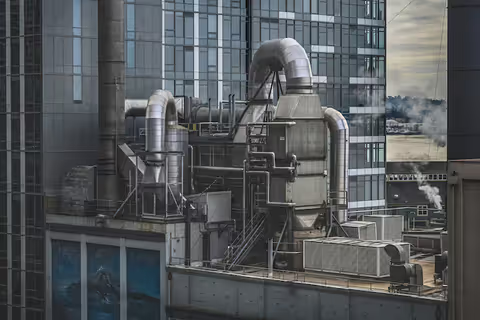
Industrial dust collectors may use fabric filter bags or cartridge filters to capture particles from process exhaust streams. These systems help control workplace dust and reduce the release of particulate matter, provided they are correctly designed and maintained.
The appropriate air filter depends on particle characteristics, airflow, required collection efficiency, and the conditions of the surrounding environment.
Liquid Filters
Liquid filters remove suspended solids from liquids used in industrial processes. They are found in water treatment plants, manufacturing systems, cooling circuits, food processing facilities, and chemical production.
Common examples include cartridge filters, bag filters, and filter housings containing replaceable elements. Some systems use reusable filter media, while others rely on disposable components.
A liquid filtration system may protect pumps, valves, nozzles, and downstream equipment from contamination. In product manufacturing, it can also help achieve the required clarity or cleanliness of a liquid.
Selection depends on the liquid's viscosity, chemical compatibility, temperature, contaminant load, and desired filtration level.
Hydraulic and Lubrication Filters
Hydraulic filters remove contaminants from fluids used to transmit power in hydraulic machinery. Lubrication filters help control particles that could accelerate wear in engines, gearboxes, compressors, and other mechanical equipment.
Fine particles can damage precision components, interfere with valve operation, and reduce equipment reliability. Hydraulic and lubrication filters therefore play an important role in preventive maintenance.
Different locations within a system may require different filtration arrangements. Suction-side, pressure-line, and return-line filters perform distinct functions and must be selected according to system design.
Filter compatibility, pressure ratings, flow capacity, and the manufacturer's contamination-control requirements should be checked before installation.
Water and Wastewater Filters
Water filtration systems are used to remove suspended solids and other unwanted substances from water. Depending on the treatment process, equipment may include sand filters, multimedia filters, cartridge filters, membrane systems, and activated carbon filters.
Sand and multimedia filters commonly remove suspended particles through a bed of granular material. Activated carbon can reduce certain organic compounds, odors, and tastes through adsorption. Membrane technologies can separate particles and dissolved substances according to the membrane type and operating conditions.
Wastewater treatment often combines multiple processes rather than relying on one filter. Screening, sedimentation, biological treatment, filtration, and disinfection may be used at different stages.
The required treatment depends on the water source and its intended use. Removing visible particles alone does not guarantee that water is safe for drinking or suitable for a sensitive industrial process.
Key Factors for Choosing an Industrial Filter
Choosing an industrial filter begins with understanding what needs to be removed. Contaminants may include coarse particles, fine dust, metal fragments, suspended solids, or other materials. Their size, shape, concentration, and physical properties influence filter selection.
The required filtration rating is another important consideration. A filter's nominal rating and absolute rating do not necessarily describe the same level of particle retention. Buyers and engineers should understand the manufacturer's test methods and the conditions under which performance claims apply.
Flow rate and pressure are equally important. A filter must handle the expected operating flow without creating an unacceptable pressure drop. As contaminants accumulate, resistance to flow may increase, affecting system performance.
Material compatibility also matters. Filter media, seals, housings, and other components must tolerate the fluid's chemical composition, temperature, and operating pressure. Incorrect materials can deteriorate, leak, or contaminate the process.
Finally, consider the operating environment, maintenance access, available replacement elements, expected contaminant load, and consequences of filter failure. Evaluating these factors together is more reliable than selecting a filter based on particle size alone.
Understanding Filter Efficiency and Pressure Drop
Filter efficiency describes how effectively a filter removes the targeted contaminants under defined conditions. It is often expressed as a percentage, but the meaning depends on the test method and the particle sizes being measured.
For example, a filter may perform differently for larger particles than for very fine particles. In air filtration, efficiency may be evaluated using specific particle-size ranges, while liquid filtration systems may use different testing approaches.
Pressure drop refers to the difference in pressure between the inlet and outlet of a filter. Every filtration system creates some resistance to flow, and this resistance can increase as contaminants collect in the filter medium.
An excessively high pressure drop may indicate loading, blockage, or unsuitable operating conditions. However, the acceptable range depends on the equipment and the manufacturer's specifications.
Monitoring both filtration performance and pressure drop helps operators identify problems before they affect the wider process.
Industrial Filter Maintenance and Replacement
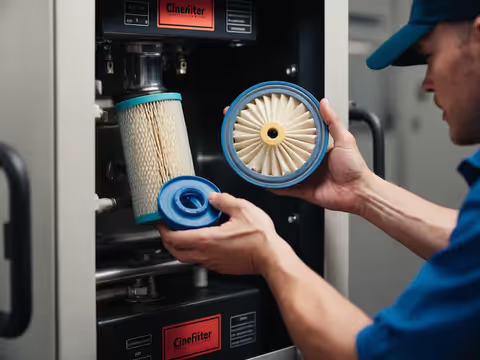
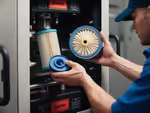
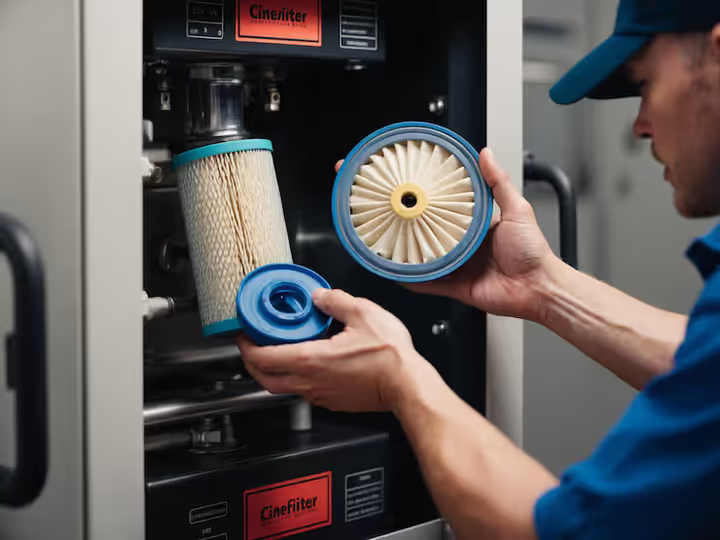
Regular maintenance helps industrial filters perform as intended and reduces the risk of unplanned downtime. Maintenance requirements vary according to the filter type, process conditions, contaminant levels, and operating hours.
Routine inspections may include checking pressure gauges, examining housings for leaks, reviewing airflow or liquid flow, and assessing filter elements for damage. Some systems use differential-pressure indicators or automated monitoring to show when servicing may be required.
Filters should be cleaned only when their design permits cleaning. Certain disposable elements are intended for replacement rather than reuse, and improper cleaning can damage the media or reduce filtration performance.
Before opening a filter housing, personnel should follow the appropriate shutdown, isolation, depressurization, and hazardous-material handling procedures. Residual pressure or trapped process substances can create serious risks.
Replacement intervals should follow manufacturer guidance and actual operating conditions. A calendar-based schedule alone may not account for changes in contamination levels or process demand.
Keeping maintenance records helps teams identify recurring blockages, unusual pressure changes, and opportunities to improve filtration system performance.
Industrial Filter Applications Across Different Sectors
Industrial filters support different operational needs across many industries. In manufacturing, they protect machinery and help maintain process consistency. In the automotive sector, hydraulic and lubrication filters help control contamination in mechanical systems.
Food and beverage facilities use filtration to manage ingredients, process water, and selected product streams. These applications require suitable materials, hygienic equipment design, and cleaning procedures appropriate to the process.
Pharmaceutical and biotechnology operations may require specialized liquid and air filtration systems to meet strict cleanliness requirements. Chemical plants use filters to separate solids, protect equipment, and support process control.
Power generation facilities may rely on air intake filters, water treatment filters, and lubrication filtration systems. Wastewater treatment plants use filtration as part of broader processes designed to manage suspended solids and improve water quality.
In every sector, the filter must be selected according to the actual process requirements rather than relying on general assumptions about a particular filter category.
Conclusion
Industrial filters help control contamination, protect equipment, improve process consistency, and support air and water treatment across a wide range of applications. Air filters, liquid filters, hydraulic filters, and wastewater filtration systems all use different methods to address specific operational needs.
Selecting the right industrial filter requires careful consideration of contaminants, filtration efficiency, flow rate, pressure drop, material compatibility, and maintenance requirements. Regular monitoring and appropriate replacement practices help maintain reliable performance.
By understanding how industrial filtration works and how different filter types are used, businesses and technical professionals can make better-informed equipment decisions and develop more effective maintenance practices.