Industrial Power Distribution Systems: Complete Guide to Safe and Efficient Industrial Electrical Networks
Industrial power distribution systems are the electrical networks that deliver electricity from the utility supply or an on-site power source to machines, equipment, lighting, control panels, and other electrical loads within an industrial facility. They form the backbone of manufacturing plants, warehouses, processing units, refineries, data centers, and other industrial environments where reliable electricity is essential for daily operations.
Unlike residential electrical systems, industrial power distribution is designed to handle significantly higher voltages, larger electrical loads, and continuous operation across complex facilities. These systems include transformers, switchgear, circuit breakers, distribution panels, cables, busbars, protective devices, and monitoring equipment that work together to ensure electricity reaches every part of the plant safely and efficiently.
A well-designed power distribution system helps industrial facilities maintain operational continuity, reduce electrical losses, protect expensive equipment, and improve workplace safety. As industries become increasingly automated and energy-intensive, power distribution systems have evolved into intelligent electrical infrastructures capable of monitoring and managing energy usage in real time.
Why Industrial Power Distribution Systems Matter Today
Reliable electricity is one of the most important resources in any industrial environment. A short interruption in power can stop production lines, damage sensitive equipment, interrupt automated processes, and increase operational downtime. Industrial power distribution systems are designed to minimize these risks while supporting growing energy demands.
Modern factories use robotic equipment, programmable logic controllers, electric motors, HVAC systems, compressors, pumps, conveyors, and digital control systems simultaneously. Each device requires stable voltage and adequate protection against overloads, short circuits, voltage fluctuations, and power quality issues.
Power distribution systems also support energy efficiency goals. Many organizations monitor electricity consumption across departments, identify energy losses, and optimize load balancing to reduce unnecessary power usage. This makes electrical distribution not only a technical necessity but also an important part of sustainable industrial operations.
Industries such as manufacturing, pharmaceuticals, food processing, chemicals, mining, automotive production, and renewable energy all depend on dependable power distribution to maintain productivity and operational safety.
How Industrial Power Distribution Systems Work
An industrial power distribution system begins with a high-voltage utility connection or an independent generation source. Electricity enters the facility through incoming feeders and is reduced to usable voltage levels by transformers before being distributed across different sections of the plant.
The distribution process follows multiple stages to ensure electricity is delivered safely to every connected load. High-voltage power is received at the facility, stepped down through transformers, routed through switchgear for protection and control, and distributed through feeders to various distribution panels and motor control centers. Finally, electricity reaches machinery, lighting systems, automation equipment, and auxiliary electrical loads.
Each stage includes protective equipment that isolates faults without affecting the entire facility. This layered protection helps prevent equipment damage and reduces downtime during electrical disturbances.
Power monitoring devices installed throughout the system measure voltage, current, frequency, power factor, and energy consumption. These measurements help maintenance teams identify abnormal operating conditions before they become serious problems.
Main Components of an Industrial Power Distribution System
Industrial electrical distribution relies on several interconnected components that perform different functions within the network.
Power Transformers
Transformers convert incoming high-voltage electricity into voltage levels suitable for industrial equipment. Different transformer capacities are selected based on facility size, connected loads, and future expansion requirements.
Switchgear
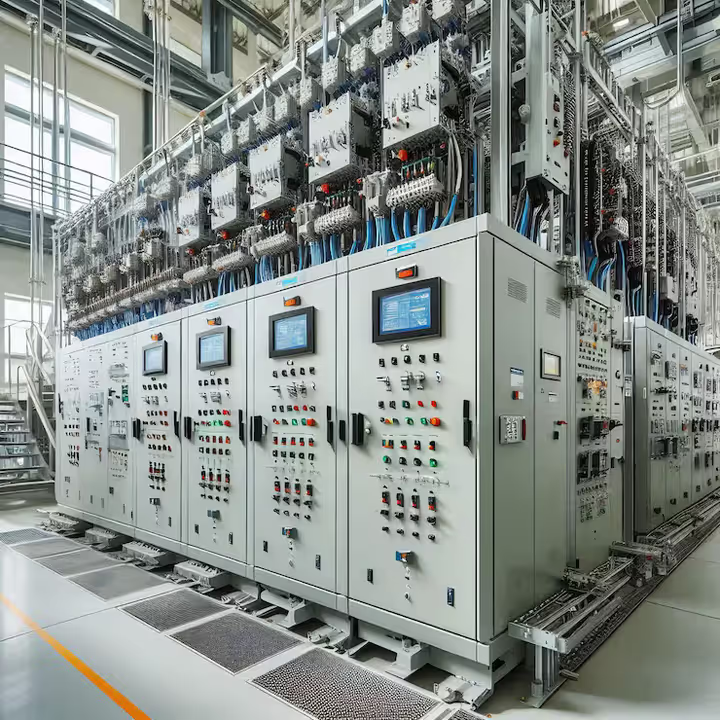
Switchgear controls, protects, and isolates electrical equipment. It contains circuit breakers, disconnect switches, relays, and protection devices that automatically disconnect faulty sections during electrical faults.
Circuit Breakers
Circuit breakers protect electrical circuits against overloads and short circuits. Modern industrial breakers include adjustable protection settings, remote monitoring capabilities, and fault diagnostics.
Distribution Panels
Distribution panels divide electrical power into multiple branch circuits throughout the facility. Each circuit supplies a specific production area or equipment group.
Busbar Systems
Busbars distribute large amounts of current efficiently within industrial buildings. Compared with traditional cable systems, busbars simplify installation, maintenance, and future electrical expansion.
Motor Control Centers
Motor control centers manage industrial motors through starters, protection devices, variable frequency drives, and monitoring equipment. They improve motor reliability while supporting automated process control.
Protective Relays
Protective relays continuously monitor electrical conditions and detect abnormal events such as overcurrent, earth faults, under-voltage, and phase imbalance. They communicate with circuit breakers to isolate affected circuits.
Together, these components create a coordinated electrical network capable of supplying power reliably across large industrial operations.
Types of Industrial Power Distribution Systems
Industrial facilities use different distribution configurations depending on operational requirements, reliability needs, and facility layout.
Radial Distribution Systems
Radial systems supply electricity through a single path from the source to the load. They are simple, economical, and commonly used in smaller industrial facilities where uninterrupted power is less critical.
Ring Main Distribution Systems
Ring main systems provide electricity through multiple paths arranged in a loop. If one section experiences a fault, electricity continues flowing from the opposite direction, improving system reliability.
Network Distribution Systems
Large industrial complexes often use interconnected network systems that receive power from multiple sources. These systems provide high reliability and minimize production interruptions during equipment maintenance or electrical faults.
Dedicated Critical Load Systems
Facilities with sensitive operations often separate critical loads such as control rooms, emergency lighting, communication systems, and safety equipment from general production loads using dedicated distribution circuits and backup power sources.
Selecting the appropriate distribution configuration depends on operational continuity requirements, safety standards, facility size, and electrical load characteristics.
Designing an Efficient Industrial Power Distribution System
A successful power distribution system is carefully planned before installation. Engineers evaluate present electrical demand while allowing room for future expansion.
Load calculations determine the total connected power requirements of motors, lighting, heating systems, cooling equipment, automation systems, and auxiliary loads. Diversity factors help estimate actual operating demand rather than simply adding every connected load.
Voltage selection is another important consideration. Higher voltage distribution reduces current levels, minimizes cable size, and lowers transmission losses over long distances inside industrial facilities.
Proper cable routing, grounding systems, protective coordination, and equipment placement improve operational safety and maintenance accessibility. Designers also consider environmental conditions such as temperature, moisture, dust, chemicals, and vibration when selecting electrical equipment.
Power quality studies help identify potential issues including harmonic distortion, voltage drops, flicker, and transient surges that could affect sensitive equipment.
A scalable design allows additional production lines or equipment to be integrated without major electrical redesign.
Safety Practices in Industrial Power Distribution
Electrical safety is a fundamental part of industrial power distribution because high-energy electrical systems can present significant hazards if not properly managed.
Grounding systems provide safe paths for fault currents and reduce shock hazards. Protective grounding also helps stabilize voltage levels during abnormal electrical conditions.
Circuit protection devices isolate faults quickly before cables or equipment overheat. Proper coordination ensures only the affected circuit disconnects while the rest of the facility continues operating.
Routine inspections identify loose connections, insulation damage, overheating components, corrosion, and abnormal equipment conditions before failures occur.
Lockout and isolation procedures prevent accidental energization during maintenance activities. Maintenance personnel verify circuits are de-energized before beginning work.
Arc flash protection has become increasingly important in industrial facilities. Protective equipment, warning labels, safety boundaries, and incident energy assessments help reduce risks during electrical maintenance.
Regular testing of transformers, breakers, relays, grounding systems, and insulation improves long-term electrical reliability and compliance with industrial safety standards.
Energy Efficiency and Power Quality in Industrial Facilities
Energy efficiency is closely connected with industrial power distribution performance. Efficient distribution reduces electrical losses and supports sustainable manufacturing operations.
Power factor correction improves electrical efficiency by reducing reactive power demand. Capacitor banks and automated power factor controllers help maintain efficient electrical operation.
Variable frequency drives reduce electricity consumption by controlling motor speed according to process requirements rather than operating motors continuously at full speed.
Energy monitoring systems measure electricity usage across departments, production lines, and individual equipment. This information helps identify inefficient equipment and unnecessary energy consumption.
Power quality improvement devices reduce voltage fluctuations, harmonics, and electrical noise that may affect automation systems and sensitive electronics.
Load balancing distributes electrical demand evenly across phases, reducing transformer loading and improving equipment performance.
These practices improve equipment lifespan while supporting operational efficiency and energy management objectives.
Recent Trends in Industrial Power Distribution Systems
Industrial electrical infrastructure has changed rapidly over the past year as digital technologies become more integrated into manufacturing operations.
Smart switchgear now includes communication capabilities that transmit operational data to centralized monitoring systems. Maintenance teams receive alerts about abnormal temperatures, overloads, breaker operations, and equipment health before failures occur.
Industrial Internet of Things technologies allow connected sensors to monitor transformers, switchgear, busbars, and electrical panels continuously. Predictive maintenance reduces unexpected downtime by identifying developing issues early.
Digital substations are becoming more common in large industrial facilities. They replace traditional wiring with digital communication between protection devices, improving monitoring accuracy and reducing installation complexity.
Renewable energy integration has also increased. Many industrial facilities now combine utility electricity with rooftop solar systems, battery storage, and backup generators through intelligent distribution management systems.
Microgrid technology enables facilities to manage multiple power sources while improving resilience during utility interruptions. Energy storage systems help balance renewable generation with industrial demand.
Artificial intelligence is beginning to assist electrical maintenance by analyzing operational data and identifying patterns associated with equipment degradation.
Common Challenges and How Industries Address Them
Industrial power distribution systems operate under demanding conditions that create several operational challenges.
Growing electrical demand requires facilities to expand distribution capacity without interrupting production. Modular switchgear and busbar systems make expansion easier.
Voltage fluctuations can affect precision manufacturing equipment. Voltage regulation devices and power conditioning equipment help maintain stable electrical supply.
Aging electrical infrastructure increases maintenance requirements and failure risks. Many industries gradually replace outdated breakers, transformers, and protection systems while keeping facilities operational.
Harmonic distortion generated by electronic equipment and variable speed drives can reduce equipment efficiency. Harmonic filters improve overall power quality.
Environmental conditions such as dust, humidity, vibration, and corrosive chemicals require specialized electrical enclosures and industrial-grade components designed for harsh operating environments.
Addressing these challenges requires continuous monitoring, preventive maintenance, equipment modernization, and careful electrical planning.
The Future of Industrial Power Distribution Systems
Industrial power distribution is moving toward intelligent, connected, and more sustainable electrical networks. Automation, digital monitoring, renewable energy integration, and predictive maintenance are reshaping how industrial facilities manage electricity.
Future systems are expected to provide greater visibility into energy consumption, faster fault detection, improved cybersecurity for connected electrical devices, and better integration with industrial automation platforms.
Energy storage, electric vehicle charging infrastructure, distributed renewable generation, and advanced microgrids will become increasingly integrated into industrial electrical systems. Facilities will also rely more on digital twins and simulation tools to optimize electrical performance before making physical changes.
As industries continue modernizing, power distribution systems will play an even larger role in improving operational reliability, reducing energy waste, supporting sustainability initiatives, and enabling smarter manufacturing environments.
Conclusion
Industrial power distribution systems are the foundation of safe, reliable, and efficient industrial operations. They deliver electricity from power sources to every part of a facility while protecting equipment, supporting automation, and maintaining continuous production.
A well-designed distribution network combines transformers, switchgear, circuit breakers, distribution panels, protective relays, grounding systems, and monitoring technologies into a coordinated electrical infrastructure. Beyond simply supplying power, modern systems improve energy efficiency, enhance safety, enable predictive maintenance, and support digital industrial transformation.
As industrial facilities adopt smarter technologies and renewable energy solutions, power distribution systems continue evolving into intelligent networks capable of meeting future operational demands. Understanding how these systems work helps businesses, engineers, technicians, and facility managers build safer, more resilient, and more efficient industrial environments.