How Rotogravure Printing Machines Work: A Step-by-Step Guide
Rotogravure printing machines are high-speed printing systems designed to reproduce detailed.
The technology uses engraved printing cylinders to transfer controlled amounts of ink onto the substrate.
Because the printing cylinder contains recessed cells that hold ink, rotogravure printing can provide consistent image reproduction and fine detail across long production runs. Modern machines combine precision cylinders, ink systems, drying units, tension controls, and automation to support continuous production.
Why Rotogravure Printing Machines Matter
Rotogravure printing is particularly suited to applications requiring high-quality graphics and consistent results over extended production runs. It is widely associated with packaging and other printed materials where detailed images and color consistency are important.
A typical rotogravure system can support:
- High-speed continuous printing
- Multi-color printing
- Detailed image reproduction
- Flexible packaging production
- Paper and film printing
- Consistent ink transfer
- Automated process control
- Inline drying and material handling
The final print quality depends on factors such as cylinder engraving, ink characteristics, substrate properties, impression pressure, web tension, and drying conditions.
Main Components of Rotogravure Printing Machines
A rotogravure press contains several coordinated components that work together during printing.
| Component | Primary Function |
|---|---|
| Engraved cylinder | Transfers the printed image |
| Ink system | Supplies printing ink |
| Doctor blade | Removes excess ink from the cylinder surface |
| Impression cylinder | Presses the substrate against the cylinder |
| Drying unit | Dries or cures the printed ink |
| Web handling system | Controls substrate movement |
| Tension control | Maintains stable web tension |
| Rewinding system | Collects the printed material |
Engraved Printing Cylinder
The printing cylinder is one of the defining components of rotogravure technology. Its surface contains numerous recessed cells that represent the image being printed.
During production, these cells collect ink. The amount and distribution of the recessed cells influence ink transfer and image density.
Ink System
The ink system delivers ink to the printing cylinder. In many press configurations, the cylinder rotates through an ink pan or chamber before the doctor blade removes excess ink from the surface.
Stable ink circulation and appropriate viscosity help maintain consistent printing.
Doctor Blade
The doctor blade removes excess ink from the non-image areas of the cylinder while leaving ink inside the engraved cells.
Blade angle, pressure, condition, and alignment can influence ink transfer and print quality.
Impression Cylinder
The impression cylinder presses the substrate against the engraved cylinder. This controlled contact allows ink to transfer from the recessed cells to the substrate.
How the Rotogravure Printing Process Works
The process involves several coordinated stages.
1. Cylinder Preparation
The printing image is transferred to the cylinder through an engraving process. The cylinder contains microscopic recessed cells of varying characteristics that represent the image.
Cylinder preparation is important because the engraved surface determines how ink is transferred during printing.
2. Ink Supply
The engraved cylinder comes into contact with the printing ink. As it rotates, the recessed cells become filled with ink.
The ink system must maintain appropriate viscosity and circulation throughout production.
3. Excess Ink Removal
After leaving the ink supply, the cylinder passes the doctor blade.
The blade removes excess ink from the surface while ink remains inside the recessed cells. This prepares the cylinder for controlled image transfer.
4. Image Transfer
The substrate passes between the engraved cylinder and the impression cylinder.
Pressure causes the substrate to contact the ink-filled cells. The ink is transferred from the recessed cells onto the substrate, creating the printed image.
5. Drying
After printing, the substrate passes through a drying section. Drying systems typically use controlled airflow and heat or other appropriate technologies to remove solvents or otherwise stabilize the ink.
For multi-color printing, the ink generally needs to dry sufficiently before the substrate reaches the next printing unit.
6. Multi-Color Printing
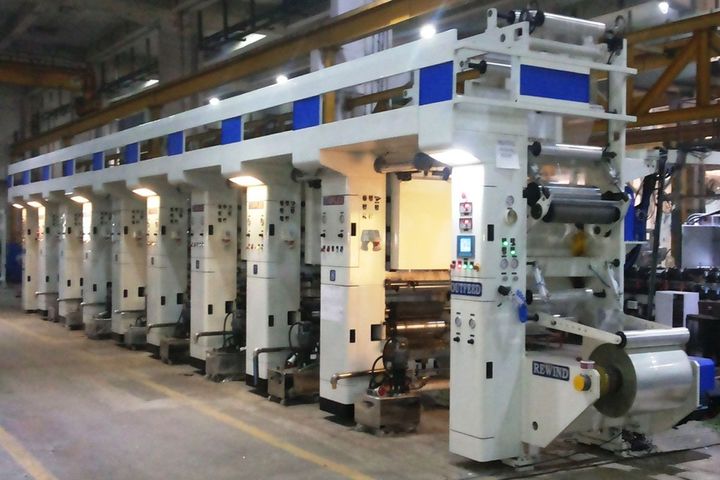
A rotogravure press may contain multiple printing units arranged along the web path.
Each unit can apply a different color. Precise registration ensures that the individual colors align correctly to create the final image.
7. Rewinding and Finishing
After the final printing unit and drying section, the printed material can be rewound into rolls.
Depending on the production process, it may then move to additional operations such as laminating, slitting, cutting, or packaging conversion.
Types of Rotogravure Printing Applications
Rotogravure printing machines are used across several industries.
Flexible Packaging
Flexible films are a major application for rotogravure printing. The technology can reproduce detailed graphics across packaging materials used for food, consumer products, and other packaged goods.
Labels
Rotogravure systems can produce detailed graphics and text for selected label applications.
Decorative Printing
The technology can be used to reproduce patterns and decorative designs on suitable films, papers, and other substrates.
Publication Printing
Rotogravure has historically been used for high-volume publication applications where consistent image reproduction is required.
Industrial Materials
Specialized rotogravure systems can also be configured for selected industrial printing and coating applications.
Rotogravure vs. Flexographic Printing
Both rotogravure and flexographic printing are widely associated with high-volume printing, but they use different image-transfer mechanisms.
| Feature | Rotogravure | Flexographic |
|---|---|---|
| Printing surface | Engraved cylinder | Flexible relief plate |
| Ink transfer | Recessed cells | Raised plate areas |
| Detail reproduction | High | High |
| Setup requirements | Cylinder preparation | Plate preparation |
| Common applications | Packaging, decorative printing | Packaging, labels, paper |
| Long-run suitability | High | High |
The appropriate technology depends on factors such as print requirements, production volume, substrate, artwork complexity, and process configuration.
Factors Affecting Rotogravure Print Quality
Several variables can influence the quality and consistency of rotogravure printing.
Cylinder engraving determines how ink is held and transferred. Variations in cell structure can affect image density and tonal reproduction.
Ink viscosity affects how ink fills and transfers from the engraved cells. Maintaining appropriate viscosity is important for consistent color.
Doctor blade settings influence how effectively excess ink is removed from the cylinder surface.
Web tension must remain stable to maintain accurate substrate movement and color registration.
Drying conditions also matter, particularly during multi-color printing. Insufficient drying can contribute to smearing or other quality problems.
Automation in Modern Rotogravure Printing
Modern rotogravure printing machines can incorporate automated controls for registration, tension, ink management, drying, and quality inspection.
Automated registration systems can monitor printed marks and make adjustments to maintain alignment between colors. Sensors can also monitor web tension and other process variables.
Inspection systems may use cameras to detect defects such as missing print, color variation, registration errors, or surface imperfections.
Best Practices for Rotogravure Printing
Consistent production requires control of both equipment and process conditions.
Useful practices include:
- Maintain consistent ink viscosity.
- Inspect engraved cylinders before production.
- Keep doctor blades properly aligned.
- Monitor blade wear.
- Maintain stable web tension.
- Control drying temperature and airflow.
- Check color registration regularly.
- Clean ink systems according to production requirements.
- Inspect printed material during production.
- Follow preventive maintenance schedules.
These practices can help reduce process variations and support consistent output.
Who Uses Rotogravure Printing Machines?
Packaging manufacturers, printing companies, flexible-film converters, label producers, and decorative-material manufacturers can use rotogravure printing equipment.
The technology is especially relevant to operations requiring detailed graphics, multi-color printing, and long production runs.
Frequently Asked Questions
What are rotogravure printing machines?
Rotogravure printing machines are high-speed printing systems that use engraved cylinders with recessed cells to transfer ink onto substrates such as films, paper, and foil.
How does a rotogravure printing machine work?
The engraved cylinder picks up ink, a doctor blade removes excess ink, and the remaining ink in the recessed cells transfers to the substrate when it passes through the impression area.
What is the purpose of a doctor blade in rotogravure printing?
The doctor blade removes excess ink from the cylinder surface while allowing ink to remain inside the engraved cells. This helps control the amount of ink transferred to the substrate.
What materials can rotogravure machines print on?
Depending on the machine configuration and ink system, rotogravure presses can print on flexible films, paper, foil, and various packaging substrates.
What industries use rotogravure printing machines?
Common applications include flexible packaging, labels, decorative printing, publication printing, and selected industrial printing processes.
Conclusion
Rotogravure printing machines use engraved cylinders, controlled ink systems, doctor blades, impression cylinders, drying units, and web-handling systems to produce detailed printed images at high production speeds.
The process begins with cylinder preparation and ink supply, followed by controlled ink metering, image transfer, drying, and finishing. Understanding these stages helps manufacturers evaluate equipment configuration, printing requirements, process controls, and potential applications.