How Packaging Film Manufacturing Works: A Step-by-Step Guide
Packaging film manufacturing is the process of converting polymer materials into thin, flexible films used to protect, contain, display, and transport products.
These films can be engineered for properties such as strength, flexibility, transparency, moisture resistance, sealability, and barrier performance.
Packaging films are used across food packaging, pharmaceuticals, consumer products, industrial materials, and many other applications. Modern production can involve extrusion, film cooling, stretching, coating, laminating, printing, slitting, and quality control.
Why Packaging Film Manufacturing Matters
Packaging film serves several important functions. It can help protect products from moisture, oxygen, contamination, physical damage, and environmental exposure while also providing a suitable surface for printing and sealing.
Depending on the formulation and structure, packaging films can provide:
- Moisture and vapor resistance
- Oxygen barrier properties
- Mechanical strength
- Flexibility
- Heat-sealing capability
- Transparency or opacity
- Printability
- Puncture resistance
- Chemical resistance
The required properties determine the polymer selection, film structure, production technology, and finishing processes.
Raw Materials Used in Packaging Film Manufacturing
The manufacturing process begins with polymer resins and other formulation components. Different polymers provide different performance characteristics.
Common materials include:
| Material | Typical Characteristics |
|---|---|
| Polyethylene (PE) | Flexibility, sealability, moisture resistance |
| Polypropylene (PP) | Strength, clarity, heat resistance |
| PET | Strength, dimensional stability, barrier properties |
| Polyamide (PA) | Mechanical strength and toughness |
| EVOH | High oxygen barrier performance |
| Recycled polymers | Used in selected applications where specifications permit |
Multilayer films can combine several materials to achieve a combination of properties that a single polymer may not provide.
Main Stages of Packaging Film Manufacturing
The exact process varies depending on the film type and production method, but most systems involve several fundamental stages.
1. Polymer Preparation
Polymer pellets are prepared according to the film formulation. Different resin grades may be combined to achieve the required mechanical, thermal, barrier, or sealing characteristics.
Additives may also be incorporated to influence properties such as slip, processing behavior, stability, or surface characteristics.
2. Extrusion
Extrusion is one of the most important stages in packaging film manufacturing.
Polymer pellets are introduced into an extruder, where controlled heat and mechanical energy melt the material. The molten polymer is then transported toward a specialized die.
Two common film extrusion approaches are blown film extrusion and cast film extrusion.
3. Blown Film Extrusion
In blown film production, molten polymer exits a circular die and forms a tube. Air is introduced into the tube to expand it to the desired dimensions.
The film bubble is cooled, collapsed, and guided through rollers before being wound into rolls.
Blown film technology is widely used for flexible packaging films and other applications requiring specific mechanical properties.
4. Cast Film Extrusion
Cast film production uses a flat die to produce a thin sheet of molten polymer. The film passes over a cooled casting surface or chill roll, which rapidly reduces its temperature and solidifies the material.
Cast film processes can provide good thickness control and surface characteristics for suitable applications.
5. Cooling and Solidification
After leaving the die, the polymer must be cooled to form a stable film.
Cooling conditions influence film thickness, clarity, dimensional stability, and other characteristics. Different film technologies use different cooling configurations.
6. Stretching or Orientation
Some packaging films undergo controlled stretching in one or more directions.
Orientation can improve characteristics such as tensile strength, stiffness, clarity, and dimensional stability. Biaxially oriented films are stretched in two directions under controlled conditions.
7. Surface Treatment
Some films require surface treatment before printing, coating, or laminating.
Processes such as corona treatment can increase surface energy and improve the adhesion of inks, adhesives, or coatings.
8. Coating and Lamination
Packaging films may be coated or laminated with other materials to achieve additional properties.
For example, a multilayer structure may combine:
- A printable outer layer
- A structural layer
- A barrier layer
- A sealing layer
Lamination can combine separate film webs using an adhesive or another bonding technology.
Multilayer Packaging Film Manufacturing
Many modern packaging applications use multilayer packaging films rather than single-layer films.
A multilayer structure can be engineered so that each layer performs a specific function. One layer may provide strength, another may provide barrier protection, and another may provide heat-sealing characteristics.
Coextrusion is one approach for producing multiple polymer layers within a single film structure. Multiple extruders feed different materials into a specialized die to form a combined multilayer film.
Printing and Finishing
After film production, the material may undergo additional converting processes.
Printing
Packaging films can be printed with product graphics, text, barcodes, regulatory information, and other content.
Flexographic and rotogravure printing are commonly associated with flexible packaging, while digital printing can support variable designs and data.
Slitting
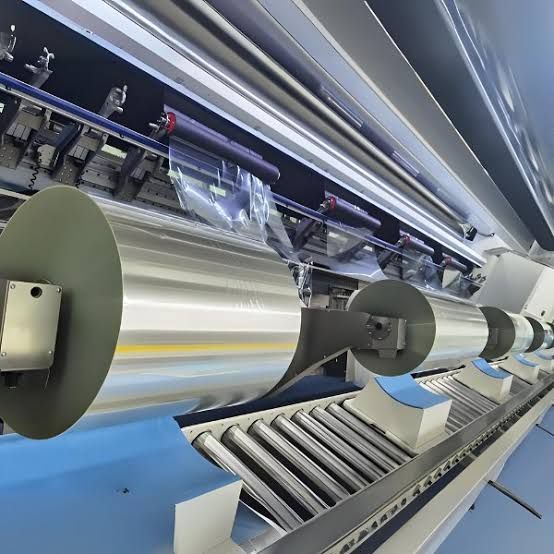
Large film rolls can be divided into narrower rolls according to the requirements of the packaging operation.
Rewinding
The film is rewound into controlled roll sizes suitable for storage, transportation, or downstream packaging equipment.
Laminating
Different film layers can be combined to create a structure with the required mechanical, barrier, sealing, or appearance characteristics.
Quality Control in Packaging Film Manufacturing
Quality control is important because small variations in film properties can affect downstream packaging performance.
Manufacturers may monitor:
- Film thickness
- Width
- Tensile strength
- Elongation
- Seal strength
- Coefficient of friction
- Optical properties
- Barrier performance
- Surface treatment
- Dimensional stability
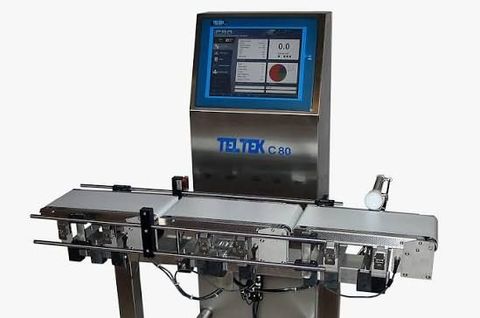
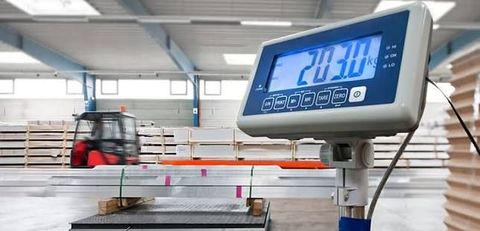
Automated measurement systems can continuously monitor film thickness and other process variables during production.
Equipment Used in Packaging Film Production
A typical packaging film production line may include:
- Polymer feeding systems
- Extruders
- Film dies
- Cooling systems
- Air rings or chill rolls
- Thickness-control systems
- Surface-treatment equipment
- Printing equipment
- Laminators
- Slitting machines
- Rewinding systems
- Quality inspection equipment
The equipment configuration depends on the film material, production method, layer structure, and intended application.
Factors Affecting Film Quality
Several factors influence the final properties of packaging films.
Polymer selection affects strength, flexibility, barrier properties, and sealing performance.
Processing temperature must be controlled because excessive or insufficient heat can affect polymer behavior and film quality.
Extrusion conditions influence thickness uniformity, surface characteristics, and production stability.
Cooling conditions affect crystallization, clarity, dimensional stability, and other properties.
Surface treatment can determine whether inks, coatings, and adhesives adhere effectively to the film.
Best Practices for Packaging Film Manufacturing
Manufacturers can improve consistency by controlling raw materials and processing conditions throughout production.
Useful practices include:
- Maintain consistent polymer specifications.
- Control extrusion temperature and pressure.
- Monitor film thickness continuously.
- Maintain stable cooling conditions.
- Verify surface treatment levels.
- Inspect film for defects.
- Maintain extrusion and winding equipment.
- Monitor roll tension.
- Test mechanical and barrier properties.
- Maintain batch and production records.
Frequently Asked Questions
What is packaging film manufacturing?
Packaging film manufacturing is the process of converting polymer materials into thin films used for product protection, containment, sealing, printing, and other packaging functions.
How is packaging film produced?
Packaging film is commonly produced through extrusion. Polymer materials are melted, formed through a die, cooled, and wound into rolls. Additional processes can include orientation, coating, printing, laminating, and slitting.
What polymers are used in packaging film?
Common polymers include polyethylene, polypropylene, PET, polyamide, and specialty barrier materials such as EVOH. Material selection depends on the required packaging properties.
What is multilayer packaging film?
Multilayer packaging film combines two or more material layers to provide different properties within one structure. These may include strength, barrier protection, printability, and heat-sealing performance.
How is packaging film quality tested?
Film quality can be evaluated through tests for thickness, tensile strength, elongation, seal strength, barrier performance, optical properties, surface characteristics, and dimensional stability.
Conclusion
Packaging film manufacturing combines polymer science, extrusion technology, cooling, orientation, surface treatment, printing, laminating, and converting to create films suited to specific packaging requirements.
From single-layer polyethylene films to sophisticated multilayer structures, each manufacturing stage can influence the final product. Careful control of materials, processing conditions, equipment, and quality testing helps manufacturers produce packaging films with consistent mechanical, barrier, sealing, and printing characteristics.