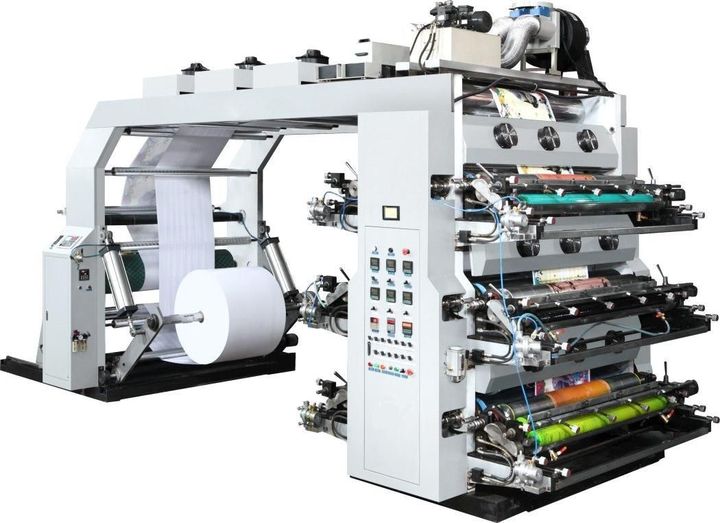
How Flexographic Printing Equipment Works: A Step-by-Step Guide
Flexographic printing equipment is widely used for high-speed printing on materials such as flexible packaging, labels, paper, films, and other substrates.
The process uses flexible printing plates, controlled ink transfer, and a series of rollers and cylinders to reproduce text, graphics, patterns, and other designs.
Modern flexographic printing equipment combines mechanical systems, ink management, drying technology, and automation to maintain consistent print quality during continuous production. Understanding how the equipment works can help manufacturers evaluate its components, operating stages, and suitable applications.
Why Flexographic Printing Equipment Matters
Flexographic printing is designed for efficient continuous production. Its ability to print on a wide range of substrates makes it useful across packaging, labeling, consumer products, and industrial applications.
A properly configured flexographic printing system can support:
- High-speed continuous printing
- Multiple-color printing
- Flexible packaging production
- Label printing
- Paper and board printing
- Variable substrate handling
- Inline finishing processes
- Automated production monitoring
The overall performance depends on factors such as ink viscosity, plate quality, anilox specifications, substrate characteristics, printing pressure, and drying conditions.
Main Components of Flexographic Printing Equipment
A flexographic press contains several coordinated components. Each plays a specific role in transferring ink and creating the final printed image.
| Component | Primary Function |
|---|---|
| Ink system | Supplies and controls printing ink |
| Anilox roll | Transfers a controlled amount of ink |
| Plate cylinder | Holds the flexible printing plate |
| Impression cylinder | Presses the substrate against the plate |
| Substrate handling system | Moves material through the press |
| Drying system | Removes solvents or cures the ink |
| Rewind system | Collects the printed material |
Ink System
The ink system delivers printing ink to the anilox roll. Pumps, chambers, reservoirs, and metering components help maintain a controlled ink supply.
Consistent ink flow is important because variations can affect color density, print quality, and production stability.
Anilox Roll
The anilox roll is one of the most important components in flexographic printing. Its surface contains precisely engineered cells that hold and transfer a controlled quantity of ink.
Cell volume and line screen influence ink transfer and can affect the appearance of solid areas, fine details, and colors.
Plate Cylinder
The plate cylinder carries the flexible printing plate. The raised image areas on the plate receive ink from the anilox roll before transferring it onto the substrate.
Plate materials and mounting accuracy can influence registration, detail reproduction, and print consistency.
Impression Cylinder
The impression cylinder applies controlled pressure between the substrate and the printing plate. Proper pressure helps transfer the image without creating unnecessary distortion or print defects.
Drying System
After ink is transferred, drying or curing systems remove solvents or otherwise solidify the ink layer. Depending on the ink technology, drying may use heated air, infrared systems, ultraviolet light, or other methods.
How the Flexographic Printing Process Works
The basic process consists of several coordinated stages.
1. Prepress and Plate Preparation
The desired artwork is prepared digitally before the printing plate is produced. The plate contains raised image areas that will receive and transfer ink.
Accurate plate preparation and mounting are essential for maintaining image quality and registration.
2. Ink Preparation
The selected ink is prepared according to the requirements of the printing process. Important characteristics can include viscosity, color strength, drying behavior, and compatibility with the substrate.
Proper ink conditioning helps maintain consistent transfer throughout production.
3. Ink Metering
Ink moves from the ink system to the anilox roll. The anilox cells collect ink, while the metering system controls the amount remaining on the roll surface.
This controlled transfer is important for maintaining consistent ink coverage.
4. Image Transfer
The anilox roll transfers ink to the raised areas of the printing plate. The plate then contacts the moving substrate and transfers the image.
The impression cylinder provides the necessary pressure to create contact between the plate and substrate.
5. Drying
The printed substrate passes through a drying or curing section. Drying requirements depend on the ink formulation, substrate, press speed, and printing configuration.
Proper drying helps prevent smearing and allows the material to continue through subsequent production stages.
6. Repeat Printing
For multi-color printing, the substrate passes through several printing units. Each unit applies a different color.
Accurate registration between printing units is essential for producing a sharp final image.
7. Rewinding or Finishing
After printing, the material may be rewound into rolls or transferred to additional processes such as laminating, slitting, cutting, or other finishing operations.
Types of Flexographic Printing Presses
Flexographic presses can be configured in different ways depending on the substrate and production requirements.
Central Impression Press
A central impression press uses a large central impression cylinder shared by multiple printing units. The substrate remains supported against the central cylinder while different colors are applied.
This configuration is commonly associated with flexible films and packaging applications.
Inline Flexographic Press
In an inline press, printing units are arranged sequentially along the material path. These systems can be configured with additional finishing, coating, laminating, or converting equipment.
Stack Flexographic Press
Stack presses arrange printing units vertically around a central framework. This configuration can provide flexibility for different substrates and printing applications.
Applications of Flexographic Printing Equipment
Flexographic printing equipment is used across a broad range of industries.
Common applications include:
- Flexible food packaging
- Pharmaceutical packaging
- Labels
- Paper bags
- Corrugated materials
- Folding cartons
- Plastic films
- Foils
- Industrial packaging
- Consumer product packaging
The choice of press configuration depends on substrate properties, print requirements, production volume, and finishing requirements.
Factors Affecting Print Quality
Several variables can influence the final result.
Ink viscosity affects ink transfer and color consistency. If viscosity changes during production, print density may also change.
Anilox specifications influence how much ink reaches the printing plate. Selecting the appropriate cell volume and line screen is important for the intended print application.
Printing pressure must be carefully controlled. Excessive pressure can cause image distortion, while insufficient pressure may result in incomplete transfer.
Substrate properties such as surface tension, absorbency, thickness, and dimensional stability can also affect print performance.
Automation in Modern Flexographic Printing
Modern flexographic printing equipment can incorporate automated controls for registration, ink management, tension control, defect detection, and process monitoring.
Sensors and digital controls can continuously monitor production conditions. Automated registration systems can make adjustments to maintain alignment between colors as production conditions change.
These technologies can reduce manual intervention and help maintain repeatable printing conditions.
Best Practices for Flexographic Printing
Manufacturers can improve process consistency by controlling the complete printing environment.
Recommended practices include:
- Maintain consistent ink viscosity.
- Select an appropriate anilox roll for the application.
- Inspect and clean printing plates regularly.
- Maintain accurate plate registration.
- Control printing pressure.
- Monitor substrate tension.
- Maintain drying-system performance.
- Inspect printed material during production.
- Follow equipment maintenance schedules.
Regular monitoring can help identify process variations before they create larger production problems.
Who Uses Flexographic Printing Equipment?
Packaging manufacturers, label producers, converters, paper-product manufacturers, and printing companies commonly use flexographic printing equipment.
The technology is particularly relevant when production requires continuous printing across rolls or sheets of flexible and semi-flexible materials.
Frequently Asked Questions
What is flexographic printing equipment?
Flexographic printing equipment is a type of printing system that uses flexible relief plates, anilox rolls, ink systems, and impression cylinders to transfer images onto various substrates.
How does a flexographic printing press work?
Ink is transferred from the ink system to an anilox roll, then to the raised areas of a flexible printing plate. The plate transfers the image to the substrate under controlled pressure.
What is an anilox roll used for?
An anilox roll meters and transfers a controlled amount of ink to the printing plate. Its cell structure determines the volume of ink that can be transferred.
What materials can flexographic presses print on?
Flexographic presses can print on materials such as plastic films, paper, foil, labels, corrugated substrates, and various packaging materials.
What affects flexographic print quality?
Ink viscosity, anilox specifications, plate quality, printing pressure, substrate characteristics, registration, drying conditions, and press speed can all affect print quality.
Conclusion
Flexographic printing equipment combines ink delivery, metering, plate transfer, impression control, substrate handling, and drying into an integrated printing process. Each component contributes to the accuracy and consistency of the final print.
Understanding the complete process—from plate preparation and ink metering to image transfer, drying, and finishing—helps manufacturers evaluate press configurations and operating requirements. With appropriate process control and equipment maintenance, flexographic systems can support consistent high-speed printing across many packaging and industrial applications.