Fancy-Cut Gemstone Jewelry: Guide to Shapes, Styles, and Practical Insights
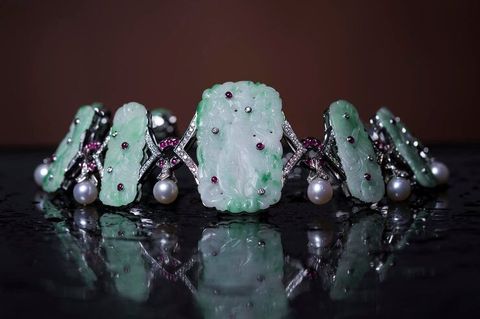
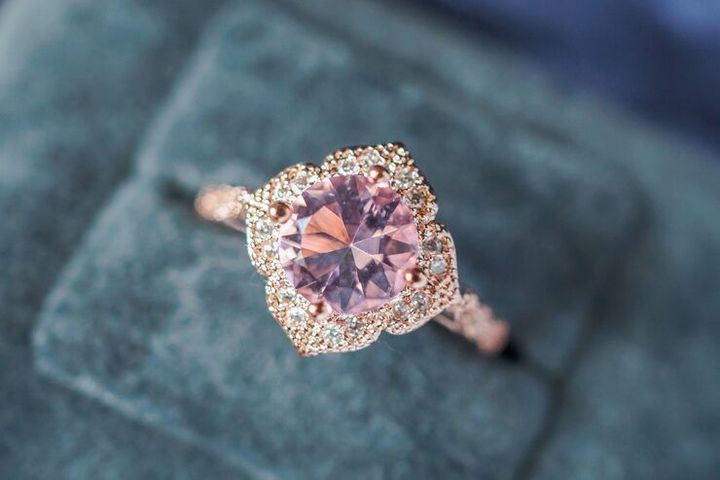
Fancy-cut gemstone jewelry refers to jewelry featuring gemstones shaped and faceted in forms other than traditional round cuts. These shapes can include oval, pear, emerald, cushion, marquise, heart, trillion, radiant, and other customized designs. The cutting style affects how a gemstone reflects light, appears from different angles, and fits into a jewelry setting.
Fancy-cut gemstone jewelry can be found in rings, earrings, necklaces, bracelets, pendants, and other decorative pieces. The choice of gemstone, shape, color, clarity, cutting pattern, and setting all influence the final appearance.
How Gemstone Shapes Are Created
A gemstone usually begins as a rough mineral crystal. A lapidary, or gemstone cutter, studies its natural structure before deciding how it can be shaped and faceted.
The cutter removes selected portions of the rough material and creates flat surfaces called facets. These facets are arranged to interact with light, while the overall outline creates the gemstone's visible shape.
The final result depends on several factors:
Rough material: The natural crystal determines available dimensions and possible shapes.
Shape: The outline may be oval, pear, marquise, cushion, emerald, heart, or another form.
Faceting pattern: The arrangement of facets affects light reflection and visual character.
Proportions: The relationship between length, width, depth, and facet placement influences appearance.
Symmetry: Balanced proportions and matching sides can affect the visual presentation of a cut gemstone.
Polish: Smoothly finished facets can influence how light interacts with the stone.
Common Fancy Gemstone Shapes
Oval cuts have a rounded outline with an elongated appearance. They are frequently used in rings and pendants because the shape can create a visually extended profile.
Pear-shaped gemstones combine a rounded end with a pointed end. This distinctive outline is commonly used in earrings, pendants, and rings.
Marquise cuts have two pointed ends and curved sides. Their elongated profile can create a strong directional appearance when placed vertically or horizontally.
Emerald cuts generally use a rectangular or square outline with stepped facets. The broad surface can make internal characteristics easier to observe.
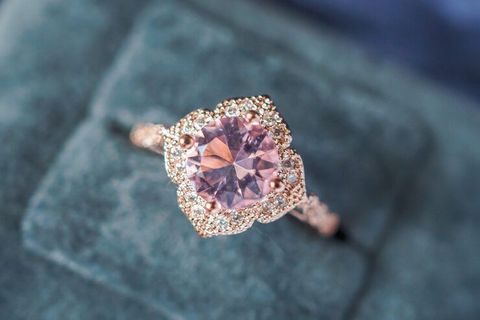
Cushion cuts have rounded corners and a softer square or rectangular outline. Their appearance can vary considerably depending on the faceting arrangement.
Heart-shaped gemstones use a symmetrical heart outline and require careful cutting to maintain the recognizable form.
Trillion cuts are commonly triangular, often with curved or slightly rounded sides. They can appear as central stones or as accent stones beside another gemstone.
A simple example is an oval sapphire set into a ring. The gemstone may have the same blue color as a round sapphire, but its elongated outline gives the finished jewelry a different visual character.
Importance
Why Fancy-Cut Gemstone Jewelry Matters
The shape of a gemstone influences both appearance and jewelry design. Unlike a standard round outline, fancy cuts provide more options for creating distinctive proportions, arrangements, and settings.
Jewelry designers can use different shapes to create symmetrical patterns, elongated profiles, geometric arrangements, or combinations of several gemstones.
Fancy cuts are also relevant when working with colored gemstones because their cutting decisions may consider the natural color distribution and crystal structure of the rough material.
Jewelry Applications
Fancy-cut gemstones are used across many jewelry categories:
Rings: Oval, cushion, pear, emerald, marquise, and radiant shapes can be used as central stones or accent stones.
Earrings: Pear, oval, marquise, and trillion shapes can create different hanging or symmetrical arrangements.
Necklaces: Pendants often use elongated, heart, pear, or geometric gemstone shapes.
Bracelets: Smaller fancy-cut stones can be arranged into repeating patterns.
Brooches and decorative pieces: Unusual gemstone outlines can contribute to more detailed designs.
Factors That Influence Appearance
Shape alone does not determine how a gemstone looks. The relationship between shape, faceting, proportions, color, transparency, and setting is also important.
For example, two oval gemstones can have noticeably different appearances if one is longer and narrower while another is shorter and wider. Differences in facet arrangement can also affect how light moves across their surfaces.
Comparing Common Fancy Cuts
| Gemstone Shape | General Outline | Common Jewelry Uses | Main Visual Character |
|---|---|---|---|
| Oval | Rounded and elongated | Rings, earrings, pendants | Soft elongated profile |
| Pear | Rounded with pointed end | Rings, earrings, pendants | Teardrop-like outline |
| Marquise | Long with pointed ends | Rings, earrings | Narrow elongated profile |
| Emerald | Rectangular with stepped facets | Rings, earrings | Broad geometric appearance |
| Cushion | Square or rectangular with rounded corners | Rings, pendants | Soft geometric profile |
| Heart | Symmetrical heart | Rings, pendants | Distinctive symbolic shape |
| Trillion | Triangular | Rings, earrings, accents | Angular geometric appearance |
| Radiant | Square or rectangular | Rings, pendants | Geometric outline with faceted interior |
Common Limitations
Fancy-cut gemstone jewelry can require careful design because unusual shapes may be more difficult to match with standard settings. Pointed shapes such as pear and marquise cuts may also require protective setting designs around their tips.
Colored gemstones can present additional considerations because their color may vary within the rough material. A cutting decision can therefore involve balancing shape, weight retention, color distribution, clarity, and optical appearance.
Recent Updates
Digital Gemstone Design
Between 2024 and 2026, digital design tools have continued to influence jewelry development. Computer-aided design software allows designers to create accurate models of gemstone settings before physical production.
Three-dimensional modeling can show how a fancy-cut gemstone fits into a ring, pendant, or other structure. Designers can also examine proportions and setting dimensions before manufacturing.
3D Printing and Prototyping
Jewelry production increasingly uses digital modeling alongside 3D printing for prototypes and casting patterns. A digital model can be converted into a physical prototype, allowing designers to examine proportions and setting arrangements.
This is particularly useful for unusual gemstone shapes because the setting can be tested around the exact geometry of the stone.
Digital Gemstone Identification
Technology used for gemstone identification and documentation has also developed. Imaging systems, spectroscopy, and other analytical methods can help laboratories examine gemstone characteristics.
These technologies do not replace professional gemological assessment. Instead, they provide additional forms of evidence that can support identification, treatment detection, and documentation.
Sustainability and Material Traceability
The jewelry industry has continued to focus on material origin, responsible sourcing, recycled metals, laboratory-grown materials, and supply-chain documentation. These developments can affect how gemstone jewelry is documented and communicated to consumers.
The exact requirements and terminology vary depending on the gemstone, country, laboratory, and applicable industry framework.
Laws or Policies
International Gemstone and Jewelry Frameworks
There is no single worldwide law governing all gemstone jewelry. Requirements can differ according to the country where gemstones are mined, processed, traded, manufactured, imported, or sold.
The Kimberley Process is an international framework focused specifically on rough diamonds and aims to prevent conflict diamonds from entering the legitimate diamond trade. It does not apply to every colored gemstone.
For colored gemstones, sourcing and trade requirements can involve national customs rules, import documentation, sanctions, environmental regulations, and consumer-protection laws.
Regional Requirements
The European Union has regulations affecting certain minerals and supply chains, while individual countries can establish additional requirements concerning imports, product descriptions, precious metals, environmental protection, and consumer information.
In the United States, the Federal Trade Commission provides guidance concerning jewelry marketing terminology and disclosures. Its Jewelry Guides address descriptions of precious metals, gemstones, laboratory-created materials, treatments, and related claims.
Requirements can change according to jurisdiction and product category. Jewelry businesses and consumers should therefore consult the relevant government or recognized industry authority for current requirements.
Tools and Resources
Computer-Aided Design Software
CAD software can be used to create three-dimensional jewelry models. Designers can adjust dimensions, gemstone seats, prongs, bezels, and other setting components digitally.
Gemological Instruments
Gemological professionals may use tools such as loupes, microscopes, refractometers, polariscopes, spectroscopes, and specific gravity equipment to examine gemstones. Different instruments provide different types of information.
Digital Calipers and Measurement Tools
Digital calipers can measure gemstone length, width, and depth. These measurements help designers determine whether a gemstone will fit a particular setting.
Laboratory Reports
Gemological laboratories can provide reports describing gemstone characteristics. Depending on the laboratory and gemstone type, reports may address identity, treatment, measurements, color, and other characteristics.
Jewelry Design Databases
Digital gemstone catalogs, CAD libraries, gemstone measurement databases, and professional gemological resources can help designers compare shapes and plan settings.
FAQs
What is fancy-cut gemstone jewelry?
Fancy-cut gemstone jewelry uses gemstones shaped in outlines other than the traditional round form. Common examples include oval, pear, marquise, cushion, emerald, heart, trillion, and radiant shapes.
Which shapes are common in fancy-cut gemstone jewelry?
Common shapes in fancy-cut gemstone jewelry include oval, pear, marquise, cushion, emerald, heart, trillion, and radiant cuts. Their appearance varies according to proportions and faceting.
How are fancy-cut gemstones different from round gemstones?
Fancy-cut gemstones have non-round outlines and can provide different visual proportions and design possibilities. Their appearance also depends on the gemstone material, facet arrangement, symmetry, and setting.
Are fancy-cut gemstone jewelry designs suitable for different gemstones?
Yes. Fancy cuts can be used with many colored gemstones and other gem materials. The appropriate shape depends partly on the gemstone's crystal structure, durability, color distribution, clarity, and cutting characteristics.
How does technology affect fancy-cut gemstone jewelry?
CAD modeling, 3D printing, digital measurement, imaging, and laboratory analysis can support gemstone design, setting development, documentation, and quality assessment.
Conclusion
Fancy-cut gemstone jewelry combines gemstone cutting with jewelry design through shapes such as oval, pear, marquise, cushion, emerald, heart, and trillion. The final appearance depends on the relationship between gemstone material, shape, facets, proportions, symmetry, and setting. From CAD modeling and 3D printing to digital gemstone analysis, technology continues to influence modern jewelry development. Understanding these elements helps readers recognize how different gemstone shapes contribute to jewelry design.