Excavators: Explore Types, Components, and Construction Applications
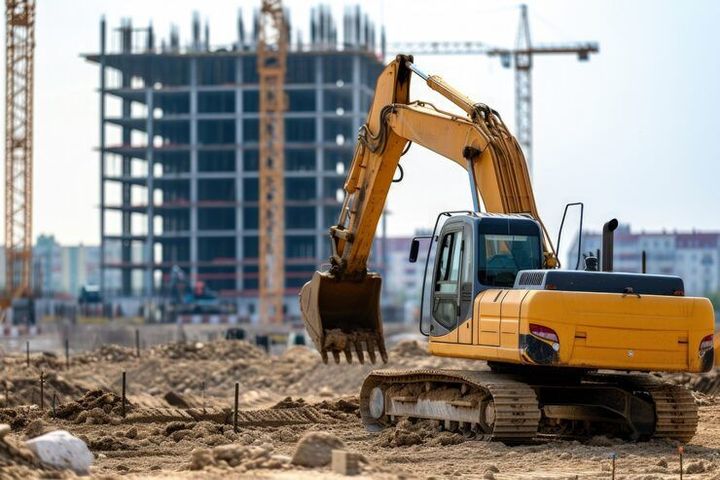
Excavators are heavy earthmoving machines designed to dig, lift, move, and place soil, rock, debris, and other materials. They are widely used in construction, mining, road development, utility work, landscaping, demolition, and infrastructure projects.
A typical excavator uses a hydraulic system to move a boom, arm, and attachment. Hydraulic pressure allows the machine to generate the force needed for digging and lifting while the operator controls movement from a cab.
Excavators are available in different sizes and configurations. A compact excavator may work in a restricted residential area, while a large crawler excavator can handle demanding excavation and material-handling work at major construction or mining sites.
How an Excavator Works
The basic working process starts with the engine or electric power system generating energy. Hydraulic pumps convert this power into pressurized hydraulic fluid, which moves cylinders and hydraulic motors.
The boom raises and lowers the working equipment, while the arm extends or retracts it. The bucket or another attachment performs the actual task, such as digging soil or breaking concrete.
The upper structure can normally rotate around the undercarriage. This rotation allows the operator to work across a wide area without repositioning the entire machine after every movement.
Main Excavator Components
Several major components work together:
Engine or electric power system: Provides the energy required for hydraulic pumps and machine movement.
Hydraulic system: Uses pressurized fluid to operate cylinders, motors, and attachments.
Boom: The large front structure that supports the arm and transfers digging force.
Arm or stick: Connects the boom to the bucket and controls its reach.
Bucket: Scoops and carries soil, rock, sand, or other materials.
Cab: Contains the operator's seat, controls, displays, and protective structure.
Swing system: Rotates the upper structure around the undercarriage.
Undercarriage: Includes tracks or wheels, frames, rollers, and drive components.
Counterweight: Helps balance the machine during digging and lifting.
Attachments: Specialized tools such as breakers, grapples, augers, compactors, and hydraulic shears.
Main Types of Excavators
Excavator categories are generally based on size, undercarriage design, operating environment, and intended application.
Crawler excavators use tracks and are widely used where ground stability and traction are important. Their tracked undercarriage can distribute machine weight across a larger ground area.
Wheeled excavators use wheels instead of tracks. They can move efficiently across paved surfaces and are commonly used for urban construction, road work, utility projects, and municipal applications.
Mini or compact excavators have smaller dimensions and operating weights. Their compact design makes them suitable for landscaping, residential construction, drainage work, and locations with limited working space.
Long-reach excavators use extended boom and arm configurations. They are useful for deep excavation, slope work, dredging-related activities, and projects where the operator needs additional reach.
Dragline excavators use a different digging arrangement and are associated with large-scale excavation and mining operations. Their long boom and suspended bucket system allow excavation over substantial distances.
Importance
Construction Applications
Excavators perform many tasks across construction projects. They can prepare foundations, dig trenches, remove earth, load materials, clear demolition debris, and shape terrain.
For utility construction, an excavator can create trenches for water pipes, drainage systems, electrical infrastructure, and communication cables. Attachment selection and machine size depend on soil conditions, trench dimensions, working space, and project requirements.
Mining and Quarrying
Large excavators are used in mining and quarrying to remove overburden, excavate material, load haulage equipment, and prepare working areas. Their hydraulic systems and large buckets allow substantial quantities of material to be moved during a work cycle.
Mining applications may require machines with specialized buckets, reinforced structures, increased operating capacity, or configurations suited to particular geological conditions.
Demolition and Material Handling
Excavators can be equipped with hydraulic breakers, shears, grapples, crushers, and other tools. These attachments allow one base machine to perform several different tasks.
During demolition, specialized attachments can break concrete, cut structural materials, separate debris, and handle recovered materials. Appropriate attachment selection depends on material type and machine specifications.
Excavator Types and Applications
| Excavator Type | Main Feature | Common Applications | Typical Environment |
|---|---|---|---|
| Mini excavator | Compact dimensions | Landscaping, trenching, small construction | Restricted spaces |
| Crawler excavator | Tracked undercarriage | Earthmoving, foundations, mining | Soft or uneven ground |
| Wheeled excavator | Wheeled mobility | Road and utility work | Urban and paved areas |
| Long-reach excavator | Extended working range | Deep excavation, slope work | Large or difficult-to-reach areas |
| Dragline excavator | Suspended digging bucket | Large excavation and mining | Large-scale projects |
| Demolition excavator | Reinforced structure and attachments | Building demolition | Controlled demolition areas |
Advantages and Limitations
Excavators combine digging, lifting, rotation, and attachment capability in one machine. Their hydraulic systems provide controlled movement, while interchangeable attachments can expand the range of applications.
However, excavators also have limitations. Large machines require sufficient working space, transportation planning, suitable ground conditions, and trained operators. Fuel or electrical energy requirements, hydraulic maintenance, noise, vibration, visibility, and interaction with nearby workers must also be considered.
Safe excavation planning is particularly important because underground utilities, unstable soil, falling materials, and nearby structures can create hazards. OSHA identifies cave-ins, heavy equipment, underground and overhead electrical hazards, and nearby structures among the risks associated with excavation work.
Recent Updates
Electric Excavators
Electric excavators have received increasing attention in construction because battery-electric systems can reduce direct exhaust emissions at the machine's operating location. Compact electric excavators are particularly relevant to indoor work, urban projects, and areas where local emissions or noise need to be controlled.
Electric models require different planning around battery capacity, charging infrastructure, operating cycles, ambient temperature, and available electrical supply. Their suitability therefore depends on the specific application rather than a single universal configuration.
Telematics and Connected Machines
Modern excavators increasingly use telematics systems that collect information about machine location, operating hours, fuel or energy consumption, diagnostic conditions, and machine utilization.
Telematics means collecting machine information through sensors and communication systems and sending it to digital software. This can help construction teams monitor equipment activity and identify operating patterns.
Machine Control and Grade Guidance
Digital machine-control systems can combine positioning technologies, sensors, and design information to help operators maintain planned excavation depths, slopes, and grades.
Some systems use satellite positioning, machine sensors, digital terrain models, and in-cab displays. These technologies can reduce the need for repeated manual measurements, although accuracy depends on system configuration, site conditions, calibration, and project requirements.
Automation and Operator Assistance
Automation is developing gradually across earthmoving equipment. Current systems can assist with functions such as controlled digging, payload monitoring, machine guidance, obstacle awareness, and predefined operating tasks.
Fully autonomous excavation remains a developing area and should not be treated as standard capability across the entire excavator market. ISO identifies autonomous earthmoving machinery as a specialized area addressed by ISO 17757, while ISO 20474 provides broader safety requirements for earthmoving machinery.
Laws or Policies
International Safety Standards
ISO 20474 provides an international framework for safety requirements covering earthmoving machinery. ISO 20474-1 establishes general requirements, while ISO 20474-5 contains requirements specifically for hydraulic excavators. The current ISO pages identify the 2017 editions of these standards as confirmed and current.
These standards are not automatically laws in every country. Their relevance depends on national regulations, adoption practices, contracts, and applicable conformity requirements.
United States Requirements
In the United States, OSHA construction rules include requirements covering mechanized equipment and excavation activities. OSHA's excavation rules address hazards associated with trenches and open excavations, including cave-ins and risks involving heavy equipment and utilities.
Specific requirements can depend on the equipment, work activity, workplace conditions, and applicable federal or state rules.
European Union Machinery Framework
The European Union Machinery Regulation, Regulation (EU) 2023/1230, establishes health and safety requirements for machinery placed on the EU market. The regulation is scheduled to apply from 20 January 2027, with certain provisions applying earlier.
Manufacturers and operators in other jurisdictions must follow their own applicable machinery, workplace safety, environmental, emissions, and road-transport requirements. Excavator requirements can therefore differ by country and intended use.
Tools and Resources
Machine Specifications
Manufacturer technical specifications are useful for understanding operating weight, engine or motor output, bucket capacity, digging depth, maximum reach, hydraulic flow, lifting capacity, and dimensions.
These figures help determine whether an excavator is suitable for a particular excavation depth, site condition, attachment, and transport requirement.
Digital Machine-Control Systems
Grade-control and machine-control software can connect digital site designs with positioning and machine sensors. These systems can display digging information to the operator and support more consistent excavation according to the project design.
Telematics Platforms
Telematics platforms can provide machine location, operating-hour records, diagnostic information, utilization data, and alerts. Construction teams can use these records to understand machine activity and plan inspections or scheduled maintenance.
Safety and Standards Resources
ISO publications are useful for understanding international earthmoving machinery safety frameworks. Government workplace-safety agencies, such as OSHA in the United States, provide regulatory information and excavation safety guidance. Local construction authorities should be consulted for jurisdiction-specific requirements.
FAQs
What are excavators used for?
Excavators are used for digging, trenching, foundation preparation, earthmoving, material handling, demolition, landscaping, mining, quarrying, and infrastructure construction.
What are the main types of excavators?
The main types include crawler excavators, wheeled excavators, mini excavators, long-reach excavators, dragline excavators, and specialized demolition configurations. Each type is designed around different ground conditions, working ranges, and applications.
What are the main components of an excavator?
The major components include the engine or electric power system, hydraulic system, boom, arm, bucket, cab, swing mechanism, undercarriage, counterweight, and attachments.
How do excavators use hydraulic systems?
Hydraulic pumps pressurize fluid and send it through valves and hydraulic cylinders or motors. The cylinders move the boom, arm, and bucket, while hydraulic motors can drive the tracks or wheels and rotate the upper structure.
Are electric excavators becoming more common?
Electric excavators are developing across several equipment categories, particularly compact machines. Their practical use depends on battery capacity, charging access, operating cycle, site conditions, and local requirements.
Conclusion
Excavators are versatile earthmoving machines used across construction, infrastructure, mining, demolition, utilities, and landscaping. Their main systems include hydraulic equipment, a boom and arm, an attachment, an operator cab, and a tracked or wheeled undercarriage. Recent developments include electric powertrains, telematics, digital machine control, positioning systems, and increasing automation. International standards such as ISO 20474 and regional regulations provide frameworks for safe machine design and operation, while exact requirements vary by jurisdiction and application.