Effluent Treatment Plants: Overview of Working Methods
Effluent Treatment Plants (ETPs) are systems designed to treat wastewater generated by industrial activities before it is reused or discharged. Industrial effluent can contain suspended solids, organic matter, oils, chemicals, salts, metals, and other substances that require controlled treatment.
An ETP combines physical, chemical, and biological processes according to the characteristics of the incoming wastewater. The treatment sequence can vary between industries because textile, pharmaceutical, chemical, food-processing, metal-processing, and other manufacturing facilities can generate very different effluent streams.
The main objective is to reduce pollutants and bring treated water within the applicable discharge or reuse requirements. In India, the Central Pollution Control Board (CPCB) maintains industry-specific effluent standards, while State Pollution Control Boards can apply conditions that are more stringent for particular discharge situations.
Main Components of an ETP
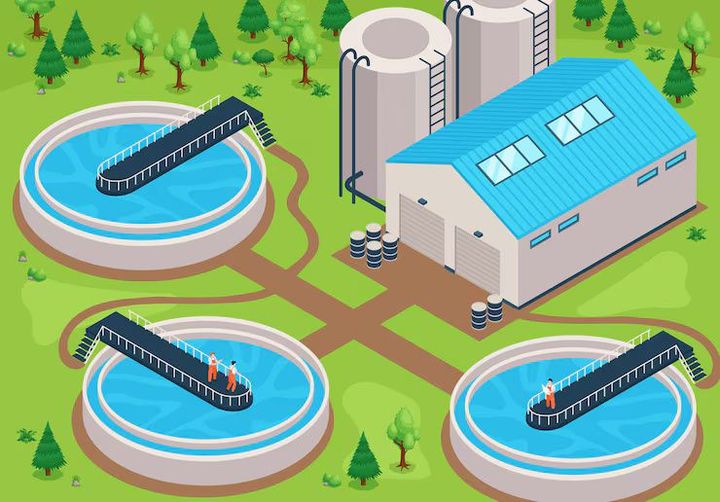
An industrial ETP commonly contains several treatment stages:
- Collection and equalization tank
- Screening system
- Oil and grease removal system
- pH adjustment system
- Primary clarification
- Biological treatment
- Secondary clarification
- Filtration
- Disinfection, where required
- Sludge handling system
- Treated-water storage
- Monitoring and control equipment
The exact configuration depends on wastewater flow, pollutant concentration, temperature, pH, biodegradability, dissolved solids, and the intended destination of the treated water.
Types of Industrial Effluent
Effluent characteristics differ according to the production process. For example, textile wastewater can contain colour, suspended solids, organic matter, and dissolved salts, while food-processing wastewater can contain biodegradable organic matter and suspended solids.
Chemical and pharmaceutical processes may generate wastewater containing complex organic compounds, dissolved solids, or specific chemical constituents. Therefore, an ETP normally begins with wastewater characterization before treatment stages are selected.
Importance
Pollution Reduction
Untreated industrial effluent can affect surface water, groundwater, soil, and aquatic ecosystems. Treatment reduces pollutant loads before wastewater reaches the receiving environment.
CPCB environmental standards emphasize treatment of wastewater and consideration of the receiving water body's assimilative capacity when discharge conditions are established.
Water Reuse
An appropriately designed ETP can produce treated water suitable for selected internal applications after meeting the required quality criteria. Reuse can reduce dependence on fresh water and can support water-management objectives within industrial facilities.
Some facilities combine ETPs with tertiary treatment, membrane filtration, reverse osmosis, or other advanced processes when higher-quality water is required.
Process Stability
Wastewater quality can fluctuate during production. Equalization tanks help balance variations in flow, pH, organic loading, and other characteristics before wastewater enters downstream treatment stages.
This can make biological and chemical treatment processes more stable and easier to control.
Resource Recovery
Modern treatment systems can be designed around recovery and reuse concepts. Depending on wastewater characteristics, facilities may recover water, biogas, salts, or other useful materials.
CPCB environmental guidance encourages recycling and reuse of waste materials and recognizes recovery of biogas, energy, and reusable materials as useful environmental practices.
Recent Updates
Greater Use of Online Monitoring
Digital monitoring has become an important part of industrial wastewater management. Online Continuous Effluent Monitoring Systems (OCEMS) can measure selected parameters continuously and transmit data to regulatory systems where required.
CPCB has established protocols covering OCEMS installation, operation, calibration, data submission, and related monitoring procedures.
CPCB also issued a September 2024 direction concerning OCEMS installation and connectivity for grossly polluting industries in the Ganga basin.
Automation and Process Control
ETPs increasingly use sensors, programmable logic controllers, variable-frequency drives, automated dosing systems, flow meters, and supervisory monitoring platforms.
Automation can help operators monitor parameters such as pH, flow, dissolved oxygen, pressure, conductivity, turbidity, and tank levels. Historical data can also help identify process variations and support corrective actions.
Advanced Treatment
Membrane technologies, dissolved air flotation, advanced oxidation, activated carbon, membrane bioreactors, and tertiary filtration are being integrated into treatment systems where conventional treatment does not provide the required water quality.
Zero Liquid Discharge (ZLD) configurations can combine multiple treatment and concentration stages to minimize liquid discharge. CPCB monitoring guidance also includes specific provisions related to facilities claiming ZLD.
Focus on Water Reuse
Water reuse is becoming more significant as industries evaluate water consumption and wastewater generation together. Treatment design is therefore increasingly connected with water-recovery targets, process-water requirements, cooling applications, and other internal water uses.
Laws or Policies
Industrial effluent management in India is governed through the Environment (Protection) Act, 1986, the Environment (Protection) Rules, 1986, the Water (Prevention and Control of Pollution) Act, 1974, and related standards, consent conditions, notifications, and directions.
Effluent Discharge Standards
India has industry-specific effluent standards covering parameters such as pH, biochemical oxygen demand (BOD), chemical oxygen demand (COD), suspended solids, oil and grease, colour, dissolved solids, and sector-specific pollutants.
For example, CPCB's published standards for integrated textile units specify limits for several parameters, while noting that CPCB or State Pollution Control Boards may apply stricter requirements depending on the receiving environment.
Consent Requirements
Industrial facilities that fall under pollution-control requirements generally need applicable consent from the relevant State Pollution Control Board or Pollution Control Committee. The conditions can specify wastewater treatment, monitoring, sampling, reporting, and discharge requirements.
A 2024 CPCB direction reiterated that industries requiring consent to operate need a functional ETP capable of treating pollutants to the prescribed requirements before discharge.
Common Effluent Treatment Plants
Common Effluent Treatment Plants (CETPs) are used in industrial clusters where multiple units send wastewater to a shared treatment facility. CPCB has described CETPs as a mechanism for collective treatment of industrial effluent, particularly for small and medium-scale industrial clusters.
The applicable inlet and treated-water requirements depend on the industry, CETP configuration, regulatory conditions, and receiving environment.
Tools and Resources
Several instruments and systems are important for ETP operation and monitoring.
| Tool or System | Main Purpose |
|---|---|
| pH meter | Measures acidity or alkalinity |
| Flow meter | Tracks wastewater flow |
| DO sensor | Measures dissolved oxygen |
| ORP sensor | Monitors oxidation-reduction conditions |
| Turbidity meter | Measures suspended optical particles |
| Conductivity meter | Indicates ionic content |
| Online analyser | Continuous measurement of selected parameters |
| PLC | Controls treatment sequences |
| HMI | Displays process conditions |
| Dosing system | Adds chemicals at controlled rates |
| Sludge dewatering system | Reduces water content in sludge |
| Filter system | Removes remaining suspended particles |
| Membrane system | Provides advanced separation |
| Laboratory equipment | Supports sampling and quality analysis |
CPCB guidance on real-time effluent monitoring highlights the importance of calibration, validation, data recording, alarms, and transmission of monitoring information.
For technical reference, industrial facilities can consult CPCB environmental standards, relevant State Pollution Control Board requirements, applicable BIS standards, laboratory testing procedures, and sector-specific wastewater guidelines.
FAQs
What is an Effluent Treatment Plant?
An Effluent Treatment Plant is a wastewater treatment system used by industrial facilities to remove or reduce pollutants from process effluent before reuse or discharge.
How does an ETP work?
An ETP generally uses a sequence of screening, equalization, chemical treatment, biological treatment, clarification, filtration, and other processes selected according to wastewater characteristics.
What are the main ETP treatment methods?
The main methods include physical treatment, chemical treatment, biological treatment, tertiary filtration, membrane separation, and advanced oxidation. The selected combination depends on the pollutants and required treated-water quality.
What is the difference between an ETP and a CETP?
An ETP generally treats wastewater generated by an individual industrial facility. A CETP is a shared treatment facility designed to receive wastewater from multiple industrial units within a cluster.
Why is ETP monitoring important?
Monitoring helps track treatment performance and wastewater characteristics. Parameters such as pH, flow, BOD, COD, suspended solids, conductivity, and other sector-specific indicators can be monitored according to applicable requirements.
Conclusion
Effluent Treatment Plants combine multiple treatment methods to manage industrial wastewater and reduce pollutant loads. Their design depends on wastewater characteristics, production processes, discharge requirements, and water-reuse objectives. Recent developments include greater automation, online monitoring, advanced filtration, membrane systems, and water-recovery approaches. Proper treatment design and continuous monitoring are important for maintaining stable wastewater treatment performance and meeting applicable environmental requirements.