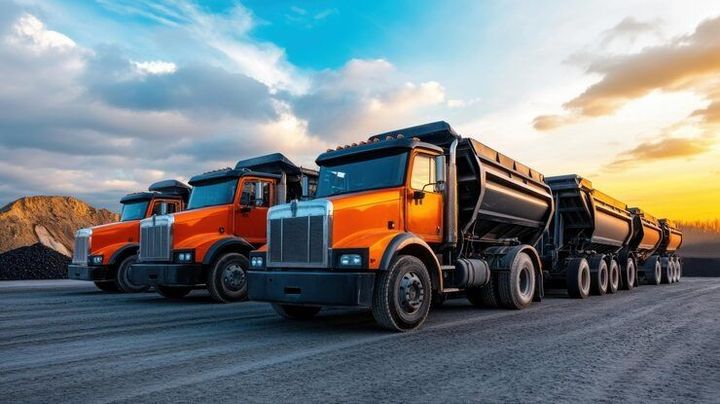
Dump Trucks: Discover Hauling Technology and Heavy-Duty Mining and Construction Applications
Dump trucks are heavy-duty vehicles designed to transport and unload large quantities of soil, rock, minerals, aggregates, and construction materials. They are widely used in mining, quarrying, road development, and major construction projects. Modern dump trucks combine robust frames, powerful drivetrains, hydraulic tipping systems, advanced monitoring, and operator-assistance technologies for demanding hauling operations.
Dump Trucks: Discover Hauling Technology and Heavy-Duty Mining and Construction Applications
Context
Dump trucks are heavy-duty vehicles designed to transport and unload large quantities of materials across mining, quarrying, construction, road development, and infrastructure sites. Their primary function is to move materials such as soil, rock, ore, aggregate, sand, and construction debris between different areas of a worksite.
Unlike conventional road vehicles, heavy-duty dump trucks are engineered for demanding off-road conditions. They typically have reinforced frames, large tires, powerful propulsion systems, high-capacity bodies, and hydraulic mechanisms that allow the load body to be raised for unloading.
A typical dump truck consists of several major systems:
Chassis and frame
Engine or electric propulsion system
Transmission and drivetrain
Dump body
Hydraulic lifting system
Axles and suspension
Tires and wheels
Operator cab
Braking and steering systems
Electronic monitoring systems
The basic operating cycle involves loading material into the dump body, transporting it to a designated location, positioning the vehicle, raising the body, and discharging the material. After unloading, the body returns to its normal position and the truck travels back for another loading cycle.
Types of Dump Trucks
Dump trucks can be classified according to their size, body arrangement, drive configuration, and intended operating environment.
Rigid dump trucks have a fixed chassis and a separate dump body mounted on the frame. They are commonly associated with large mining and quarrying operations where substantial material volumes need to be transported across prepared haul roads.
Articulated dump trucks have a hinged connection between the front and rear sections. This design provides greater maneuverability across uneven or challenging terrain and makes them suitable for many construction and earthmoving applications.
Underground dump trucks are designed for confined mining environments. Their dimensions and operating configurations are adapted to underground access routes and material-handling requirements.
Road-oriented dump trucks are used for construction and municipal applications where the vehicle may travel between worksites or on public roads, subject to applicable regulations.
Main Components
The dump body is the section that carries the material. Its shape, capacity, construction material, and reinforcement depend on the intended application.
The hydraulic system raises and lowers the dump body. Hydraulic cylinders provide the force needed to tilt the body and release the load.
The chassis provides structural support for the vehicle and carries the engine, drivetrain, body, suspension, and other major systems.
The drivetrain transfers power to the wheels. Depending on the vehicle design, this can involve mechanical transmissions, electric drive systems, or other propulsion arrangements.
The operator cab contains steering controls, displays, communication equipment, visibility systems, and safety controls. Modern cabins may also integrate cameras, sensors, and electronic monitoring interfaces.
Importance
Dump trucks are an important part of material transportation systems because they connect excavation and loading equipment with stockpiles, processing areas, construction zones, and disposal locations.
Mining Applications
Mining operations often involve moving large quantities of overburden, fragmented rock, and extracted material. Heavy-duty dump trucks can transport these materials between loading areas and designated destinations.
The truck's body capacity, payload configuration, traction, braking system, and haul-road characteristics all influence its suitability for mining applications.
Large mining trucks can operate alongside hydraulic excavators, electric shovels, wheel loaders, and other loading equipment. Coordination between these machines helps maintain an organized material-handling cycle.
Construction Applications
Construction projects use dump trucks for transporting excavated soil, aggregates, demolition materials, fill materials, and other bulk products.
They can support road construction, site preparation, foundation work, earthmoving, drainage projects, and large infrastructure developments.
Different construction environments may require different truck configurations. Smaller articulated models can be useful where maneuverability is important, while larger units can be used where site conditions support higher-capacity hauling.
Quarrying
Quarries require continuous movement of rock and aggregate between extraction areas and processing or stockpile locations. Dump trucks can provide the transportation link between loading equipment and these destinations.
Vehicle selection depends on material characteristics, haul-road conditions, loading equipment, travel distance, gradients, and required operating cycles.
Material Handling
The design of the dump body affects how materials are contained and discharged. Different materials can place different demands on the body structure and hydraulic lifting mechanism.
Operators need to consider load distribution as well as overall payload limits. Uneven loading can affect vehicle stability, tire loading, braking, and component stress.
Haul-Road Operation
Haul roads are an important part of dump-truck operations. Road width, gradients, curves, surface condition, drainage, and traffic patterns can influence vehicle movement.
Good coordination between trucks and other equipment is particularly important on sites where several types of heavy machinery share the same routes.
Recent Updates
Dump truck technology continues to evolve through developments in automation, digital monitoring, electric drive systems, operator assistance, connectivity, and energy management.
Digital Monitoring
Modern dump trucks can use sensors and onboard electronic systems to monitor operating conditions. Depending on the machine, these systems can track information such as engine or motor parameters, transmission conditions, temperatures, payload data, tire conditions, and operating hours.
Digital displays provide operators with information about machine status and alerts. Connected systems can also allow authorized technical teams to review selected equipment information remotely.
Payload Monitoring
Payload monitoring technology can help operators and site teams understand how much material is being transported during each cycle.
Accurate payload information can support load management and reduce the risk of operating outside the vehicle's intended limits. It can also help track material movement across large sites.
Automation
Automation is increasingly being introduced into large-scale mining haulage. Automated dump trucks can use positioning systems, onboard sensors, communication systems, and site-control technology to navigate designated routes and coordinate movement.
The level of automation varies significantly between operations. Human supervision and site-management systems remain important for responding to changing road conditions, maintenance requirements, weather, and unexpected site activity.
Electric Drive Systems
Electric propulsion is receiving greater attention in heavy-duty hauling applications. Some large mining trucks use electric drive systems, while other developments focus on battery-electric or alternative power configurations.
The practical suitability of an electric dump truck depends on factors such as vehicle size, operating cycle, terrain, charging or power infrastructure, ambient conditions, and the specific requirements of the site.
Operator Assistance
Cameras, proximity sensors, collision-awareness systems, and improved displays can support operator awareness around large vehicles.
These technologies can help provide additional information about nearby equipment and obstacles. They complement rather than replace established site safety procedures.
Tire and Component Monitoring
Tire-pressure and condition-monitoring systems can provide information about tire operating conditions. Similar monitoring technologies can be applied to other major components.
Early identification of unusual operating conditions can support inspection and maintenance planning and may help reduce unexpected equipment interruptions.
Laws or Policies
Dump trucks used in mining and construction are subject to workplace safety, vehicle, environmental, electrical, and site-specific requirements. The exact rules vary according to country, industry, vehicle type, and operating environment.
Workplace Safety
Safety procedures commonly address operator training, vehicle inspection, braking systems, steering, visibility, reversing procedures, load limits, communication, and interaction with other mobile equipment.
Pre-operation checks may include tires, wheels, brakes, lights, mirrors or cameras, hydraulic systems, body condition, steering controls, warning systems, and fluid levels.
Load Management
Vehicles should be operated within their specified payload and structural limits. Correct loading helps maintain stability and reduces unnecessary stress on the chassis, suspension, tires, and braking system.
Loading practices should also consider the distribution of material across the dump body rather than focusing only on total load quantity.
Traffic Management
Large worksites often establish designated haul routes, speed controls, intersection procedures, reversing protocols, and separation zones.
Clear communication between dump trucks and loading equipment is important when multiple machines operate within the same area.
Environmental Requirements
Mining and construction operations may be subject to requirements concerning dust, noise, emissions, water management, soil disturbance, and site restoration.
Electric and other alternative-power vehicles may have additional requirements related to electrical systems, charging infrastructure, or high-voltage components.
Tools and Resources
Dump trucks rely on mechanical, hydraulic, electronic, and digital resources to support safe and consistent operation.
| Tool or Resource | Main Function |
|---|---|
| Dump body | Carries and discharges bulk material |
| Hydraulic cylinders | Raise and lower the dump body |
| Payload monitoring | Tracks transported material quantity |
| Tire monitoring | Provides tire condition information |
| Cameras and sensors | Improve visibility and awareness |
| Diagnostic systems | Monitor vehicle systems |
| Brake inspection tools | Support braking-system checks |
| Technical manuals | Provide operating and maintenance procedures |
Hydraulic components require appropriate inspection because cylinders, hoses, valves, and connections operate under substantial pressure. Leaks, physical damage, or unusual movement should be addressed according to established maintenance procedures.
The braking system is another critical area. Heavy dump trucks can carry substantial loads and operate on slopes, so braking components require regular inspection and appropriate maintenance.
Tires experience significant loads and may operate over rough surfaces. Tire pressure, tread condition, structural condition, and wheel components should be checked according to applicable procedures.
Digital diagnostic tools can provide additional information about electronic systems, engine or motor performance, transmission operation, and other vehicle functions.
Operator manuals, maintenance documentation, inspection checklists, and site traffic plans are also important resources. Together, these materials provide practical information for operating and maintaining dump trucks within their intended conditions.
FAQs
What are Dump Trucks used for?
Dump trucks are used to transport and discharge bulk materials such as soil, rock, ore, aggregate, sand, and construction materials. They are widely used in mining, quarrying, construction, road development, and large infrastructure projects.
How do Dump Trucks work?
Dump trucks carry material in a dedicated body and transport it to a designated location. A hydraulic lifting system raises the body, allowing the material to slide or discharge from the rear or another designated opening.
What are the main types of Dump Trucks?
Common types include rigid dump trucks, articulated dump trucks, underground dump trucks, and road-oriented dump trucks. Their designs differ according to terrain, payload requirements, maneuverability, and operating environment.
What features are important in Dump Trucks?
Important features include payload capacity, dump-body design, hydraulic lifting systems, drivetrain configuration, suspension, braking systems, tires, operator controls, monitoring technology, and visibility equipment.
How is technology changing Dump Trucks?
Modern Dump Trucks increasingly incorporate payload monitoring, digital diagnostics, cameras, sensors, connectivity, operator-assistance systems, automation, and electric drive technologies. These developments can provide greater visibility into vehicle operation and support controlled hauling activities.
Conclusion
Dump trucks are essential for transporting bulk materials across mining, construction, quarrying, and infrastructure sites. Their heavy-duty frames, specialized dump bodies, hydraulic systems, powerful drivetrains, and braking systems allow them to handle demanding hauling conditions. Recent developments in automation, digital monitoring, electric drive systems, payload technology, and operator assistance are expanding the capabilities of modern hauling equipment. Appropriate vehicle selection, load management, inspection, and compliance with applicable safety requirements remain important for dependable dump-truck operation.