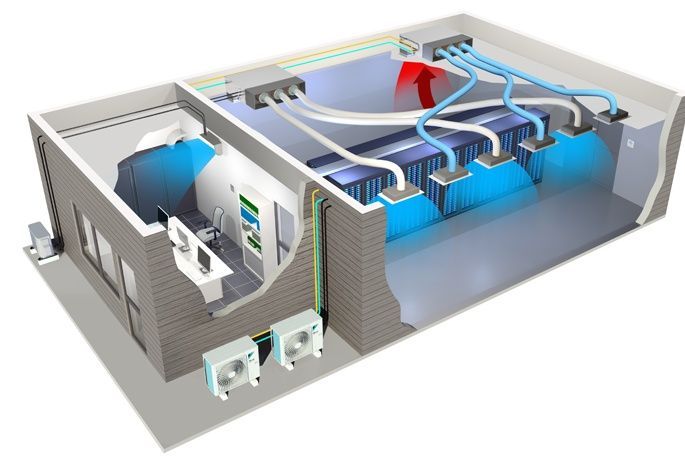
Data Center Cooling Systems Explained: An Overview With Insights and Practical Tips
Data center cooling systems are the technologies and methods used to maintain safe operating temperatures for servers, networking hardware, and storage equipment. Modern data centers generate significant heat due to dense computing workloads, high-performance hardware, and continuous operation.
Cooling is essential to prevent thermal damage, improve reliability, and maintain energy-efficient performance.
Cooling solutions exist because servers convert electrical energy into heat, and without proper temperature regulation, even a minor rise in heat can reduce performance or lead to system shutdowns. As digital infrastructure expands—with cloud computing, AI processing, big data analytics, and digital transformation—cooling has become a foundational part of the IT environment.
Many cooling strategies exist, including air-based cooling, liquid cooling, hot-aisle and cold-aisle containment, direct-to-chip cooling, evaporative cooling, and advanced heat-recovery systems. Each is designed to manage airflow, reduce heat hotspots, and optimize thermal performance while supporting sustainability goals. High-value keywords such as data center infrastructure, thermal management solutions, liquid cooling technology, precision cooling systems, and energy-efficient cooling methods are often associated with this topic due to the industry’s technical nature.
Importance: Why Data Center Cooling Matters Today
Cooling systems play a critical role in protecting digital infrastructure. As processing loads grow due to AI training models, 5G deployment, IoT devices, and edge computing, temperature control is increasingly challenging. High-density racks and GPU-based compute clusters produce far more heat than traditional servers, increasing pressure on cooling technologies.
Cooling affects several groups, including:
-
Data center operators managing uptime and reliability
-
Cloud computing platforms that run high-demand workloads
-
Organizations relying on mission-critical IT systems
-
Sustainability teams focusing on environmental impact
-
Engineers designing high-density server architecture
Efficient cooling helps address widespread concerns such as energy efficiency, environmental impact, and thermal reliability. Energy consumption is a major factor; globally, data centers consume an estimated 1–2% of total electricity use, and cooling can contribute to a significant share of that consumption. Any improvement in cooling efficiency directly supports environmental goals and operational optimization.
Cooling systems also matter because they reduce heat-related failures. Even small temperature fluctuations can impact equipment longevity. Proper thermal management ensures stable performance, protects data integrity, and supports uninterrupted operations.
Recent Updates: Trends and Developments in the Last Year
Cooling technology has undergone rapid innovation due to shifting workloads and sustainability goals. Notable updates from the past year include:
-
Growing adoption of liquid cooling (2024–2025):
Liquid cooling methods such as direct-to-chip cooling and immersion cooling gained momentum as AI workloads pushed heat density to unprecedented levels. Several hyperscale data centers began adopting hybrid cooling approaches to support GPU clusters. -
Surge in sustainability-focused cooling designs (2024):
The industry saw increased interest in low-water systems, heat-recovery options, and renewable-powered cooling. Many facilities began integrating outside-air economizers to take advantage of cooler climates. -
AI-driven thermal optimization tools (2024):
Data centers increasingly use AI-powered environmental monitoring to adjust cooling dynamically, improving efficiency and reducing energy wastage. -
Shift toward edge data center thermal solutions (2024–2025):
Smaller regional edge sites are now using compact precision cooling systems designed for limited space and variable climates. -
Rising focus on indirect evaporative cooling:
This method gained adoption in regions with moderate climates, helping reduce reliance on mechanical chillers.
These updates reflect a broader push toward sustainability, energy-efficient cooling systems, and solutions tailored for high-density computing environments.
Laws or Policies: How Cooling Systems Are Affected by Regulations
Cooling system design often intersects with environmental, energy, and safety regulations. Key policy areas that influence data center cooling include:
-
Energy efficiency standards:
Many countries require data centers to follow guidelines on power usage effectiveness (PUE), using benchmarks to encourage lower energy consumption. -
Environmental guidelines:
Regulations may address refrigerant usage, emissions targets, and heat discharge. Environmental agencies monitor the impact of cooling systems that rely on mechanical chillers or industrial coolants. -
Building codes and safety rules:
Requirements may dictate ventilation, structural design for equipment rooms, and emergency airflow procedures. -
Climate-related policies:
Many governments promote energy-efficient cooling methods through incentives for sustainable technologies or through mandatory reporting on environmental performance. -
Water-usage regulations:
Regions facing water scarcity enforce stricter controls on cooling systems that rely heavily on evaporative processes.
While policies differ by country, they all aim to enhance efficiency, reduce environmental impact, and encourage sustainable practices in data center cooling.
Tools and Resources: Helpful Platforms, Calculators, and Guides
Several practical tools and resources support planning, monitoring, and optimizing cooling systems. These include:
-
Thermal mapping software
Helps visualize airflow, heat zones, and equipment temperature distribution. -
Data center infrastructure monitoring platforms (DCIM)
Tracks cooling performance, energy consumption, rack load, and environmental data. -
PUE calculators
Assists in estimating energy efficiency and comparing cooling strategies. -
CFD (computational fluid dynamics) modeling tools
Used during the design phase to simulate airflow and temperature patterns. -
Environmental monitoring sensors
Provide real-time temperature and humidity data for proactive cooling management. -
Energy optimization dashboards
Offer insights into cooling performance, fan speeds, chiller efficiency, and thermal risks. -
Industry guides and documentation
Organizations publish thermal guidelines for temperature ranges, humidity control, and airflow management.
These tools help operators analyze cooling performance, identify inefficiencies, and make informed decisions about thermal strategies.
Data Center Cooling Methods Overview (Table)
Below is a simple comparison table showing common cooling methods and where they are typically used:
| Cooling Method | Characteristics | Typical Use Cases |
|---|---|---|
| Air-Based Cooling | Uses chilled air through raised floors or overhead ducts | General server rooms, low–medium density |
| Liquid Cooling | Transfers heat using coolant to cold plates or immersion tanks | High-density racks, AI hardware |
| Evaporative Cooling | Uses water evaporation to reduce temperature | Moderate climates, energy-focused designs |
| Direct-to-Chip Cooling | Liquid circulates directly to processor plates | GPU clusters, HPC workloads |
| Economizer Cooling | Uses outside air for cooling | Cooler climates, sustainability-focused facilities |
FAQs
What temperature range is recommended in most data centers?
Most guidelines suggest maintaining temperatures between 18°C and 27°C. The ideal range depends on hardware type, rack density, and airflow design.
Is liquid cooling safer than air cooling?
Both methods are safe when properly designed and maintained. Liquid cooling is increasingly used for high-density environments because it manages heat more effectively.
Does cooling affect energy efficiency?
Cooling significantly influences energy use. Optimized systems reduce energy consumption, improve thermal stability, and support environmental goals.
What is PUE and why is it important?
Power Usage Effectiveness (PUE) is a metric that compares total facility energy with IT equipment energy. A lower PUE indicates better efficiency, and cooling significantly impacts this value.
Can cooling systems support AI-heavy workloads?
Yes. Modern technologies like direct-to-chip cooling and immersion cooling are specifically developed to manage the high heat generated by AI hardware and GPU-intensive operations.
Conclusion
Data center cooling systems are essential for managing heat, protecting equipment, and ensuring efficient operation in modern digital environments. As computing demands increase, especially with AI, cloud infrastructure, and edge deployments, cooling systems must evolve to handle higher heat loads while supporting sustainability objectives.
Recent advances—including liquid cooling innovations, AI-optimized thermal tools, and high-efficiency airflow solutions—highlight the industry’s shift toward scalable and environmentally responsible cooling strategies. With growing regulatory attention and the need for reliable data center performance, understanding cooling systems is valuable for anyone involved in IT operations, infrastructure design, or environmental management.