Conveyor Systems for Mining Operations: Guide to Design and Practical Insights
Conveyor Systems for Mining Operations are mechanical material-handling systems designed to move bulk materials such as coal, iron ore, copper ore, limestone, aggregates, and other mined materials between different locations. They can transport material from extraction areas to crushers, stockpiles, processing plants, loading facilities, or other stages of a mining operation.
A conveyor generally uses a continuous belt, chain, or other carrying mechanism that moves along a defined route. In large mining applications, belt conveyors are particularly common because they can transport substantial quantities of bulk material over long distances.
A complete conveyor system is more than a moving belt. It can include drive units, pulleys, idlers, frames, take-up equipment, loading points, discharge points, transfer stations, controls, monitoring equipment, and protective systems.
How Mining Conveyors Work
A typical belt conveyor moves material along a continuous loop.
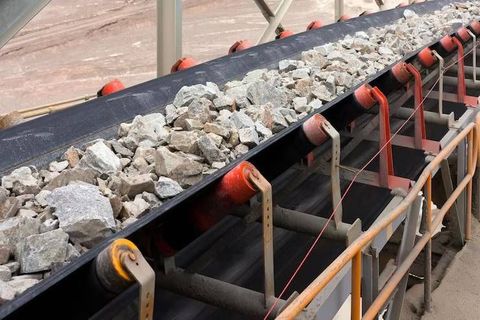
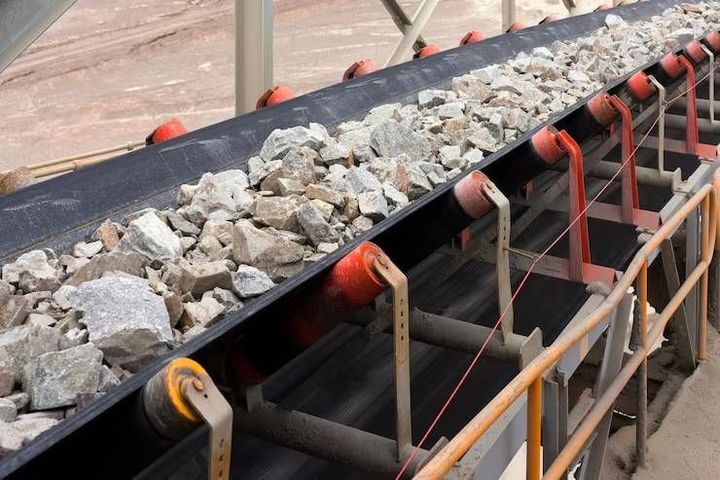
The drive pulley provides the motion needed to move the belt. Idlers support the belt and its load along the conveyor route, while the tail pulley guides the belt around the opposite end.
At a loading point, mined material is transferred onto the moving belt. The belt carries the material along the conveyor and eventually discharges it into another conveyor, crusher, stockpile, hopper, or processing stage.
A simplified operating sequence includes:
Loading: Material enters the conveyor through a controlled loading point.
Carrying: The belt transports material along the conveyor route.
Monitoring: Sensors and control equipment can monitor selected operating conditions.
Transfer: Material moves to another conveyor, machine, stockpile, or processing stage.
Discharge: A pulley, chute, or other arrangement directs the material to its destination.
Return: The empty belt travels back toward the loading area.
Main Conveyor Types
Overland conveyors transport material across relatively long distances and can connect mining areas with processing or storage facilities.
In-pit conveyors are positioned within open-pit mining areas and can move material from lower mining levels toward crushers or other transfer points.
Underground conveyors transport material through mine workings and can be integrated with continuous mining, crushing, and shaft transportation systems.
Incline conveyors move materials upward or downward along sloped routes. Their design must consider belt tension, material stability, braking, and controlled movement.
Mobile conveyors can be relocated as mining areas change. They are useful in operations where the material-handling route needs to change as extraction progresses.
Importance
Continuous Material Movement
Conveyors allow material to move continuously instead of requiring separate transport cycles for every load. This can create a consistent flow between extraction, crushing, screening, processing, and storage stages.
The appropriate arrangement depends on production volume, material properties, distance, terrain, elevation changes, and mine layout.
Long-Distance Transportation
Long conveyors can connect distant areas within a mine or between a mine and a processing facility. In suitable applications, a conveyor route can reduce the need for repeated movement by individual mobile vehicles.
Long-distance systems require careful attention to alignment, belt tension, drive arrangement, transfer points, structural support, and maintenance access.
Material Handling in Difficult Terrain
Mining areas can contain slopes, uneven ground, elevation changes, tunnels, and restricted spaces. Conveyor routes can be engineered around these physical conditions.
Horizontal, inclined, curved, underground, and overland configurations are possible depending on the application.
Operational Monitoring
Modern conveyor systems can use sensors and control equipment to monitor belt speed, temperature, vibration, motor conditions, belt alignment, and other operating parameters.
Monitoring systems can help operators identify abnormal conditions and investigate potential equipment issues before they interrupt material movement.
Main Components
| Component | Main Function | Typical Consideration |
|---|---|---|
| Conveyor belt | Carries material | Width, strength, material compatibility |
| Drive pulley | Moves the belt | Power and traction |
| Idlers | Support the belt | Spacing and load |
| Tail pulley | Guides the belt | Return-belt alignment |
| Take-up system | Controls belt tension | Thermal and load changes |
| Transfer chute | Moves material between stages | Flow and dust control |
| Scraper | Removes material from belt | Belt cleanliness |
| Emergency stop | Stops equipment during an emergency | Accessible locations |
| Control system | Manages operation | Interlocks and monitoring |
Recent Updates
Digital Conveyor Monitoring
Mining conveyors are increasingly connected to digital monitoring systems. Sensors can collect information about belt speed, temperature, vibration, motor conditions, pulley behavior, and other operating characteristics.
The information can be displayed through centralized monitoring platforms, allowing operators and maintenance teams to observe conveyor conditions without relying entirely on physical inspection.
Condition-Based Maintenance
Condition monitoring can support maintenance planning by identifying changes in equipment behavior. Vibration, temperature, belt tracking, motor current, and other measurements can be compared with established operating conditions.
This approach can help teams investigate unusual patterns before a component develops a more serious operational problem.
Belt Health Monitoring
Modern technologies can inspect belts for selected forms of damage, misalignment, wear, or structural changes. Some systems use cameras, sensors, magnetic inspection, or other measurement technologies.
These technologies are particularly relevant to long conveyors where inspecting the complete belt manually can be difficult.
Automation and Remote Control
Automation can coordinate conveyor starts, stops, speed changes, material transfers, and interlocking between connected machines.
For example, a conveyor may be programmed to communicate with a crusher or upstream conveyor so that equipment operates in a defined sequence. Automated systems still require appropriate safety logic, supervision, and emergency controls.
Energy Management
Energy use is an important design consideration for large conveyor installations. Engineers can evaluate belt speed, loading conditions, route geometry, drive configuration, and operating schedules when developing an energy strategy.
Regenerative braking can also be considered for selected downhill conveyor applications where the moving material creates recoverable mechanical energy.
Current Safety Developments
Mining regulators continue to emphasize conveyor guarding, emergency stopping systems, safe access, belt condition, fire protection, and maintenance procedures.
For example, the U.S. Mine Safety and Health Administration provides current guidance covering powered haulage equipment and conveyor safety, including safe walkways, emergency pull cords, startup warnings, and appropriate crossing facilities.
In India, DGMS published a 2026 safety alert concerning conveyor belt replacement work that highlights risk assessment, isolation and lockout procedures, suitable lifting equipment, supervision, and workplace coordination.
Laws or Policies
International Standards
Conveyor design can involve several international standards depending on the equipment type, location, material, and applicable jurisdiction.
ISO 5048 provides methods for calculating operating power requirements and belt tensile forces for belt conveyors with carrying idlers. ISO confirmed this standard as current in 2026.
Other international conveyor standards address areas such as mechanical handling equipment, conveyor construction, and safety considerations. The applicable standard should be selected according to the specific conveyor design and operating environment.
Mining Safety Regulations
Mining regulations differ between countries and sometimes between different types of mines within the same country.
In the United States, MSHA regulates mine safety and maintains requirements relating to powered haulage equipment, conveyor guarding, belt materials, fire protection, and other mining hazards. Underground coal mining has additional requirements concerning conveyor belts and fire prevention.
In India, DGMS oversees occupational safety, health, and welfare within mines. Its current regulatory resources include the OSH & WC framework and mine-specific regulations and notifications. DGMS published 2026 notifications concerning the Occupational Safety, Health and Working Conditions framework for mining.
Other mining jurisdictions maintain their own regulatory systems. Australia, Canada, South Africa, Chile, Brazil, and European countries, for example, apply national or regional requirements that may influence conveyor design, electrical equipment, guarding, fire protection, inspections, and worker access.
Conveyor Guarding
Moving belts, pulleys, idlers, drive components, and transfer equipment can create trapping and entanglement hazards. Guarding and controlled access are therefore important elements of conveyor design.
A suitable system can include physical guards, emergency-stop devices, warning systems, controlled access points, and appropriate walkways.
Fire Protection
Fire protection is especially important in underground mining and other environments where evacuation or access can be difficult.
U.S. mining requirements include provisions concerning flame-resistant conveyor belts and fire prevention and detection in underground coal mines.
The exact requirements vary by country, mine type, belt material, ventilation arrangement, and applicable legislation.
Lockout and Maintenance Safety
Maintenance activities can expose workers to stored energy, unexpected movement, electrical hazards, and mechanical forces.
DGMS guidance emphasizes power isolation and lockout procedures for conveyor maintenance work. Similar isolation principles appear in mining safety frameworks internationally.
Tools and Resources
Conveyor Design Calculations
Engineering calculations can determine required belt capacity, power, belt tension, drive requirements, and other operating parameters.
ISO 5048 provides a recognized reference for calculating operating power and tensile forces for applicable belt conveyor arrangements.
Belt Conveyor Simulation
Simulation software can represent conveyor routes, material flow, belt tension, transfer points, and operating sequences. Engineers can use such models to examine different layouts before physical installation.
Belt Monitoring Systems
Belt monitoring equipment can measure selected characteristics such as belt speed, alignment, temperature, vibration, and structural condition.
Some systems can generate alerts when measurements move outside defined operating limits.
Motor and Drive Monitoring
Drive systems can be monitored for motor temperature, current, vibration, speed, and other electrical or mechanical characteristics.
Variable-speed drives may also allow conveyor speed to be adjusted according to operating conditions and material flow.
Digital Mine Platforms
Mining operations can connect conveyor data with broader fleet-management, process-control, maintenance, and production platforms.
This can create a more complete view of material movement from extraction through processing and storage.
Safety Resources
Regulatory agencies provide technical information for conveyor design and operation. MSHA provides mining conveyor safety materials, while DGMS maintains Indian mining legislation, technical circulars, safety alerts, and related resources.
FAQs
What are Conveyor Systems for Mining Operations?
Conveyor Systems for Mining Operations are mechanical systems used to transport bulk mined materials between extraction, crushing, processing, storage, and loading areas.
How do mining conveyor systems work?
A conveyor uses a continuous moving belt or another carrying mechanism to transport material from a loading point to a discharge point. Drives, pulleys, idlers, controls, and monitoring equipment support the movement.
What factors affect mining conveyor design?
Important factors include material type, capacity, belt width, conveyor length, inclination, elevation changes, belt speed, tensile forces, loading conditions, environmental conditions, and required safety systems.
What safety features are used on mining conveyors?
Common features include guards, emergency-stop devices, pull cords, startup warnings, belt alignment monitoring, controlled access, safe walkways, fire detection or suppression systems, and appropriate isolation procedures.
Are mining conveyors used underground?
Yes. Underground conveyors can transport mined material through tunnels and connect extraction equipment with crushers, shafts, processing areas, or other transportation systems. Their design must account for restricted spaces, ventilation, fire risks, access, and mine-specific regulations.
Conclusion
Conveyor Systems for Mining Operations provide continuous material movement across extraction, processing, storage, and transportation stages. Their design involves belt selection, drive systems, structural support, material flow, power requirements, monitoring, and safety controls. Current developments include digital monitoring, automated operation, belt inspection technologies, condition-based maintenance, and energy-management approaches. Because mining regulations differ around the world, conveyor systems must be designed and operated according to the applicable standards and requirements of each mining jurisdiction.