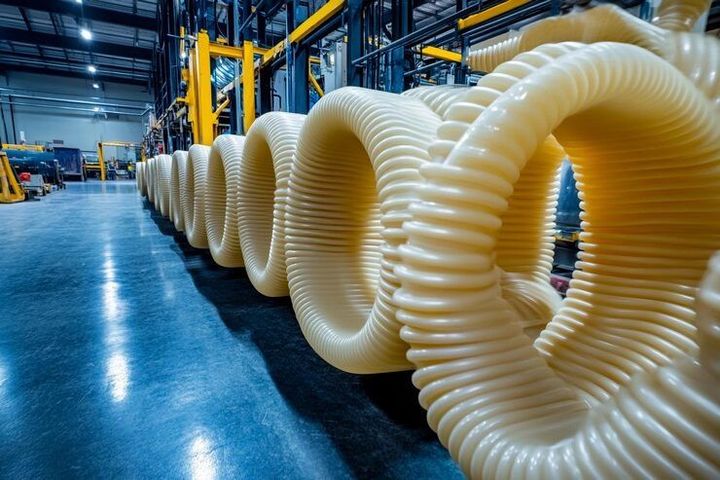
Coiled Tubing Reels: Guide to Design, Components, and Field Operations
Coiled Tubing Reels are large rotating drums used to store, transport, deploy, and retrieve long continuous lengths of coiled tubing during oil and gas well operations. The tubing is stored by wrapping it around the reel in multiple layers, allowing a long string of tubing to be handled without repeatedly connecting individual pipe sections.
Coiled tubing is a continuous steel tube that can be inserted into a well while the tubing remains connected as one long string. This makes it useful for well intervention, cleaning, stimulation, pressure-control operations, and other activities where equipment needs to enter or leave a well efficiently.
A complete coiled tubing unit normally contains a reel, injector head, control cabin, power system, and pressure-control equipment. SLB describes the reel as the component that stores and transports the coiled tubing string, while the injector head provides the force needed to run and retrieve the tubing.
How a Coiled Tubing Reel Works
The reel rotates around its central axis. During deployment, the reel pays out tubing while the injector head guides and pushes the tubing toward the well.
During retrieval, the injector head pulls the tubing upward and the reel rotates in the opposite direction to wind the tubing back onto the drum.
The operation requires coordination between the reel, injector head, hydraulic system, tubing guide, and control system. The tubing must be wound in an organized pattern to prevent excessive bending, overlapping, or mechanical damage.
Main Reel Components
A typical coiled tubing reel can contain several important components:
Drum: The large cylindrical structure around which the tubing is wound.
Flanges: Side plates that help contain the tubing on the drum.
Hub: The central section around which the tubing is wrapped.
Reel shaft: Supports the rotating drum and transfers mechanical loads.
Drive system: Rotates the reel during tubing deployment and retrieval.
Tubing guide: Helps direct tubing onto and off the drum.
Level-wind mechanism: Helps distribute tubing across the reel width.
Hydraulic motor: Provides controlled rotational force on many systems.
Brake system: Helps control reel movement and prevent unwanted rotation.
Control system: Allows operators to monitor and regulate reel operation.
The exact arrangement varies according to reel capacity, tubing dimensions, operating environment, and the design of the complete coiled tubing unit.
Why Continuous Tubing Is Useful
Conventional tubing operations often involve assembling and removing individual pipe sections. Coiled tubing can instead be deployed continuously from a reel.
This allows selected well-intervention operations to be performed with fewer pipe connections. The tubing can also be moved in and out of the well while maintaining a controlled configuration at the surface.
Importance
Tubing Storage and Deployment
The primary function of a reel is to store a long continuous tubing string in a controlled manner. The reel must accommodate the required tubing length while keeping the tubing within acceptable bending limits.
The drum diameter is therefore an important design consideration. A reel that is not appropriately matched to the tubing can subject the tubing to repeated bending stresses.
Controlled Tubing Movement
During field operations, tubing may need to move into a well at a controlled speed. The reel and injector head work together to manage this movement.
The injector generally controls the primary axial movement of the tubing, while the reel manages storage and payout. Coordination between these systems helps maintain a stable tubing path.
Reducing Handling Complexity
Because coiled tubing is continuous, operators do not need to repeatedly make and break conventional tubing connections while running the string.
The reel provides a practical way to store the tubing before the operation and recover it afterward.
Supporting Well Intervention
Coiled tubing can be used for several intervention activities, including:
Well cleanout
Fluid circulation
Nitrogen operations
Selected stimulation activities
Logging and diagnostic operations
Mechanical intervention
Scale or debris removal
Well-killing and pressure-control operations
Placement of selected chemicals or treatment fluids
The exact application depends on well pressure, depth, tubing dimensions, temperature, fluid characteristics, and the equipment installed at the wellhead.
Tubing Fatigue Management
One of the important technical considerations is fatigue. Coiled tubing is repeatedly bent when it moves over the gooseneck and onto or off the reel.
Repeated bending can gradually affect tubing integrity. For this reason, operators track tubing usage and bending history and inspect the tubing before and during appropriate operations.
Important Design Parameters
| Parameter | Meaning | Why It Matters |
|---|---|---|
| Reel capacity | Amount of tubing the drum can hold | Determines usable tubing length |
| Drum diameter | Diameter around which tubing is wound | Influences bending strain |
| Tubing diameter | Outside diameter of tubing | Determines reel compatibility |
| Tubing wall thickness | Thickness of the tubing wall | Influences strength and pressure capability |
| Reel width | Available winding width | Affects tubing distribution |
| Maximum working pressure | Pressure associated with the tubing system | Important for well operations |
| Rotation speed | Speed at which the reel turns | Influences deployment and retrieval |
| Drive torque | Rotational force available | Helps move loaded reel |
| Tubing weight | Mass of tubing stored on reel | Influences structural and drive requirements |
Recent Updates
Updated Coiled Tubing Specifications
API continues to maintain standards related to coiled tubing. API's current standards information identifies API Spec 5ST for coiled tubing and shows an addendum issued in February 2024.
API Spec 5ST addresses manufacturing, inspection, and testing requirements for specified carbon and low-alloy steel coiled tubing used in oil and gas wells.
This is important because the tubing itself must be considered together with the reel and the rest of the coiled tubing system.
More Compact Equipment
Modern coiled tubing units are increasingly designed around transportation efficiency and faster field setup. Compact layouts can reduce the physical footprint of equipment at the wellsite.
Land and offshore configurations can differ considerably because offshore systems must account for limited deck space, marine conditions, lifting arrangements, and wellhead access.
Automation and Monitoring
Modern coiled tubing systems can incorporate electronic monitoring and automated controls. Operators can monitor tubing depth, movement, pressure, reel behavior, and other operating parameters from a control cabin.
Digital monitoring can also help record tubing movement and operational history, supporting later analysis.
Tubing Inspection Technologies
Tubing inspection has become increasingly data-driven. Specialized systems can examine characteristics such as tubing wall thickness, outside diameter, length, and other conditions to help determine whether the tubing remains suitable for an intended operation.
SLB describes a CT inspection system that monitors wall thickness, outside diameter, and tubing length to help determine operational limits.
Offshore Coiled Tubing Systems
Offshore applications create additional engineering requirements because the equipment operates in a restricted environment and may experience vessel or platform movement.
Modern offshore systems can incorporate modular arrangements, automated controls, and motion-compensation technologies. These features are particularly relevant to deepwater well-intervention operations.
Standards Development
API's standards plan currently lists work associated with coiled tubing properties and operations, including documents concerning coiled tubing calculations and operations in corrosive environments. API also lists RP 16ST for coiled tubing well-control equipment systems.
These developments show that coiled tubing operations continue to receive attention in areas such as well control, material performance, calculations, and operating conditions.
Laws or Policies
API Specification 5ST
API Spec 5ST is an important industry reference for the manufacture, inspection, and testing of specified coiled tubing. API's current information identifies Spec 5ST as the specification for coiled tubing and shows its 2024 addendum.
The specification relates to the tubing rather than defining every requirement for a complete reel or well-intervention operation.
Coiled Tubing Well-Control Equipment
API RP 16ST addresses coiled tubing well-control equipment systems. The standard is concerned with equipment used to maintain well control during coiled tubing operations.
This is important because a reel is only one part of a larger system. The complete operation can involve pressure-control equipment, injectors, valves, blowout-prevention equipment, tubing, and surface control systems.
Indian Oil and Gas Operations
In India, oil and gas activities are subject to applicable regulations, technical requirements, environmental provisions, and safety rules administered by relevant authorities. The exact requirements depend on the location, operator, type of well, equipment, and operation.
Coiled tubing operations also need to account for well pressure, hazardous fluids, lifting and mechanical hazards, pressure-control arrangements, and equipment inspection.
Equipment Inspection
Before field deployment, the coiled tubing string and associated equipment should be checked according to applicable procedures and manufacturer or operator requirements.
Inspection can include examination of tubing condition, connections, hydraulic systems, pressure-control equipment, reel components, drive mechanisms, brakes, sensors, and safety systems.
Well-Control Planning
A coiled tubing operation should have a defined well-control plan appropriate to the well conditions. Pressure-control equipment must be correctly selected, tested, installed, and operated.
The reel itself does not control well pressure. Its function is primarily to store and move the tubing, while dedicated pressure-control equipment manages the wellbore interface.
Tools and Resources
Tubing-Reel Design Calculations
Engineering calculations can determine reel capacity, tubing length, drum diameter, tubing bending strain, structural loads, and drive requirements.
These calculations are important because the reel must accommodate the tubing without exceeding relevant mechanical limitations.
Tubing Fatigue Tracking
Fatigue-monitoring systems can record the number and severity of bending cycles experienced by coiled tubing.
Operators can use this information alongside inspection results and operating history when evaluating tubing condition.
Hydraulic Control Systems
Hydraulic systems can drive the reel, injector, and other equipment. Pressure and flow controls allow operators to regulate equipment movement during field operations.
Depth and Tension Monitoring
Electronic systems can monitor tubing depth, injector forces, tubing tension, pressure, and movement. These measurements help operators understand the behavior of the tubing during deployment and retrieval.
Inspection Equipment
Inspection systems can evaluate tubing dimensions and selected physical characteristics before deployment. These measurements can help determine whether the tubing remains within operational limits.
API Standards Resources
API provides standards and technical material covering coiled tubing, tubular goods, and well-control equipment. API's tubular-goods resources include material concerning coiled tubing and line pipe used in intervention operations.
Engineering teams can use the applicable standards together with equipment manuals, inspection procedures, well-specific operating programs, and regulatory requirements.
FAQs
What are Coiled Tubing Reels?
Coiled Tubing Reels are rotating drums used to store, transport, deploy, and retrieve continuous lengths of coiled tubing during oil and gas well operations.
How does a coiled tubing reel work?
The reel rotates to pay tubing out during deployment and winds tubing back onto the drum during retrieval. The injector head controls the tubing's movement into and out of the well while the reel manages storage and payout.
What are the main components of a coiled tubing reel?
Important components can include the drum, hub, flanges, shaft, drive system, hydraulic motor, brake system, tubing guide, level-wind mechanism, and control system.
Why is reel diameter important?
Reel diameter influences the bending experienced by the coiled tubing. Appropriate reel dimensions help keep tubing within its intended mechanical operating limits.
Where are Coiled Tubing Reels used?
They are used in oil and gas well intervention operations on land and offshore. Applications can include well cleanout, fluid circulation, selected stimulation activities, logging, mechanical intervention, and other well-maintenance operations.
Conclusion
Coiled Tubing Reels are central components of coiled tubing units because they store and control long continuous tubing strings during field operations. Their design involves factors such as drum diameter, capacity, tubing dimensions, drive torque, rotation control, and fatigue management. Modern systems increasingly incorporate electronic monitoring, automated controls, compact layouts, and advanced tubing inspection technologies. API standards such as API Spec 5ST and API RP 16ST provide important technical references for coiled tubing and associated well-control equipment.