Automatic Labeling Machines for Pharma: Guide to Technology and Key Details
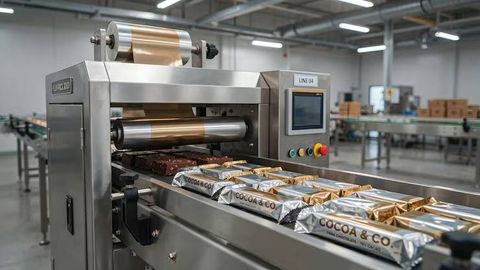
Automatic Labeling Machines for Pharma are automated systems designed to apply labels accurately and consistently to pharmaceutical containers and packaging. They can handle products such as bottles, vials, ampoules, cartridges, cartons, jars, and other containers used in pharmaceutical production and packaging.
A typical labeling machine combines mechanical handling equipment, sensors, label-dispensing mechanisms, control software, and inspection technology. Depending on the application, the system may also integrate printers, barcode readers, cameras, rejection mechanisms, and production-line controls.
Pharmaceutical labeling requires careful control because labels can contain important information such as product identification, batch information, manufacturing details, expiry information, storage instructions, regulatory information, and machine-readable codes.
How Pharmaceutical Labeling Works
A typical automated labeling sequence can involve several stages:
Container feeding: Containers enter the machine through a conveyor, rotary system, or other controlled feeding mechanism.
Positioning: Sensors or mechanical guides position each container correctly.
Label detection: The machine detects the label material and determines when an individual label should be dispensed.
Label application: An applicator places the label onto the container or package.
Printing: Selected systems print variable information such as batch numbers, dates, or codes.
Inspection: Cameras or scanners examine label position, readability, or printed information.
Rejection: Containers that do not meet programmed inspection conditions can be separated from the accepted production flow.
The exact sequence depends on the container type, packaging format, label design, production speed, and regulatory requirements.
Major Types of Pharmaceutical Labeling Machines
Bottle labeling machines apply labels to round or shaped pharmaceutical bottles. They can use wrap-around, front-and-back, or multiple-label configurations.
Vial labeling machines are designed for small containers commonly used for injectable and other pharmaceutical products. Precise positioning is particularly important because vial surfaces provide limited labeling space.
Ampoule labeling machines handle narrow glass containers and can use specialized feeding and positioning mechanisms.
Carton labeling systems apply labels to secondary packaging such as cartons. They can also be integrated with printing and inspection equipment.
Syringe labeling systems handle prefilled syringes and similar formats where controlled handling and accurate placement are important.
Wrap-around labeling systems place labels around cylindrical containers, while front-and-back systems apply separate labels to designated surfaces.
Importance
Label Accuracy
A pharmaceutical label needs to correspond to the correct product and packaging configuration. Automated systems can use sensors, programmed recipes, barcode verification, and vision inspection to control labeling operations.
The objective is not simply rapid label application. The complete process needs to maintain identification accuracy, label position, print quality, and traceability.
Supporting Production Consistency
Manual labeling can involve differences in placement, alignment, and handling between individual operators. Automated equipment can repeat programmed movements under controlled operating conditions.
Consistency is particularly important when pharmaceutical packaging contains small labels with limited printing areas.
Reducing Label Mix-Ups
Pharmaceutical production environments handle multiple products, strengths, batches, and packaging formats. A mix-up between labels can create a significant quality concern.
Automated systems can incorporate barcode readers and electronic recipe controls to verify that the selected packaging materials correspond to the intended production run. FDA guidance for pharmaceutical manufacturing emphasizes documented procedures for using correct packaging materials and labels and preventing mix-ups.
Supporting Traceability
Modern pharmaceutical packaging increasingly uses machine-readable identification. Depending on the market and product category, this may include barcodes, QR codes, data matrix symbols, serial numbers, batch information, or other identifiers.
These codes can connect physical packages with production and distribution records.
Main Machine Components
| Component | Main Function | Typical Role |
|---|---|---|
| Conveyor | Moves containers | Product transportation |
| Sensor | Detects containers or labels | Position control |
| Label dispenser | Separates labels | Label feeding |
| Applicator | Places labels | Label attachment |
| Printer | Adds variable information | Batch and date coding |
| Camera | Examines labels | Visual inspection |
| Barcode reader | Reads codes | Identification verification |
| Controller | Coordinates operations | Machine control |
| Reject unit | Removes selected items | Quality separation |
Recent Updates
Vision-Based Inspection
Machine vision has become an important component of automated pharmaceutical packaging. Cameras can inspect label presence, position, orientation, printed characters, and selected barcode characteristics.
A vision system can compare the captured label against programmed criteria. When an item does not meet those criteria, the system can trigger an appropriate response according to the validated production process.
Serialization and Data-Matrix Codes
Pharmaceutical packaging increasingly uses machine-readable identifiers to support product authentication and supply-chain traceability.
In the United States, the Drug Supply Chain Security Act established requirements for package-level electronic tracing of certain prescription drugs, with data elements represented through machine-readable technologies. FDA guidance continues to address implementation of enhanced drug-distribution security requirements.
India's Drugs Rules include requirements for QR codes on active pharmaceutical ingredient packaging and barcode or QR-code provisions for specified Schedule H2 formulation products.
This has encouraged labeling equipment to integrate coding, scanning, verification, and data-handling functions.
Integrated Printing
Many pharmaceutical labeling lines combine label application with variable-data printing. Depending on the packaging configuration, printers can add batch numbers, expiry information, serial numbers, barcodes, or other approved data.
Integration can reduce the number of separate handling stages and allow printed information to be checked as part of the packaging process.
Flexible Container Handling
Pharmaceutical manufacturers may work with multiple container formats. Modern machines can therefore incorporate adjustable guides, change parts, programmable settings, and electronic recipes.
This flexibility is useful when a single production environment handles bottles, vials, cartons, or other packaging formats.
Digital Machine Monitoring
Modern labeling equipment can record production information such as operating status, container counts, machine alarms, rejected items, and selected performance parameters.
When connected with broader manufacturing systems, this information can support production records and process monitoring.
Improved Human-Machine Interfaces
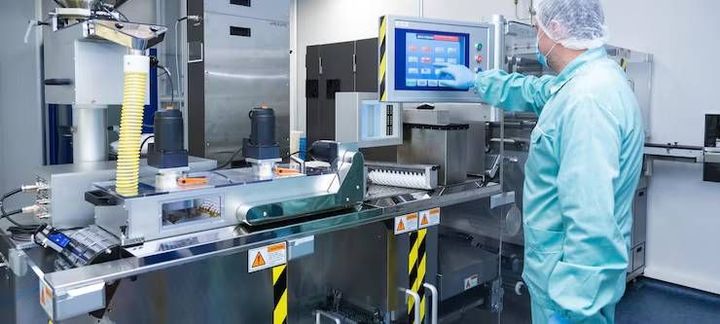
Touchscreen interfaces and recipe-based controls allow operators to select validated machine configurations and monitor operating conditions.
User-access controls can also restrict changes to specific parameters. In regulated pharmaceutical environments, electronic controls need to be implemented according to the organization's validation, data-integrity, and quality procedures.
Laws or Policies
Global Regulatory Environment
Pharmaceutical labeling requirements differ between jurisdictions and product categories. A machine itself does not determine regulatory compliance; the packaging process, approved artwork, printed information, inspection procedures, records, and quality system all contribute to compliance.
Organizations operating internationally generally need to evaluate the requirements applicable to each destination market.
United States
In the United States, pharmaceutical packaging and labeling operate within the FDA regulatory framework. Good manufacturing practice principles include controls designed to ensure that correct packaging materials and labels are used.
For medical devices, FDA labeling requirements also address label control, legibility, inspection, storage, and change control. The FDA's updated Quality Management System Regulation for medical devices became effective on February 2, 2026, incorporating ISO 13485:2016 by reference.
Drug and medical-device requirements are distinct, so manufacturers need to identify the regulatory category applicable to their products.
European Union
European pharmaceutical packaging operates within the EU regulatory framework, including EudraLex Volume 4 GMP requirements and rules concerning medicinal-product information and packaging.
The European Medicines Agency maintains reference material covering medicinal-product packaging information, readability of labels and package leaflets, and EudraLex GMP guidance.
India
India's pharmaceutical labeling framework includes provisions under the Drugs Rules and related regulatory requirements administered through the national drug-control framework.
The CDSCO Drugs Rules specify labeling and packaging information for regulated products. They also contain provisions concerning machine-readable codes for certain pharmaceutical products and APIs.
Good Manufacturing Practice
GMP principles are central to pharmaceutical packaging. Labeling operations generally require controlled procedures, appropriate documentation, material identification, inspection, and measures against mix-ups.
FDA guidance for APIs specifically notes the importance of documented packaging and labeling procedures and physical or spatial controls intended to prevent mix-ups.
Data Integrity and Change Control
Automated labeling systems can contain recipes, electronic settings, production records, inspection results, and coding information. Changes to these elements may therefore need to follow documented authorization and change-control procedures.
The exact requirements depend on the jurisdiction, product category, equipment configuration, and applicable quality system.
Tools and Resources
Vision Inspection Systems
Vision systems use cameras and image-processing software to examine labels and printed information. They can check characteristics such as presence, alignment, orientation, and selected code features.
Barcode and QR Readers
Barcode scanners and QR readers can verify machine-readable information during packaging. They may be integrated before labeling, after labeling, or at multiple stages of a packaging line.
Serialization Platforms
Serialization systems manage unique identifiers assigned to individual pharmaceutical packages where required. They can connect packaging equipment with databases and broader production or supply-chain systems.
Label Design Software
Controlled label-design platforms help create approved artwork and manage versions. In regulated environments, artwork changes generally need appropriate review and authorization before implementation.
Track-and-Trace Systems
Track-and-trace technologies connect identification information across packaging and distribution stages. Depending on the jurisdiction, they can support authentication, product history, or supply-chain visibility.
Machine Monitoring Systems
Industrial monitoring software can record equipment status, alarms, production counts, and selected process information. These records can help production teams review machine operation and investigate deviations.
Regulatory Resources
Useful global resources include:
FDA: U.S. pharmaceutical and medical-device regulatory information.
EMA: European medicinal-product regulatory and GMP information.
CDSCO: Indian drug and medical-device regulatory information.
WHO: International pharmaceutical quality and regulatory guidance.
ISO: International standards related to quality, automation, safety, and manufacturing systems.
FAQs
What are Automatic Labeling Machines for Pharma?
Automatic Labeling Machines for Pharma are automated systems that apply labels to pharmaceutical containers or packages. They can also integrate printing, barcode reading, vision inspection, and rejection functions.
How do Automatic Labeling Machines for Pharma work?
Automatic Labeling Machines for Pharma typically feed containers, position them, dispense labels, apply them to designated surfaces, and inspect selected characteristics. Additional systems can print and verify variable information.
What products can pharmaceutical labeling machines handle?
Depending on the machine configuration, pharmaceutical labeling systems can handle bottles, vials, ampoules, syringes, cartridges, cartons, jars, and other pharmaceutical packaging formats.
Why are barcode and QR systems important in pharmaceutical labeling?
Machine-readable codes can support identification, authentication, serialization, and traceability. Requirements vary by product and jurisdiction, so the applicable regulatory framework needs to be considered.
What technologies are used in modern pharmaceutical labeling machines?
Modern systems can combine conveyors, sensors, servo drives, vision cameras, barcode readers, printers, controllers, software, electronic recipes, and automated rejection mechanisms.
Conclusion
Automatic Labeling Machines for Pharma combine mechanical handling, label application, printing, inspection, and digital identification technologies to support controlled pharmaceutical packaging. Modern systems increasingly integrate machine vision, serialization, QR and barcode technologies, electronic recipes, and production monitoring. Regulatory requirements differ across markets, with organizations needing to consider applicable pharmaceutical, packaging, quality, and traceability rules. As packaging operations become more digitally connected, labeling equipment is increasingly treated as part of a broader automated and controlled production environment.