Adaptive Fashion: Guide to Inclusive Clothing Design and Practical Insights
Adaptive fashion refers to clothing designed or modified to make dressing, wearing, adjusting, and removing garments easier for people with different physical, sensory, or cognitive needs. Adaptive clothing can use alternative closures, adjustable construction, easier openings, flexible materials, and changes in garment placement.
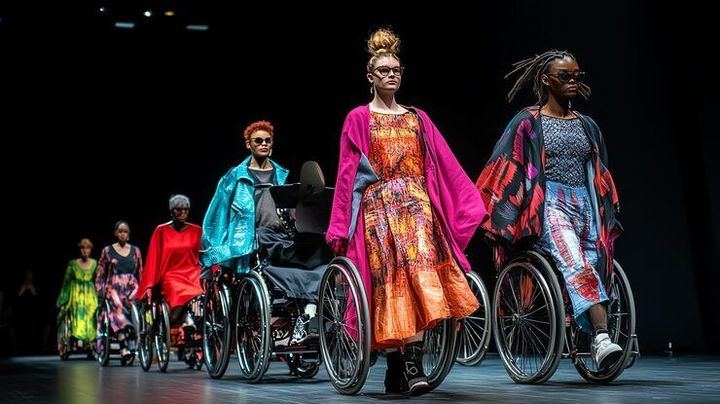
The concept is broader than simply making clothing larger or looser. Designers consider how a person moves, sits, reaches, bends, uses mobility equipment, or manages clothing with limited dexterity. The aim is to connect clothing design with practical accessibility while maintaining appearance, personal style, and everyday usability.
How Adaptive Clothing Developed
Traditional clothing has generally been designed around standard body measurements and common dressing movements. However, people have different body shapes, movement patterns, sensory preferences, and levels of dexterity.
Adaptive fashion developed through a combination of occupational needs, disability-inclusive design, medical and rehabilitation environments, caregiver experience, and consumer demand for more accessible garments. Over time, designers began incorporating accessibility features directly into everyday clothing rather than treating them only as modifications.
The field now includes everyday wear, formal clothing, children's garments, sportswear, footwear, outerwear, and garments designed around particular dressing requirements.
Main Design Features
Adaptive clothing can contain several design elements:
Alternative closures: Magnetic fasteners, hook-and-loop systems, snaps, larger pulls, or other mechanisms can reduce the hand movements needed to open or close a garment.
Rear and side openings: These can make dressing easier when a person has limited mobility or spends substantial time seated.
Adjustable construction: Elastic sections, adjustable hems, expandable waist areas, and repositionable components can accommodate different body positions.
Flat or reduced seams: Garment construction can be modified to reduce pressure points and improve comfort during prolonged sitting or movement.
Easy-access openings: Carefully positioned openings can simplify dressing or access to specific areas without removing the entire garment.
Sensory considerations: Fabric texture, labels, seams, tags, and fasteners can be selected according to different sensory preferences.
Wheelchair-oriented construction: Some garments are shaped around seated posture, including changes to garment length, rise, back construction, and pocket placement.
A Simple Example
Consider a person who spends much of the day using a wheelchair. A conventional pair of trousers may be designed primarily around standing posture, while adaptive trousers can account for seated positioning.
The garment might use a higher back rise, easier waist adjustment, strategically positioned openings, and pocket placement that remains accessible while seated. The design changes are functional rather than simply decorative.
Importance
Why Adaptive Fashion Matters
Adaptive fashion matters because clothing is part of everyday independence, identity, comfort, and participation. Difficulty with buttons, zippers, sleeves, waistbands, or garment positioning can make routine dressing more complicated.
Inclusive clothing design can reduce some of these physical barriers by considering a wider range of body characteristics and abilities during the design process. ISO 24553:2023, for example, provides international ergonomic guidance for improving ease of operation by considering factors such as strength, reach, dexterity, and body characteristics.
Who Uses Adaptive Clothing
Adaptive clothing can be relevant to people with different accessibility requirements, including people with limited hand movement, reduced reach, mobility limitations, sensory sensitivities, or difficulties with conventional garment closures.
Older adults may also benefit from easier garment manipulation. Adaptive approaches can be relevant across age groups, including children, teenagers, working adults, and older people.
The design should not assume that everyone with the same condition or disability has identical requirements. Individual preferences, body proportions, movement patterns, and dressing routines can differ considerably.
Main Applications
Adaptive fashion is used across several clothing categories:
Everyday clothing: Shirts, trousers, dresses, jackets, underwear, and other daily garments can incorporate accessible construction.
Formal clothing: Adaptive design can be applied to suits, dresses, jackets, and occasion wear while maintaining conventional visual characteristics.
Children's clothing: Garments can be designed around easier dressing routines and different developmental needs.
Sportswear: Stretch materials, accessible closures, and movement-oriented construction can support different activity patterns.
Outerwear: Jackets and coats can include larger openings, adjustable sections, and construction suited to mobility equipment.
Footwear: Easy-entry designs, adjustable fastening systems, and wider openings can simplify putting on and removing footwear.
Advantages and Limitations
The practical importance of adaptive fashion comes from its focus on real user needs. Clothing can become easier to manipulate, more compatible with particular movement patterns, and more adaptable to individual preferences.
However, adaptive design also has limitations. A feature that helps one person may not help another. Magnetic closures, for example, may not be appropriate for every situation, while highly specialized construction can make garment design more complex.
Another challenge is maintaining a balance between accessibility, appearance, durability, laundering requirements, fabric behavior, and personal preference. User testing is therefore important when developing adaptive garments.
Comparing Adaptive Design Features
| Design Feature | Main Purpose | Common Application | Important Consideration |
|---|---|---|---|
| Magnetic closure | Reduce fastening movements | Shirts, jackets | Closure strength and safe use |
| Side opening | Simplify dressing | Trousers, skirts | Opening placement |
| Rear opening | Assist seated dressing | Tops, outerwear | Privacy and garment fit |
| Elastic adjustment | Allow easier adjustment | Waistbands, sleeves | Stretch recovery |
| Flat seams | Reduce pressure points | Everyday and seated clothing | Fabric and construction |
| Large zipper pull | Improve grip | Jackets, trousers | Pull size and durability |
| Soft labels | Reduce sensory irritation | Shirts, children's wear | Label placement |
| Seated-fit construction | Support seated posture | Trousers, coats | Body position and mobility |
Recent Updates
User-Centered Inclusive Design
From 2024 through 2026, inclusive design has continued moving toward greater attention to user participation, accessibility research, and practical usability. Instead of relying only on conventional sizing models, designers can gather feedback from people with different physical and sensory requirements during development.
This approach can include prototype testing, interviews, movement observation, fit assessments, and repeated garment trials. The resulting design process can identify problems that may not be visible from a standard clothing pattern alone.
Digital Design and Virtual Fitting
Digital clothing tools are increasingly used to visualize garments before physical samples are produced. Three-dimensional garment simulation can represent fabric behavior, body measurements, garment dimensions, and different fit conditions.
ISO/TS 3736-1:2022 provides a framework for digital fitting processes involving virtual human bodies, virtual garments, and fitting for ready-to-wear clothing. The standard was confirmed in 2026.
For adaptive fashion, digital fitting can potentially help designers examine garment proportions and accessibility features before producing physical samples. However, virtual fitting does not replace physical testing because fabric movement, pressure, closures, and real-world dressing actions can behave differently.
Accessibility Research and Sensory Needs
ISO 6273:2024 introduced guidelines for surveying user needs related to assistive products for people with sensory disabilities involving seeing and hearing. Although it is not a clothing-specific standard, its focus on understanding user needs is relevant to broader accessibility-oriented design processes.
Designers can apply similar user-centered thinking when evaluating garment labels, colors, textures, fasteners, instructions, and other clothing features.
Digital Accessibility Around Clothing
Clothing companies and fashion platforms are also affected by broader digital accessibility developments. In the European Union, accessibility requirements for certain products and digital services placed on the market began applying from June 28, 2025, with defined exceptions. These rules include requirements concerning accessibility for people with disabilities and compatibility with assistive technologies in relevant contexts.
These rules do not create a universal adaptive-clothing standard, but they illustrate the broader movement toward accessible digital experiences surrounding products.
Laws or Policies
International Accessibility Frameworks
There is no single worldwide law specifically governing adaptive fashion. Requirements can depend on the country, product category, labeling rules, consumer regulations, workplace requirements, and whether clothing has a specialized protective or medical function.
The United Nations Convention on the Rights of Persons with Disabilities provides a major international framework concerning participation, accessibility, equality, and inclusion. Its principles can influence national accessibility policies, although implementation is handled through individual jurisdictions.
Accessibility Standards
ISO/IEC Guide 71 provides guidance for incorporating accessibility considerations into standards and product development. It addresses differences in human abilities and accessibility needs across products, systems, and built environments.
ISO 24553:2023 is also relevant to accessible product operation because it considers physical characteristics such as reach, strength, and dexterity. It is not an adaptive-clothing standard, but its ergonomic principles can inform accessible design thinking.
Regional Differences
Regulatory requirements vary between jurisdictions. The European Union has accessibility rules affecting certain products and digital elements, while the United States has federal disability and accessibility laws that can apply depending on the context of a product, organization, workplace, or digital platform.
Clothing manufacturers and retailers therefore need to identify the specific legal requirements applicable to their market rather than assuming that one international standard covers every garment.
Protective clothing is another distinct category. ISO 13688 addresses general requirements for protective clothing, including ergonomics, sizing, compatibility, marking, and related information, but it is intended to work with standards covering specific protective performance.
Tools and Resources
Digital Pattern and 3D Garment Software
Computer-aided design and 3D garment platforms can help designers create patterns, test proportions, visualize garment construction, and examine fit before producing physical samples.
These tools can be particularly useful when designers need to compare several garment configurations or evaluate changes to closures, openings, lengths, and body positioning.
Body Measurement and Fit Tools
Measurement systems can include conventional measuring equipment, digital body scanners, posture assessment tools, and structured fit-testing methods. Accurate measurements are important because adaptive garments may need to account for both standing and seated body positions.
User Testing
User testing is one of the most important practical resources for adaptive fashion development. Test participants can evaluate dressing time, closure manipulation, comfort, reach requirements, garment positioning, and ease of adjustment.
Designers can document observations and use them to modify patterns and construction details. Testing should represent the intended users rather than relying only on assumptions.
Accessibility Standards Databases
ISO provides databases and documentation for international standards relating to ergonomics and accessibility. ICOM and other professional organizations also publish guidance relevant to inclusive cultural and design practices.
Design teams can use recognized standards alongside local regulations, textile requirements, labeling rules, and user research to build a broader design framework.
FAQs
What is adaptive fashion?
Adaptive fashion is clothing designed around different physical, sensory, or cognitive requirements. It can include alternative closures, adjustable construction, accessible openings, specialized garment shapes, and sensory-conscious materials.
How does adaptive fashion improve clothing design?
Adaptive fashion can address practical barriers such as difficult fasteners, limited reach, seated posture, or sensory discomfort. The design process focuses on individual usability rather than assuming that one conventional garment construction works for everyone.
What features are common in adaptive fashion?
Common features include magnetic closures, larger zipper pulls, elastic adjustments, side or rear openings, flat seams, accessible pockets, soft labels, and garment shapes designed around seated or assisted dressing.
Is adaptive fashion only for people with disabilities?
No. Adaptive design can be useful for people with different mobility, dexterity, sensory, or age-related needs. Some features can also make everyday garments easier to manage for people without a disability.
How is technology changing adaptive fashion?
3D garment simulation, digital fitting, body measurement tools, computer-aided pattern development, and accessibility research are helping designers examine garments before physical production. Physical user testing remains important for evaluating real-world fit and usability.
Conclusion
Adaptive fashion applies inclusive design principles to clothing by considering different physical, sensory, and practical needs. Its development includes accessible closures, adjustable construction, seated-fit garments, sensory considerations, and user-centered testing. Digital fitting, 3D garment design, accessibility research, and updated international guidance are contributing to continued development between 2024 and 2026. The central practical principle is to design clothing around real human variation while considering usability, appearance, comfort, durability, and applicable requirements.