7 Types of Liquid Filling Equipment Explained
Liquid filling equipment is used to transfer measured quantities of liquid products into bottles, jars, cans, pouches, and other containers.
These systems are widely used in food and beverage processing, pharmaceuticals, cosmetics, chemicals, personal care, and other manufacturing environments.
Different liquids have different flow characteristics. Water-like products may require a different filling method from thick sauces, oils, creams, or foaming liquids. Choosing the appropriate equipment depends on viscosity, product behavior, container format, filling volume, production rate, and required accuracy.
Why Liquid Filling Equipment Matters
Consistent liquid filling helps maintain uniform container volumes and stable production performance. Automated equipment can coordinate container positioning, product dosing, filling, and transfer to downstream packaging stages.
Modern liquid filling systems can support:
- Consistent fill volumes
- Controlled filling speeds
- Reduced product handling
- Automated container movement
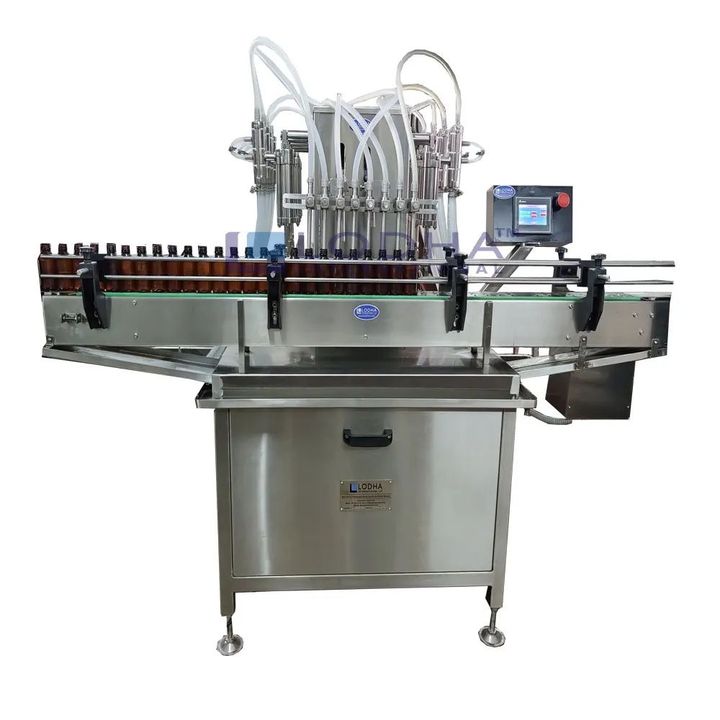
- Multiple filling heads
- Integration with capping and labeling systems
- Product-specific filling configurations
- Production monitoring and control
The most suitable system depends on the characteristics of the liquid rather than simply the desired production speed.
1. Gravity Filling Equipment
Gravity fillers use the natural force of gravity to transfer liquid from a holding tank into containers.
The system is generally suited to relatively free-flowing liquids with consistent viscosity. Filling valves open for a controlled period while the liquid flows into positioned containers.
Common Applications
Gravity filling equipment can be used for:
- Water
- Thin beverages
- Cleaning liquids
- Low-viscosity food products
- Certain personal care formulations
The simple operating principle can make gravity systems suitable for applications where sophisticated pressure or metering mechanisms are not required.
2. Overflow Filling Equipment
Overflow fillers are designed to achieve a consistent visual fill level, particularly when containers have variations in their internal dimensions.
During filling, excess liquid returns through the filling nozzle or a dedicated return path once the desired level is reached.
Common Applications
Overflow filling is often used for products such as:
- Shampoos
- Liquid soaps
- Household cleaners
- Beverages
- Other relatively free-flowing liquids
One advantage is consistent appearance across containers, which can be important when the fill level is visible through transparent packaging.
3. Piston Filling Equipment
Piston fillers use a piston mechanism to measure and dispense a predetermined quantity of liquid or semi-liquid product.
The piston draws product into a cylinder and then pushes the measured quantity through the filling nozzle. This approach can provide controlled volumetric dosing.
Common Applications
Piston filling equipment is commonly used for:
- Thick sauces
- Syrups
- Pastes
- Creams
- Dressings
- Viscous food products
Piston systems are particularly useful when gravity-based filling would be too slow or inconsistent because of product viscosity.
4. Pump Filling Equipment
Pump fillers use pumps to transfer liquids from a product supply system to the filling nozzles.
Different pump technologies can be selected according to the product characteristics and required flow control. Pump-based systems can accommodate a broad range of liquid viscosities and production requirements.
Common Applications
Pump filling equipment can handle:
- Oils
- Sauces
- Beverages
- Personal care liquids
- Chemical formulations
- Viscous products
Pump selection should consider flow rate, product sensitivity, viscosity, temperature, and compatibility with food-contact or other application requirements.
5. Volumetric Filling Equipment
Volumetric fillers dispense a predetermined volume of liquid into each container.
The equipment may use pistons, measuring chambers, flow meters, or other mechanisms to establish the target quantity.
Key Advantages
Volumetric filling systems can provide:
- Repeatable dosing
- Controlled fill quantities
- Multiple-head operation
- Adaptability to different container formats
- Integration with automated production lines
They are commonly used when maintaining a defined liquid volume is an important production requirement.
6. Net Weight Filling Equipment
Net weight fillers measure product based on mass rather than volume.
Containers are positioned on weighing systems, and the filling process is controlled until the target weight is reached. This approach can be useful when product density varies or when the packaged quantity is specified by weight.
Common Applications
Net weight filling systems can be used for:
- Food products
- Sauces
- Oils
- Bulk liquid products
- Products with variable density
Weight-based measurement can provide a useful alternative to volume-based filling when mass consistency is the primary requirement.
7. Pressure Filling Equipment
Pressure fillers use controlled pressure to move liquid from a supply system into containers.
The method can support higher filling speeds and is often considered for products that require controlled flow conditions.
Common Applications
Pressure filling equipment can be used for:
- Beverages
- Carbonated products
- Liquid food products
- Certain specialty formulations
The pressure conditions must be matched to the product and container characteristics to maintain stable filling performance.
Liquid Filling Equipment Comparison
| Equipment Type | Suitable Products | Main Filling Principle |
|---|---|---|
| Gravity filler | Thin, free-flowing liquids | Gravity-driven flow |
| Overflow filler | Thin liquids and visible-fill containers | Level-based overflow |
| Piston filler | Thick liquids and semi-liquids | Piston displacement |
| Pump filler | Low to high viscosity liquids | Pump-driven transfer |
| Volumetric filler | Measured liquid products | Volume-based dosing |
| Net weight filler | Products specified by mass | Weight measurement |
| Pressure filler | Selected beverages and liquids | Controlled pressure |
Factors to Consider When Selecting Equipment
Choosing liquid filling equipment requires more than comparing machine capacity. The product, container, filling method, and complete packaging line should all be evaluated together.
Product Viscosity
Viscosity is one of the most important selection factors. Water-like liquids can generally flow easily, while thick sauces and creams require stronger or more controlled filling mechanisms.
Foaming Characteristics
Some liquids produce foam during filling. Excessive foam can interfere with fill-level consistency and production speed.
Equipment may therefore require specialized nozzle designs or controlled filling speeds.
Container Type
Bottle shape, opening diameter, material, volume, and stability can influence equipment configuration.
Common container formats include:
- Glass bottles
- Plastic bottles
- Jars
- Cans
- Pouches
- Specialty containers
Production Capacity
Production volume determines the number of filling heads, machine configuration, conveyor speed, and automation level required.
High-throughput operations may use multi-head filling systems integrated with container handling, capping, labeling, and inspection equipment.
Cleaning and Sanitation
For food, beverage, pharmaceutical, and personal care applications, hygienic equipment design is particularly important.
Product-contact components should be compatible with the required cleaning procedures and operating environment.
Applications of Liquid Filling Equipment
Liquid filling systems are used across numerous industries.
| Industry | Typical Products |
|---|---|
| Food & beverage | Sauces, oils, beverages, dressings |
| Pharmaceutical | Liquid formulations and solutions |
| Cosmetics | Lotions, shampoos, liquid products |
| Personal care | Soaps, gels, conditioners |
| Chemical | Detergents, cleaning liquids, formulations |
| Household products | Cleaners and liquid preparations |
Best Practices for Liquid Filling Operations
Reliable filling performance depends on consistent product and equipment conditions.
Important practices include:
- Maintain stable product temperature where required.
- Monitor product viscosity during production.
- Check fill accuracy regularly.
- Inspect nozzles and valves for buildup or wear.
- Keep product-contact components clean.
- Verify container positioning.
- Maintain appropriate conveyor synchronization.
- Calibrate measurement systems according to established procedures.
- Monitor changes when switching between products or container formats.
These practices help maintain repeatable filling performance and reduce production interruptions.
Frequently Asked Questions
What is liquid filling equipment?
Liquid filling equipment is machinery designed to measure and dispense liquid products into containers at controlled quantities and production speeds.
What are the main types of liquid filling equipment?
Common types include gravity, overflow, piston, pump, volumetric, net weight, and pressure filling systems.
Which filling equipment is suitable for thick liquids?
Piston and pump filling systems are commonly considered for thick liquids and semi-liquid products because they can provide controlled product movement and dosing.
What is the difference between volumetric and net weight filling?
Volumetric filling measures a defined liquid volume, while net weight filling measures product mass. The appropriate method depends on product characteristics and packaging requirements.
How do I choose liquid filling equipment?
Consider product viscosity, foaming behavior, required fill quantity, container format, production volume, filling accuracy, cleaning requirements, and integration with other packaging equipment.
Conclusion
Liquid filling equipment provides controlled methods for transferring liquids into containers across food, beverage, pharmaceutical, cosmetic, chemical, and personal care applications. The seven major approaches include gravity, overflow, piston, pump, volumetric, net weight, and pressure filling.
The right technology depends on the product's flow characteristics, container design, required accuracy, production volume, and packaging-line configuration. Evaluating these factors together helps manufacturers select a filling system that supports consistent and efficient production.