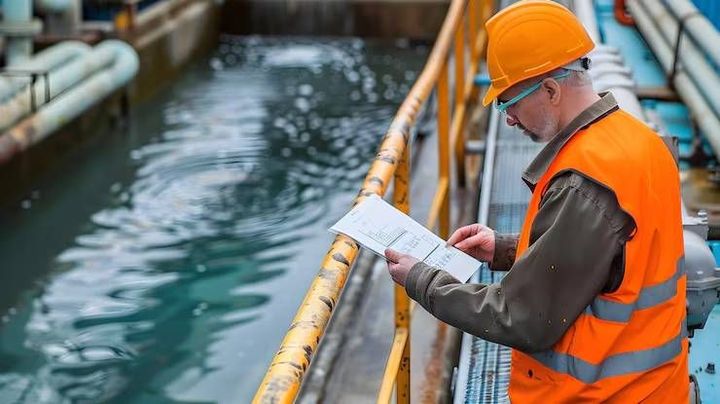
Water Treatment Systems: Guide to Processes, Equipment, and Industrial Applications
Water Treatment Systems are combinations of physical, chemical, biological, and membrane-based processes used to improve water quality for a particular purpose. Depending on the source and intended use, treatment may remove suspended particles, microorganisms, dissolved minerals, organic compounds, nutrients, salts, or other contaminants.
Water treatment is used for drinking-water production, municipal wastewater management, industrial processes, agriculture, power generation, mining, food production, electronics manufacturing, and water reuse.
The treatment process is not identical everywhere. Source-water characteristics, climate, regulations, intended use, available infrastructure, and contaminant levels determine which technologies are appropriate. The World Health Organization's 2026 drinking-water guidelines emphasize risk management from the water source through treatment, distribution, and the point of consumption.
How Water Treatment Works
A treatment plant normally uses several stages rather than relying on one piece of equipment. Each stage targets particular contaminants or prepares the water for the following process.
A simplified treatment sequence can include:
Screening: Removes large objects and debris.
Coagulation: Helps small suspended particles come together.
Flocculation: Encourages particles to form larger groups called flocs.
Sedimentation: Allows heavier particles to settle.
Filtration: Removes remaining suspended material.
Membrane treatment: Separates selected dissolved substances and microorganisms.
Disinfection: Controls microorganisms using methods such as chlorine, ultraviolet radiation, or ozone.
Conditioning: Adjusts characteristics such as pH or mineral content when required.
Industrial wastewater may require additional stages because manufacturing processes can introduce specific chemicals, metals, oils, salts, organic compounds, or other pollutants.
Main Categories of Water Treatment
Drinking-water treatment prepares raw water for human consumption and focuses strongly on microbial, chemical, and physical water-quality risks.
Municipal wastewater treatment processes wastewater from homes, institutions, and commercial areas before discharge or reuse.
Industrial wastewater treatment handles water generated by manufacturing and processing activities. The treatment approach depends heavily on the industry and pollutants involved.
Water reuse systems treat water so it can be used again for applications such as cooling, irrigation, industrial processes, or other permitted purposes.
Desalination systems remove dissolved salts from seawater or brackish water, commonly using membrane processes such as reverse osmosis.
Importance
Protecting Water Quality
Water treatment helps control contaminants that can affect human health, ecosystems, industrial processes, and infrastructure. Drinking-water treatment is particularly important because untreated or inadequately treated water can contain microorganisms and chemical hazards.
WHO's current drinking-water guidance uses a risk-based approach that considers hazards throughout the water supply chain rather than focusing only on the final treatment stage.
Supporting Industrial Operations
Many industries require water with specific characteristics. Manufacturing processes may need water with controlled mineral content, low suspended solids, or reduced microbial activity.
Industries such as semiconductor manufacturing, food and beverage production, mining, energy generation, and chemical processing can generate wastewater with very different characteristics. EPA's industrial treatment database contains treatment performance information covering numerous industrial pollutants and technologies.
Enabling Water Reuse
Water reuse involves treating water and directing it toward another suitable application. Industrial facilities can reuse treated water for activities such as cooling and certain process operations.
Reuse can also reduce dependence on freshwater sources in areas where water availability is limited. EPA identifies industrial reuse applications across manufacturing, energy, mining, food and beverage production, and other sectors.
Supporting Different Water Sources
Treatment technologies can be adapted to surface water, groundwater, seawater, brackish water, municipal wastewater, and industrial wastewater.
The treatment challenge changes with each source. For example, seawater has a high dissolved-salt concentration, while industrial wastewater may contain a mixture of organic compounds, metals, suspended solids, and process chemicals.
Main Treatment Processes
| Process | Main Function | Typical Application |
|---|---|---|
| Screening | Removes large debris | Municipal and industrial water |
| Coagulation | Groups fine particles | Drinking-water treatment |
| Sedimentation | Separates settled solids | Water and wastewater |
| Sand filtration | Removes suspended particles | Water treatment |
| Activated carbon | Adsorbs selected compounds | Drinking and industrial water |
| Ultrafiltration | Separates fine particles and microorganisms | Reuse and process water |
| Reverse osmosis | Removes many dissolved salts | Desalination and process water |
| UV disinfection | Inactivates microorganisms | Drinking and reused water |
| Ozonation | Oxidizes selected contaminants | Advanced treatment |
| Ion exchange | Removes selected dissolved ions | Industrial water |
Recent Updates
Greater Focus on Water Reuse
Water reuse has become an important area of water planning in many regions. Recent developments include treatment systems designed to recover water from municipal wastewater and industrial process streams for subsequent applications.
In April 2026, the U.S. Environmental Protection Agency announced its Water Reuse Action Plan 2.0, highlighting water reuse for industry, energy, and other applications while maintaining public-health considerations.
Advanced Membrane Systems
Membrane technologies continue to play an important role in advanced water treatment. Microfiltration, ultrafiltration, nanofiltration, reverse osmosis, and related processes can separate contaminants according to their size, charge, or other physical and chemical characteristics.
Reverse osmosis is particularly important in desalination and applications requiring substantial removal of dissolved salts. EPA's industrial technology database identifies reverse osmosis among the treatment technologies used for industrial wastewater.
Digital Monitoring
Sensors and digital control systems are increasingly used to monitor flow, pressure, turbidity, conductivity, pH, temperature, dissolved oxygen, and other parameters.
Data from these instruments can help operators understand changing water conditions and identify deviations from expected operating ranges. Digital monitoring can also support automated control of pumps, valves, chemical dosing, and membrane systems.
Advanced Contaminant Removal
Water treatment research increasingly addresses contaminants that may occur at very low concentrations but require specialized treatment approaches.
Activated carbon, advanced oxidation, membrane technologies, ion exchange, biological processes, and combinations of several treatment barriers can be selected according to the contaminant and intended water use.
Updated Global Drinking-Water Guidance
WHO published an updated edition of its drinking-water quality guidelines in June 2026. The edition incorporates the first, second, and third addenda and expands guidance on risk management, treatment performance, analytical methods, and other water-quality considerations.
WHO also published a 2025 compendium covering drinking-water systems and technologies from the source through distribution and household-level practices. It emphasizes selecting technologies according to local water quality, resources, infrastructure, and risk conditions.
Industrial Water Recycling
Industrial facilities are increasingly examining internal water loops in which treated process water is reused rather than discharged after one use.
The approach can involve filtration, biological treatment, membrane separation, evaporation, ion exchange, or other technologies depending on the water characteristics. EPA's industrial database includes technologies such as crystallization, granular activated carbon, ion exchange, biological treatment, evaporation, filtration, and reverse osmosis.
Laws or Policies
International Drinking-Water Frameworks
There is no single worldwide water-treatment law that applies to every country. Drinking-water standards, wastewater discharge requirements, industrial regulations, and reuse rules are established by national, regional, and local authorities.
The WHO Guidelines for Drinking-water Quality provide international technical guidance rather than functioning as a universal national law. Countries can use the guidance when developing their own water-quality regulations and standards.
Wastewater Discharge Requirements
Industrial and municipal wastewater generally must meet applicable discharge requirements before being released into receiving environments. The specific limits can vary according to jurisdiction, industry, receiving water, and pollutant.
Regulations can address parameters such as suspended solids, organic matter, nutrients, metals, chemicals, temperature, pH, and microbial indicators.
Water Reuse Regulations
Water reuse requirements differ substantially between jurisdictions and between intended uses. Drinking-water reuse normally requires more stringent treatment and monitoring than certain non-potable industrial applications.
EPA documentation shows that treatment requirements for industrial reuse can differ between jurisdictions and may specify particular treatment processes, performance levels, or water-quality criteria.
Environmental Protection
Water regulations commonly connect treatment requirements with environmental protection. Wastewater controls can reduce the release of pollutants into rivers, lakes, groundwater, coastal areas, and other receiving environments.
Industrial facilities may therefore need to consider treatment requirements together with permits, monitoring programs, discharge conditions, and waste-management rules.
Public-Health Protection
For drinking water, regulations generally focus on protecting consumers from microbial and chemical hazards. WHO recommends health-based targets, water safety planning, risk assessment, and independent surveillance as components of drinking-water safety management.
Tools and Resources
Water Quality Testing
Laboratory and field testing can measure parameters such as pH, turbidity, conductivity, hardness, dissolved solids, nutrients, metals, organic compounds, and microbial indicators.
Testing results help determine which treatment processes may be appropriate for a particular water source.
Treatment Technology Databases
The U.S. EPA Industrial Wastewater Treatment Technology Database provides performance information from pilot-scale and full-scale industrial treatment applications. Users can explore technologies according to industry, treatment process, or pollutant.
Process Monitoring Instruments
Common instruments include pH meters, conductivity meters, turbidity meters, flow meters, pressure sensors, dissolved oxygen sensors, and online water-quality analyzers.
These instruments can provide continuous or periodic information for treatment control.
Membrane Monitoring
Membrane systems require monitoring of parameters such as feed pressure, permeate flow, conductivity, recovery, and differential pressure.
Changes in these measurements can indicate fouling, scaling, pressure changes, or other operating conditions that require investigation.
Water-Quality Guidelines
WHO drinking-water guidelines provide a major international reference for water-quality risk management and treatment planning. The 2026 edition includes updated material covering treatment methods, analytical approaches, and health-related water-quality considerations.
Water Reuse Resources
EPA's water-reuse resources include technical material covering industrial reuse, treatment technologies, cooling applications, microbial treatment targets, and planning approaches. These resources can help readers understand how treated water may be incorporated into different reuse applications.
FAQs
What are Water Treatment Systems?
Water Treatment Systems are combinations of processes and equipment used to improve water quality for drinking, industrial use, wastewater management, reuse, agriculture, or other applications.
How do Water Treatment Systems work?
Water Treatment Systems normally combine several stages, such as screening, coagulation, filtration, biological treatment, membrane separation, and disinfection. The exact sequence depends on the source water and intended use.
What equipment is used in Water Treatment Systems?
Common equipment includes screens, pumps, settling tanks, filters, membrane modules, chemical-dosing systems, UV units, ozone generators, activated-carbon vessels, clarifiers, biological reactors, and monitoring instruments.
Where are Water Treatment Systems used?
They are used in municipal water plants, wastewater facilities, industrial plants, desalination facilities, power-generation sites, mining operations, food-processing facilities, agriculture, and water-reuse projects.
What is the role of reverse osmosis in water treatment?
Reverse osmosis uses a semipermeable membrane and pressure to separate water from many dissolved salts and other substances. It is widely used in desalination and applications requiring substantial dissolved-solids removal.
Conclusion
Water Treatment Systems combine multiple technologies to improve water quality for drinking, industrial processes, wastewater management, and reuse. Treatment methods range from basic screening and filtration to biological processes, advanced membranes, activated carbon, oxidation, and disinfection. Recent developments emphasize water reuse, digital monitoring, advanced contaminant removal, and more integrated risk management. Because water-quality requirements differ across countries and applications, treatment design must consider local regulations, source-water characteristics, intended use, and appropriate technical guidance.