Serverless Computing Guide: Key Insights and Helpful Information
Serverless computing is a cloud-based approach where applications run without the need to manage physical servers or virtual machines. Instead of configuring and maintaining infrastructure, developers focus on writing code while the cloud platform automatically handles scaling, availability, and execution. This approach exists to simplify application deployment, reduce operational complexity, and streamline cloud computing architecture for modern workloads.
The model gained popularity as organizations sought flexible environments for building data processing systems, event-driven workflows, and application backends. It supports dynamic execution, meaning functions run only when triggered, which helps optimize resource usage. High CPC keywords such as cloud computing solutions, serverless architecture, edge computing integration, and application modernization strategies are commonly associated with discussions around this topic.
Importance
Serverless computing matters today because digital systems increasingly require rapid deployment, continuous availability, and efficient scaling. As workloads grow more unpredictable, this model provides an adaptable way to handle fluctuations without manual intervention.
It affects a wide range of users, including developers, cloud architects, data engineers, platform designers, and organizations adopting cloud computing frameworks. Its benefits include simplified operations, automated scaling, and reduced administrative overhead for cloud deployments.
Serverless platforms solve several challenges found in traditional infrastructure environments, including:
-
Difficulty predicting resource needs
-
Manual management of servers and runtime environments
-
Slow deployment cycles
-
Limited scalability for event-driven workloads
-
Inefficient use of computing resources
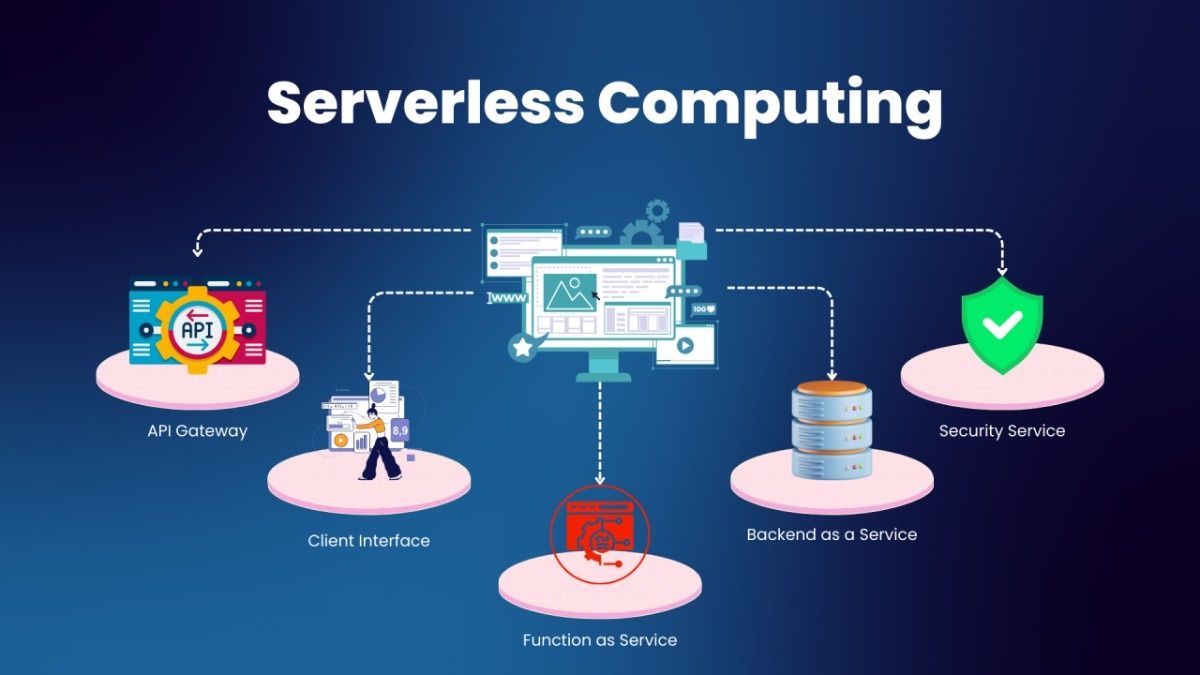
Serverless architectures also support modern digital applications such as real-time analytics, automation workflows, API-driven systems, and microservices. They integrate well with high CPC topics like cloud security architecture, API management platforms, data engineering workflows, and digital transformation strategies, making the model relevant in many industries.
Recent Updates
Recent developments show continued improvements in performance, observability, and multi-cloud integration. Cloud providers enhanced function runtimes, improved event-based triggers, and added support for more programming languages.
A key trend has been the expansion of serverless capabilities to container environments. This allows developers to run functions alongside containerized applications, creating a unified approach to application delivery.
Another update is the growing use of serverless in artificial intelligence and automation pipelines. Function-based execution is increasingly integrated with machine learning workflows, allowing tasks such as model inference, automated data processing, and pipeline orchestration.
Enhanced security and compliance features have also been introduced, reflecting the increased demand for enterprise cloud security and identity access management solutions. These updates help organizations adopt serverless computing in sensitive or large-scale environments.
A simplified view of common platform improvements is shown below:
| Area of Update | Description |
|---|---|
| Runtime Performance | Faster cold start reduction and optimized execution environments |
| Language Support | Broader support for languages and custom runtimes |
| Event Triggers | Expanded integrations for APIs, storage events, automation signals |
| Monitoring | Better insights through tracing, metrics, and log aggregation |
| Multi-Cloud Support | Tools enabling deployment across different cloud ecosystems |
These updates reflect the shift toward more efficient and flexible cloud computing solutions capable of handling complex and data-intensive workloads.
Laws or Policies
Serverless computing can be influenced by general digital, data protection, cybersecurity, and cloud governance policies. Regulations guide how data is stored, processed, and secured within cloud computing environments.
Common areas that affect serverless implementations include:
-
Data protection rules requiring secure handling and storage of user information
-
Cybersecurity frameworks that outline authentication and encryption expectations
-
Compliance guidelines for logging, auditing, and monitoring
-
Cloud governance principles that address workload distribution and risk management
These policies encourage the adoption of strong security configurations, identity management practices, and consistent oversight within serverless systems. They also support improved transparency and accountability in cloud computing environments, aligning with high CPC keywords such as data governance framework, cloud compliance standards, and secure cloud computing practices.
Tools and Resources
A variety of tools and resources support the development, testing, monitoring, and optimization of serverless systems. These include cloud-native platforms, code editors, API tools, security utilities, and observability frameworks.
Cloud Platforms for Serverless Execution
-
AWS Lambda
-
Google Cloud Functions
-
Azure Functions
-
IBM Cloud Functions
-
Oracle Functions
Development Frameworks
-
Serverless Framework
-
AWS SAM
-
Google Cloud Run integrations
-
Pulumi
-
Terraform configuration modules
Monitoring and Observability Tools
-
Datadog
-
New Relic
-
Prometheus for cloud environments
-
Cloud-native log aggregation tools
-
Application tracing platforms
API and Workflow Tools
-
API Gateway systems
-
Event routing and messaging services
-
Data pipeline orchestrators
-
Automation workflow platforms
Educational and Documentation Resources
-
Cloud provider documentation libraries
-
Architecture blueprints
-
Community tutorials and code repositories
-
Technical blogs covering serverless architecture patterns
-
Cloud computing overview portals
These tools support high CPC keyword areas such as cloud automation platforms, developer productivity tools, API integration systems, and scalable cloud architecture.
FAQs
What is serverless computing?
Serverless computing is a cloud model where applications run without requiring users to manage servers. Developers deploy functions or components, and the cloud platform automatically handles execution, scaling, and availability.
How does serverless computing handle scaling?
Scaling occurs automatically. When workload demand increases, additional function instances run to handle the load. When demand decreases, the system scales down accordingly. No manual configuration is needed.
Is serverless suitable for large applications?
Yes, serverless can be used for large applications when they are designed using modular microservices, distributed workflows, or event-driven patterns. It supports complex deployments through APIs, automation pipelines, and messaging systems.
How does security work in serverless environments?
Security relies on identity management, encryption, permission controls, and continuous monitoring. Since the cloud provider manages the infrastructure, users focus on securing code, data flows, and access policies.
What types of workloads benefit most from serverless computing?
Event-driven workloads, data processing tasks, scheduled jobs, backend APIs, IoT event handling, and real-time automation processes are well-suited for serverless execution.
Conclusion
Serverless computing has become a foundational approach for modern cloud architecture. It simplifies operations, supports dynamic scaling, and enables application development without direct infrastructure management. With continuous improvements in runtime performance, security, and multi-cloud compatibility, serverless computing is increasingly important in environments that require flexibility, automation, and efficiency.
It aligns closely with high CPC keywords such as enterprise cloud solutions, digital transformation technologies, scalable computing models, and cloud security frameworks, reflecting its relevance across technical and organizational domains. As cloud ecosystems evolve, serverless remains a key method for building resilient, efficient, and adaptable digital systems.