
Data Engineering Overview: A Complete Guide with Key Insights & Helpful Details
Data engineering is the practice of designing, building, and maintaining systems that collect, store, and process data so it can be used efficiently for analysis, reporting, and decision-making. It exists because modern organizations generate extremely large volumes of data from various digital sources, including applications, devices, transactions, and user interactions. Without structured systems to manage this data, it becomes difficult to extract meaningful insights.
The field focuses on creating data pipelines, integrating multiple data sources, ensuring data quality, and preparing datasets for analytics and machine learning. Data engineering establishes the foundational layer for data analytics, predictive modeling, business intelligence, cloud computing, and automation, making it a core function in any data-driven environment.
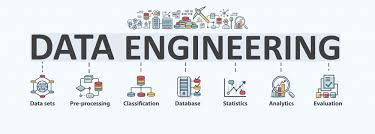
The need for structured data workflows grew as computing systems became more complex and distributed. With the rise of cloud platforms and high-volume processing methods, data engineering evolved into a discipline that supports scalability, reliability, and real-time decision systems.
Importance: Why Data Engineering Matters Today
Data engineering is essential because organizations depend on reliable data to operate, strategize, and innovate. It affects sectors such as technology, finance, healthcare, retail, manufacturing, logistics, and digital services. The importance of data engineering continues to expand as data ecosystems grow more complex.
Data engineering helps solve several major problems:
-
Unstructured or scattered data: It organizes and standardizes datasets from multiple sources.
-
Slow decision-making: Well-designed pipelines enable faster reporting and real-time insights.
-
Inaccurate analysis: Data engineering ensures quality, validation, and consistency.
-
Scalability issues: Modern architectures help systems handle large and continuously growing datasets.
-
Security and governance needs: Data engineers design systems that protect sensitive information and maintain compliance.
Organizations rely on accurate and timely data for forecasting, automation tools, resource planning, operational improvements, and customer experience strategies. Data engineering brings these capabilities to life by ensuring data flows efficiently through an organization's digital ecosystem.
Recent Updates: Trends and Developments
Data engineering continues to evolve as new technologies and practices emerge. Although exact dates are not referenced, the following developments have shaped the field in the past year:
-
Growth of real-time analytics pipelines: More platforms now support streaming data to meet demand for instant insights in areas like monitoring systems, recommendation engines, and anomaly detection.
-
Increased use of artificial intelligence within pipelines: Machine learning is being integrated into data transformation, data cleaning, and anomaly detection processes.
-
Expansion of cloud-native architectures: Cloud platforms continue to introduce improved data processing engines, storage options, and serverless technologies that simplify pipeline management.
-
Rising interest in data observability: New tools focus on pipeline health, data lineage, metadata tracking, and reliability metrics.
-
More organizations adopting lakehouse architectures: Blended models allow the benefits of both data lakes and data warehouses, supporting structured and unstructured data in unified systems.
-
Enhanced focus on data governance: As organizations handle larger ecosystems, metadata management and policy alignment have become more integrated into engineering workflows.
These updates highlight the increasing expectation for automation, scalability, and transparency in data pipelines.
Laws or Policies: How Governance Shapes Data Engineering
Data engineering practices are influenced by data privacy rules, information security requirements, and industry-specific standards. While not referring to any particular country or year, the following themes reflect common governance considerations:
-
Data protection requirements: Regulations often define how personal or sensitive information must be collected, processed, stored, and accessed.
-
Retention and deletion rules: Many policies specify how long data can be kept and when it must be removed.
-
Cross-platform and cross-border data handling: Engineering teams design systems that maintain compliance when data flows between regions or technology environments.
-
Audit and documentation requirements: Data lineage, access logs, and pipeline documentation are essential to maintain accountability.
-
Security standards: Encryption, access control, monitoring, and secure storage are often mandatory features in engineered data systems.
Data engineering teams incorporate these principles into architecture planning, pipeline design, storage choices, and governance frameworks to ensure compliant and ethical data usage.
Tools and Resources: Helpful Platforms and Systems
A wide range of tools support data collection, storage, transformation, orchestration, and analysis. Below is an organized overview:
Data Storage and Management
-
Cloud-based object storage
-
Data warehouses
-
Data lake platforms
-
Lakehouse ecosystems
Data Integration and Pipeline Building
-
ETL/ELT pipeline tools
-
Data ingestion connectors
-
Real-time streaming platforms
-
Batch processing engines
Processing and Transformation
-
Distributed computing frameworks
-
SQL engines
-
Workflow orchestration tools
Data Quality and Observability
-
Data validation tools
-
Metadata management platforms
-
Pipeline monitoring dashboards
Analytics and Exploration
-
BI dashboards
-
Data exploration notebooks
-
Query interfaces
Learning and Reference Resources
-
Open-source documentation
-
Technical blogs and knowledge bases
-
Community forums
-
Online reference manuals
-
Educational articles on analytics, data pipelines, and cloud architecture
Below is a sample table summarizing categories and their primary purpose:
| Category | Purpose |
|---|---|
| Data Storage | Holds structured, semi-structured, and unstructured data |
| Pipeline Tools | Moves and transforms data across systems |
| Processing Engines | Handles large-scale or real-time data workloads |
| Observability | Ensures reliability, lineage, and data quality |
| Analytics Tools | Enables visualization, querying, and insights |
These tools help data professionFAQs
What does a data engineer typically work on?
A data engineer builds pipelines, manages data storage systems, ensures data quality, and supports teams that analyze or model data. Their focus is on reliability, scalability, and efficiency across data workflows.
How is data engineering different from data science?
Data engineering focuses on building the systems that prepare and deliver data, while data science analyzes that data to produce insights or models. Both roles complement each other within a data-driven framework.
Why is data quality important in data engineering?
Poor data quality leads to incorrect insights and unreliable decisions. Data engineering ensures accuracy by validating, cleaning, and standardizing data before it reaches downstream applications.
Is cloud computing essential for data engineering?
Many modern data engineering systems use cloud environments because they offer scalability and flexible storage. However, on-premise systems still exist in controlled or specialized environments.
What is a data pipeline?
A data pipeline is a sequence of processes that moves data from one system to another while performing transformations, validations, and formatting as needed.
Conclusion
Data engineering provides the structure and reliability that modern data ecosystems require. It enables organizations to transform raw information into actionable insights, supporting analytics, automation, and strategic planning. With growing data volumes and the continued expansion of digital platforms, the role of data engineering remains central to maintaining efficient, secure, and high-quality data operations.
The field continues to evolve with advancements in real-time processing, cloud-native designs, observability tools, and integrated governance practices. By understanding foundational concepts, staying informed about emerging trends, and using the right tools, anyone can better appreciate how data engineering shapes the modern information landscape.