RF Coaxial Cables Explained: Practical Knowledge, Advice & Helpful Resources
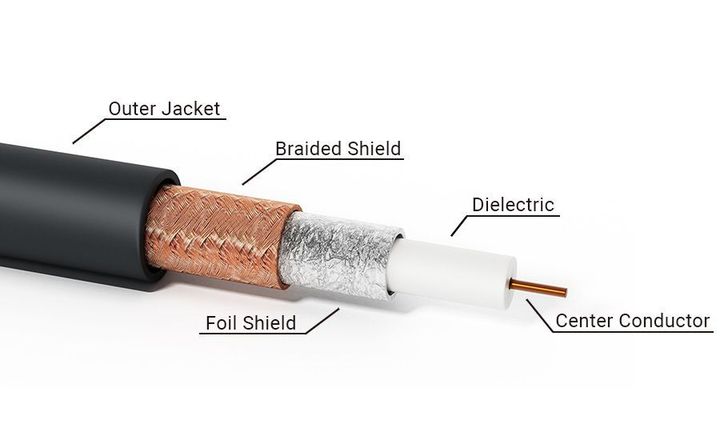
Radio Frequency (RF) coaxial cables are specialized transmission lines designed to carry high-frequency signals with minimal interference. Their unique coaxial structure—consisting of a center conductor, dielectric insulator, shielding layer, and outer jacket—helps maintain signal stability across varying environments.
These cables exist because many everyday technologies such as wireless communication systems, broadcast antennas, satellite connections, IoT devices, and data transmission networks rely on stable, low-loss signal pathways.
As digital communication expanded globally, RF coaxial cables became fundamental components enabling everything from TV broadcasting to high-frequency measurement equipment. They help ensure that transmitted signals retain clarity and strength over distance. Without them, a wide range of RF technologies would face severe signal losses, reduced accuracy, and unreliable performance.
Why RF Coaxial Cables Matter Today
RF coaxial cables remain important across multiple modern sectors. Their role has expanded as industries increasingly depend on reliable high-frequency transmission. This includes:
-
Telecommunications: Essential for base-station connectivity, 5G infrastructure, microwave links, and broadband networks.
-
Broadcasting: Maintains stable transmission for TV, radio, and satellite systems.
-
Electronics and Testing: Used in laboratory instruments, oscilloscopes, spectrum analyzers, and calibration tools.
-
Aerospace and Defense: Supports radar systems, communication units, navigation devices, and RF monitoring.
-
Smart Devices and IoT: Enables secure and interference-resistant communication between connected devices.
RF coaxial cables solve various technical challenges including:
-
Signal attenuation at high frequencies
-
Electromagnetic interference (EMI) in sensitive environments
-
Impedance mismatch, which affects system accuracy
-
Durability requirements for outdoor or industrial installations
As RF applications expand—especially with the growth of 5G, satellite broadband, and advanced wireless systems—the need for high-performance coaxial cabling increases. Even with the rise of fiber-optic technology, coaxial cables remain vital due to their robustness, simplicity, and compatibility with RF hardware.
Recent Updates and Trends in RF Coaxial Technology
The past year has shown new developments in coaxial cable design, adoption, and usage across industries. Several trends from 2024–2025 stand out:
-
Advances in 5G and mmWave Applications (2024–2025):
Emerging 5G infrastructure continues to rely on low-loss coaxial cables for fronthaul and antenna connections. Engineering updates in 2024 included new dielectric materials designed to handle frequencies above 30 GHz with reduced signal distortion. -
Growth in Satellite Internet Deployment (2024):
Multiple global initiatives expanded satellite broadband services, increasing demand for stable RF connections between ground stations and antennas. Coaxial lines designed for Ku-band and Ka-band saw higher adoption in early 2025. -
Miniaturized Coaxial Cables for IoT and Wearable Devices (2024):
The electronics industry introduced ultra-small coaxial connectors and cable types to support compact devices requiring reliable RF transmission. -
Improved Shielding Standards for Urban RF Environments (2024):
Densely populated cities experienced higher RF noise, prompting manufacturers to enhance shielding performance and phase stability. -
Durability Enhancements for Harsh Conditions (2025):
New outer jacket materials capable of resisting UV, moisture, temperature swings, and mechanical stress gained attention across industrial and defense sectors.
These changes reflect ongoing progress toward higher frequency capability, greater durability, and improved signal reliability in complex RF environments.
Laws, Policies, and Standards Affecting RF Coaxial Cables
RF coaxial cables are influenced by national and international regulations that ensure electrical safety, signal integrity, and electromagnetic compliance.
Key policy and standards areas include:
-
Electromagnetic Compatibility (EMC) Regulations:
Countries follow standards that limit electromagnetic emissions. Coaxial cables must meet shielding and leakage requirements defined by organizations such as CISPR, IEC, and national EMC guidelines. -
Frequency Allocation Policies:
Telecommunications authorities regulate frequency bands. Coaxial cables used in licensed RF systems must maintain stable performance within the assigned spectrum ranges. -
Safety and Material Compliance:
Standards such as RoHS restrict the use of hazardous materials in electronic products, including cable components like insulation and shielding.
REACH regulations in many regions also govern chemical substances used in cable manufacturing. -
Telecommunication Infrastructure Rules:
National communication authorities set performance parameters for physical network components. Cables used in RF networks must meet specific impedance and attenuation requirements. -
Building and Installation Codes:
Indoor and outdoor cable installations may require compliance with fire-retardant materials, waterproofing guidelines, or grounding requirements.
These regulations help ensure that RF coaxial cables support safe, reliable communication systems without causing interference or environmental issues.
Tools, Calculators, and Helpful Resources
Readers interested in understanding, evaluating, or working with RF coaxial cables can use several practical tools and resources.
Useful Estimation and Design Tools
-
RF Attenuation Calculators:
Estimate signal loss over specific distances and frequencies. Several online engineering platforms provide easy-to-use models. -
Impedance Matching Tools:
Assist in maintaining proper impedance across cables and connectors for stable RF performance. -
VSWR (Voltage Standing Wave Ratio) Calculators:
Helps assess system efficiency and detect possible reflection issues.
Technical References and Databases
-
RF Engineering Knowledge Bases:
Offer practical insights into coaxial cable materials, connector types, shielding, and tolerance levels. -
Antenna and Transmission Line Guides:
Useful for understanding how coaxial cables integrate into RF systems. -
Standards Documentation:
Organizations such as IEEE, IEC, and ITU provide specifications related to RF cables, connectors, and test procedures.
Practical Resources for Learning
-
Electronics Learning Platforms:
Provide tutorials on RF fundamentals, signal propagation, and cable behavior. -
Cable Specification Libraries:
Feature datasheets for various coaxial types such as RG-6, RG-58, LMR series, and semi-rigid cables. -
RF Measurement Tool Guides:
Explain how to use spectrum analyzers, network analyzers, and other test instruments that commonly interface with coaxial cables.
These resources help general audiences, students, technicians, and professionals better understand RF cable performance and selection criteria.
Frequently Asked Questions
What makes RF coaxial cables different from other cable types?
RF coaxial cables are engineered specifically for high-frequency signal transmission. Their coaxial structure minimizes interference, maintains consistent impedance, and reduces signal loss. This design is different from audio, power, or general-purpose data cables, which are not optimized for radio frequency applications.
What factors affect signal loss in RF coaxial cables?
Signal loss increases with higher frequencies, longer cable lengths, lower-quality shielding, and environmental factors such as temperature changes. Using proper connectors, matched impedance, and high-quality dielectric materials helps maintain stable performance.
Are all coaxial cables suitable for high-frequency applications?
No. Different coaxial types support different frequency ranges. For example, RG-6 works well for TV and satellite signals, while LMR-400 or semi-rigid cables are used for higher-frequency systems such as microwave links or advanced RF testing.
How important is shielding in RF coaxial cables?
Shielding is critical because it protects the signal from external electromagnetic interference. Environments with high RF noise—such as cities, industrial facilities, or laboratory settings—require cables with strong shielding to maintain accuracy and stability.
Can environmental conditions affect RF cable performance?
Yes. Temperature, moisture, UV exposure, and physical bending can impact attenuation and durability. Outdoor and industrial applications often require cables with reinforced jackets or improved insulation to maintain long-term reliability.
Conclusion
RF coaxial cables remain fundamental components of modern communication, broadcasting, testing, and navigation systems. Their structure supports stable, low-loss transmission at high frequencies, making them essential in an increasingly connected world. Recent advancements in materials, shielding, and frequency capability continue to strengthen their role. With ongoing updates in telecommunications policies, EMC standards, and frequency regulations, understanding these cables helps readers appreciate their importance in daily technologies.