Playground Equipment Manufacturing: Process, Materials & Safety
Playground equipment manufacturing combines engineering, material selection, product design, fabrication, finishing, and safety testing.
Modern playground systems can include slides, swings, climbing structures, activity panels, bridges, tunnels, and interactive play components.
The manufacturing process must balance durability, usability, accessibility, appearance, and safety. For schools, parks, residential communities, hospitality properties, and commercial recreation areas, understanding how playground equipment is designed and manufactured can help organizations evaluate suitable systems.
What Is Playground Equipment Manufacturing?
Playground equipment manufacturing is the process of designing, fabricating, assembling, finishing, and testing equipment intended for children's recreational environments.
A typical manufacturing workflow may include:
- Product concept and design
- Engineering analysis
- Material selection
- Component fabrication
- Surface treatment
- Assembly
- Quality inspection
- Safety evaluation
- Installation preparation
Different equipment types require different manufacturing techniques. A metal climbing structure, for example, may involve tube forming and welding, while a molded plastic slide may require specialized molding processes.
Types of Playground Equipment
Modern playgrounds can contain many different equipment categories designed for different ages and play activities.
Swings
Swing systems typically consist of structural frames, seats, suspension components, and connecting hardware. Designs can range from traditional belt seats to inclusive and specialized seating arrangements.
Slides
Slides can be manufactured from materials such as molded plastics, stainless steel, or other engineered materials. Their dimensions, surface characteristics, transitions, and surrounding safety areas are important design considerations.
Climbing Equipment
Climbing structures encourage physical activity and coordination. Examples include:
- Climbing walls
- Rope structures
- Climbing nets
- Ladders
- Horizontal bars
- Climbing panels
Multi-Play Systems
Multi-play structures combine several activities into one integrated system. A single structure may include platforms, slides, climbing components, bridges, tunnels, and interactive panels.
Interactive Play Equipment
Interactive elements can include educational panels, musical components, sensory activities, rotating features, and other systems designed to encourage exploration.
Materials Used in Playground Equipment
Material selection affects structural strength, weather resistance, maintenance requirements, appearance, and expected lifespan.
| Material | Common Applications | Key Characteristics |
|---|---|---|
| Steel | Frames, posts, supports | Strong and structurally durable |
| Stainless steel | Slides, hardware | Corrosion resistant |
| HDPE | Panels, slides, barriers | Durable and versatile |
| Plastic | Slides, seats, components | Lightweight and moldable |
| Aluminum | Structural and specialty components | Lightweight and corrosion resistant |
| Rubber | Flooring and protective surfaces | Impact-absorbing applications |
| Wood | Traditional structures | Natural appearance |
Steel Components
Steel is frequently used for structural frames, support posts, platforms, and other load-bearing components. Protective coatings can help improve resistance to environmental exposure.
Plastic Components
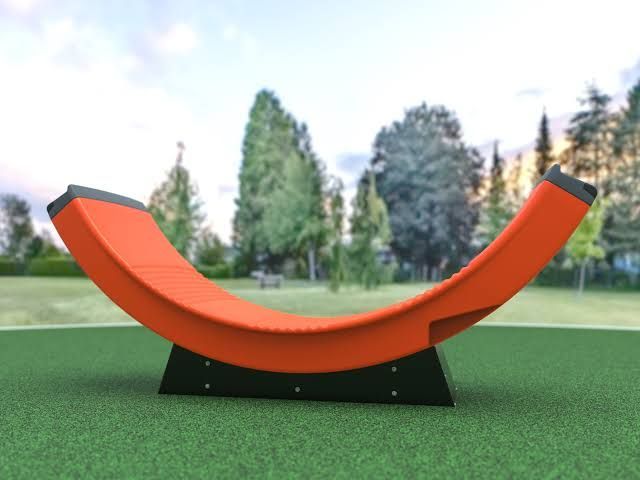
High-density polyethylene and other engineered plastics can be molded into curved panels, slides, roofs, barriers, and activity components.
Plastic provides flexibility in design and can support a wide variety of colors, shapes, and surface finishes.
Rubber Safety Surfaces
Impact-absorbing surfaces are often incorporated around playground equipment. Rubber-based systems can be designed to reduce the severity of falls when appropriately specified and installed.
Commercial Playground Equipment Manufacturing Process
The commercial playground equipment manufacturing process generally begins long before fabrication starts.
1. Concept and Design
Designers establish the intended age group, activities, dimensions, site requirements, and overall configuration.
Computer-aided design tools can be used to create detailed models and drawings before production.
2. Engineering
Engineers evaluate structural loads, connections, dimensions, material requirements, and potential hazards.
The design must account for factors such as repeated use, environmental exposure, and expected loading conditions.
3. Material Preparation
Raw materials are cut, shaped, molded, drilled, or otherwise prepared according to engineering specifications.
Metal tubes may be cut and formed, while plastic panels can be manufactured using molding or machining processes.
4. Fabrication
Components are fabricated using appropriate techniques such as:
- Welding
- CNC machining
- Tube forming
- Injection molding
- Rotational molding
- Laser cutting
- Drilling
- Press forming
5. Surface Treatment
Metal components may receive protective coatings or other treatments designed to improve durability and appearance.
Plastic components can receive textures, molded details, graphics, or other finishes during production.
6. Assembly
Components are assembled into complete playground systems or modules. Manufacturers inspect connections and verify that components fit according to design specifications.
7. Quality Inspection
Finished equipment is examined for dimensional accuracy, structural integrity, surface defects, hardware installation, and other specified requirements.
Playground Equipment Design
Playground equipment design involves more than creating visually attractive structures. Designers must consider how children interact with equipment and how different activities work together within the available space.
Important design considerations include:
- Age-appropriate activities
- Structural stability
- Fall zones
- Entrapment prevention
- Access points
- Guardrails and barriers
- Handholds
- Surface transitions
- Visibility
- Accessibility
Good design also considers how children move between different components. Paths should be logical and equipment should provide appropriate separation between active play areas.
Playground Safety Equipment
Playground safety equipment includes components and design features intended to reduce foreseeable hazards.
Examples include:
- Protective surfacing
- Guardrails
- Handrails
- Barriers
- Rounded edges
- Secure fasteners
- Appropriate spacing
- Impact-absorbing components
- Safety zones
Manufacturers and site operators should follow applicable playground safety requirements and installation specifications.
Safety Standards and Compliance
Safety requirements vary by country, jurisdiction, equipment category, and installation environment. Manufacturers therefore need to understand the standards applicable to their target market.
In the United States, playground equipment is commonly evaluated against relevant standards and guidelines such as those developed by ASTM International and the U.S. Consumer Product Safety Commission.
For international projects, manufacturers may need to consider standards applicable to the destination country or region.
Compliance should be treated as an ongoing process rather than a final inspection step. Design, materials, manufacturing, installation, and maintenance can all influence playground safety.
Custom Playground Equipment
Custom playground equipment allows designers to develop structures around specific site conditions, themes, user groups, or activity requirements.
Customization may involve:
- Unique structural configurations
- Themed designs
- Custom colors
- Specialized play panels
- Site-specific dimensions
- Inclusive play components
- Different combinations of activities
- Educational features
Custom systems can be particularly useful when the installation area has unusual dimensions or when a specific architectural or recreational concept needs to be incorporated.
Outdoor Playground Equipment Manufacturers
When evaluating outdoor playground equipment manufacturers, several factors should be reviewed before selecting a production partner.
Manufacturing Experience
Look for experience with equipment types similar to the intended project. Experience can be particularly important for complex structures involving multiple play components.
Engineering Capabilities
A capable manufacturer should have appropriate design and engineering processes for structural analysis, component development, and documentation.
Material Quality
Ask about structural materials, coatings, plastics, hardware, protective surfacing, and other components used in the equipment.
Quality Control
Review how the manufacturer handles incoming materials, fabrication, assembly, inspections, and final testing.
Installation Requirements
Equipment should be supplied with appropriate installation documentation, site requirements, assembly instructions, and maintenance information.
Sustainability in Playground Equipment Manufacturing
Sustainability is becoming an important consideration in playground design and manufacturing.
Manufacturers can incorporate sustainability through:
- Recyclable materials
- Durable components
- Efficient manufacturing processes
- Long-lasting protective coatings
- Material-efficient designs
- Replacement components
- Repairable structures
Durability can itself contribute to sustainability because longer-lasting equipment may reduce the frequency of complete replacement.
How to Choose Playground Equipment
Organizations selecting playground systems should begin with the installation environment and intended users.
Consider:
- Available space — Measure the installation area and surrounding clearances.
- Age range — Select equipment appropriate for intended users.
- Activity types — Balance climbing, sliding, swinging, and interactive play.
- Safety requirements — Review applicable standards and protective surfacing.
- Accessibility — Consider inclusive access and varied play abilities.
- Materials — Evaluate durability and environmental exposure.
- Maintenance — Understand inspection and maintenance requirements.
- Customization — Determine whether site-specific modifications are needed.
- Installation — Confirm foundation and assembly requirements.
- Long-term durability — Evaluate components and replacement options.
Who Uses Commercial Playground Equipment?
Commercial playground systems are commonly designed for environments such as:
- Public parks
- Schools
- Daycare facilities
- Residential communities
- Hotels and resorts
- Recreational centers
- Shopping and entertainment areas
- Community spaces
- Hospitality properties
Each setting can have different requirements for capacity, age groups, accessibility, appearance, maintenance, and environmental exposure.
Frequently Asked Questions
What is playground equipment manufacturing?
Playground equipment manufacturing involves designing, engineering, fabricating, assembling, finishing, inspecting, and preparing recreational equipment for children and public play environments.
What materials are commonly used for playground equipment?
Steel, stainless steel, aluminum, HDPE, molded plastics, rubber, and wood are commonly used. Material selection depends on structural requirements, weather exposure, durability, appearance, and equipment design.
How is commercial playground equipment manufactured?
The process generally includes design, engineering, material preparation, fabrication or molding, surface treatment, assembly, quality inspection, and preparation for installation.
What should I consider when choosing playground equipment?
Important factors include available space, intended age group, equipment activities, safety requirements, accessibility, materials, maintenance needs, installation conditions, and applicable standards.
How do playground equipment manufacturers address safety?
Manufacturers address safety through engineering analysis, appropriate materials, protective components, controlled spacing, structural testing, quality inspections, and compliance with applicable safety standards.
Conclusion
Playground equipment manufacturing combines engineering, fabrication, material science, design, and safety considerations to create recreational systems for children and communities. From simple swings and slides to complex multi-play structures, every component must be designed around appropriate use and environmental conditions.
The strongest evaluation process considers equipment design, material quality, manufacturing capabilities, safety requirements, accessibility, customization, installation, and long-term maintenance.