Orbital Welding Machines: A Complete Guide with Key Insights and Helpful Tips
Orbital welding machines are automated systems designed to perform precise, repeatable welding by rotating the welding arc around a fixed workpiece. They are often used for joining tubes, pipes, and components where high-quality welds are necessary. The idea behind orbital welding emerged from the need to reduce operator error and maintain consistent weld quality across industries that depend on strong, clean, and uniform joints.
These machines work on the principle of automated motion control. Instead of manual handling, the torch follows a programmed path around the material, which helps maintain stable heat input, controlled speed, and uniform penetration. This approach supports applications in sectors such as advanced manufacturing, aerospace technology, semiconductor production, and pharmaceutical processing, where welding precision directly impacts reliability and long-term performance.
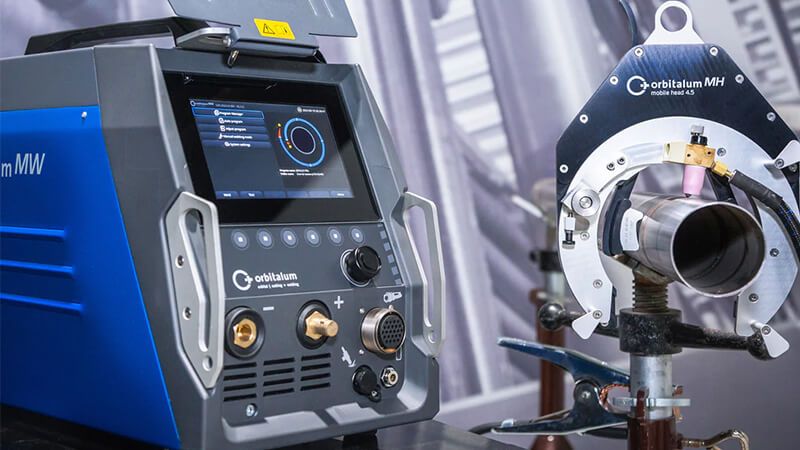
Automation in welding also exists to handle the complexity of modern materials. As alloys, thin-walled tubing, and high-purity piping systems became more common, conventional techniques sometimes struggled to maintain the same accuracy. Orbital welding machines were developed to address these engineering challenges while ensuring consistency, repeatability, and clean weld profiles.
Importance
Orbital welding machines matter today because manufacturing and infrastructure systems increasingly depend on exact weld quality. Modern components are built with tighter tolerances, advanced materials, and higher expectations for durability. Automated welding processes help reduce variability, improve structural integrity, and support high-purity environments where contamination must be minimized.
This technology affects industries where reliability is essential. Examples include:
-
High-purity piping systems, where uniform welds help maintain clean surfaces used for sensitive processes.
-
Aerospace and aviation structures, where consistent weld strength is critical to safety.
-
Energy systems, including pipelines and power-generation components that require controlled weld geometry.
-
Automotive and mobility technologies, which rely on precision joining for performance and longevity.
Orbital welding helps solve problems such as inconsistent weld quality, human fatigue, and difficulty accessing tight or complex geometries. It also reduces the risk of defects like incomplete fusion or excessive heat input. Since the machine can be programmed and monitored, operators achieve repeatable results across multiple welds, which improves reliability and quality assurance.
With growing interest in automated fabrication, digital manufacturing, and clean-energy infrastructure, orbital welding machines play an important role in meeting quality expectations and maintaining technical standards.
Recent Updates
Orbital welding systems have seen several developments over the past year, especially in automation, sensor feedback, and digital integration.
Notable trends include:
-
Adaptive welding control: Recent updates introduced enhanced sensors that automatically adjust heat input and travel speed based on real-time conditions. This helps improve weld consistency when working with challenging alloys or varying wall thicknesses.
-
Data analytics and monitoring: Manufacturers have added cloud-linked data tracking to help users monitor weld parameters, review performance history, and maintain documentation for quality control. These upgrades support the trend toward digital fabrication and process traceability.
-
Improved power supply designs: Updates released in recent months focus on stable arc performance, better waveform control, and user-friendly calibration.
-
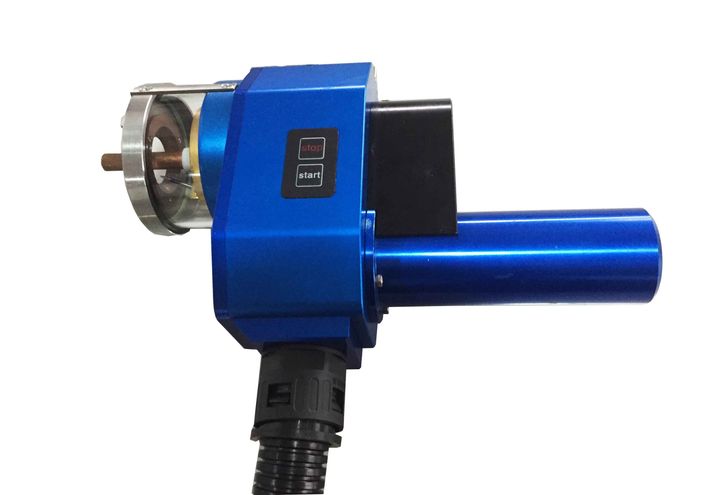
Compact and portable orbital heads: New versions introduced this year highlight lighter, more flexible heads that allow access to confined or complex fabrication environments.
-
Weld-quality visualization tools: Software enhancements allow automated generation of weld graphs showing real-time current, voltage, and travel speed. This supports precision-based applications and improves inspection workflows.
Industry publications throughout the year highlighted a rising interest in automation-supported welding for applications such as clean-energy pipelines, advanced manufacturing facilities, and semiconductor systems. Overall, the updates focus on stability, ease of use, digital insight, and improved weld accuracy.
Laws or Policies
Orbital welding machines operate within general safety, engineering, and equipment-use guidelines that influence how they are used in industrial environments. While specific country laws are not mentioned, several universal policy areas affect this field.
Common regulatory themes include:
-
Equipment safety standards: These ensure that welding power supplies, cables, and automated heads meet established safety requirements for electrical stability, shielding-gas systems, and protective enclosures.
-
Operator training expectations: Policies often require trained personnel to set up, monitor, and maintain welding systems, ensuring safe practices during operation.
-
Material and weld-quality guidelines: Many industries rely on standardized welding procedures and inspection criteria to ensure consistency. These cover weld geometry, joint preparation, shielding-gas purity, and equipment calibration.
-
Environmental and workplace safety rules: These govern ventilation, arc-protection measures, and handling of materials to ensure safe working conditions.
-
Documentation and traceability: Automated welding systems often support compliance by recording welding parameters, contributing to quality assurance and process verification requirements.
These policies exist to maintain safe environments, ensure accurate fabrication processes, and protect the reliability of structures or components where orbital welding is used.
Tools and Resources
Several tools and resources support planning, executing, and understanding orbital welding operations. They help with data monitoring, weld analysis, process setup, and compliance with technical requirements.
Useful categories include:
Weld-parameter calculators
-
Tools that estimate current, voltage, travel speed, and heat input.
-
Helpful for selecting settings based on material thickness and joint design.
Welding-procedure documentation templates
-
Used for organizing details such as material type, orbital head selection, shielding-gas requirements, and rotation speed.
-
Supports quality assurance and consistency across projects.
Arc-performance monitoring software
-
Provides live graphs showing parameters like current, voltage, wire-feed rate, and travel speed.
-
Helps analyze deviations and improve weld accuracy.
Digital-inspection tools
-
Measurement systems for evaluating weld bead geometry, surface finish, and alignment.
-
Optical inspection devices and weld-profile scanners assist in reviewing completed joints.
Technical information libraries
-
Websites and reference portals offering insights on welding metallurgy, orbital-head configurations, shielding-gas guidance, and troubleshooting.
-
Industry organizations often publish recommended practices and guidelines.
Training modules
-
Educational videos, guides, and interactive resources explaining the fundamentals of orbital welding, weld preparation, and parameter selection.
These tools help operators, engineers, and quality-control teams maintain accurate, consistent, and verifiable welding processes.
FAQs
What materials are commonly welded using orbital welding machines?
Orbital welding is often used for stainless steel, high-purity alloys, titanium, nickel-based alloys, and thin-walled tubing. These materials benefit from precise heat control and clean weld formation.
Is orbital welding only for specialized industries?
It is widely used where accuracy is essential, but it is not limited to one sector. Industries such as aerospace, semiconductor manufacturing, energy systems, automotive technology, and advanced manufacturing frequently use it.
What makes orbital welding more consistent than manual welding?
The automated rotation and programmable parameters help maintain constant travel speed, stable current, and uniform heat distribution. This reduces the risk of variability and supports repeatable weld quality.
Do orbital welding machines require specialized setup?
The setup involves preparing the joint, selecting the correct orbital head, setting parameters, and ensuring proper shielding-gas flow. Although the process is technical, automation simplifies many steps once the parameters are established.
How does orbital welding support high-purity systems?
Because the process minimizes contamination and irregularities, the resulting welds offer smooth internal surfaces, which is important for systems that must maintain clean, controlled environments.
Conclusion
Orbital welding machines play an important role in modern fabrication by offering precision, repeatability, and reliable weld quality. As industries continue to advance and adopt complex materials, automated welding processes help maintain high standards and consistent performance. Recent improvements in digital integration, adaptive control, and weld monitoring demonstrate ongoing progress toward more efficient and traceable welding operations.
By understanding how orbital welding machines work, the importance of accurate welds, and the tools that support the process, readers can better appreciate the role of automation in today’s engineering and manufacturing environments. This technology continues to evolve as industries seek cleaner, safer, and more consistent welding methods suited for advanced applications.