Maxillofacial Implant Manufacturing: Process, Materials & Technology
Maxillofacial implant manufacturing combines medical engineering, digital imaging, anatomical modeling, materials science.
These implants may be used to reconstruct or restore areas affected by trauma, congenital conditions, tumors, or other clinical circumstances. Modern manufacturing technologies can allow implant designs to be adapted to individual anatomy rather than relying exclusively on standardized shapes.
From patient imaging to final inspection, each stage requires careful control because implant geometry, material properties, surface characteristics, and dimensional accuracy can influence clinical performance.
What Are Maxillofacial Implants?
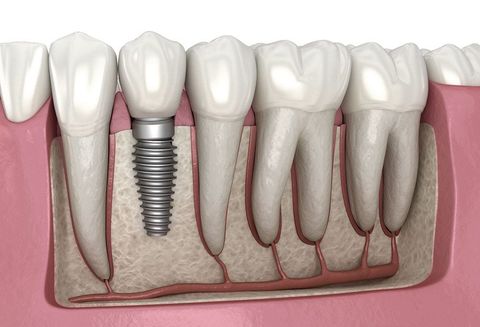
Maxillofacial implants are medical implants designed for reconstruction or restoration of structures involving the face, jaw, skull, and related anatomical regions.
Depending on the clinical application, implant designs may address areas such as:
- Facial bones
- Orbital regions
- Jaw structures
- Cranial defects
- Midface structures
- Facial contour defects
The specific design depends on the patient's anatomy, surgical objectives, fixation method, and applicable medical-device requirements.
What Is Maxillofacial Implant Manufacturing?
Maxillofacial implant manufacturing is the controlled process of transforming a clinical design into a physical medical implant.
A typical workflow can include:
- Medical imaging
- Anatomical data processing
- Digital implant design
- Engineering analysis
- Material selection
- Manufacturing
- Surface finishing
- Cleaning
- Inspection
- Sterilization or preparation for sterilization
- Packaging and release
The exact process varies according to implant material, manufacturing technology, device classification, and intended application.
Patient-Specific Maxillofacial Implants
Patient specific implants are designed around the anatomy of an individual patient.
Medical imaging data, such as CT scans, can be processed to create a three-dimensional representation of the relevant anatomical structures. Engineers can then develop an implant that corresponds to the defect or reconstruction requirement.
Benefits of Patient-Specific Design
Patient-specific approaches may provide:
- Anatomically matched geometry
- Customized defect coverage
- More predictable fit during surgical planning
- Integration with digital surgical workflows
- Customized fixation-hole placement
- Ability to address complex anatomical defects
The clinical suitability of a patient-specific implant must be determined by the treating surgical team.
Maxillofacial Implant Design
Maxillofacial implant design begins with understanding the anatomical and clinical requirements.
Engineers may evaluate:
- Defect dimensions
- Bone geometry
- Implant thickness
- Fixation locations
- Screw placement
- Anatomical symmetry
- Load conditions
- Surgical access
- Surface characteristics
Computer-aided design software can help convert medical imaging information into an accurate digital model.
Digital Anatomical Modeling
Three-dimensional anatomical models can allow engineers and surgeons to visualize the defect and evaluate potential implant configurations before manufacturing.
Digital planning can also support communication between surgeons, engineers, and manufacturing teams.
Maxillofacial Implant Manufacturing Process
The custom maxillofacial implant manufacturing process can involve several highly controlled stages.
1. Medical Image Acquisition
The process generally begins with appropriate medical imaging. CT imaging is commonly useful for evaluating complex bony anatomy.
The quality and accuracy of the source imaging can affect subsequent digital modeling.
2. Image Segmentation
Relevant anatomical structures are separated from the imaging dataset through segmentation.
The resulting data can be converted into a three-dimensional anatomical representation.
3. Digital Design
Engineers develop the implant geometry using specialized computer-aided design software.
The design may include:
- Defect-matched surfaces
- Fixation holes
- Edges and transitions
- Structural reinforcement
- Anatomical contours
4. Design Verification
The digital design can be reviewed against the patient's anatomy and defined engineering requirements.
In some applications, physical models or digital simulations may be used to verify fit and structural characteristics.
5. Manufacturing
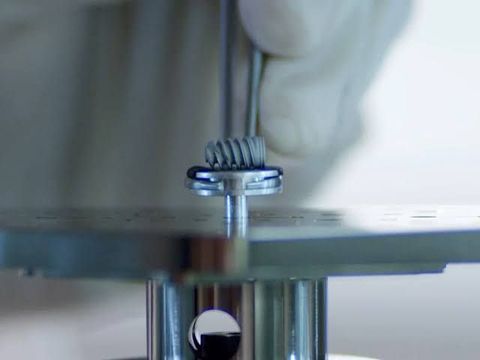
The selected manufacturing technology is used to produce the implant.
Depending on the material and design, methods can include CNC machining, additive manufacturing, molding, forming, or other precision processes.
6. Finishing
Post-processing may include support removal, machining, polishing, surface treatment, or other finishing operations.
7. Cleaning and Inspection
The implant undergoes controlled cleaning and inspection to verify dimensional and surface requirements.
8. Packaging and Sterilization
Depending on the device and manufacturing arrangement, the implant may undergo sterilization or be supplied for sterilization according to validated procedures.
Packaging must protect the device from contamination and physical damage.
Materials Used in Maxillofacial Implants
Maxillofacial implant materials must be selected according to mechanical performance, biocompatibility, manufacturability, sterilization compatibility, and intended clinical use.
| Material | Common Characteristics | Potential Applications |
|---|---|---|
| Titanium | Strong, lightweight, biocompatible | Cranial and facial reconstruction |
| Titanium alloys | High strength and durability | Structural implants |
| PEEK | Lightweight polymer, radiolucent | Selected cranial applications |
| PMMA | Moldable polymer | Selected reconstructive applications |
| Ceramics | Hard and biocompatible | Selected specialized applications |
| Other medical-grade polymers | Application-specific properties | Customized implants |
Material selection should always be based on the intended medical application and applicable regulatory requirements.
Titanium Maxillofacial Implants
Titanium is widely used in implantable medical devices because of its combination of strength, relatively low density, corrosion resistance, and established biocompatibility.
Titanium can be machined using precision CNC equipment or manufactured through additive manufacturing technologies.
Surface characteristics can also be engineered depending on the implant's intended function.
PEEK Maxillofacial Implants
PEEK, or polyether ether ketone, is a high-performance polymer used in selected medical applications.
One important characteristic is its radiolucency, meaning it produces relatively little interference with certain imaging techniques compared with metallic materials.
PEEK implants can be manufactured using machining or other specialized processing methods depending on the device design.
3D Printed Maxillofacial Implants
3D printed maxillofacial implants have become an important application of additive manufacturing.
Metal additive manufacturing can create complex geometries that may be difficult or inefficient to produce using conventional subtractive processes.
Potential advantages include:
- Complex anatomical geometries
- Customized structures
- Internal features
- Controlled porosity in appropriate designs
- Reduced material waste in some manufacturing approaches
- Digital production workflows
However, additive manufacturing requires careful control of powder or feedstock quality, machine parameters, build orientation, post-processing, surface quality, and validation.
Additive Manufacturing Technologies
Metal implants can be produced using technologies such as laser powder bed fusion.
The manufacturing system selectively fuses material layer by layer according to a digital model.
After printing, additional processing may be necessary, including:
- Support removal
- Heat treatment
- Machining
- Surface finishing
- Cleaning
- Dimensional inspection
The final implant must meet defined specifications before it can proceed through subsequent production stages.
Quality Control in Implant Manufacturing
Quality control is particularly important for implantable medical devices.
Manufacturers may evaluate:
Dimensional Accuracy
Critical dimensions and anatomical surfaces should conform to approved specifications.
Surface Quality
Surface roughness, defects, contamination, and other characteristics may require controlled inspection.
Material Properties
Material composition and mechanical characteristics should meet applicable specifications.
Manufacturing Traceability
Production records should allow relevant materials, processes, equipment, and inspection results to be traced.
Sterility
Where supplied sterile, the sterilization process and sterile barrier system require appropriate validation and controls.
Medical Implant Manufacturing Technology
Modern medical implant manufacturing technology increasingly integrates digital design and precision production.
Technologies can include:
- 3D medical imaging
- CAD modeling
- Computer-aided manufacturing
- CNC machining
- Additive manufacturing
- Digital inspection
- 3D scanning
- Simulation
- Automated quality control
Digital workflows can reduce the number of manual steps between patient imaging and final implant production.
Regulatory and Quality Requirements
Maxillofacial implants are medical devices, so manufacturers must comply with applicable regulatory requirements in their target markets.
Quality systems may address:
- Design controls
- Risk management
- Material traceability
- Process validation
- Manufacturing controls
- Inspection and testing
- Sterilization
- Packaging
- Complaint handling
- Post-market activities
Requirements vary according to jurisdiction and device classification.
Manufacturers should establish documented processes that demonstrate conformity with applicable regulations and standards.
Choosing Maxillofacial Implant Manufacturers
When evaluating maxillofacial implant manufacturers, organizations should examine both manufacturing capabilities and quality systems.
Digital Design Capabilities
The manufacturer should have appropriate capabilities for processing anatomical imaging data and developing patient-specific digital models.
Manufacturing Technology
Consider whether the manufacturer has suitable CNC, additive manufacturing, or other production technologies for the selected material and design.
Material Expertise
Experience with implant-grade titanium, PEEK, or other relevant materials can be important for specialized applications.
Quality Management
Review quality systems, traceability procedures, inspection capabilities, and regulatory documentation.
Customization Capabilities
For complex anatomical defects, the ability to produce customized geometries can be particularly important.
Challenges in Maxillofacial Implant Production
Manufacturing customized implants introduces several technical challenges.
Anatomical Complexity
Facial and cranial anatomy can include highly irregular surfaces and structures. Small design errors can affect implant fit.
Imaging Accuracy
The digital implant model depends on the quality of the underlying imaging data and segmentation process.
Manufacturing Tolerances
Small dimensional deviations can influence the relationship between the implant and surrounding anatomy.
Surface Finishing
Complex geometries can make post-processing and cleaning more challenging.
Production Validation
Manufacturers must demonstrate that processes consistently produce devices meeting predefined requirements.
Future Trends
Several technologies are likely to continue influencing maxillofacial implant manufacturing.
Advanced 3D Printing
Additive manufacturing can provide increasingly sophisticated options for complex geometries and customized implant designs.
Digital Surgical Planning
Closer integration between imaging, implant design, and surgical planning can support more coordinated workflows.
Automated Inspection
Advanced scanning and imaging systems can improve dimensional inspection of complex implant surfaces.
Computational Modeling
Simulation tools can help evaluate structural characteristics before physical production.
Frequently Asked Questions
What is maxillofacial implant manufacturing?
Maxillofacial implant manufacturing is the process of designing and producing implants for facial, jaw, cranial, and related reconstructive applications. It can involve medical imaging, digital modeling, precision machining, additive manufacturing, finishing, and inspection.
What materials are used for maxillofacial implants?
Common materials include titanium and titanium alloys, PEEK, PMMA, and selected ceramics or medical-grade polymers. Material selection depends on the clinical application and applicable requirements.
What are patient specific implants?
Patient-specific implants are customized to match an individual's anatomy. Medical imaging data can be used to create a three-dimensional model from which the implant is digitally designed.
How are 3D printed maxillofacial implants manufactured?
A digital implant model is converted into machine instructions, and material is built layer by layer using an additive manufacturing system. The finished component may then require support removal, heat treatment, machining, cleaning, and inspection.
How do I choose maxillofacial implant manufacturers?
Evaluate their digital design capabilities, implant-grade material expertise, manufacturing technologies, customization capabilities, quality systems, inspection processes, traceability, and applicable regulatory documentation.
Conclusion
Maxillofacial implant manufacturing has evolved from conventional fabrication toward highly integrated digital workflows. Medical imaging, computer-aided design, precision machining, additive manufacturing, and advanced inspection can work together to produce implants tailored to complex anatomical requirements.
Patient-specific approaches can be particularly valuable when standardized implant geometries do not adequately address an individual's anatomy. Materials such as titanium, titanium alloys, PEEK, and other medical-grade materials provide different combinations of strength, weight, imaging characteristics, and manufacturing flexibility.
Ultimately, implant quality depends on the entire production chain—from accurate imaging and engineering design to controlled manufacturing, finishing, inspection, packaging, and regulatory compliance. Clinical decisions regarding implant selection and use should always be made by appropriately qualified healthcare professionals.