Industrial Welding Robots: Complete Guide to Automated Welding Systems in Modern Manufacturing
Industrial welding robots have become an important part of modern manufacturing because they help automate one of the most essential production processes—welding. These robotic systems are designed to perform welding tasks with speed, precision, and consistency across a wide range of industries. From automotive assembly lines to heavy equipment manufacturing, welding robots help produce strong and reliable joints while reducing repetitive manual work.
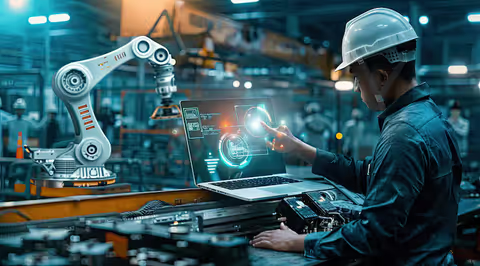
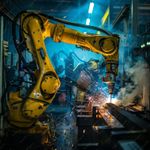
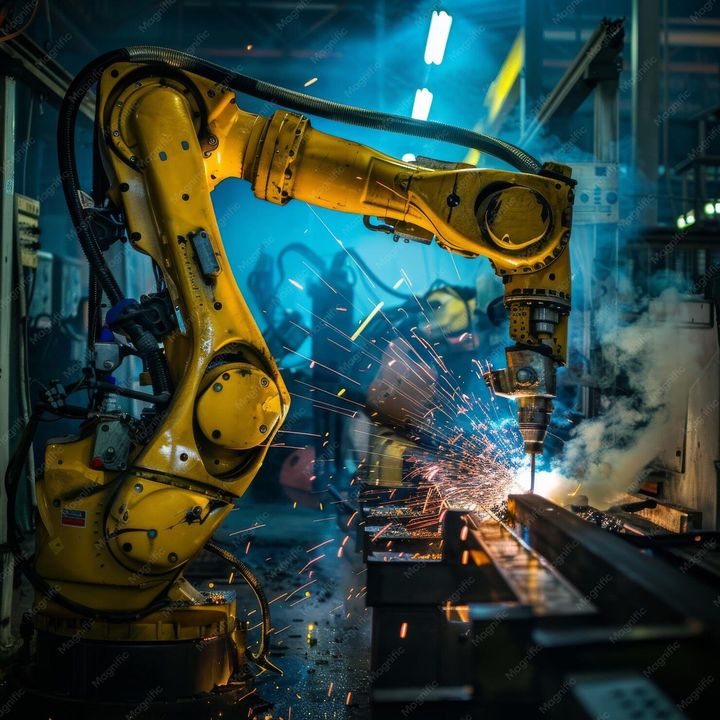
A welding robot is a programmable robotic arm equipped with a welding tool, sensors, and software that allows it to complete welding operations automatically. Instead of relying entirely on human welders for repetitive production tasks, manufacturers use robots to perform consistent welds on large volumes of products. Human operators still play a valuable role in programming, monitoring, inspecting, and maintaining these systems.
As industries continue to adopt automation and smart manufacturing practices, industrial welding robots are becoming more flexible, intelligent, and capable of handling complex welding applications with minimal downtime.
Why Industrial Welding Robots Matter Today
Manufacturing industries face increasing demand for higher production quality, faster turnaround times, and improved workplace safety. Welding robots help address these challenges by performing repetitive welding operations with a high level of accuracy throughout long production cycles.
One of the biggest advantages of robotic welding is consistency. Manual welding quality can vary depending on fatigue, experience, and working conditions. Robotic systems follow programmed welding paths repeatedly, helping maintain uniform weld quality across thousands of components.
Industrial welding robots also contribute to safer workplaces. Welding environments often involve high temperatures, sparks, fumes, and exposure to intense light. By automating hazardous welding tasks, manufacturers reduce the need for workers to remain in high-risk positions for extended periods.
Another important reason for their growing adoption is manufacturing efficiency. Automated welding systems can operate for long production shifts with fewer interruptions, making them suitable for industries producing large quantities of identical or similar components.
As labor shortages continue to affect manufacturing in many regions, welding robots also help companies maintain production capacity while allowing skilled workers to focus on programming, quality control, maintenance, and specialized welding operations.
How Industrial Welding Robots Work
Industrial welding robots combine mechanical movement, sensors, welding equipment, and software into a coordinated automated system. The robotic arm moves along programmed paths while controlling welding speed, angle, distance, and torch position throughout the welding cycle.
The welding process begins with programming. Engineers create welding paths using offline programming software, teach pendants, or collaborative programming methods. The robot stores movement instructions and welding parameters such as voltage, current, travel speed, and welding sequence.
During operation, sensors monitor the robot's position and sometimes adjust movement based on component alignment. Vision systems or laser sensors may detect variations in workpiece placement and compensate automatically for small positioning differences.
The robotic controller coordinates every movement while communicating with welding power supplies and production equipment. This synchronization ensures that welding begins and stops at precise locations without damaging surrounding materials.
After welding is complete, inspection systems may verify weld quality through cameras, laser scanning, or other quality measurement technologies integrated into the production line.
Main Types of Industrial Welding Robots
Industrial welding robots support several welding processes depending on the material, application, and production environment.
Arc welding robots are among the most common robotic welding systems. They create an electric arc between the welding electrode and the workpiece to join metal components. This method is widely used for steel structures, automotive parts, and industrial machinery.
Spot welding robots are extensively used in automotive manufacturing. They apply pressure and electrical current to join overlapping metal sheets quickly and consistently during vehicle body assembly.
Laser welding robots use concentrated laser beams to produce precise welds with minimal heat distortion. They are suitable for electronics, medical devices, aerospace components, and high-precision manufacturing.
TIG welding robots are designed for applications requiring clean, high-quality welds on stainless steel, aluminum, and thinner materials. They are commonly found in industries where appearance and precision are important.
MIG welding robots are widely used for general industrial fabrication because they provide fast welding speeds and strong weld joints for a variety of metal components.
Each welding method serves different manufacturing requirements, allowing industries to select robotic systems that match production goals and material specifications.
Industries That Use Welding Robots
Industrial welding robots are used across numerous manufacturing sectors because welding is a fundamental process in metal fabrication.
The automotive industry remains one of the largest users of robotic welding. Vehicle frames, body panels, exhaust systems, and structural components are frequently welded using robotic spot and arc welding systems.
Heavy equipment manufacturers use welding robots for agricultural machinery, construction equipment, mining vehicles, and industrial machines where strong structural welds are essential.
Aerospace manufacturers rely on robotic welding for lightweight metal structures and components that require high precision and consistent weld quality.
Shipbuilding facilities use robotic welding for large steel sections, hull structures, pipelines, and marine equipment where repetitive welding improves production efficiency.
Energy industries also use welding robots in pipeline fabrication, renewable energy equipment, storage tanks, wind turbine towers, and industrial infrastructure.
Metal furniture, appliance manufacturing, railway equipment, industrial storage systems, and steel fabrication facilities increasingly integrate robotic welding into their production workflows.
Benefits of Industrial Welding Robots in Manufacturing
Industrial welding robots provide several operational advantages that extend beyond faster production speeds.
One major benefit is improved weld consistency. Robots repeat identical welding paths accurately, reducing variations that may occur during repetitive manual welding tasks.
Automation also improves production efficiency by minimizing delays between welding cycles. Robots transition quickly between weld positions, helping manufacturers increase throughput without compromising quality.
Quality improvements are another important advantage. Consistent welding parameters help reduce defects such as uneven weld beads, excessive spatter, incomplete fusion, and inconsistent penetration.
Manufacturers also benefit from improved material utilization. Precise robotic movement helps reduce welding wire waste, unnecessary heat input, and material distortion.
Workplace safety improves because robots perform welding in environments involving sparks, fumes, heat, and repetitive movements. Human operators supervise equipment from safer locations while handling programming and inspections.
Industrial welding robots also generate valuable production data. Modern systems record welding parameters, cycle times, equipment status, and maintenance information, supporting quality management and production analysis.
Components of an Industrial Welding Robot System
A complete industrial welding robot includes several integrated components working together during production.
The robotic arm provides multiple axes of movement, allowing the welding torch to reach complex positions and angles around the workpiece.
The welding power source supplies electrical energy for the selected welding process while controlling voltage and current according to programmed parameters.
The welding torch delivers filler material or welding energy to the joint while maintaining the required welding position throughout the operation.
The robot controller serves as the central processing unit that coordinates movement, welding parameters, communication, and safety functions.
Sensors help monitor position, torch alignment, seam tracking, collision detection, and workpiece placement during automated welding operations.
Fixtures and positioning equipment securely hold workpieces in place, ensuring accurate alignment throughout the welding cycle.
Safety equipment such as protective enclosures, emergency stop systems, light curtains, and safety scanners help create secure automated work environments.
Together, these components create a reliable robotic welding cell suitable for continuous industrial production.
Industrial Welding Robots and Smart Manufacturing
Modern welding robots are increasingly connected to Industry 4.0 manufacturing environments where machines communicate through industrial networks and production software.
Connected welding robots share operational information with manufacturing execution systems and production monitoring platforms. This allows engineers to track machine utilization, welding performance, production output, and maintenance schedules in real time.
Artificial intelligence is also becoming part of robotic welding. AI-assisted systems can analyze welding quality, optimize welding parameters, detect anomalies, and improve production efficiency using historical production data.
Digital twin technology allows manufacturers to simulate welding operations virtually before deploying programs on physical robots. This helps reduce programming errors and optimize robot movement before production begins.
Cloud-based monitoring platforms also provide production insights across multiple manufacturing facilities while supporting predictive maintenance and equipment diagnostics.
Safety Considerations for Robotic Welding
Although welding robots improve workplace safety, proper safety practices remain essential for automated welding environments.
Manufacturing facilities typically isolate robotic welding cells using protective fencing or enclosed workstations to prevent accidental entry during robot operation.
Safety scanners and light curtains automatically stop robot movement if someone enters a restricted operating area.
Emergency stop systems provide immediate shutdown capability during unexpected situations or maintenance activities.
Proper ventilation helps remove welding fumes generated during automated welding operations, creating healthier working environments for nearby personnel.
Routine inspection and maintenance also contribute to safe robot operation by identifying worn cables, damaged torches, sensor issues, or mechanical wear before equipment failures occur.
Training remains an important part of robotic welding safety because operators must understand programming procedures, lockout practices, emergency systems, and maintenance protocols.
Recent Developments in Industrial Welding Robots in 2025–2026
Industrial welding robotics continues to evolve rapidly with advancements in automation, sensing, and intelligent software.
Collaborative welding robots have become more common in smaller manufacturing facilities. These robots are designed to work alongside human operators in controlled environments while assisting with repetitive welding tasks that do not require complete production isolation.
AI-powered seam tracking has improved robotic welding accuracy by helping robots adjust automatically when components vary slightly in position or shape during production.
Advanced vision systems now identify weld locations with greater precision, reducing setup time and improving adaptability for mixed-product manufacturing lines.
Manufacturers are also integrating predictive maintenance technologies that monitor robot motors, welding torches, and controllers to identify potential issues before equipment downtime occurs.
Energy-efficient welding power supplies and optimized robot motion planning are helping reduce electricity consumption and heat generation during production cycles.
Another important trend is easier offline programming, allowing engineers to create and test welding programs using digital models instead of interrupting production equipment for programming activities.
Choosing the Right Industrial Welding Robot for Different Applications
Selecting an industrial welding robot depends on production requirements, materials, welding methods, and manufacturing complexity rather than choosing one universal solution.
Manufacturers first evaluate the type of material being welded, including steel, stainless steel, aluminum, or specialty alloys. Different materials may require different welding processes and robotic capabilities.
Production volume also influences robot selection. High-volume manufacturing often benefits from fully automated welding cells, while lower-volume production may prioritize flexible robotic systems capable of handling multiple product designs.
The size and weight of components determine the required robot payload and reach. Large structural components require robots with longer arms and higher lifting capacity.
Precision requirements influence the selection of sensors, vision systems, seam tracking technology, and welding software capabilities.
Future production flexibility is another consideration because many manufacturers prefer robotic systems that can be reprogrammed for new product designs as manufacturing needs evolve.
The Future of Industrial Welding Robots
Industrial welding robots are expected to become even more intelligent, connected, and adaptable as manufacturing technologies continue to advance.
Future systems will likely combine artificial intelligence, machine vision, digital twins, and advanced sensors to create highly adaptive welding environments capable of responding to changing production conditions automatically.
Collaborative robotics will continue expanding into medium-sized manufacturing operations, allowing greater flexibility for customized production without sacrificing automation benefits.
Sustainability will also shape robotic welding development through improved energy efficiency, reduced material waste, and optimized production processes that minimize environmental impact.
As smart factories become more common, industrial welding robots will increasingly function as connected manufacturing assets that contribute data, quality insights, maintenance information, and production intelligence across the entire manufacturing process.
Conclusion
Industrial welding robots have transformed modern manufacturing by bringing precision, consistency, and automation to one of the industry's most important production processes. They help manufacturers produce reliable welds, improve workplace safety, reduce repetitive manual tasks, and support higher production efficiency across automotive, aerospace, heavy equipment, energy, and metal fabrication industries.
Modern robotic welding systems are no longer limited to simple repetitive tasks. With advancements in artificial intelligence, machine vision, collaborative robotics, and Industry 4.0 connectivity, these systems are becoming smarter and more adaptable to changing manufacturing requirements.
Understanding how industrial welding robots work, where they are used, and the technologies shaping their future helps manufacturers, engineers, students, and industry professionals better understand the role automation plays in today's evolving industrial production landscape.