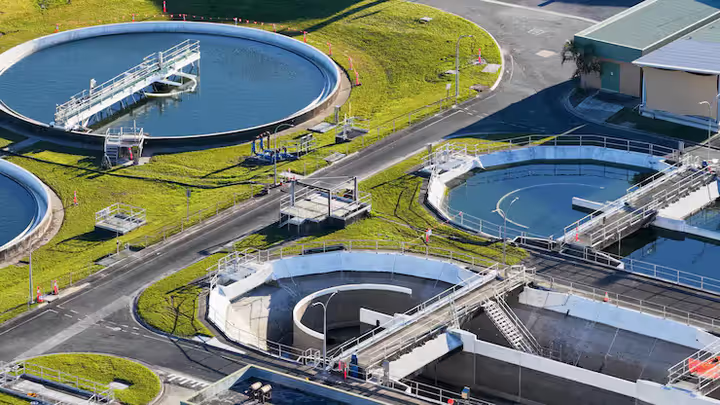
Industrial Water Systems: Types, Components, Benefits, and Modern Applications Guide (2026)
Water is one of the most important resources used in industrial operations. From manufacturing and food processing to power generation and pharmaceuticals, nearly every industry depends on reliable water systems to maintain production, ensure safety, and meet environmental standards. Industrial water systems are designed to supply, treat, circulate, reuse, and dispose of water efficiently throughout industrial facilities.
As industries grow and sustainability becomes a greater priority, managing water effectively is no longer just about keeping operations running. It is also about reducing waste, improving efficiency, protecting equipment, and complying with environmental regulations.
This guide explains industrial water systems in simple terms, covering how they work, the different types, their key components, common applications, benefits, challenges, and future trends.
What Are Industrial Water Systems?
Industrial water systems are integrated systems that manage water throughout industrial facilities. These systems control the collection, treatment, distribution, reuse, and discharge of water used in industrial processes.
Unlike residential water systems, industrial systems are designed to handle large volumes of water while meeting strict quality and operational requirements. Depending on the industry, water may be used for cooling, heating, cleaning, manufacturing, chemical processing, steam production, or sanitation.
A well-designed industrial water system ensures that water reaches the right process in the right condition while minimizing waste and protecting equipment.
Why Industrial Water Systems Are Important
Industries rely on water for far more than basic operations. Water directly affects production quality, equipment lifespan, energy efficiency, and environmental performance.
Key reasons industrial water systems matter include:
Supporting manufacturing and production processes.
Providing cooling for machinery and industrial equipment.
Generating steam for industrial heating applications.
Maintaining cleanliness and sanitation in facilities.
Reducing equipment corrosion and mineral scaling.
Improving water reuse and conservation efforts.
Helping industries comply with environmental regulations.
Efficient water management also reduces operational downtime and lowers resource consumption over time.
How an Industrial Water System Works
An industrial water system typically follows several stages that ensure water is suitable for its intended purpose.
1. Water Intake
Water enters the facility from sources such as municipal supplies, rivers, lakes, reservoirs, groundwater, or recycled water systems.
2. Water Treatment
Before water is used, it may undergo treatment to remove impurities, minerals, bacteria, suspended solids, or chemicals.
3. Distribution
Pumps, valves, and pipelines distribute treated water to different industrial processes based on operational requirements.
4. Process Usage
Water performs specific industrial functions such as cooling, cleaning, mixing, heating, transporting materials, or steam generation.
5. Wastewater Collection
Used water is collected through drainage and wastewater systems for further treatment.
6. Recycling or Discharge
Depending on facility design, water is either reused after treatment or discharged according to environmental guidelines.
This continuous cycle helps industries maximize water efficiency while minimizing environmental impact.
Main Types of Industrial Water Systems
Industrial facilities often use multiple water systems simultaneously.
Raw Water Systems
Raw water systems transport untreated water from natural or municipal sources into industrial facilities.
These systems typically include intake structures, pumps, storage tanks, and preliminary filtration equipment.
Process Water Systems
Process water is treated specifically for manufacturing or production activities.
Its quality varies depending on the product being manufactured, making treatment requirements highly industry-specific.
Cooling Water Systems
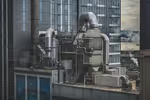
Cooling water systems remove excess heat generated during industrial operations.
Common configurations include:
Open-loop cooling systems.
Closed-loop cooling systems.
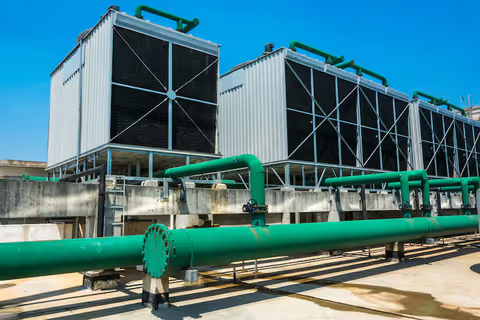
Cooling tower systems.
Chilled water systems.
Cooling systems help maintain stable operating temperatures and prevent equipment overheating.
Boiler Feed Water Systems
Boiler systems require highly purified water to generate steam safely and efficiently.
Treatment removes dissolved minerals, oxygen, and contaminants that could damage boilers through corrosion or scaling.
Wastewater Treatment Systems
Industrial wastewater systems collect and treat water after production processes.
Treatment removes contaminants before water is discharged or reused within the facility.
Water Reuse Systems
Many industries now recycle treated wastewater for non-potable industrial applications such as cooling, washing, irrigation, or cleaning.
Water reuse systems reduce freshwater demand and improve sustainability.
Essential Components of Industrial Water Systems
Industrial water systems combine mechanical, electrical, and treatment equipment into one integrated infrastructure.
Pumps
Pumps move water throughout the facility under controlled pressure and flow conditions.
Different pump types are selected based on flow rate, pressure requirements, and water characteristics.
Pipes and Distribution Networks
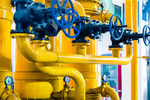
Pipelines transport water between treatment units, storage tanks, production equipment, cooling towers, and wastewater systems.
Proper pipe materials reduce corrosion and contamination.
Storage Tanks
Storage tanks provide water reserves for production, firefighting, emergency supply, or treated water storage.
Filtration Equipment
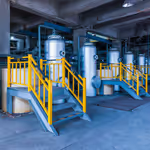
Filters remove suspended solids, sediment, sand, rust particles, and other contaminants before water enters sensitive equipment.
Valves and Flow Controls
Valves regulate water pressure, flow direction, isolation, and system balancing throughout industrial operations.
Sensors and Monitoring Systems
Modern industrial water systems use sensors to continuously monitor:
Water flow.
Pressure.
Temperature.
Conductivity.
pH.
Dissolved oxygen.
Water quality.
Real-time monitoring improves efficiency and preventive maintenance.
Common Industrial Water Treatment Methods
Water treatment is one of the most important parts of industrial water management.
Filtration
Filtration removes physical particles using sand filters, cartridge filters, multimedia filters, or membrane filtration.
Reverse Osmosis
Reverse osmosis removes dissolved salts, minerals, heavy metals, and many contaminants through semi-permeable membranes.
It is widely used for high-purity industrial water.
Water Softening
Softening removes calcium and magnesium that cause hardness and scale formation inside equipment.
Deionization
Deionization produces highly purified water by removing dissolved ions using ion exchange resins.
Industries requiring ultrapure water often use this process.
Ultraviolet Disinfection
Ultraviolet systems reduce microorganisms without adding chemical disinfectants.
Chemical Treatment
Chemical treatment controls:
Corrosion.
Scaling.
Biological growth.
pH balance.
Oxidation.
Proper chemical management protects industrial equipment and water quality.
Industries That Depend on Industrial Water Systems
Water systems serve a wide variety of industrial sectors, each with unique requirements.
Manufacturing
Manufacturing facilities use water for machining, cooling, cleaning, coating, and product processing.
Food and Beverage Processing
Water is essential for ingredient preparation, equipment sanitation, steam generation, and cleaning operations.
Strict water quality standards help maintain product safety.
Pharmaceutical Industry
Pharmaceutical manufacturing requires purified water for production, cleaning, laboratory work, and sterile processing.
Chemical Processing
Chemical plants rely on water for mixing, reactions, cooling, washing, and waste treatment.
Power Generation
Power plants use large-scale water systems for cooling turbines, generating steam, and heat exchange processes.
Textile Industry
Textile manufacturing uses water during dyeing, washing, bleaching, finishing, and fabric treatment processes.
Mining and Metal Processing
Mining operations use water for mineral extraction, dust suppression, slurry transport, and equipment cooling.
Benefits of Efficient Industrial Water Systems
Well-managed water systems provide operational, financial, and environmental advantages.
Improved Operational Efficiency
Reliable water quality keeps production processes consistent and minimizes unexpected interruptions.
Longer Equipment Life
Proper treatment reduces corrosion, scaling, fouling, and sediment buildup inside equipment.
Lower Water Consumption
Water recycling and optimized distribution reduce unnecessary water use.
Reduced Maintenance Requirements
Clean water reduces wear on pumps, boilers, cooling towers, heat exchangers, and piping systems.
Better Environmental Compliance
Effective wastewater treatment helps facilities meet discharge requirements and environmental standards.
Increased Sustainability
Water reuse and conservation reduce pressure on freshwater resources while supporting long-term environmental goals.
Common Challenges in Industrial Water Systems
Despite their importance, industrial water systems face several operational challenges.
Scaling
Mineral deposits accumulate inside pipes, boilers, and heat exchangers, reducing efficiency.
Corrosion
Poor water chemistry can damage metal equipment and shorten infrastructure lifespan.
Biological Fouling
Microorganisms, algae, and bacteria may grow in cooling systems and storage tanks if not properly controlled.
Water Quality Variability
Changes in incoming water quality require continuous monitoring and treatment adjustments.
Wastewater Management
Industrial wastewater often contains chemicals, solids, oils, or biological contaminants that require specialized treatment.
Energy Consumption
Large pumping, treatment, and cooling operations consume significant energy if systems are not optimized.
Addressing these challenges requires preventive maintenance, monitoring, and proper treatment strategies.
Industrial Water Recycling and Conservation
Water conservation has become a major priority across industrial sectors.
Water Recycling Methods
Industries commonly recycle water through:
Membrane filtration.
Reverse osmosis recovery.
Biological treatment.
Chemical treatment.
Ultrafiltration systems.
Conservation Strategies
Facilities improve water efficiency by:
Detecting leaks early.
Optimizing cooling tower cycles.
Reusing process water.
Collecting rainwater where appropriate.
Installing automated flow controls.
Monitoring water consumption continuously.
These practices reduce freshwater demand while supporting sustainable production.
Smart Technologies in Industrial Water Systems
Digital technology is transforming industrial water management.
IoT Monitoring
Connected sensors collect real-time information about water quality, flow rates, pressure, and equipment performance.
Automation Systems
Automated controllers adjust pumps, valves, and chemical dosing based on operational conditions.
Predictive Maintenance
Data analytics identifies potential equipment issues before failures occur, reducing downtime.
Digital Water Management Platforms
Centralized software helps operators monitor multiple water systems from one interface while generating performance reports and alerts.
These technologies improve efficiency, reduce waste, and support better decision-making.
Maintenance Best Practices for Industrial Water Systems
Regular maintenance keeps industrial water systems operating safely and efficiently.
Routine Inspection
Inspect pumps, valves, filters, storage tanks, cooling towers, and pipelines for wear or leaks.
Water Quality Testing
Monitor parameters such as pH, hardness, conductivity, dissolved solids, and microbial activity.
Cleaning and Descaling
Remove accumulated deposits from heat exchangers, boilers, membranes, and cooling equipment.
Calibration of Sensors
Ensure monitoring equipment provides accurate readings through scheduled calibration.
Preventive Maintenance Scheduling
Replace filters, inspect seals, lubricate pumps, and service treatment equipment according to maintenance plans.
Preventive maintenance helps reduce unexpected shutdowns and repair costs.
Environmental Considerations in Industrial Water Management
Responsible water management supports both industrial productivity and environmental protection.
Key environmental priorities include:
Reducing wastewater discharge volumes.
Improving water recycling rates.
Preventing contamination of natural water sources.
Managing sludge generated during treatment.
Reducing chemical consumption through optimized treatment.
Improving overall water-use efficiency.
Many industries now include water stewardship as part of broader sustainability initiatives.
Emerging Trends in Industrial Water Systems
Industrial water systems continue evolving through new technologies and environmental priorities.
Increased Water Reuse
More facilities are investing in systems that recover and reuse wastewater internally.
Advanced Membrane Technologies
Improved filtration membranes increase water recovery while reducing energy use.
AI-Based Water Optimization
Artificial intelligence helps optimize treatment processes, predict maintenance needs, and detect anomalies in water systems.
Energy-Efficient Pumping Systems
Modern pumps and variable-speed drives reduce electricity consumption during water distribution.
Integrated Sustainability Reporting
Industries increasingly monitor water consumption, recycling rates, and treatment performance as part of environmental reporting.
These trends reflect the growing importance of efficient and sustainable water management across industrial sectors.
How to Choose the Right Industrial Water System
Selecting an industrial water system depends on operational needs rather than using a single solution for every facility.
Important factors include:
Water source availability and quality.
Industry-specific water purity requirements.
Daily water demand and peak usage.
Cooling or heating process requirements.
Wastewater treatment needs.
Opportunities for water recycling.
Maintenance capabilities.
Environmental compliance requirements.
A properly designed system balances water quality, operational reliability, efficiency, and sustainability.
Conclusion
Industrial water systems play a fundamental role in modern industry by supplying, treating, distributing, recycling, and managing water throughout industrial operations. Whether supporting manufacturing, food processing, pharmaceuticals, power generation, mining, or chemical production, these systems help maintain productivity, protect equipment, and reduce environmental impact.
As water conservation and sustainability become increasingly important, industries are adopting smarter treatment technologies, automated monitoring systems, and water reuse strategies to improve efficiency. Investing in well-maintained industrial water systems not only supports reliable operations but also helps organizations manage resources responsibly and prepare for future environmental and operational challenges.