Industrial Sensor Systems: A Complete Guide to Modern Industrial Monitoring and Automation
Industrial sensor systems are one of the most important technologies used in modern manufacturing, production, energy, logistics, and infrastructure. These systems collect information from machines, equipment, and the surrounding environment, allowing industries to monitor operations in real time and respond quickly to changing conditions.
A sensor is a device that detects a physical or environmental change, such as temperature, pressure, motion, humidity, vibration, or liquid level, and converts that information into an electrical signal. An industrial sensor system combines multiple sensors with controllers, communication networks, and monitoring software to provide continuous visibility into industrial processes.
As industries become more automated and connected, sensor systems have become the foundation of digital manufacturing and Industrial Internet of Things (IIoT) environments. They help organizations improve productivity, reduce downtime, maintain product quality, and increase workplace safety by providing accurate and timely operational data.
Industrial sensor systems are used across factories, warehouses, power plants, chemical facilities, water treatment plants, mining sites, transportation networks, and many other industrial environments where reliable monitoring is essential.
Importance: Why Industrial Sensor Systems Matter Today
Modern industries rely on accurate information to make operational decisions. Without sensors, machines cannot measure performance, automated equipment cannot react to environmental changes, and maintenance teams cannot identify problems before failures occur.
Industrial sensor systems help organizations monitor equipment continuously instead of relying only on scheduled inspections. This real-time monitoring allows businesses to identify abnormal conditions early and prevent unexpected interruptions.
Safety is another major reason these systems are widely used. Sensors detect hazardous conditions such as excessive pressure, overheating, gas leaks, or equipment vibration before they become serious risks. This allows operators to respond quickly and maintain safer working environments.
Industrial sensors also improve efficiency by reducing manual measurements and supporting automated control systems. Machines can adjust operations automatically based on sensor readings, helping reduce waste, energy consumption, and production errors.
In today's connected industrial environment, sensors generate valuable operational data that supports predictive maintenance, quality control, energy management, inventory monitoring, and process optimization.
How Industrial Sensor Systems Work
An industrial sensor system follows a simple but highly effective process. Sensors first detect a physical condition from equipment or the surrounding environment. That measurement is converted into an electronic signal and transmitted to a controller such as a Programmable Logic Controller (PLC), Distributed Control System (DCS), or industrial computer.
The controller processes the incoming information according to predefined rules. If a reading exceeds a safe operating range, the controller may trigger an alarm, adjust machine settings, or stop equipment automatically.
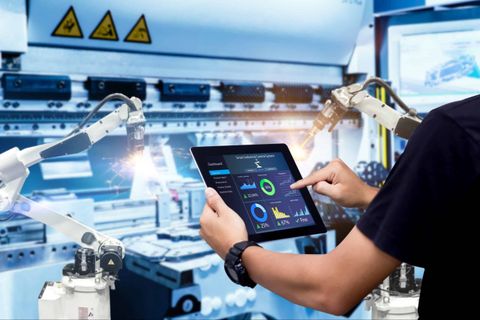
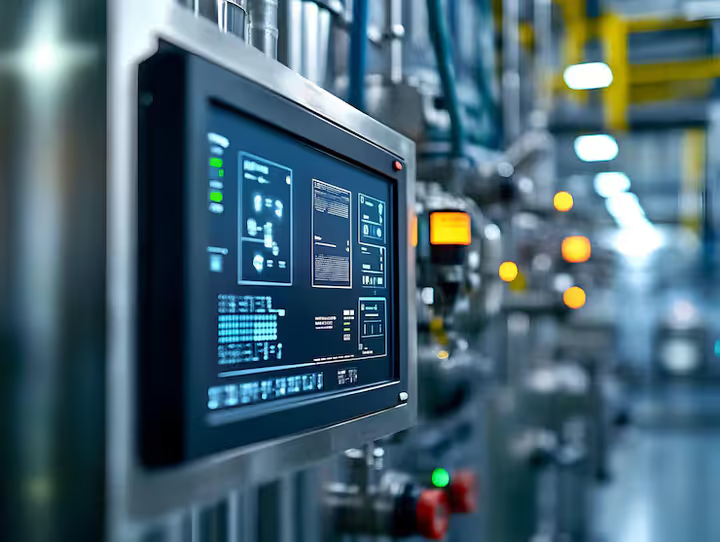
The processed information is then displayed on Human Machine Interface (HMI) screens or supervisory monitoring software, allowing operators and engineers to monitor equipment performance from a central location.
Modern sensor systems often send data through industrial communication protocols to cloud platforms or analytics software for long-term monitoring and reporting.
Main Types of Industrial Sensor Systems
Industrial environments require different sensors depending on the process being monitored. Each type is designed for specific measurements and operating conditions.
Temperature Sensor Systems
Temperature sensors measure heat levels in industrial equipment, pipelines, motors, furnaces, refrigeration systems, and manufacturing processes. Accurate temperature monitoring helps maintain product quality and prevents equipment damage caused by overheating.
These sensors are commonly used in food processing, pharmaceuticals, oil and gas facilities, chemical manufacturing, and metal production.
Pressure Sensor Systems
Pressure sensors monitor the force applied by gases or liquids inside industrial equipment. They help maintain safe operating pressure in pipelines, boilers, hydraulic systems, compressors, and storage tanks.
Continuous pressure monitoring supports both equipment protection and process stability.
Proximity Sensor Systems
Proximity sensors detect the presence or absence of objects without physical contact. They are widely used in conveyor systems, robotic arms, packaging equipment, automated assembly lines, and machine positioning applications.
Because they operate without direct contact, they reduce mechanical wear and improve reliability.
Level Sensor Systems
Level sensors measure the amount of liquid, powder, or solid material inside tanks, silos, and containers. Industries use these sensors to monitor water storage, chemical tanks, fuel reservoirs, grain storage, and wastewater treatment systems.
Accurate level measurement helps prevent overflow and ensures continuous production.
Flow Sensor Systems
Flow sensors monitor the movement of liquids, gases, or steam through industrial pipelines. They provide important information for chemical processing, water treatment, energy production, cooling systems, and industrial automation.
Stable flow monitoring helps maintain process consistency and resource efficiency.
Vibration Sensor Systems
Vibration sensors detect unusual movement in rotating equipment such as motors, turbines, pumps, compressors, and industrial fans. Changes in vibration patterns often indicate wear, imbalance, or mechanical faults before equipment failure occurs.
These sensors are widely used in predictive maintenance programs.
Humidity and Environmental Sensor Systems
Humidity sensors measure moisture levels in industrial environments where environmental conditions affect product quality or equipment performance. Warehouses, electronics manufacturing, clean rooms, agricultural processing, and pharmaceutical facilities commonly use these sensors.
Environmental sensor systems may also monitor air quality, dust concentration, gas levels, or ambient light.
Components of an Industrial Sensor System
An industrial sensor system is more than just individual sensors. Multiple components work together to collect, process, and communicate operational information.
| Component | Purpose |
|---|---|
| Industrial Sensors | Measure physical conditions such as temperature, pressure, flow, or vibration. |
| Controllers (PLC/DCS) | Process sensor data and control industrial equipment automatically. |
| Signal Converters | Convert sensor signals into standardized communication formats. |
| Communication Network | Transfer sensor information between devices and monitoring systems. |
| Human Machine Interface | Display live equipment status and operating conditions. |
| Monitoring Software | Store, analyze, and visualize operational data for decision-making. |
Together, these components create an integrated monitoring system capable of supporting complex industrial operations.
Applications of Industrial Sensor Systems Across Industries
Industrial sensor systems have become essential across nearly every industrial sector because they support automation, monitoring, and operational control.
In manufacturing, sensors monitor machine performance, detect product position, measure production conditions, and improve assembly accuracy. Automated production lines rely heavily on sensors for quality inspection and equipment synchronization.
In the energy sector, power plants use sensors to monitor turbines, generators, transformers, pipelines, and electrical systems. Renewable energy facilities also depend on sensors to monitor wind speed, solar panel conditions, and battery storage systems.
Chemical industries use sensor systems to measure pressure, temperature, chemical concentration, liquid levels, and gas detection to maintain safe processing environments.
Oil and gas operations depend on sensors throughout exploration, transportation, refining, and storage facilities. Continuous monitoring improves operational safety and environmental compliance.
Water and wastewater treatment plants use sensors to monitor water quality, pH levels, chemical dosing, tank levels, and pipeline flow throughout treatment processes.
Warehousing and logistics facilities use sensors for conveyor automation, inventory tracking, environmental monitoring, and equipment safety systems.
Mining operations use rugged industrial sensors to monitor machinery, structural stability, dust levels, and environmental conditions in demanding operating environments.
Benefits of Industrial Sensor Systems
Industrial sensor systems provide operational improvements that extend beyond automation. One of the biggest advantages is continuous real-time visibility into equipment and production processes.
With continuous monitoring, maintenance teams can identify performance changes before equipment breaks down. This predictive approach reduces unexpected downtime and improves maintenance planning.
Sensor systems also improve production quality by maintaining consistent operating conditions. Automated adjustments based on sensor data reduce variation and improve manufacturing accuracy.
Energy efficiency improves because sensors monitor energy consumption and identify equipment operating outside optimal conditions.
Industrial safety becomes stronger through early detection of overheating, excessive pressure, gas leaks, abnormal vibration, or other hazardous conditions.
Data collected by sensor systems also supports long-term operational analysis, helping organizations identify trends, optimize workflows, and improve resource utilization.
Industrial Sensor Systems and Industrial Internet of Things (IIoT)
The Industrial Internet of Things has expanded the role of industrial sensor systems. Instead of sending information only to local controllers, sensors can now communicate across connected industrial networks.
IIoT-enabled sensors collect operational information continuously and transmit it to cloud-based monitoring platforms or industrial analytics software. Engineers can monitor equipment remotely from centralized control centers while receiving alerts when operating conditions change.
Connected sensor systems support predictive maintenance by identifying performance patterns that indicate future equipment issues. Machine learning models analyze historical sensor data to recognize abnormal behavior before failures occur.
Remote monitoring also allows organizations with multiple facilities to compare equipment performance across locations using the same sensor infrastructure.
Recent Developments in Industrial Sensor Technology
Industrial sensor technology has evolved rapidly during the past year as industries continue investing in smarter automation and digital manufacturing.
Wireless industrial sensors have become increasingly common because they simplify installation in large facilities and reduce wiring complexity. These sensors support flexible equipment layouts and easier expansion of monitoring systems.
Edge computing has also become more important in industrial sensor networks. Instead of sending every measurement to centralized systems, edge devices process sensor information locally for faster response times and reduced network traffic.
Artificial intelligence is increasingly integrated with sensor analytics. AI-powered systems analyze vibration, temperature, and operational patterns to detect equipment anomalies more accurately.
Cybersecurity has become a stronger focus as connected industrial sensors communicate across larger networks. Manufacturers continue improving secure communication protocols and authentication methods for industrial devices.
Sustainability initiatives have also increased the use of sensor systems for monitoring energy consumption, emissions, water usage, and environmental performance across industrial facilities.
Choosing the Right Industrial Sensor System
Selecting an industrial sensor system depends on the operating environment and monitoring requirements. Different industries require different levels of accuracy, durability, communication capability, and environmental protection.
The operating environment is one of the first considerations. Sensors installed in extreme temperatures, dusty environments, chemical facilities, or outdoor locations require specialized industrial protection.
Measurement accuracy is also important because different applications require different precision levels depending on the process.
Communication compatibility matters when integrating sensors with PLCs, DCS systems, SCADA platforms, or IIoT networks.
Maintenance requirements should also be considered, especially for facilities that operate continuously and require reliable long-term monitoring.
Scalability is valuable because industrial facilities often expand monitoring systems over time by adding new equipment and production lines.
Challenges in Industrial Sensor Systems
Although industrial sensor systems provide significant operational benefits, implementing and maintaining them also presents challenges.
Industrial environments can expose sensors to vibration, moisture, dust, chemicals, and extreme temperatures, making equipment durability an important consideration.
Large industrial facilities often use equipment from different manufacturers, creating integration challenges between communication protocols and monitoring platforms.
Sensor calibration is necessary in many applications to maintain measurement accuracy over time. Regular maintenance helps ensure reliable operational data.
Managing large volumes of sensor data is another growing challenge as connected facilities deploy thousands of sensors across multiple production processes.
Organizations also need cybersecurity measures to protect connected industrial devices and communication networks from unauthorized access.
The Future of Industrial Sensor Systems
Industrial sensor systems are expected to become more intelligent, connected, and autonomous as Industry 4.0 technologies continue developing. Sensors will increasingly support self-monitoring equipment capable of identifying maintenance needs without manual inspection.
Artificial intelligence, edge computing, digital twins, and advanced analytics will allow industrial systems to respond faster to changing operating conditions. Wireless connectivity will continue expanding sensor deployment across complex industrial environments.
Energy-efficient sensors, miniature sensor designs, and improved battery technology will support broader adoption in remote monitoring applications. Environmental monitoring will also become more important as industries focus on sustainability, emissions tracking, and resource efficiency.
As industrial automation continues evolving, sensor systems will remain a core technology connecting machines, people, and data into smarter operational ecosystems.
Frequently Asked Questions
What is an industrial sensor system?
An industrial sensor system is a network of sensors, controllers, communication devices, and monitoring software that measures physical conditions such as temperature, pressure, vibration, flow, humidity, or motion in industrial environments.
Where are industrial sensor systems commonly used?
They are widely used in manufacturing plants, power generation facilities, chemical industries, oil and gas operations, water treatment plants, warehouses, mining sites, logistics centers, and automated production lines.
What is the difference between industrial sensors and consumer sensors?
Industrial sensors are designed for demanding environments with higher durability, greater accuracy, longer operational life, and compatibility with industrial automation systems.
How do industrial sensor systems improve maintenance?
They continuously monitor equipment performance and detect unusual operating conditions early, helping maintenance teams identify potential issues before unexpected equipment failures occur.
Are industrial sensor systems part of Industry 4.0?
Yes. Industrial sensor systems are a key part of Industry 4.0 because they provide the real-time operational data required for automation, predictive maintenance, IIoT connectivity, analytics, and smart manufacturing.
Conclusion
Industrial sensor systems have become an essential part of modern industrial operations because they provide continuous visibility into equipment, processes, and environmental conditions. By converting physical measurements into actionable operational data, these systems support automation, safety, efficiency, and quality across a wide range of industries.
As manufacturing and industrial infrastructure continue becoming more connected through IIoT and smart automation technologies, sensor systems will play an even greater role in predictive maintenance, remote monitoring, sustainability initiatives, and intelligent decision-making. Understanding how these systems work and where they are applied helps businesses and professionals appreciate their importance in building reliable, efficient, and future-ready industrial environments.