Industrial Processing Machines: Types, Uses, Benefits, and Modern Industry Guide
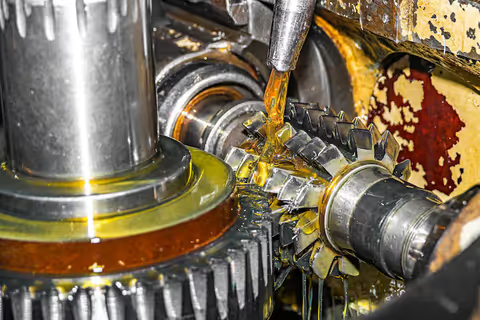
Industrial processing machines are the foundation of modern manufacturing. They help transform raw materials into finished or semi-finished products through mechanical, thermal, chemical, or automated processes. From food production and pharmaceuticals to textiles, chemicals, plastics, and metal fabrication, these machines make large-scale production faster, more consistent, and more efficient.
As manufacturing continues to evolve, industrial processing machines have become more advanced through automation, digital monitoring, and energy-efficient technologies. Understanding how these machines work, where they are used, and why they matter can help businesses, students, and professionals better understand modern production systems.
This guide explains industrial processing machines in simple language, covering their types, applications, benefits, maintenance, and recent industry trends.
What Are Industrial Processing Machines?
Industrial processing machines are specialized equipment designed to process, shape, mix, separate, heat, cool, package, or otherwise transform raw materials into usable products during manufacturing.
These machines are used at different stages of production depending on the industry. Some prepare raw materials, while others perform finishing operations or packaging before products reach customers.
Unlike manual production methods, industrial machines perform repetitive tasks with greater accuracy and higher production capacity, helping manufacturers maintain consistent quality.
Why Industrial Processing Machines Are Important
Industrial processing equipment has become essential because manufacturers need reliable, scalable, and efficient production methods.
Key reasons these machines matter include:
Increasing production output without compromising quality.
Reducing manual labor for repetitive operations.
Improving product consistency and precision.
Supporting safety through controlled manufacturing environments.
Helping businesses meet large-scale production demands.
Industries rely on processing machines to minimize waste, improve productivity, and maintain standardized production processes.
How Industrial Processing Machines Work
Although machines vary across industries, most follow a similar production workflow.
Typical Processing Workflow
Raw materials enter the machine.
Materials are processed through mechanical, thermal, chemical, or automated operations.
Sensors monitor temperature, pressure, speed, or weight.
The processed material moves to the next production stage.
Finished products undergo inspection, packaging, or storage.
This step-by-step process helps manufacturers produce large quantities while maintaining quality standards.
Main Types of Industrial Processing Machines
Different manufacturing sectors require different processing equipment. Below are some of the most common categories.
1. Mixing and Blending Machines
Mixing equipment combines ingredients or materials into a uniform mixture.
Common uses include:
Food ingredients.
Chemicals.
Cosmetics.
Pharmaceuticals.
Construction materials.
These machines help ensure even distribution of materials.
2. Grinding and Milling Machines
Grinding equipment reduces materials into smaller particles or powders.
Applications include:
Grain processing.
Mineral processing.
Chemical powders.
Pharmaceutical ingredients.
Plastic recycling.
Particle size control is important for product quality.
3. Heating and Cooling Equipment
Temperature-controlled processing machines heat or cool materials during production.
Examples include:
Industrial ovens.
Dryers.
Coolers.
Heat exchangers.
Pasteurization equipment.
Temperature management improves product safety and consistency.
4. Cutting and Forming Machines
These machines shape materials into specific sizes or forms.
Industries use them for:
Metal fabrication.
Woodworking.
Plastic manufacturing.
Textile production.
Packaging materials.
Precision cutting reduces waste and improves product quality.
5. Separation and Filtration Machines
Separation equipment removes unwanted materials or separates components.
Examples include:
Filters.
Centrifuges.
Sieves.
Dust collectors.
Liquid separators.
These systems improve purity and manufacturing efficiency.
6. Packaging Processing Machines
Packaging machines prepare products for transportation and storage.
Common operations include:
Filling.
Sealing.
Wrapping.
Labeling.
Bottling.
Packaging equipment improves speed and product protection.
Industries That Use Industrial Processing Machines
Industrial processing equipment serves many sectors, each with unique production requirements.
Industry | Common Processing Applications |
| Food and Beverage | Mixing, cooking, filling, drying, packaging. |
| Pharmaceuticals | Tablet production, sterile processing, blending, coating. |
| Chemical Manufacturing | Reactors, mixers, filtration systems, storage processing. |
| Metal Processing | Cutting, welding, rolling, machining, finishing. |
| Textile Industry | Dyeing, weaving, drying, coating, fabric finishing. |
| Agriculture | Grain milling, seed processing, feed production. |
| Plastic and Rubber | Extrusion, molding, mixing, recycling. |
Each industry selects machines based on production volume, material type, and regulatory requirements.
Benefits of Industrial Processing Machines
Industrial processing equipment offers numerous operational advantages.
Improved Production Efficiency
Machines operate continuously for long production cycles, increasing manufacturing output while reducing production delays.
Better Product Consistency
Automated controls help maintain uniform product dimensions, weight, texture, or composition.
Reduced Material Waste
Modern processing systems optimize raw material usage through accurate measurements and controlled processing.
Enhanced Workplace Safety
Machines reduce direct human exposure to hazardous temperatures, chemicals, or moving equipment when used properly.
Scalability for Growing Businesses
Manufacturers can expand production by adding machines or integrating automated production lines.
Features Found in Modern Industrial Processing Machines
Today's industrial equipment includes technologies that improve monitoring and operational performance.
Automation Controls
Programmable systems manage production settings automatically.
Features may include:
Touchscreen interfaces.
Recipe management.
Automated process sequencing.
Error detection.
Sensor-Based Monitoring
Sensors track important production parameters such as:
Temperature.
Pressure.
Flow rate.
Moisture.
Weight.
Speed.
Continuous monitoring helps maintain production quality.
Energy-Efficient Design
Modern equipment often includes:
Variable-speed motors.
Energy-saving heating systems.
Optimized insulation.
Smart power management.
These features help reduce energy consumption during production.
Data Collection and Reporting
Many machines record operational data that manufacturers use for:
Quality control.
Production analysis.
Maintenance planning.
Inventory management.
Digital records improve production visibility.
Factors to Consider When Choosing Industrial Processing Machines
Selecting processing equipment depends on operational needs rather than simply choosing the largest machine.
Important considerations include:
Production Capacity
Estimate current and future production requirements before selecting equipment size.
Material Compatibility
Different materials require different processing methods and machine components.
Automation Level
Businesses may choose between:
Manual operation.
Semi-automatic systems.
Fully automated production lines.
The choice depends on workflow complexity and production goals.
Maintenance Requirements
Equipment with accessible components and preventive maintenance schedules may reduce downtime.
Safety Compliance
Machines should include safety mechanisms appropriate for industrial environments.
Examples include:
Emergency stop systems.
Protective guards.
Temperature controls.
Pressure relief mechanisms.
Maintenance Best Practices for Industrial Processing Equipment
Regular maintenance helps machines operate efficiently and safely.
Daily Inspection
Operators should check:
Leaks.
Loose components.
Noise or vibration.
Safety devices.
Cleanliness.
Early inspection helps identify small issues before they become major problems.
Scheduled Preventive Maintenance
Preventive maintenance typically includes:
Lubrication.
Belt inspection.
Filter replacement.
Sensor calibration.
Electrical inspection.
Following maintenance schedules improves equipment reliability.
Cleaning Procedures
Proper cleaning helps prevent contamination and equipment wear, especially in food, pharmaceutical, and chemical manufacturing.
Cleaning routines should match machine design and production requirements.
Performance Monitoring
Monitoring machine performance helps detect:
Reduced output.
Increased energy use.
Temperature changes.
Abnormal operating conditions.
Performance tracking supports predictive maintenance strategies.
Common Challenges in Industrial Processing
Manufacturers may face several operational challenges during processing.
Equipment Downtime
Unexpected machine failures can interrupt production schedules.
Preventive maintenance and monitoring reduce downtime risks.
Material Variability
Raw materials may vary in moisture, size, density, or composition.
Machines often require adjustments to maintain product quality.
Energy Consumption
Industrial production consumes significant energy.
Efficient equipment and optimized production planning help reduce consumption.
Workforce Training
Operators need training to safely use automated equipment and understand control systems.
Proper training improves productivity and reduces operational errors.
Automation and Smart Manufacturing Trends
Industrial processing machines continue to evolve through digital technologies.
Industrial Internet of Things (IIoT)
Connected machines share operational data across manufacturing systems.
Benefits include:
Real-time monitoring.
Remote diagnostics.
Production analytics.
Maintenance alerts.
Artificial Intelligence in Processing
AI-supported systems analyze machine performance and production patterns.
Potential applications include:
Quality inspection.
Predictive maintenance.
Process optimization.
Production forecasting.
Robotics Integration
Robotic systems increasingly work alongside processing equipment for tasks such as:
Material handling.
Packaging.
Sorting.
Assembly.
Palletizing.
Automation improves production consistency while reducing repetitive manual work.
Digital Twin Technology
Digital twins create virtual models of manufacturing equipment.
Manufacturers use them to:
Simulate production.
Test process changes.
Identify performance improvements.
Reduce operational risks.
Sustainability in Industrial Processing Machines
Sustainability has become an important focus across manufacturing industries.
Energy Optimization
Manufacturers increasingly use machines designed to reduce electricity and fuel consumption.
Waste Reduction
Modern processing equipment helps minimize:
Material waste.
Water usage.
Production rejects.
Packaging waste.
Resource Efficiency
Advanced systems optimize raw material usage through precise measurements and automated controls.
These improvements support more sustainable manufacturing practices.
Recent Developments in Industrial Processing Machines
Over the past year, manufacturing technology has continued advancing in several important areas.
Key developments include:
Increased adoption of AI-assisted production monitoring.
Greater use of cloud-connected industrial equipment.
Expansion of predictive maintenance systems using sensor data.
Continued investment in energy-efficient industrial machinery.
Growth in flexible manufacturing systems that adapt to changing production needs.
Many manufacturers are modernizing production facilities by combining automation, data analytics, and sustainability initiatives into a single manufacturing strategy.
Safety Practices for Operating Industrial Processing Machines
Safe operation protects both workers and equipment.
Important safety practices include:
Following operating procedures.
Wearing appropriate protective equipment when required.
Keeping machine guards in place.
Performing regular equipment inspections.
Locking out equipment before maintenance.
Reporting unusual machine behavior immediately.
A strong safety culture helps reduce workplace incidents and equipment damage.
Future of Industrial Processing Machines
Industrial processing machines are expected to become more intelligent, connected, and adaptable as manufacturing evolves.
Future developments may include:
More autonomous production systems.
Improved AI-based quality control.
Faster predictive maintenance capabilities.
Greater integration with robotics.
Increased focus on sustainable manufacturing technologies.
These innovations aim to improve efficiency while supporting flexible production environments.
Conclusion
Industrial processing machines are essential tools that enable modern industries to manufacture products efficiently, consistently, and safely. From mixing and grinding to heating, packaging, and automated quality control, these machines support nearly every stage of industrial production.
As manufacturing technologies continue advancing through automation, smart sensors, AI, and energy-efficient designs, industrial processing equipment is becoming more reliable and adaptable to changing production needs. Understanding the different types of machines, their applications, maintenance practices, and emerging trends provides valuable insight into how today's manufacturing systems operate and continue to evolve.
Whether used in food processing, pharmaceuticals, chemicals, metals, textiles, or agriculture, industrial processing machines remain a critical part of modern industrial operations and future manufacturing innovation.